
Year-Round Salad Leaves: A Guide for UK Gardeners
Discover how to grow fresh, organic salad leaves in your UK garden all year round. Expert tips on varieties, sowing schedules, and winter protection.
Key takeaways
- In the UK, we often fall into the trap of thinking salads are strictly for summer.
- Most salad leaves are fast-growing and have relatively shallow root systems.
- Instead of planting a whole packet of seeds at once, sow small amounts every two to three weeks.
- The Classics (Lactuca sativa)</h3> <ul> <li><strong>'Little Gem':</strong> A British staple.
- Instead of waiting for a lettuce to form a solid heart, sow seeds thickly in a drill (a shallow trench).
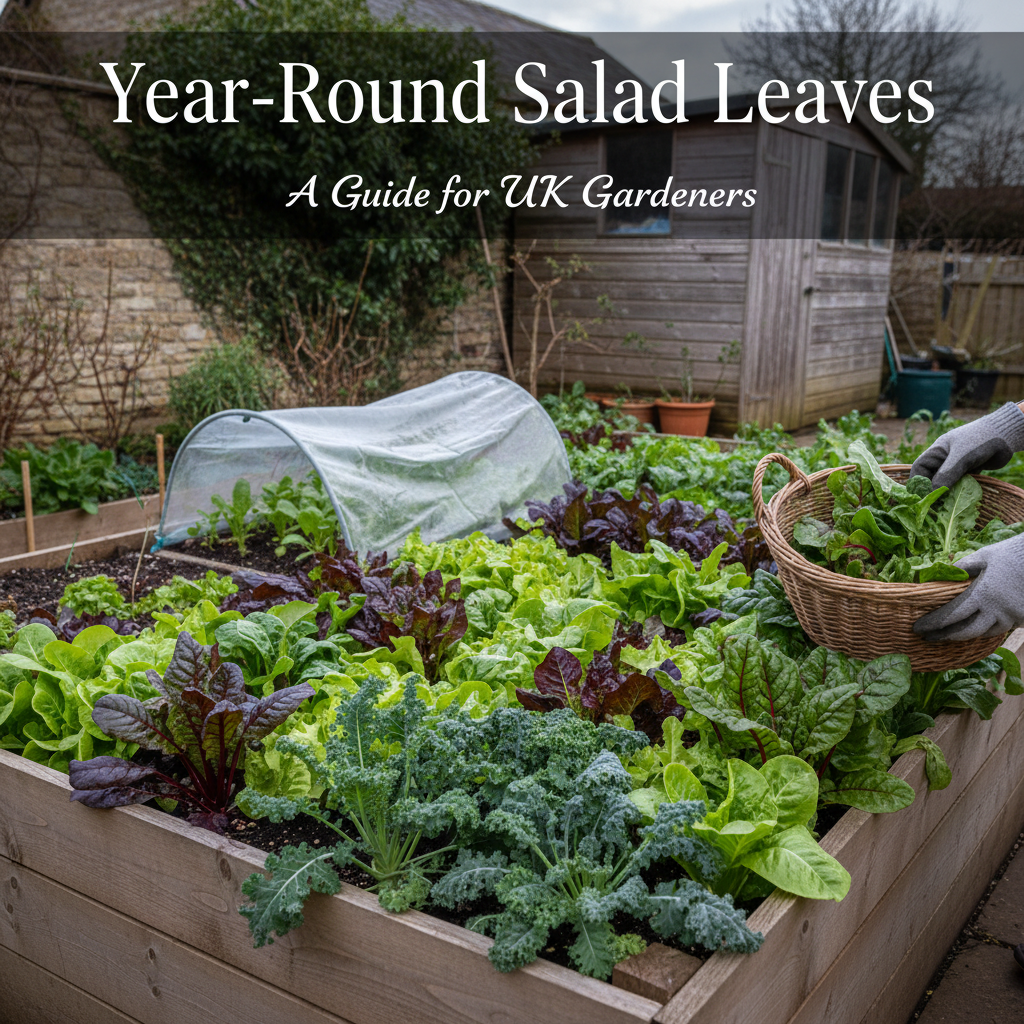
Fresh, crisp salad leaves are one of the most rewarding crops for any UK gardener. Unlike the plastic-wrapped, chlorine-rinsed bags found in supermarkets, home-grown salads offer an explosion of flavour, superior nutrition, and the convenience of 'cut-and-come-again' harvesting.
Whether you have a vast kitchen garden or just a few pots on a balcony, you can enjoy a continuous supply of greens. In this guide, we will explore how to master the art of the year-round salad harvest, tailored specifically for the British climate.
Why Grow Your Own Salad Leaves?
In the UK, we often fall into the trap of thinking salads are strictly for summer. However, with our temperate maritime climate, we are actually perfectly positioned to grow a huge variety of leafy greens through at least ten months of the year—and all twelve if you use a little protection.
Growing your own allows you to experiment with 'heritage' and 'speciality' varieties that are too delicate for commercial transport, such as spicy mustards, buttery oakleaf lettuces, and earthy winter purslane.
Getting Started: Soil and Site Preparation
Most salad leaves are fast-growing and have relatively shallow root systems. This makes them versatile, but they do require high-quality soil to produce tender, sweet leaves rather than tough, bitter ones.
Soil Requirements
Salads thrive in moisture-retentive, fertile soil. Before sowing, incorporate plenty of well-rotted organic matter or garden compost. If you are growing in containers, use a high-quality peat-free multi-purpose compost.
Sun and Shade
- Spring and Autumn: Position your crops in full sun to make the most of the limited light.
- Midsummer: High temperatures (above 24°C) can cause lettuce to 'bolt' (flowering and becoming bitter). During a UK heatwave, a bit of afternoon shade is beneficial.
The Sowing Calendar: When to Plant in the UK
Successional sowing is the secret to a constant supply. Instead of planting a whole packet of seeds at once, sow small amounts every two to three weeks.
Spring (March to May)
As the soil warms up, start with hardy varieties.
- Early March: Sow under glass (cold frame or unheated greenhouse) or under cloches outdoors.
- April onwards: Direct sow outdoors. This is the prime time for classic lettuces like 'Little Gem' and 'All Year Round'.
Summer (June to August)
Focus on heat-tolerant varieties to prevent bolting.
- Tip: If the weather is exceptionally hot, sow seeds in a shady spot or even in modules indoors, as lettuce seeds can go dormant if temperatures exceed 25°C.
Autumn (September to October)
This is the time to sow 'Winter Salads'. These plants grow slowly as the light levels drop but stay hardy through frosts.
- Varieties: Mâche (Lamb’s Lettuce), Land Cress, and Winter Purslane (Claytonia).
Winter (November to February)
Growth will largely stall during the darkest months, but if you sow hardy varieties in September/October, you can harvest them throughout winter if protected by a greenhouse or cold frame.
Top Salad Varieties for the UK Garden
1. The Classics (Lactuca sativa)
- 'Little Gem': A British staple. Reliable, compact, and sweet.
- 'Lollo Rossa': A beautiful frilly red leaf that adds texture and colour.
- 'Salad Bowl' (Red or Green): The ultimate cut-and-come-again variety. It doesn’t form a heart; you simply snip the outer leaves.
2. The Peppery Bitters
- Rocket (Eruca sativa): Exceptionally easy to grow. Note that 'Wild Rocket' is hardier and more pungent than 'Salad Rocket'.
- Mustards (e.g., 'Red Giant'): These provide a real kick. They are incredibly hardy and perfect for winter colour.
- Mizuna: A Japanese green that is mild when young and spicier as it matures. It is very resistant to bolting.
3. The Winter Heroes
- Lamb’s Lettuce (Mâche): Tiny, spoon-shaped leaves with a nutty flavour. It is virtually bulletproof against UK frosts.
- Winter Purslane: High in Vitamin C, this succulent green thrives in damp, cool conditions.
Expert Growing Tips for Success
The 'Cut-and-Come-Again' Method
Instead of waiting for a lettuce to form a solid heart, sow seeds thickly in a drill (a shallow trench). When the leaves reach about 10cm in height, snip them off with scissors about 2cm above the ground. Leave the growing point intact, and the plant will regrow for a second and often third harvest.
Watering Wisdom
Salad leaves are roughly 95% water. Dry soil is the quickest way to trigger bolting and bitterness. In the UK summer, water early in the morning to reduce evaporation and discourage slugs, which are more active in the evening.
Dealing with Pests: The Slug Battle
Slugs and snails are the primary nemesis of the UK salad grower.
- Barriers: Use copper tape around pots or crushed eggshells/grit around borders.
- Biological Control: For large infestations, 'Nemaslug' (a nematode treatment) is highly effective and organic-friendly.
- Beer Traps: A classic method that works well in confined areas.
Harvesting and Storage
For the best flavour, harvest your leaves early in the morning when they are at their most turgid (full of water).
If you aren't eating them immediately, plunge the leaves into cold water, spin them dry, and store them in a reusable container in the fridge. Home-grown salad, handled this way, will stay fresh for up to a week—though it rarely lasts that long before being eaten!
Sustainable Gardening Tip
Don't discard the 'bolted' plants immediately. If a lettuce goes to seed in late summer, let it flower. The small yellow flowers are a magnet for hoverflies, which are beneficial insects that eat aphids. You can also save the dried seeds for next year's crop.
Conclusion
Growing salad leaves in the UK is a journey of discovery. By moving beyond the standard iceberg lettuce and embracing seasonal varieties like winter purslane and spicy mustards, you can transform your meals. Start small, sow regularly, and enjoy the unmatched crunch of a garden-fresh salad.
Tags
Comments
Join the conversation
Create a free account to leave comments, share photos, and connect with other gardeners.
Related Articles

How to Grow Perfect, Straight Carrots in UK Soils
Master the art of growing crunchy, straight carrots in your UK garden. From avoiding carrot fly to soil prep, here is everything you need for success.

How to Grow Succulent Strawberries: The Ultimate UK Guide
Master the art of growing delicious British strawberries. From choosing Royal Horticultural Society-approved varieties to organic pest control and winter care.

Winter Garden Tidying
Winter might seem like a quiet time in the garden, but it's crucial for laying the groundwork for a spectacular spring and summer. This guide provides UK gardeners with actionable advice on essential winter tidying tasks, from preparing your soil to maintaining tools and creating a pest-free environment.

Winter Lawn Care UK: Your Essential Guide to a Resilient Lawn
Ensuring your lawn thrives through the UK's colder months requires specific preparation. This guide from Garden-Review provides essential, actionable advice to safeguard your lawn against winter stresses, from correct autumnal mowing to combating common issues like moss and fungal diseases, guaranteeing a vibrant return in spring.

What to Plant in May: Your UK Garden Guide
May is a pivotal month in the UK gardening calendar, marking the true arrival of warmer weather and the departure of late frosts across much of the nation. This comprehensive guide from Garden-Review will help you get the most out of your garden, detailing exactly what vegetables, herbs, flowers, and fruits you can confidently sow and plant for a bountiful year.

Autumn Lawn Care
Autumn is a pivotal time for your lawn's health, laying the groundwork for a lush, disease-resistant turf next spring. This comprehensive guide covers all essential tasks for UK gardeners, from tailored feeding regimes to effective moss and weed control, ensuring your lawn thrives through the colder months.