
Top 10 Plants for Dry Shade: A UK Gardener's Guide
Transform the darkest, driest corners of your UK garden with our expert guide to the best plants for dry shade, from hardy ferns to winter-flowering shrubs.
Key takeaways
- Often, it is the area directly beneath a north-facing wall or the thirsty soil under a sprawling canopy of a mature beech or oak tree.
- Before you head to the garden centre, it is vital to assess your soil.
- An evergreen perennial, it spreads via underground runners to form a dense carpet of dark green rosettes.
- Success in dry shade is determined by the care you provide in the first year.
- When gardening in the shade, the focus should shift from flowers to texture and leaf colour .

Mastering the Challenge: Gardening in Dry Shade
Every UK garden has that one difficult spot. Often, it is the area directly beneath a north-facing wall or the thirsty soil under a sprawling canopy of a mature beech or oak tree. In gardening circles, this is known as 'dry shade', and it is widely considered one of the most challenging environments for any plants to thrive in.
The difficulty is two-fold. Firstly, the lack of sunlight limits photosynthesis. Secondly, overhanging structures or tree canopies create a 'rain shadow', preventing water from reaching the soil, while established tree roots aggressively compete for whatever moisture remains.
However, at Garden-Review, we believe that no space should be left unloved. With the right selection of hardy, drought-tolerant, shade-loving perennials and shrubs, you can turn a dusty, bare patch into a lush, green sanctuary. This guide explores the best plants for dry shade in the UK and provides actionable advice on how to establish them.
Understanding Your Soil and Site
Before you head to the garden centre, it is vital to assess your soil. Dry shade soil is often impoverished and compacted. In the UK, this is particularly prevalent in gardens with heavy clay or very sandy soils.
The Importance of Soil Preparation
The secret to success in dry shade isn’t just what you plant, but how you plant it. Since these plants will be fighting for moisture, you must give them the best possible start.
- Organic Matter: Incorporate plenty of well-rotted garden compost, leaf mould, or manure into the planting hole. This improves soil structure and its ability to retain water.
- Timing: In the UK, the best time to plant in dry shade is autumn (September to November). This allows the plants to establish their root systems over the damp winter months before the stress of a dry spring or summer.
Top 10 Plants for Dry Shade in the UK
1. Euphorbia amygdaloides var. robbiae (Mrs Robb's Bonnet)
This is arguably the champion of dry shade. An evergreen perennial, it spreads via underground runners to form a dense carpet of dark green rosettes. In spring (April to June), it produces striking lime-green bracts that light up dark corners.
- Expert Tip: It is incredibly tough but can be invasive in smaller borders. Wear gloves when pruning, as the milky sap is a skin irritant.
2. Epimedium × versicolor 'Sulphureum' (Barrenwort)
Epimediums are dainty but surprisingly rugged. Known as 'Bishop’s Hat' due to the shape of the flowers, the 'Sulphureum' variety offers heart-shaped leaves that are often tinged with bronze in spring. It produces delicate yellow flowers in April.
- Why it works: Its wiry rhizomes are excellent at searching for moisture in compacted soil.
3. Dryopteris filix-mas (Male Fern)
While most ferns crave moisture, the native Male Fern is remarkably resilient to dry conditions once established. It provides a classic, architectural woodland look with its sturdy, upright fronds.
- UK Care: Cut back the old fronds in late February to make way for the new 'unfurling' croziers in spring.
4. Geranium macrorrhizum (Balkan Cranesbill)
Forget the delicate border geraniums; this is a workhorse. It has fragrant, fuzzy foliage that creates an impenetrable weed-smothering mat. Varieties like 'Bevan’s Variety' (magenta) or 'White-Ness' (pure white) flower reliably in early summer.
- Benefit: The foliage often turns a lovely reddish-orange in the autumn, providing late-season interest.
5. Sarcococca confusa (Sweet Box)
No UK shade garden is complete without Sarcococca. This evergreen shrub is slow-growing and thrives in the deepest shade. Its crowning glory is the tiny white flowers that appear in January and February, releasing a powerful, honey-like fragrance that can fill an entire garden.
- Placement: Plant near a doorway or path to enjoy the winter scent.
6. Helleborus foetidus (Stinking Hellebore)
Despite the unfortunate common name (which refers to the crushed leaves, not the flowers), this UK native is a dry shade essential. It features deeply divided, dark evergreen foliage and clusters of bell-shaped, lime-green flowers edged with purple from late winter into spring.
7. Lamium maculatum 'Beacon Silver' (Dead Nettle)
If you need to brighten a dark corner, silver foliage is the answer. Lamium functions as an excellent groundcover. 'Beacon Silver' has shimmering metallic leaves with a thin green margin and produces pink flowers in late spring.
- Note: It is much more polite and less invasive than the yellow-flowered Lamium galeobdolon.
8. Liriope muscari (Lilyturf)
Looking more like a grass than a member of the asparagus family, Liriope provides wonderful texture. It forms clumps of strap-like evergreen leaves and produces spikes of violet flowers in autumn, just when the rest of the garden is fading.
- Best for: Edging paths in shaded areas.
9. Brunnera macrophylla (Siberian Bugloss)
Known for its heart-shaped leaves, Brunnera is a fantastic choice for North-facing spots. The variety 'Jack Frost' is particularly popular in the UK for its silver-veined foliage. In spring, it produces tiny, sky-blue flowers similar to Forget-me-nots.
- Maintenance: Cut back the foliage in autumn after it has been hit by the first frost.
10. Vinca minor (Lesser Periwinkle)
For those truly desperate spots where nothing else will grow, Vinca minor is a reliable saviour. It is a trailing evergreen that produces violet or white flowers in spring.
- Expert Tip: Opt for Vinca minor rather than Vinca major, as the latter can become highly invasive in UK gardens.
Planting and Establishment: The First 12 Months
Success in dry shade is determined by the care you provide in the first year. Even drought-tolerant plants are not drought-tolerant until they have established a deep root system.
Watering Strategy
In the UK, we often assume our rain is sufficient. However, under trees or near walls, the ground can remain bone-dry even after a heavy downpour.
- The Bucket Method: For the first growing season, give each plant a full bucket of water once a week during dry spells, rather than a light sprinkle every day. This encourages roots to grow downwards into the cooler, damper soil.
Mulching is Non-Negotiable
Apply a 5-7cm layer of organic mulch (composted bark or leaf mould) around your plants every spring (March). This serves three purposes:
- It suppresses weeds that would compete for water.
- It reduces evaporation from the soil surface.
- It slowly breaks down, improving the soil quality over time.
Designing with Shade Plants
When gardening in the shade, the focus should shift from flowers to texture and leaf colour.
- Contrast Forms: Pair the fine, lacy fronds of Dryopteris with the broad, bold leaves of Brunnera.
- Lighten the Dark: Use variegated plants or those with silver/white foliage (like Lamium or Euonymus fortunei) to reflect what little light is available, making the space feel larger and brighter.
- Vertical Interest: Use climbers like Hydrangea anomala subsp. petiolaris (Climbing Hydrangea) on north-facing walls to add height to your dry shade scheme.
Seasonal Calendar for Dry Shade
- Spring (March - May): Apply mulch while the soil is still damp from winter rain. Tidy up old Hellebore leaves to show off the emerging flowers.
- Summer (June - August): Monitor new plantings closely. Even 'dry shade' plants may wilt in an August heatwave during their first year.
- Autumn (September - November): This is the ideal time for planting and dividing perennials like Geranium macrorrhizum. The soil is warm, and the autumn rains help plants settle.
- Winter (December - February): Enjoy the scent of Sarcococca. Avoid walking on shaded soil if it is waterlogged or frozen, as this causes compaction.
Conclusion
Dry shade doesn't have to be a gardening graveyard. By selecting plants that have evolved to cope with forest floor conditions—such as Epimedium and Euphorbia—and by committing to a regime of soil improvement and mulching, you can create a lush, low-maintenance feature.
Remember, the key to a thriving UK shade garden is patience and preparation. Start this autumn, and by next spring, your most difficult garden corner could be your favourite place to sit.
Tags
Comments
Join the conversation
Create a free account to leave comments, share photos, and connect with other gardeners.
Related Articles
Large Garden Design: Zoning, Sightlines & Low-Maintenance Ideas
A practical guide to planning a large UK garden, from zoning and sightlines to meadows, orchards and the machinery you'll actually need.
Front Garden Design Ideas UK: Kerb Appeal & Parking Rules
Practical UK front garden ideas balancing kerb appeal, parking needs and planning rules, with low-maintenance planting and security tips.

Best Autumn Flowers for UK Gardens: Late-Season Colour
Asters, sedums, dahlias and Japanese anemones: the best autumn flowers to extend colour and support pollinators into November.
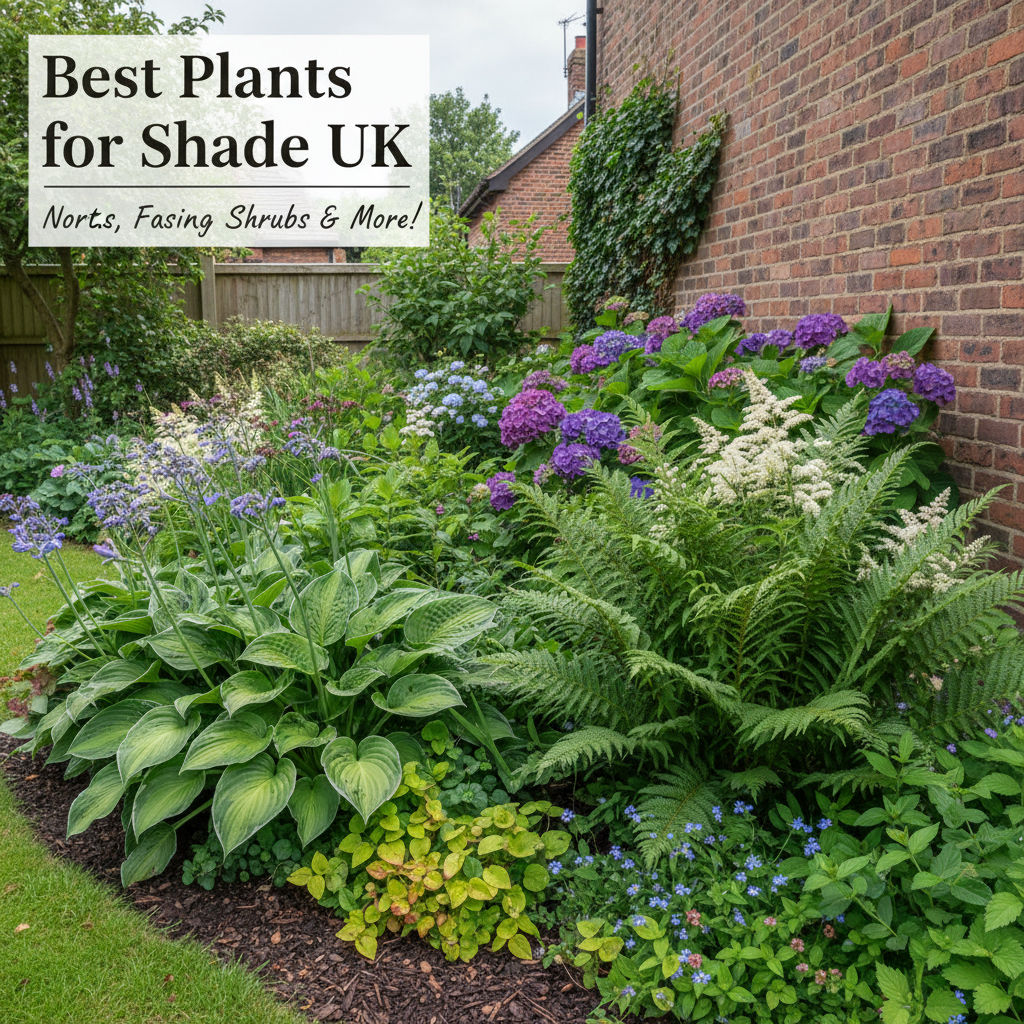
Best Plants for Shade UK: North Facing Garden Guide
Discover the best plants for shade UK gardens. Our guide covers north-facing garden ideas, ferns, hostas, and shrubs to transform your shady borders today.

When to Plant Perennials in the UK: The Ultimate Guide
Discover the best time to plant perennials in the UK. Expert advice on autumn vs spring planting, soil prep, and top varieties for a thriving garden.