
A Guide to Growing Hardback Annuals in the UK
Transform your garden with ease. Discover the best hardy annuals for the UK climate, plus expert tips on sowing, timing, and achieving a beautiful summer display.
Key takeaways
- There is a unique joy in sowing a handful of seeds and watching them transform into a riot of colour within just a few months.
- Hardy annuals offer several advantages for the home gardener.
- When selecting seeds, look for the 'HA' (Hardy Annual) symbol on the packet.
- In the UK, you generally have two windows for sowing: autumn and spring.
- Direct sowing is the process of planting seeds directly into their final flowering position.
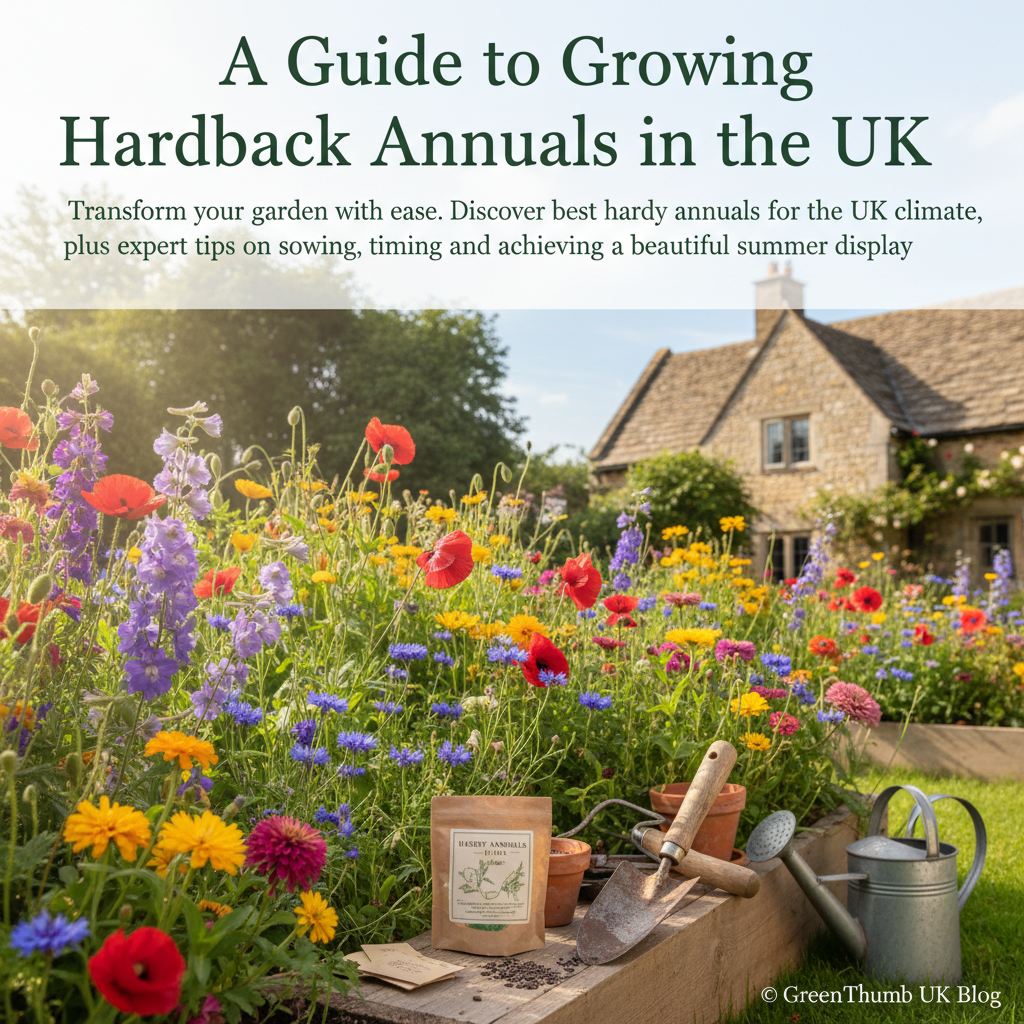
Introduction to Hardy Annuals: The UK Gardener’s Secret Weapon
There is a unique joy in sowing a handful of seeds and watching them transform into a riot of colour within just a few months. For many UK gardeners, hardy annuals are the backbone of the summer border. Unlike half-hardy annuals, which require the warmth of a greenhouse or a windowsill to start, hardy annuals are the workhorses of the garden. They are tough enough to withstand a light frost and can often be sown directly into the soil where they are to flower.
In this guide, we will explore the best hardy annuals for the British climate, how to master the timing of your sowing, and the expert techniques required to ensure your beds and borders are overflowing with blooms from June through to the first frosts of autumn.
Why Choose Hardy Annuals?
Hardy annuals offer several advantages for the home gardener. Firstly, they are incredibly cost-effective. A single packet of seeds costing a couple of pounds can produce hundreds of plants. Secondly, they are fantastic for filling gaps in perennial borders, providing 'instant' colour while younger shrubs or perennials establish themselves.
Perhaps most importantly for the eco-conscious gardener, many hardy annuals—such as Ammi majus and Centaurea cyanus—are absolute magnets for pollinators like bees, hoverflies, and butterflies. By incorporating these into your garden, you are providing a vital food source for local wildlife.
Top Hardy Annual Varieties for UK Gardens
When selecting seeds, look for the 'HA' (Hardy Annual) symbol on the packet. Here are some of the most reliable performers for UK gardens:
1. Sweet Peas (Lathyrus odoratus)
No British garden is complete without the scent of sweet peas. They are technically hardy annuals and thrive in our cooler summers.
- Recommended Varieties: 'Matucana' (heavily scented), 'Cupani', and 'Winston Churchill'.
2. Cornflowers (Centaurea cyanus)
The quintessential cottage garden flower. Native to the UK, these are tough, drought-tolerant once established, and provide a true blue that is rare in the garden.
- Recommended Varieties: 'Blue Ball' and 'Black Ball' (a stunning deep maroon).
3. Love-in-a-Mist (Nigella damascena)
Known for its feathery, fennel-like foliage and jewel-like flowers, Nigella is one of the easiest annuals to grow. It also produces attractive seed pods that look great in dried arrangements.
- Recommended Varieties: 'Miss Jekyll' (bright blue) and 'Persian Jewels' (mixed shades).
4. Pot Marigolds (Calendula officinalis)
Not to be confused with French or African marigolds (which are half-hardy), Calendula is edible and incredibly hardy. It will often self-seed, returning year after year.
- Recommended Varieties: 'Indian Prince' and 'Touch of Red'.
5. Bishop’s Weed (Ammi majus)
If you love the 'frothy' look of cow parsley, Ammi majus is the cultivated version for you. It adds height and elegance to any border and is a favourite for cut-flower arrangements.
Master the Timing: When to Sow in the UK
Timing is everything when it comes to hardy annuals. In the UK, you generally have two windows for sowing: autumn and spring.
The Autumn Sowing (September - October)
Many gardeners forget that autumn is a fantastic time to sow hardy annuals. Sowing in the late summer or early autumn allows the plants to germinate and develop a strong root system before the ground freezes. These plants will overwinter as small rosettes of leaves and then 'explode' into growth in early spring, flowering much earlier (late May/early June) than spring-sown seeds.
- Best for: Cornflowers, Sweet Peas, Nigella, and Poppies.
The Spring Sowing (March - May)
This is the traditional window. For most of the UK, late March or April is the sweet spot when the soil begins to warm up. If you sow in batches every two or three weeks (succession sowing), you can extend your flowering season well into September.
- Tip: If you live in the North of England or Scotland, wait until mid-April to ensure the soil isn't too cold and waterlogged.
How to Direct Sow: A Step-by-Step Guide
Direct sowing is the process of planting seeds directly into their final flowering position. It saves time, effort, and space on your windowsills. Here is how to do it effectively:
1. Prepare the Bed
Clear the area of all weeds. This is crucial because annual seedlings can easily be smothered. Use a garden fork to break up the soil and then rake it to a 'fine tilth'—this means the soil should have the consistency of breadcrumbs.
2. Create Drills
Instead of scattering seeds randomly (broadcasting), it is better to draw shallow lines in the soil with a stick or the corner of a rake. These are called 'drills'. Sowing in lines makes it much easier to distinguish your seedlings from emerging weed seeds later on.
3. Sowing the Seed
Sow the seeds thinly along the drills. The general rule is to plant a seed at a depth of roughly twice its size. Cover the seeds with soil and firm down gently with the back of your rake.
4. Watering and Labelling
Water the area well using a watering can with a fine rose attachment to avoid washing the seeds away. Always label your rows! It’s easy to forget what you planted where.
5. Thinning Out
Once the seedlings are a few centimetres tall, they will likely be too crowded. 'Thin them out' by removing the smaller, weaker plants so that the remaining ones have enough space to grow to their full size. Check the seed packet for the recommended final spacing (usually 15-30cm).
Expert Tips for a Stunning Summer Display
Successional Sowing
The biggest mistake gardeners make with annuals is sowing everything at once. To avoid a 'glut' followed by a garden of dead heads, sow your favourite varieties in three-week intervals. This ensures that as one patch finishes flowering, the next is just beginning.
Deadheading: The Secret to Longevity
An annual's sole purpose in life is to produce seeds. Once it does, the plant will stop flowering and die. By 'deadheading'—snipping off faded blooms before they set seed—you trick the plant into thinking its job isn't done, prompting it to produce even more flowers. For plants like sweet peas and calendula, the more you cut, the more they bloom.
Supporting Taller Varieties
Plants like Ammi majus, Sunflowers, and Sweet Peas need support. For a natural look, use 'pea sticks' (branchy twigs pushed into the ground) which the plants can grow through and over. This is much more attractive than bright green plastic netting.
Dealing with Pests
Slugs and snails are the primary enemies of young annual seedlings. Protect your plants during the early stages using your preferred method, whether that be beer traps, copper tape, or wool pellets. Once the plants reach about 10-15cm in height, they are usually tough enough to survive a bit of nibbling.
Conclusion: The Joy of Annuals
Hardy annuals are the ultimate rewarding project for any UK gardener. They require minimal equipment and offer maximum impact. Whether you have a sprawling country garden or a small urban courtyard, there is a hardy annual that will thrive for you. By following the right timing and preparation techniques, you can ensure your garden is a vibrant, buzzing sanctuary all summer long. So, grab a packet of seeds this weekend and start your journey towards a more colourful garden.
For more expert advice on seasonal planting, explore our other articles at Garden-Review.
Tags
Comments
Join the conversation
Create a free account to leave comments, share photos, and connect with other gardeners.
Related Articles
How to Grow Succulent Strawberries: The Ultimate UK Guide
Master the art of growing delicious British strawberries. From choosing Royal Horticultural Society-approved varieties to organic pest control and winter care.

Best Summer Flowers for UK Gardens: June to September Colour
Roses, dahlias, geraniums and more: how to choose and care for summer flowers that keep UK gardens blooming right through to autumn.
Growing Dahlias in the UK: Tubers to Overwintering
A complete UK guide to growing dahlias, from planting tubers after the last frost to lifting and storing them safely over winter.
Growing Roses in the UK: The Complete Guide
Everything UK gardeners need to know about choosing, planting, pruning and feeding roses for months of reliable, healthy blooms.
How to Design a Pollinator-Friendly Garden in the UK
A UK guide to designing a pollinator-friendly garden, with season-by-season plant choices, nesting habitat tips, and pitfalls to avoid.
How to Create a Wildflower Meadow in a UK Garden
A practical UK guide to creating a wildflower meadow or mini-meadow, from choosing seed mixes and sowing yellow rattle to annual cutting.