
Sowing Basil, Parsley, and Chives Indoors in Early Spring
Master sowing basil, parsley, and chives indoors this spring. Learn UK-specific timing, germination tips, and care secrets for a thriving herb garden.
Key takeaways
- In the UK climate, early spring can be unpredictable with lingering frosts and heavy rain.
- While they can all be started in early spring, their specific needs vary slightly based on their sensitivity to cold.
- Basil ( Ocimum basilicum ) is a Mediterranean native that craves heat and light.
- Parsley ( Petroselinum crispum ) is notoriously slow to germinate.
- Chives ( Allium schoenoprasum ) are incredibly resilient and are the perfect "entry-level" herb for indoor sowing.
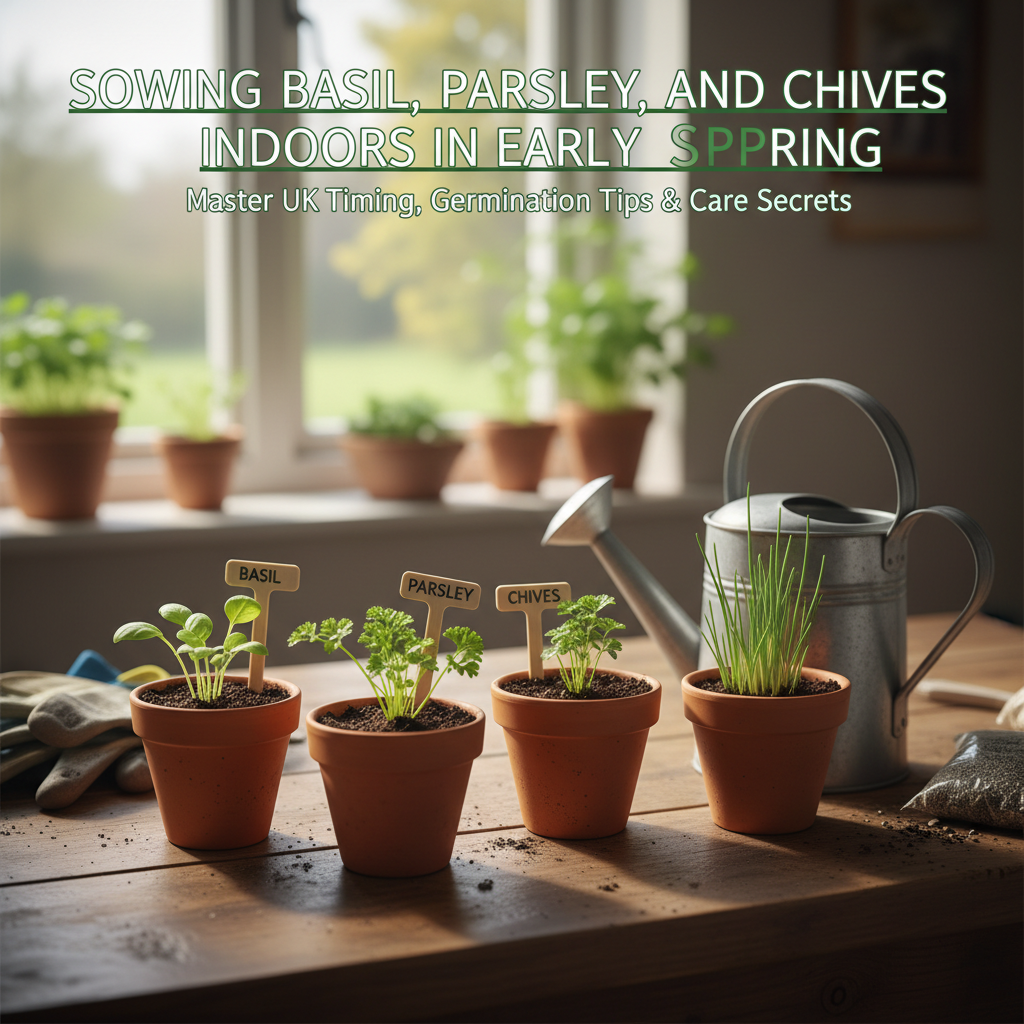
To succeed at sowing basil, parsley, and chives indoors in early spring, you should begin in late February to early April. Use a high-quality seed compost, maintain a consistent temperature of 15-21°C, and provide a bright, south-facing windowsill. This early start ensures healthy, robust herbs ready for harvesting or transplanting after the final frost.
Tips for Sowing Herbs Indoors
- Early Start: Begin sowing from late February to get a head start on the growing season.
- Temperature Control: Basil requires warmth (20°C+), while parsley and chives are more tolerant of cooler windowsill temperatures.
- Light Requirements: Aim for 6–8 hours of bright, indirect sunlight or use LED grow lights to prevent "leggy" growth.
- Moisture: Keep compost damp but never waterlogged to avoid "damping off" fungal issues.
- UK Specifics: Hardening off is essential before moving herbs outside in May or June.
Why Sowing Basil, Parsley, and Chives Indoors is Better
In the UK climate, early spring can be unpredictable with lingering frosts and heavy rain. Sowing basil, parsley, and chives indoors provides a controlled environment that significantly increases germination rates. By starting your culinary herbs on a windowsill or in a heated propagator, you bypass the cold UK soil, which often leads to seed rot in early March.
Furthermore, indoor sowing allows you to extend the harvesting season. Instead of waiting until June for your first sprigs of basil, an indoor start in March can provide fresh leaves by late May. According to Royal Horticultural Society (RHS) guidelines, protected sowing is the most reliable method for success with tender herbs like basil.
Best Timing for Sowing Culinary Herbs in the UK
Timing is critical when dealing with diverse herb species. While they can all be started in early spring, their specific needs vary slightly based on their sensitivity to cold.
| Herb Variety | Ideal Sowing Month | Germination Temp | Days to Germinate |
|---|---|---|---|
| Basil (Genovese/Thai) | Late March to April | 20–25°C | 7–10 Days |
| Parsley (Curly/Flat-leaf) | February to March | 18–21°C | 14–28 Days |
| Chives (Common/Garlic) | February to March | 15–20°C | 10–14 Days |
How to Sow Basil Indoors for Success
Basil (Ocimum basilicum) is a Mediterranean native that craves heat and light. It is arguably the most sensitive of the three to cold temperatures and "wet feet."
Step-by-Step Basil Sowing Instructions
- Choose the right pot: Use 9cm pots or modular trays filled with free-draining seed compost.
- Sowing: Scatter seeds thinly over the surface. Basil seeds need a tiny bit of light to germinate, so cover them with only a very fine layer of vermiculite or sieved compost (2mm).
- Heat: Place on a warm windowsill or a heated propagator. Basil will struggle if temperatures drop below 15°C at night.
- Watering: Water from the bottom by placing the pot in a tray of water for 10 minutes to avoid disturbing the seeds.
Pro Tip: To prevent "damping off" (a common fungal disease where luxury seedlings collapse), ensure good air circulation and avoid overwatering basil in the early stages.
The Secret to Germinating Parsley Indoors
Parsley (Petroselinum crispum) is notoriously slow to germinate. In the UK, many gardeners give up too early, thinking the seeds have failed. Perseverance is key with this nutrient-dense herb.
Speeding up Parsley Germination
Parsley seeds contain naturally occurring furanocoumarins, which are germination inhibitors. To overcome this, many UK experts recommend soaking seeds in lukewarm water for 24 hours before sowing. Once soaked, sow them 1cm deep in deep modules, as parsley develops a long taproot and dislikes being moved frequently.
Maintain a steady temperature. While parsley is hardy once established, it needs consistent warmth (around 18-20°C) to break dormancy during the early spring months.
Sowing Chives Indoors: The Easiest Spring Herb
Chives (Allium schoenoprasum) are incredibly resilient and are the perfect "entry-level" herb for indoor sowing. They are less fussy about temperature than basil and can handle the slightly cooler microclimates of a North-facing kitchen window, though South-facing is still preferred.
Chive Sowing Technique
- Sow in small clumps (8–10 seeds per cell) rather than individual seeds to get a "tufted" look immediately.
- Cover with 1cm of compost, as chives prefer darkness for germination.
- Once seedlings reach 5cm in height, use scissors to snip off the very tips; this encourages the plant to focus energy on root development.
Essential Equipment for Indoor Herb Sowing
To move from amateur results to professional-grade herb harvests, consider investing in a few specific tools tailored for the UK climate:
- Seed Compost: Avoid multipurpose compost for sowing; it is too coarse. Seed-specific compost has a fine texture and lower nutrient levels that won't "burn" delicate new roots.
- Propagator Lids: Clear plastic domes help maintain humidity, which is vital in centrally heated UK homes where the air can be very dry.
- Vermiculite: A natural mineral that helps retain moisture while allowing light to reach seeds like basil.
- Labels: Essential for distinguishing between flat-leaf parsley and young chives, which can look similar in the first few days of growth.
Managing Light and "Legginess"
The biggest challenge when sowing herbs indoors in early spring is the lack of light. Even a bright UK windowsill provides significantly less light than the outdoors. When seedlings don't get enough light, they become "leggy"—tall, thin, and weak as they stretch toward the glass.
To combat this, rotate your pots 180 degrees every day. This ensures the stems grow straight. If you find your seedlings are consistently pale and thin, you may need to supplement with a simple LED grow light set to run for 12 hours a day until the days lengthen in April.
Transitioning: Hardening Off Your Herbs
You cannot move herbs directly from a warm kitchen to a cold UK garden. The shock will likely kill basil and set parsley back by weeks. This process is called "hardening off."
Starting in mid-May (or after the last frost in your region), move your pots outside to a sheltered spot for two hours during the warmest part of the day. Gradually increase this time over 7–10 days until they are spending the full night outdoors. Only then should they be planted into their final containers or garden borders.
Frequently Asked Questions | Sowing Basil, Parsley, and Chives Indoors
Can I sow basil and parsley in the same pot?
Why are my indoor herb seedlings falling over?
Do I need a heated propagator for chives?
When can I transplant my indoor-grown herbs outside?
How often should I water my herb seedlings?
Tags
Comments
Join the conversation
Create a free account to leave comments, share photos, and connect with other gardeners.
Related Articles
Winter Garden Tidying
Winter might seem like a quiet time in the garden, but it's crucial for laying the groundwork for a spectacular spring and summer. This guide provides UK gardeners with actionable advice on essential winter tidying tasks, from preparing your soil to maintaining tools and creating a pest-free environment.
Winter Lawn Care UK: Your Essential Guide to a Resilient Lawn
Ensuring your lawn thrives through the UK's colder months requires specific preparation. This guide from Garden-Review provides essential, actionable advice to safeguard your lawn against winter stresses, from correct autumnal mowing to combating common issues like moss and fungal diseases, guaranteeing a vibrant return in spring.
How to Grow Perfect, Straight Carrots in UK Soils
Master the art of growing crunchy, straight carrots in your UK garden. From avoiding carrot fly to soil prep, here is everything you need for success.
Year-Round Salad Leaves: A Guide for UK Gardeners
Discover how to grow fresh, organic salad leaves in your UK garden all year round. Expert tips on varieties, sowing schedules, and winter protection.
What to Plant in May: Your UK Garden Guide
May is a pivotal month in the UK gardening calendar, marking the true arrival of warmer weather and the departure of late frosts across much of the nation. This comprehensive guide from Garden-Review will help you get the most out of your garden, detailing exactly what vegetables, herbs, flowers, and fruits you can confidently sow and plant for a bountiful year.

Autumn Lawn Care
Autumn is a pivotal time for your lawn's health, laying the groundwork for a lush, disease-resistant turf next spring. This comprehensive guide covers all essential tasks for UK gardeners, from tailored feeding regimes to effective moss and weed control, ensuring your lawn thrives through the colder months.