
How to Chit Potatoes UK: A Step-by-Step Guide for Success
Master how to chit potatoes in the UK with our expert guide. Learn the best timing, top varieties, and step-by-step tips for a bumper potato harvest.
Key takeaways
- Chitting is the process of encouraging seed potatoes to sprout before they are planted in the ground.
- Timing is everything when it comes to a successful potato harvest.
- Following a structured approach ensures your seed potatoes develop the high-quality green or purple shoots needed for a bumper crop.
- While all types benefit slightly, the categories below dictate your planting and harvesting schedule.
- While the process is straightforward, certain environment factors can ruin your seed potatoes before they ever reach the soil.
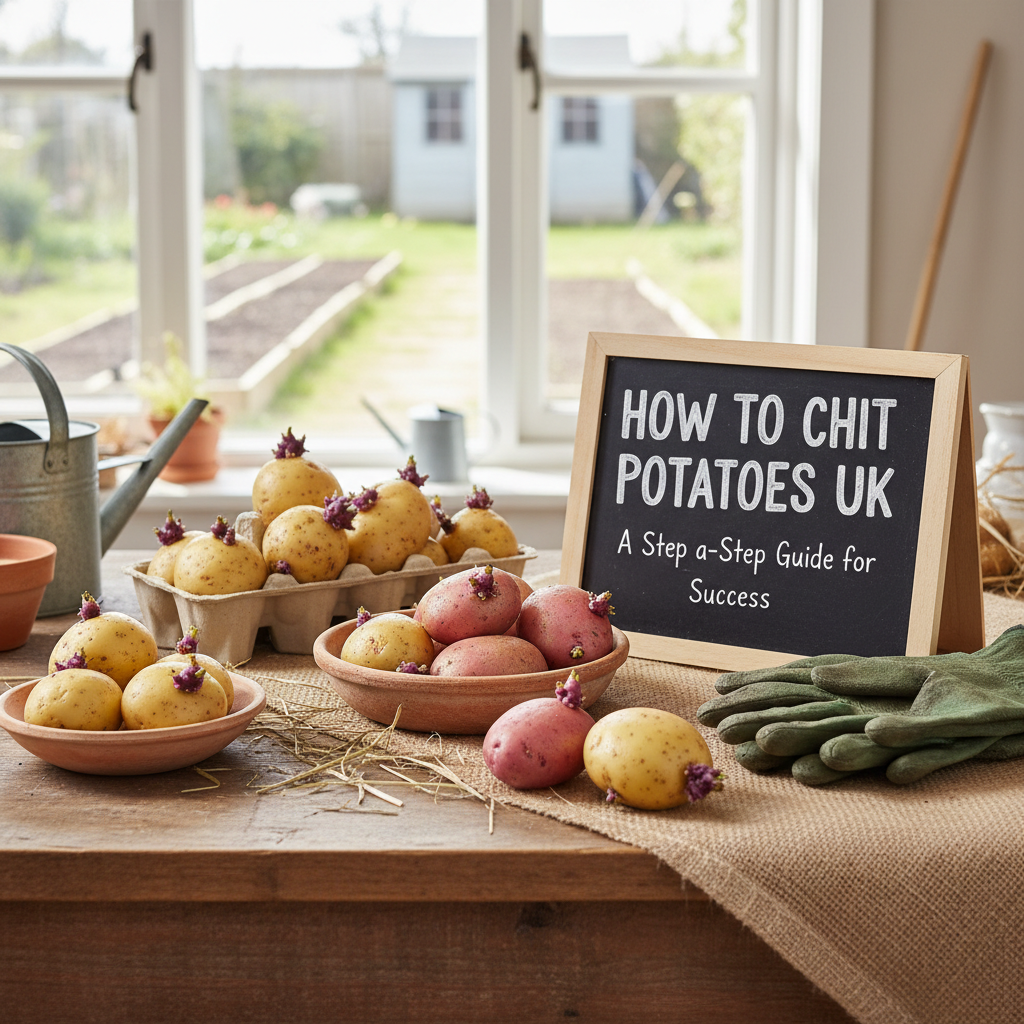
Learning how to chit potatoes is a vital skill for UK gardeners, involving the pre-sprouting of seed potatoes before planting. By placing tubers in a cool, bright spot for 4 to 6 weeks, you encourage strong, healthy "chits" or shoots to develop. This process leads to faster establishment in the soil and an earlier, more productive harvest, which is particularly beneficial in the UK’s shorter growing seasons.
Guide to Chitting Potatoes
- When to start: Late January to March, depending on your UK location.
- Duration: It typically takes 4–6 weeks for shoots to reach the ideal 2cm length.
- Location: Choose a frost-free, bright, and cool room (roughly 10°C).
- Orientation: Place the "rose end" (the end with the most eyes) facing upwards.
- Equipment: Old egg boxes or seed trays are perfect for holding tubers steady.
What is Chitting Potatoes and Why Does it Matter?
Chitting is the process of encouraging seed potatoes to sprout before they are planted in the ground. While not strictly mandatory for maincrop varieties, it is considered essential for First Early and Second Early potatoes. By giving the plants a head start indoors, you ensure they make the most of the spring sunlight and develop a robust root system before the risk of blight increases in late summer.
According to the Royal Horticultural Society (RHS), chitting is particularly advantageous in cooler northern regions of the UK, where the soil stays cold for longer. It allows the plant to "hit the ground running" as soon as soil temperatures reach roughly 7°C (45°F).
When Should You Start Chitting Potatoes in the UK?
Timing is everything when it comes to a successful potato harvest. In the UK, the ideal window to start chitting is between late January and early March. The exact date depends on your local climate and the variety of potato you are growing.
- Southern England and Coastal Areas: Start in late January for planting in mid-March.
- Midlands and Lower North: Start in early to mid-February for planting in late March or early April.
- Northern England and Scotland: Start in late February or early March for planting in mid-April.
If you purchase your seed potatoes early, keep them in a cool, dark place until you are ready to begin the chitting process. This prevents them from developing long, spindly white "etiolated" sprouts that are weak and prone to breaking.
How to Chit Potatoes: A Step-by-Step Guide
Following a structured approach ensures your seed potatoes develop the high-quality green or purple shoots needed for a bumper crop. Avoid the temptation to rush the process in a warm room; slow and steady growth is the secret to success.
- Identify the 'Rose' End: Examine your seed potato. One end will have more small indentations or "eyes" than the other - this is the rose end. The opposite end is the "blunt" or "heel" end, where it was originally attached to the parent plant.
- Position the Tubers: Place your seed potatoes in an empty egg carton or a wooden seed tray. Ensure the rose end is facing upwards. This allows the shoots to grow vertically toward the light.
- Choose the Right Environment: Move the trays to a porch, a cool windowsill, or an unheated greenhouse. The temperature should ideally stay around 10°C (50°F). It must be frost-free but bright. Avoid direct, scorching midday sun which can shrivel the tuber.
- Monitor Growth: Over the next month, you will see small, knobbly shoots emerging from the eyes. You are looking for "chits" that are roughly 2cm (¾ inch) long.
- Thinning (Optional): For larger potatoes (best for baking), some gardeners rub off all but the strongest 2 or 3 shoots. For a higher number of medium-sized potatoes, leave all the shoots intact.
Choosing the Best Potato Varieties for Chitting
Not all potatoes react the same way to chitting. While all types benefit slightly, the categories below dictate your planting and harvesting schedule.
| Category | Best Time to Chit | Planting Window | Popular UK Varieties |
|---|---|---|---|
| First Earlies | Late Jan - Feb | March | Arran Pilot, Pentland Javelin, Casablanca |
| Second Earlies | February | Late March/April | Charlotte, Maris Peer, Nicola |
| Maincrop | Feb - March | April | King Edward, Maris Piper, Sarpo Mira |
Common Mistakes to Avoid When Chitting Potatoes
While the process is straightforward, certain environment factors can ruin your seed potatoes before they ever reach the soil. Accuracy in light and temperature is critical for UK growers.
Too Much Heat
Placing potatoes in a warm kitchen or near a radiator will cause them to sprout too quickly. This results in long, thin, white stalks that are extremely fragile. If these snap off during planting, the tuber loses a significant amount of stored energy.
Lack of Light
If you chit potatoes in the dark, the shoots will be pale and weak. Strong, healthy chits are usually dark green, purple, or reddish in colour and look "tough." This indicates they have photosynthesised and are ready for the outdoors.
Frost Damage
An unheated greenhouse is a popular choice for chitting, but UK spring frosts can be lethal. If the temperature drops below freezing, the water inside the potato cells expands and destroys the tuber. Always have some horticultural fleece nearby to cover your trays if a cold snap is forecast.
When Are Chitted Potatoes Ready to Plant?
Your potatoes are ready for the garden when the chits are approximately 2.5cm (1 inch) long and have a sturdy, dark appearance. In the UK, this usually coincides with the soil warming up in late March or April. Expert Tip: Use a soil thermometer; you are looking for a consistent temperature of 7°C or higher at a depth of 10cm.
If your potatoes are ready but the ground is waterlogged or frozen, you can "hold" them for an extra week or two by moving them to an slightly cooler (but still bright) spot to slow the growth down safely.
Chitting Potatoes: Frequently Asked Questions
Do I have to chit maincrop potatoes?
Can I use supermarket potatoes for chitting?
What happens if the chits snap off?
My potatoes have turned green, are they still okay?
Should I chit potatoes in the dark?
Tags
Comments
Join the conversation
Create a free account to leave comments, share photos, and connect with other gardeners.
Related Articles

How to Plant Early Potatoes UK
Learn how to plant early potatoes in the UK with our expert guide. From chitting in February to harvesting in June, master the best timings and varieties.

How to Grow Potatoes in Bags: A Success Guide
Discover how to grow a bumper crop of delicious home-grown potatoes in bags and containers with our expert UK guide. Perfect for small gardens and patios.