
Is My Garden Suitable for a Robot Lawn Mower?
Expert guide: Discover if your UK garden is suitable for a robot lawn mower, including lawn size, slopes, layout, and setup tips.
Key takeaways
- Most robotic lawn mowers operate using a boundary wire installed around the edges of your lawn.
- Smaller models may handle 300–500 m² , while larger models can manage 1,500 m² or more .
- British gardens are rarely perfectly flat, so slope capability is important.
- Robot mowers can detect and navigate around obstacles, but too many objects can reduce efficiency .
- Robot mowers perform best when lawns have clear, defined edges .
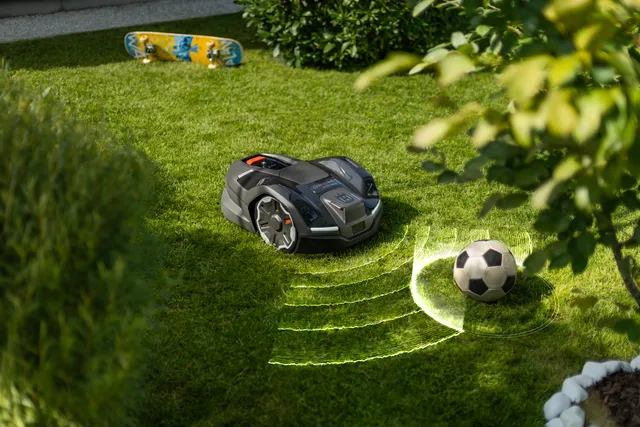
Robot lawn mowers are becoming increasingly popular across the UK as gardeners look for convenient ways to maintain a neat lawn without the weekly effort of mowing. Brands such as Husqvarna, Worx, Bosch and Flymo now offer a wide range of robotic mowers designed for typical British gardens.
But not every lawn is an ideal candidate. Before investing in a robot mower, it’s worth assessing whether your garden layout, lawn size and terrain are suitable.
In this guide, we’ll explain the key factors that determine whether a robotic mower will work well in your garden.
How Robot Lawn Mowers Work
Most robotic lawn mowers operate using a boundary wire installed around the edges of your lawn. The mower detects this wire and stays within the defined mowing area. Some newer models also use GPS mapping or camera navigation.
The mower trims little and often, cutting only a few millimetres of grass each time and leaving fine clippings that act as natural fertiliser (a process known as mulching).
Because they mow regularly and automatically, robotic mowers work best in lawns that are relatively consistent and obstacle-free.
1. Your Lawn Size
One of the first things to check is the total lawn area.
Robot mowers are designed with maximum coverage limits. Smaller models may handle 300–500 m², while larger models can manage 1,500 m² or more.
Typical UK lawn sizes:
-
Small garden: up to 100 m²
-
Medium garden: 100–400 m²
-
Large garden: 400 m²+
If your lawn area fits within the recommended coverage for a mower, it should work well. For larger gardens, you may need a higher-capacity model or multiple mowing zones.
2. Your Garden Layout
Robot mowers work best in simple, open lawn layouts.
Your garden is likely suitable if it has:
-
A clear lawn perimeter
-
Wide passages between areas
-
Minimal isolated patches of grass
-
Few tight corners
More complex gardens can still work, but may require careful boundary wire placement.
Potential challenges include:
-
Narrow corridors between lawn sections
-
Separate lawn areas divided by paths
-
Small grass islands surrounded by paving
Some premium models from Husqvarna and Bosch allow multi-zone programming, which can help manage complex gardens.
3. Slopes and Uneven Ground
British gardens are rarely perfectly flat, so slope capability is important.
Most robotic mowers can handle slopes of 20–35% (about 11–19°).
High-end models may manage slopes up to 45%.
Your garden should be fine if it has:
-
Gentle slopes
-
Slight undulations
-
Typical lawn contours
However, robot mowers may struggle with:
-
Very steep banks
-
Sudden drops
-
Uneven ground with exposed roots
If your garden has steep areas, check the manufacturer’s maximum gradient rating before buying.
4. Obstacles in the Lawn
Robot mowers can detect and navigate around obstacles, but too many objects can reduce efficiency.
Common garden obstacles include:
-
Trees
-
Flower beds
-
Garden furniture
-
Trampolines
-
Raised beds
-
Children’s toys
Most robotic mowers bump lightly into obstacles and change direction. However, gardens with numerous small obstacles may lead to longer mowing times.
You can also protect delicate areas by creating exclusion zones with boundary wire. ( also great to create no-mow zones or wildflower areas)
5. Lawn Edges and Borders
Robot mowers perform best when lawns have clear, defined edges.
Ideal lawn borders include:
-
Paving or brick edging
-
Gravel strips
-
Raised beds
-
Solid fencing
Problematic edges include:
-
Lawn blending directly into soil beds
-
Loose bark or mulch
-
Drop-offs or retaining walls
Some models offer edge-cutting features, but many still leave a narrow strip that may require occasional trimming.
6. Narrow Passages
Some UK gardens have long narrow sections, such as side lawns or paths between beds.
Most robotic mowers require passages at least 60–100 cm wide to navigate reliably.
Premium models can handle tighter routes using guided boundary wires or corridor navigation.
If your garden includes narrow sections, look for mowers designed for multi-zone or corridor mowing.
7. Weather and Drainage
Robot mowers are designed for outdoor conditions, but lawns that remain wet or waterlogged can cause problems.
Common UK lawn issues include:
-
Clay soil retaining water
-
Poor drainage
-
Moss-heavy turf
Wet ground may lead to:
-
Wheel slipping
-
Patchy mowing patterns
-
Turf damage
If your lawn drains reasonably well and doesn’t stay boggy after rain, a robotic mower should work fine.
8. Power and Charging Location
Robot mowers need a charging station installed along the boundary wire.
This requires:
-
Access to an outdoor power socket
-
A flat area near the lawn edge
-
Some shelter from heavy rain or direct sun
The mower automatically returns to the charging station when the battery runs low.
9. Pets and Wildlife
Many gardeners worry about safety.
Modern robotic mowers include:
-
Lift sensors
-
Tilt sensors
-
Collision detection
-
Automatic blade stop
However, wildlife groups advise avoiding night-time mowing, as animals such as hedgehogs are active after dark.
Is Your Garden Is Ideal for a Robot Mower ?
Your garden is likely suitable if it:
✔ Has a lawn under 1,000 m²
✔ Has gentle slopes
✔ Has clear lawn edges
✔ Has few narrow passages
✔ Drains reasonably well
✔ Has space for a charging station
Gardens That May Be More Challenging
Robot mowers may struggle if your garden has:
-
Very steep slopes
-
Multiple disconnected lawns
-
Very narrow corridors
-
Frequent flooding or poor drainage
-
Numerous small obstacles
These situations may still work with careful setup or higher-end models, but they require more planning.
For many UK homeowners, a robotic lawn mower can make lawn care almost effortless. If your garden has a moderate-sized lawn, gentle terrain and a reasonably simple layout, there’s a good chance it’s well suited to robotic mowing.
However, gardens with complex layouts, steep slopes or drainage issues may need additional setup or a more advanced model.
Before buying, measure your lawn area, assess slopes and consider how complex your garden layout is. With the right mower and installation, robotic mowing can keep your lawn looking tidy throughout the growing season with minimal effort.
Tags
Comments
Join the conversation
Create a free account to leave comments, share photos, and connect with other gardeners.
Related Articles

Should I Vacuum Artificial Grass?
Discover Cleva’s award-winning Vacmaster & LawnMaster tools—top-rated vacuums, mowers & garden gear praised by expert reviewers.
Clarke CPCP1 2HP Petrol Compactor Plate Review
Clarke CPCP1 2HP petrol compactor plate review: 8200N centrifugal force, 200mm compaction depth, 50kg build, £453.59 RRP. Jim Fellows breaks down the specs for driveway and patio projects.
Best Electric Leaf Blower Vacuums UK 2026
Find the best electric leaf blower vacuums in the UK for 2026, compared for power, value, bag size and performance.
Hyundai HYMD500 500kg 196cc 4x4 Drive Mini Dumper Review
The Hyundai HYMD500 500kg 4x4 mini dumper is a powerful petrol-powered power barrow designed for heavy-duty material handling across construction sites, farms, and large gardens. With a robust 196cc engine, all-terrain 4WD traction, and high load capacity, it offers a reliable and cost-effective alternative to manual wheelbarrows and premium mini dumpers.
Hyundai HY20CB 20v Cordless Leaf Blower Review
Hyundai HY20CB cordless leaf blower review: 200km/h power, 1.25kg, 25-min runtime. Is it worth £50.99? Jim Fellows tests the specs.

Ryobi Patio Cleaner Review: Is the RY18PCA Cordless Scrubber Any Good?
Is the Ryobi 18V ONE+ cordless patio cleaner any good? Our hands-on RY18PCA review scores it 4.4/5 and compares the wire and nylon brush heads for UK block paving.