
Spring Lawn Care UK: Your Essential Guide for a Lush Garden
Spring is the pivotal season for rejuvenating your lawn after the dormant winter months. This comprehensive guide, tailored for UK gardeners, covers all the essential tasks, from initial clean-up to feeding and pest control, ensuring your lawn is lush, healthy, and ready to thrive throughout the warmer seasons.
Key takeaways
- The UK weather, with its unpredictable mix of sunshine and showers, creates specific challenges and opportunities for lawn care.
- Fallen leaves, twigs, and other detritus can smother grass, leading to bare patches and encouraging moss growth.
- Best for: Medium-sized lawns, ease of use Check Price on Amazon → Compacted soil restricts root growth and prevents water and nutrients from reaching the grass roots.
- Spread it evenly over the lawn, working it into the aeration holes with the back of a rake.
- Best for: Quick repair, year-round use Check Price on Amazon → A spring lawn feed provides essential nutrients to kickstart healthy growth after winter.

After the long, often damp and cold UK winter, spring brings the perfect opportunity to revitalise your lawn. A thoughtful and timely spring lawn care regimen is crucial for establishing the foundation of a healthy, vibrant, and resilient lawn that will withstand the summer's activities and potential dry spells. Here at Garden-Review, we'll guide you through every critical step to ensure your lawn looks its absolute best.
Many UK gardeners underestimate the impact of spring treatments. Neglecting essential tasks during these vital months can lead to issues like moss, weeds, and patchy growth dominating your turf. By following our expert advice, you can prevent these common problems and cultivate a verdant oasis.
Understanding the UK Spring Lawn Cycle
The UK weather, with its unpredictable mix of sunshine and showers, creates specific challenges and opportunities for lawn care. Grass typically begins active growth when soil temperatures consistently reach around 6-8°C. This is usually from late February in milder southern regions, extending into April further north. Observing your lawn for the first signs of growth is key to timing your interventions correctly.
The Essential Spring Lawn Care Checklist
Here’s a breakdown of the critical tasks to undertake:
1. Initial Rake and Clear Up (Late February - Early March)
Before any other work begins, it’s vital to clear your lawn of winter debris. Fallen leaves, twigs, and other detritus can smother grass, leading to bare patches and encouraging moss growth. Use a spring-tined rake to gently remove surface debris. This also helps to lift matted grass and thin out moss, improving air circulation.
Actionable Tip: Don't be too aggressive at this stage, especially if the ground is still soft. A light raking is sufficient to begin with.
2. First Mow of the Season (March)
As soon as your grass shows signs of sustained growth and the weather is mild enough, it's time for the first cut. Remember the 'one-third rule' – never remove more than one-third of the grass blade's height at any one time. Set your mower blades high for this initial cut to avoid stressing the grass. Gradually lower the blade height over subsequent mows as the season progresses.
Actionable Tip: Ensure your mower blades are sharp. Dull blades tear the grass, making it susceptible to disease.
3. Scarification (Late March - April)
Scarification is the process of removing thatch (a layer of dead grass, roots, and debris) and moss from your lawn. This allows air, water, and nutrients to penetrate the soil more effectively, promoting healthier grass growth. For smaller lawns, a robust spring-tined rake can suffice. For larger areas or heavily matted lawns, a powered scarifier is highly recommended.
Actionable Tip: Scarify when the lawn is dry, and the grass is actively growing, allowing it to recover quickly. You might be surprised by how much material you remove!
Recommended Scarifier: Bosch UniversalVerticut 1100
Best for: Medium-sized lawns, ease of use
| Spec | Detail |
|---|---|
| Power | 1100 W 'JetCollect' System |
| Working Width | 32 cm |
| Working Depth | -5 mm to +10 mm (4 settings) |
| Collection Box | 50 Litres |
| Weight | 10.5 kg |
✅ Pros
- Powerful motor efficiently removes thatch and moss
- 'JetCollect' system ensures excellent debris collection
- Easy depth adjustment for various lawn conditions
- Compact storage thanks to foldable handles
❌ Cons
- Collection box can fill up quickly on very mossy lawns
- Power cord can be restrictive for larger gardens
4. Aeration (Late March - April)
Compacted soil restricts root growth and prevents water and nutrients from reaching the grass roots. Aeration involves making small holes in the lawn to improve air circulation, drainage, and nutrient uptake. For small areas, a garden fork can be used. For larger lawns, a hollow-tine aerator (which removes small plugs of soil) or a spike aerator is more efficient.
Actionable Tip: Aerate after scarifying. If your soil is particularly heavy clay, aeration is even more critical.
Recommended Aerator: Ohuhu 2-in-1 Lawn Aerator and Scarifier Sandals
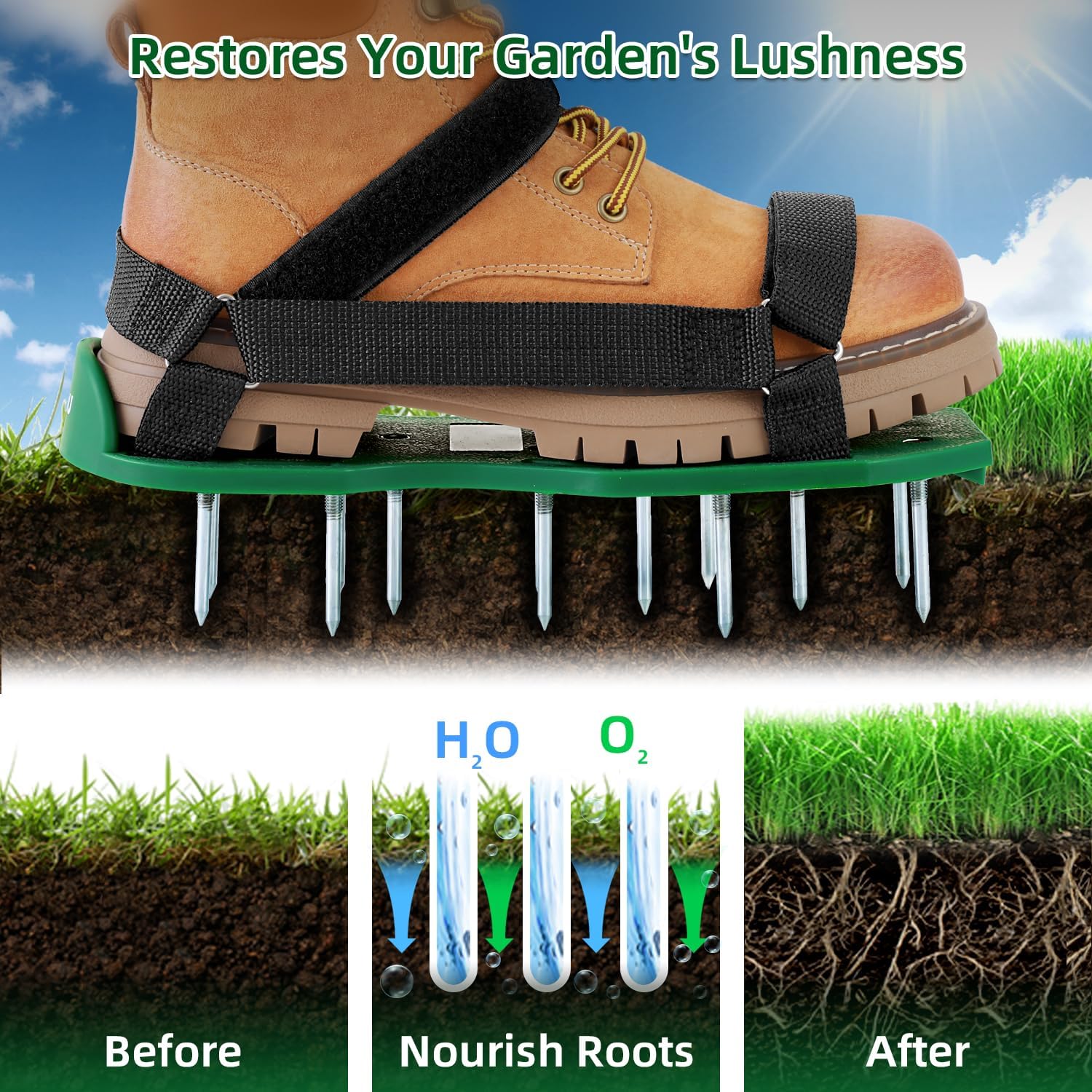
Best for: Small lawns, budget-conscious gardeners
| Spec | Detail |
|---|---|
| Type | Spike Aerator Sandals |
| Spikes | 13 x 4.5cm spikes per sandal |
| Attachment | Adjustable straps for shoes |
| Material | Durable plastic base, metal spikes |
✅ Pros
- Extremely affordable and easy to use
- Combines aeration with light scarification as you walk
- No storage space required for bulky machinery
- Great for small areas or spot treatment
❌ Cons
- Labour-intensive for larger lawns
- Less effective than dedicated machinery for heavily compacted soil
- Spikes can get clogged in wet conditions
5. Top Dressing (April)
After aeration, applying a thin layer of 'top dressing' (a mixture of sand, loam, and compost) can significantly improve soil structure, level minor imperfections, and encourage new grass growth. Spread it evenly over the lawn, working it into the aeration holes with the back of a rake.
Actionable Tip: Ensure the top dressing is fine and free-flowing to avoid smothering the grass. A thin layer is key.
6. Overseeding (April - May)
Overseeding involves spreading new grass seed over your existing lawn. This helps to fill in bare patches, thicken the turf, and introduce new, stronger grass varieties, improving the lawn's overall resilience and appearance. Choose a grass seed mix suitable for your lawn's conditions (e.g., shade-tolerant, hard-wearing).
Actionable Tip: Overseed immediately after scarifying and aerating for best results, as the seeds will have direct contact with the soil. Keep the newly seeded areas consistently moist until germination.
Recommended Grass Seed: Pronto Seed 'Anytime'
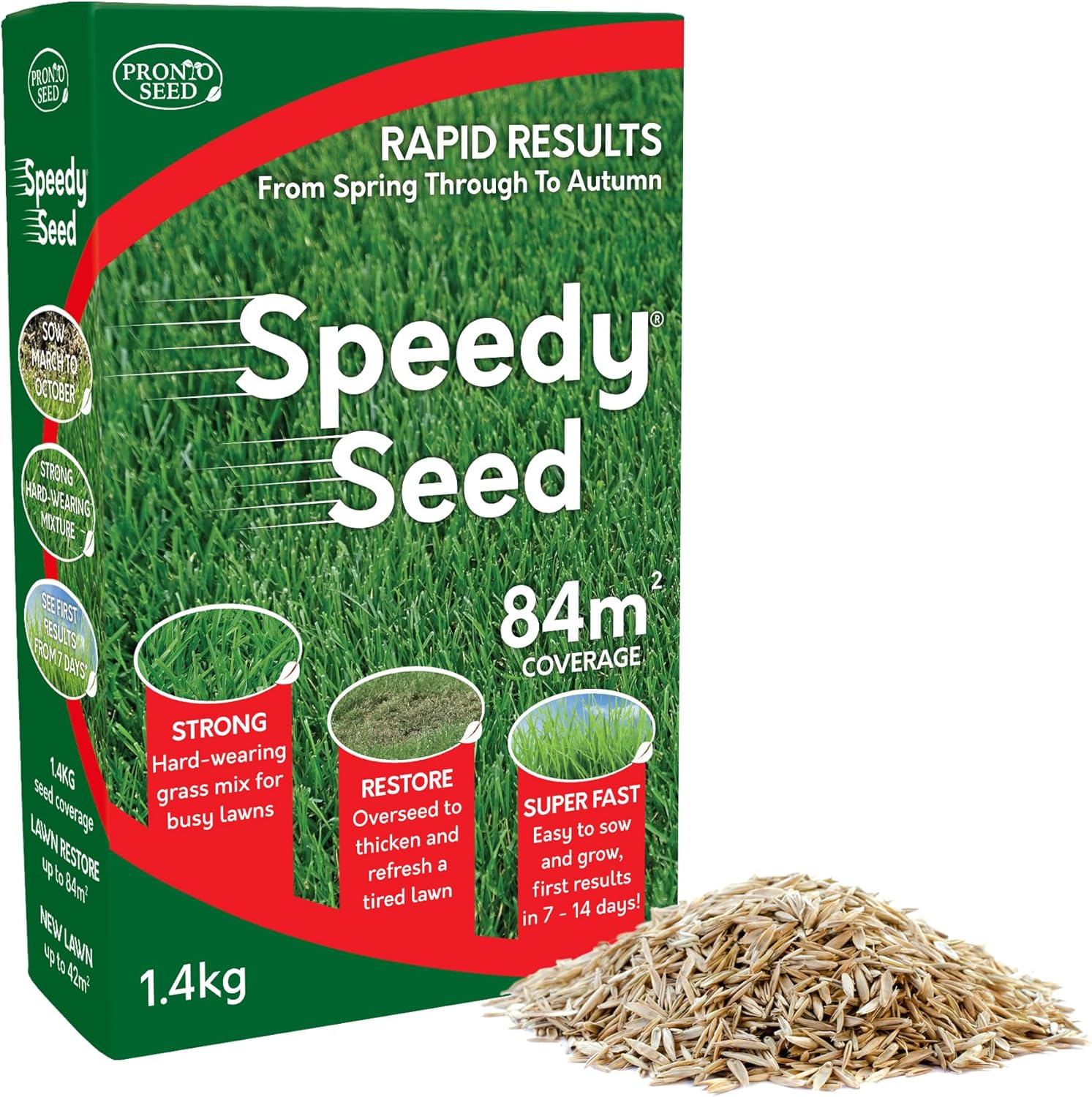
Best for: Quick repair, year-round use
| Spec | Detail |
|---|---|
| Type | Fast-growing, hard-wearing mix |
| Coverage | Varies by pack size (e.g., 1kg covers 30 sq m) |
| Germination | As low as 7°C soil temperature |
| Key Features | Drought tolerant, good disease resistance |
✅ Pros
- Rapid germination, even in cooler temperatures
- Creates a dense, hard-wearing lawn
- Good for repairing patches or overseeding
- Versatile for various soil types and conditions
❌ Cons
- Can be more expensive than basic mixes
- Requires consistent watering for best results
7. Feeding (April - May)
A spring lawn feed provides essential nutrients to kickstart healthy growth after winter. Look for a fertiliser high in nitrogen for lush green growth, along with potassium and phosphorus for root development and overall plant health. Apply evenly according to the manufacturer's instructions to avoid scorching the grass.
Actionable Tip: Apply fertiliser on a damp day or water it in immediately after application to prevent burning the grass and help it penetrate the soil.
Recommended Lawn Feed: Miracle-Gro EverGreen Complete 4-in-1
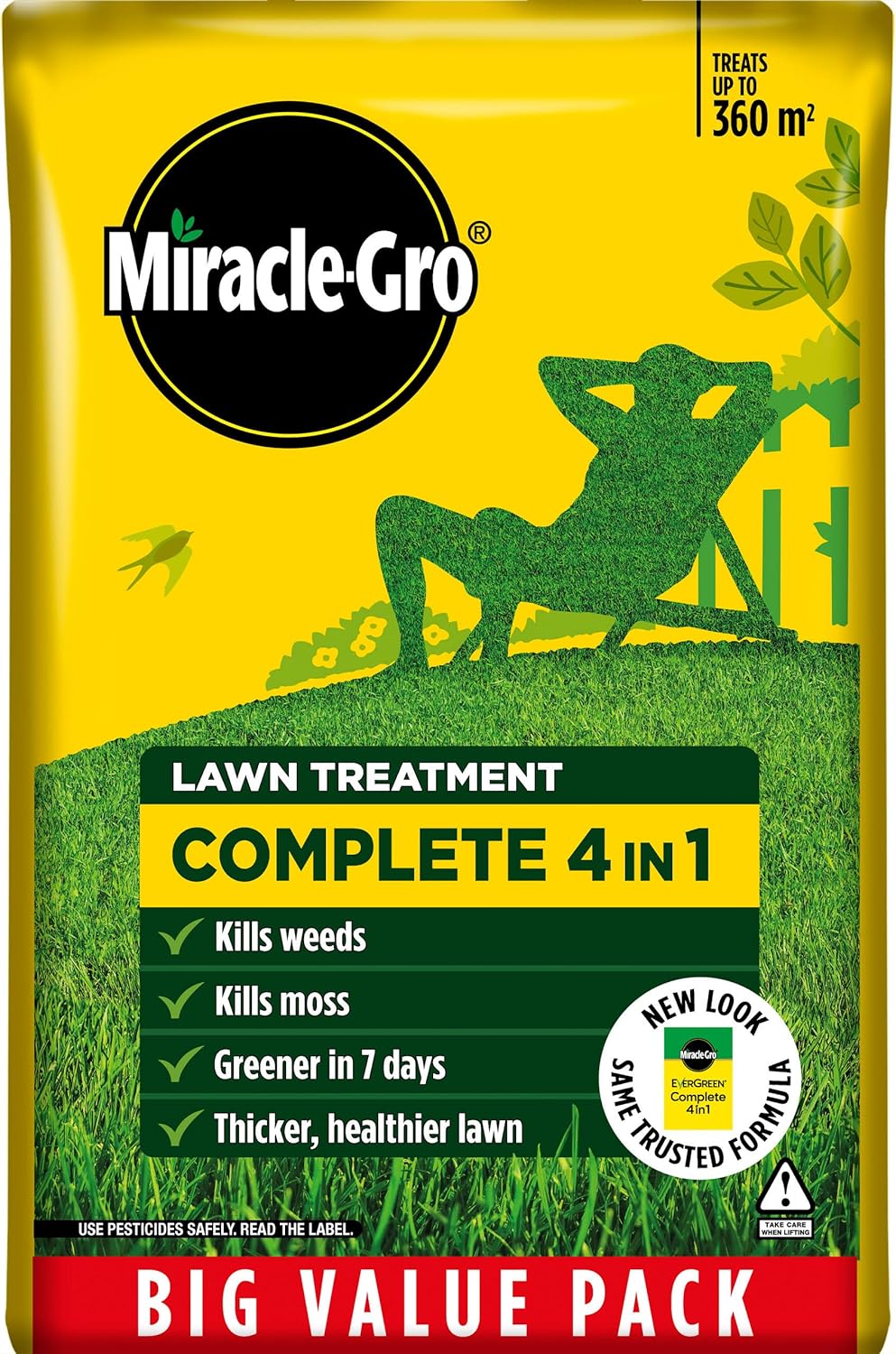
Best for: All-in-one treatment, visible results
| Spec | Detail |
|---|---|
| Function | Feeds, kills weeds, kills moss, improves water absorption |
| Coverage | Varies by pack size (e.g., 3.5kg covers 100 sq m) |
| Application | Granular, apply with spreader or by hand |
| Results | Visible in 7 days (greener lawn) |
✅ Pros
- Comprehensive 4-in-1 formula saves time and effort
- Quickly greens up the lawn and tackles common problems
- Easy to apply with clear instructions
- Effective against a wide range of weeds and moss
❌ Cons
- Can be more expensive than single-purpose feeds
- Requires careful application to avoid scorching
- Not suitable for newly seeded lawns (wait 6 months)
8. Weed and Pest Control (As Needed)
Spring is an ideal time to tackle weeds before they establish firmly. Hand-weeding is effective for individual weeds, while a selective weed killer can be used for widespread infestations. Keep an eye out for common pests like leatherjackets or chafer grubs; early intervention is key to preventing significant damage.
Actionable Tip: Always follow product instructions carefully when using chemical treatments, and consider organic alternatives where possible.
🏆 Editor's Pick
Miracle-Gro EverGreen Complete 4-in-1
This all-in-one solution offers exceptional value and convenience, tackling feeding, weeds, and moss in one easy application for a visibly healthier lawn.
Your Path to a Perfect Spring Lawn
By diligently following these steps, you'll not only repair any winter damage but also lay a strong foundation for a vibrant, healthy lawn that will be the envy of your neighbourhood throughout the warmer months. Remember, consistency is key, and observing your lawn's specific needs will always yield the best results. Happy gardening!
Frequently Asked Questions
When should I start my spring lawn care in the UK?
How often should I mow my lawn in spring?
What kind of fertiliser should I use for my UK lawn in spring?
How do I tackle moss in my lawn effectively?
Is aeration really necessary for a healthy spring lawn?
Can I apply weed killer and grass seed at the same time?
Tags
Comments
Join the conversation
Create a free account to leave comments, share photos, and connect with other gardeners.
Related Articles

Autumn Lawn Care
Autumn is a pivotal time for your lawn's health, laying the groundwork for a lush, disease-resistant turf next spring. This comprehensive guide covers all essential tasks for UK gardeners, from tailored feeding regimes to effective moss and weed control, ensuring your lawn thrives through the colder months.

Mastering Autumn Leaf Clearance for a Healthy UK Lawn
Autumn leaves, while beautiful, can pose a serious threat to your UK lawn's health. This comprehensive guide provides actionable advice on why and how to effectively remove, manage, and even repurpose fallen leaves to ensure your grass remains vibrant and disease-free through winter and into spring.

First Lawn Cut of the Year UK Tips
Master your first lawn cut of the year with our expert UK guide. Learn the best time to mow, ideal blade heights, and how to avoid common spring mistakes.
Winter Lawn Care UK: Your Essential Guide to a Resilient Lawn
Ensuring your lawn thrives through the UK's colder months requires specific preparation. This guide from Garden-Review provides essential, actionable advice to safeguard your lawn against winter stresses, from correct autumnal mowing to combating common issues like moss and fungal diseases, guaranteeing a vibrant return in spring.

Has Anyone Actually Mowed Their Lawn This Summer?
After three heatwaves, record temperatures and hosepipe bans across huge parts of the country, brown lawns are everywhere. Jim Fellows explains why your grass probably isn't dead, whether the rain now falling will actually be enough, and when it's safe to mow again.

July Gardening Jobs: Your Complete UK Garden Checklist
July is the month the garden peaks - and the month it can quietly fall apart if you look away. Our UK checklist covers watering through restrictions, deadheading, harvesting, what you can still sow, lawn care in a dry spell, hedge cutting and holiday-proofing.