
Can you paint your fence any colour you like? A nuanced guide to taste, law, and diplomacy
Can you paint your fence any colour in the UK? Discover the legalities, planning rules, and neighbourly etiquette of garden boundary DIY.

There is a particular moment in the British spring when the garden reasserts itself. Fences are braced, patios jet-washed, and tins of paint - often bearing aspirational titles like “Willow Green” or “Heritage Sage” - are cracked open. But before you reach for the Harris brush, a question of sovereignty arises: can you actually paint your fence any colour you like?
The short answer is: usually, yes. The longer answer is where things become more interesting - and, occasionally, litigious.
The legal reality: Your property, your palette
In England and Wales, the law is generally permissive regarding aesthetics. If you own the fence, you are entitled to maintain it as you see fit. There is no specific statute in the Town and Country Planning Act 1990 that dictates the pigment of your garden boundaries. Whether you opt for a discreet charcoal or a shade of "aggressively teal," the legal starting point is that your choice is your own.
However, "ownership" is often the first point of friction. The common belief that you own the fence on the left (or right) is frequently a myth.
The T-Mark Myth: While "T" marks on a title plan indicate responsibility for maintenance, they do not always exist.
Boundary Disputes: If the fence sits exactly on the boundary line (a party fence), it is shared. Painting your side is usually fine, but if the paint bleeds through the gaps or over the top onto the neighbour's side, you could technically be liable for criminal damage or trespass.
When Planning Permission overrides personal taste
While the colour itself isn't usually regulated, the context of your home is. There are three main scenarios where your choice of "Sunset Orange" might be met with a formal "Notice to Remedy":
Conservation Areas: Local authorities often use Article 4 Directions to strip away "permitted development" rights. In these areas, even a change of paint colour on a street-facing boundary may require planning consent to preserve the character of the neighbourhood.
Listed Buildings: If your fence is within the "curtilage" of a listed building, any alteration that affects its character requires Listed Building Consent.
Restrictive Covenants: Many modern UK housing estates come with "burdening covenants" in the deeds. These are private rules set by the original developer that might dictate you use a specific brand or shade of brown to maintain a uniform look across the estate.
The "Neighbour Factor": Diplomacy vs. Law
Legality aside, the more immediate concern is social. Fences are shared visual experiences. While you may have the legal right to paint your side a neon yellow, the Environmental Protection Act 1990 or "Anti-Social Behaviour" legislation is occasionally invoked in extreme cases of visual nuisance - though "bad taste" rarely meets the legal threshold for "harassment."
In practice, the British garden is a site of compromise. If a fence is shared, the most pragmatic approach is the "split-tone" finish: one side stained to your preference, the other left to the neighbour's. Just be wary of the "drip effect"—runny fence stain is the catalyst for many a High Court boundary dispute.
The rise of the "Statement Fence"
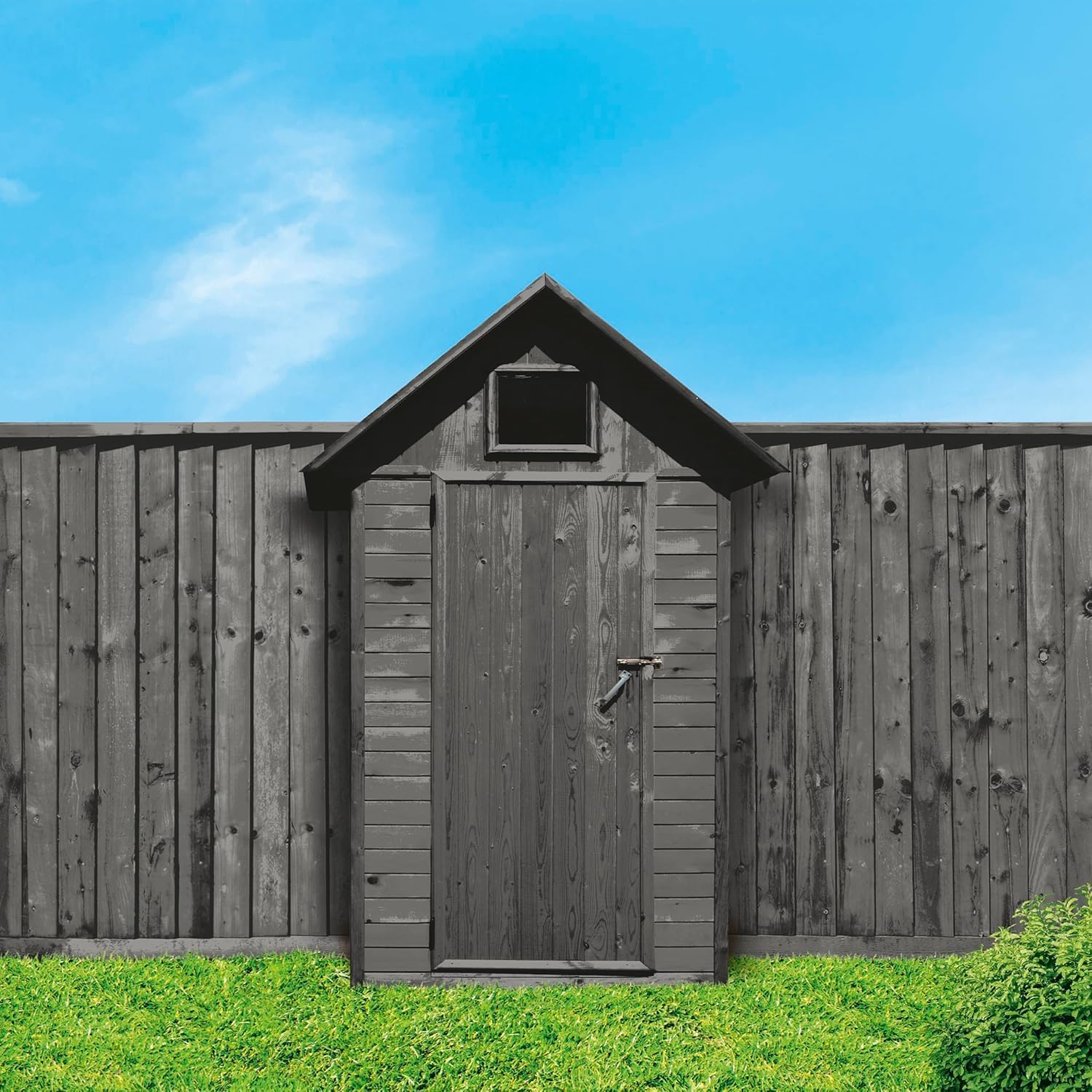
In recent years, UK garden design has pivoted away from traditional "Forestry Green" towards architectural palettes. Charcoal, navy, and even black fences have become ubiquitous, popularised by RHS Chelsea trends.
Before you paint
If you are planning a weekend of DIY, follow this checklist to stay on the right side of the law (and the person next door):
Check the Deeds: Confirm you actually own the fence. If it's shared, seek a "gentleman’s agreement" first.
Verify your Zone: Use the GOV.UK planning portal to see if you live in a Conservation Area or if an Article 4 Direction is in place.
Mind the Gaps: Use a brush rather than a sprayer if the fence has gaps, to avoid "over-spray" decorating your neighbour’s prize roses.
Height Matters: Remember that if you need to replace the fence to paint it, anything over 2 metres (or 1 metre by a road) requires planning permission regardless of the colour.
Ultimately, the law gives you latitude, but the unwritten rules of British neighbourliness suggest a little restraint - or at least a heads-up before the teal makes its debut.
Frequently Asked Questions: Painting your fence
Is it illegal to paint my side of a neighbour's fence?
Do I need planning permission to change my fence colour?
What does a "T" mark on my property deeds mean for painting?
Can my neighbour complain about my fence colour to the council?
Does painting a fence black or charcoal damage the wood?
Tags
Comments
Join the conversation
Create a free account to leave comments, share photos, and connect with other gardeners.
Related Articles

How High Can Your Garden Fence Be? – UK Rules & Practical Advice
Before building or replacing a fence in the UK, check legal height limits and planning permission requirements to avoid penalties.

Hyundai 56cc Petrol Earth Auger HYEA5600X / HYEAB5600X Review
Digging fence post holes by hand is hard, time-consuming work - but the Hyundai HYEA5600X/ HYEAB5600X Petrol Earth Augers are designed to make the job faster and easier. In this hands-on review, we look at both models across clay-heavy soil and root-filled borders to see how they perform in real garden conditions.