
Cottage garden design ideas: your practical guide
Explore inspiring cottage garden design ideas to transform your outdoor space. Create lush, romantic gardens with our practical guide today!
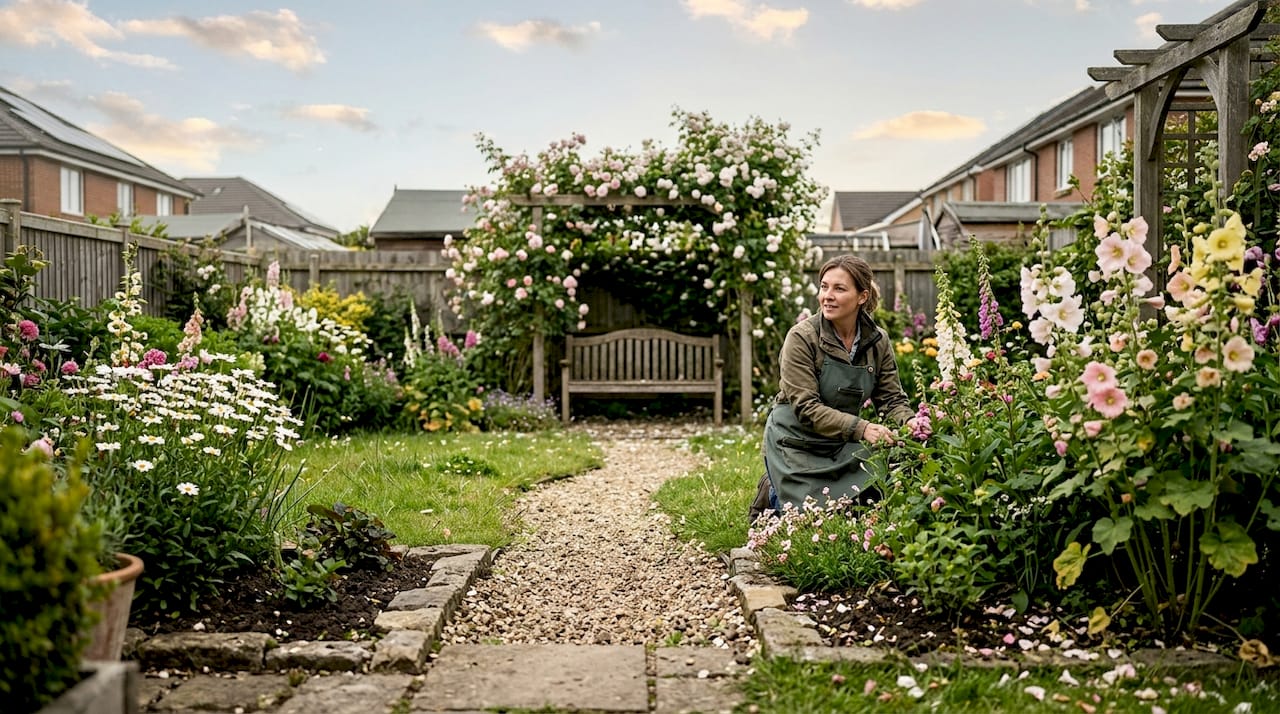
Cottage garden design is defined as an informal, layered planting style that combines dense borders, winding paths, and abundant flowering plants to create a lush, romantic outdoor space. The style draws on a long tradition rooted in the work of designers like Gertrude Jekyll, who championed naturalistic planting in the late 19th century, and continues to inspire gardeners through practitioners like Laura Janney. The core principles are abundance, fragrance, and natural layering. Plants are chosen to tumble, self-seed, and weave together rather than stand in rigid rows. Whether you have a generous plot or a compact town garden, the cottage garden approach rewards patience and creativity in equal measure.
1. What are the essential structural elements of a cottage garden layout?
Structure is the backbone of every successful cottage garden, even when the planting looks effortlessly wild. Classic cottage garden designs typically feature one or two central paths made of gravel, stepping stones, or brick, leading to a focal point, with deep planting borders 4 to 6 feet wide on each side. That width is not arbitrary. It gives you room to layer plants by height and allows the border to feel generous rather than thin and apologetic.
Focal points anchor the design and give the eye somewhere to rest. Common choices include:
- A garden seat or bench positioned at the path's end
- A rose-covered arch or timber pergola framing a view
- A birdbath or sundial set within planting
- A clipped topiary ball or urn as a contrast to loose planting
Tu Jardin Pro recommends curved or irregular paths over straight lines, because a gentle bend hides what lies beyond and creates a sense of discovery. Treating paths as integral planting edges, where thyme, hardy geraniums, and viola spill onto the surface, makes the garden feel continuous rather than divided into separate zones.
Pro Tip: Lay your path first before planting. Walking the route reveals exactly where the borders need to be wider or narrower, and prevents you from digging up established plants later.
For inspiration on materials and layouts, Garden-Review's guide to garden path ideas covers gravel, brick, and stepping stone options suited to cottage style landscaping.
2. How to layer plants by height for authentic cottage borders
The three-tier planting structure is the defining technique of cottage garden borders, and it is what separates a genuinely lush result from a flat, disappointing one. Cottage garden design uses a back tier, a middle tier, and a front tier to build depth, with each layer contributing colour, texture, and seasonal interest at a different height.
Here is how each tier works in practice:
- Back tier (tallest plants): Foxgloves, delphiniums, and hollyhocks form the structural spine. These plants need staking in exposed gardens, but their vertical drama is worth the effort. Aim for plants reaching 1.2 to 1.8 metres.
- Middle tier (mid-height perennials): Peonies, shrub roses, catmint, and phlox fill the main body of the border. This is where most of the colour and fragrance lives. Heights of 60 to 90 centimetres work well here.
- Front tier (low edging plants): Thyme, hardy geraniums, and viola soften the border edge and spill gently onto the path. These plants also suppress weeds by covering bare soil.
The key is to avoid planting each tier as a rigid staircase. A deliberate but wild technique allows some plants to drift between layers, so a foxglove might appear mid-border or a catmint clump might push towards the back. Repeating certain species through the border in odd-numbered groups of three or five creates cohesion without formality.
Pro Tip: Plant herbaceous perennials slightly closer together than the label recommends. The denser planting crowds out weeds and achieves the lush, full look of a mature cottage border far more quickly.
3. Which plants define the cottage garden style?
Classic cottage garden plants popular in the UK include hollyhocks, delphiniums, peonies, fragrant shrub roses, foxgloves, lavender, catmint, and hardy geraniums. These are the plants that give the style its character, and most of them thrive in typical British climates without excessive fuss.A reliable plant palette for UK cottage gardens includes:
- Climbing roses and clematis for vertical interest on arches and walls. For guidance on varieties, Garden-Review's article on growing clematis in the UK is a useful starting point.
- Lavender and catmint as structural edging plants that attract pollinators and tolerate dry spells. Repeating these plants throughout borders creates rhythm and supports garden health.
- Foxgloves, sweet Williams, and nigella as self-seeders that fill gaps naturally and return year after year with minimal effort.
- Bulbs such as daffodils and tulips for early spring interest before perennials come into growth, extending the season from March onwards.
- Sweet peas trained up wigwam supports or trellis for fragrance and cut flowers through summer.
Repeating old-fashioned flowering roses as a structural backbone, combined with colour-rich cottage perennials, is the approach that gives English country gardens their signature look. Old rose varieties like 'Gertrude Jekyll' (named after the designer herself) and 'Munstead Wood' offer fragrance and repeat flowering that modern hybrid teas cannot match.
Pro Tip: Incorporate old-fashioned flower varieties wherever possible. They tend to be more fragrant, more attractive to wildlife, and more forgiving in variable British weather than many modern cultivars.
4. How to create a cottage garden on a budget
A full cottage garden border does not require a large upfront spend. Starting with seeds costing as little as £1 to £3 per packet, combined with bulbs and small plug plants, is the most cost-effective route. The garden fills in over two to three seasons rather than overnight, but the result is more natural for it.
Practical ways to keep costs down include:
- Swap divisions with neighbours. Hardy geraniums, phlox, and catmint divide easily in spring or autumn. Local gardening groups and plant swap events are excellent sources of free or very cheap perennials.
- Use the anchor and fill method. Plant widely spaced structural perennials first, then fill gaps with self-seeding annuals like cosmos and nasturtiums. These cost pennies per packet and provide colour while the perennials establish.
- Source reclaimed materials. Old bricks, timber sleepers, and terracotta pots from salvage yards suit the rustic aesthetic of cottage style landscaping far better than new materials, and cost a fraction of the price.
- Invest once in soil quality. Clay soils benefit from grit and organic matter; sandy soils need heavy compost applications. Improving the soil before planting is the single investment that pays back most reliably over the life of the garden.
Pro Tip: Buy perennials in small 9cm pots rather than large 2-litre containers. They establish just as well within a season and typically cost three to four times less.
5. How to incorporate seating and features for outdoor enjoyment
A cottage garden that cannot be sat in and enjoyed is missing its purpose. Climbing roses, clematis, and other trained climbers on arches or pergolas are signature elements that provide height, fragrance, and seasonal interest, and placing a seat near these features creates an outdoor room that draws you outside on every fine day.
Consider these approaches when adding features to your garden:
- Position a bench in a sunny but sheltered spot, ideally with planting on three sides so it feels enclosed rather than exposed. A seat at the end of a path, framed by an arch, is the classic cottage garden arrangement.
- Use arches and pergolas to divide space. Even in a small garden, a single rose arch separates one area from another and adds vertical structure without taking up ground space.
- Add a birdbath or sundial as a focal point within a planting bed rather than on a hard surface. Surrounded by low perennials, these features look as though they have always been there.
- Create intimate areas in compact gardens by using taller planting to screen a small seating corner. Compact cottage gardens can be created successfully in spaces as small as 10 by 10 feet using vertical elements and dense planting. Containers of lavender, sweet peas, or geraniums supplement borders where ground space is limited.
For readers working with a smaller plot, Garden-Review's guide to small garden design ideas offers practical layouts that translate well to cottage style.
6. Low-maintenance approaches that keep the garden looking full
Low-maintenance cottage garden designs focus on choosing tough plants, avoiding perfect symmetry, and allowing natural growth patterns to reduce upkeep while maintaining abundant bloom. The goal is a garden that works with nature rather than against it, which means less deadheading, less staking, and less intervention overall.
Lavender and catmint are the workhorses of this approach. Both hold their structure through winter, attract bees and butterflies reliably, and tolerate the dry spells that catch many cottage garden plants out. Planting them in drifts along border edges means the garden always looks presentable even when other plants are between flushes.
Self-seeders like foxgloves, nigella, and sweet Williams fill gaps without any effort on your part, but they do need editing. Strategic editing of self-seeders prevents unwanted overcrowding, so pull out seedlings that appear in the wrong place and thin clusters to leave the strongest plants. This editing takes perhaps an hour in spring and keeps the garden from becoming a tangle.
Mulching borders in late autumn with garden compost suppresses weeds, feeds the soil, and protects plant crowns through frost. It is the single most time-saving task in the cottage garden calendar.
Key takeaways
A successful cottage garden is built on three-tier layered planting, irregular paths leading to a focal point, and dense borders that leave little bare soil visible.
| Point | Details |
|---|---|
| Structure before planting | Lay paths and identify focal points before buying a single plant. |
| Three-tier layering | Use tall, mid-height, and low plants to build depth and seasonal interest. |
| Budget with seeds and swaps | Seeds, divisions, and self-seeders fill borders affordably over two to three seasons. |
| Soil investment pays off | Amending clay or sandy soil once before planting supports long-term plant health. |
| Embrace self-seeding | Allow foxgloves, nigella, and sweet Williams to spread naturally, then edit in spring. |
Why I think cottage gardening rewards patience more than perfection
The advice I find most useful to share is this: stop trying to finish the garden. Most people plant a cottage border and feel disappointed after the first season because it looks sparse and unconnected. The perfectly imperfect approach recommended by designers like Laura Janney is not just a philosophy. It is a practical instruction to step back and let the garden do its work.
In my experience, the gardens that look most convincingly like they planted themselves are the ones where the gardener resisted the urge to tidy everything up. Leaving a foxglove seedling that appeared in the middle of the path, letting a rose scramble slightly beyond its arch, allowing catmint to flop forward onto the gravel. These are not failures of maintenance. They are the garden finding its own character.
The one area where I would push back against the 'just let it grow' advice is soil preparation. Skipping that step is the mistake that costs the most time later. Plants in poor soil limp along for years rather than establishing quickly and spreading as they should. Spend the money and effort on compost and grit before you plant anything, and the rest of the garden's development becomes much easier to enjoy rather than manage.
Cottage gardening is genuinely one of the most forgiving styles to work with. The informality means that mistakes are absorbed rather than exposed. A plant that dies leaves a gap that a self-seeder fills within a season. A colour combination that clashes can be moved in autumn. The garden is always in progress, and that is precisely what makes it interesting to tend year after year.
— Jim Fellows
Start planning your cottage garden with Garden-Review
Garden-Review brings together practical guides, honest product reviews, and seasonal advice written specifically for UK gardeners. Whether you are choosing the right path materials for a cottage layout, selecting climbing roses for a pergola, or looking for the right tools to keep your garden tidy, the site covers it in plain, useful detail. For garden maintenance, the best lawn mowers UK guide compares models by garden size and budget so you can find the right fit without wading through unnecessary specifications. Visit Garden-Review to explore the full range of guides and get your cottage garden project moving in the right direction.
Recommended
Frequently Asked Questions
What is cottage garden style?
How wide should cottage garden borders be?
Can you create a cottage garden in a small space?
What are the easiest cottage garden plants for beginners?
How long does it take for a cottage garden to look established?
Tags
Comments
Join the conversation
Create a free account to leave comments, share photos, and connect with other gardeners.
Related Articles
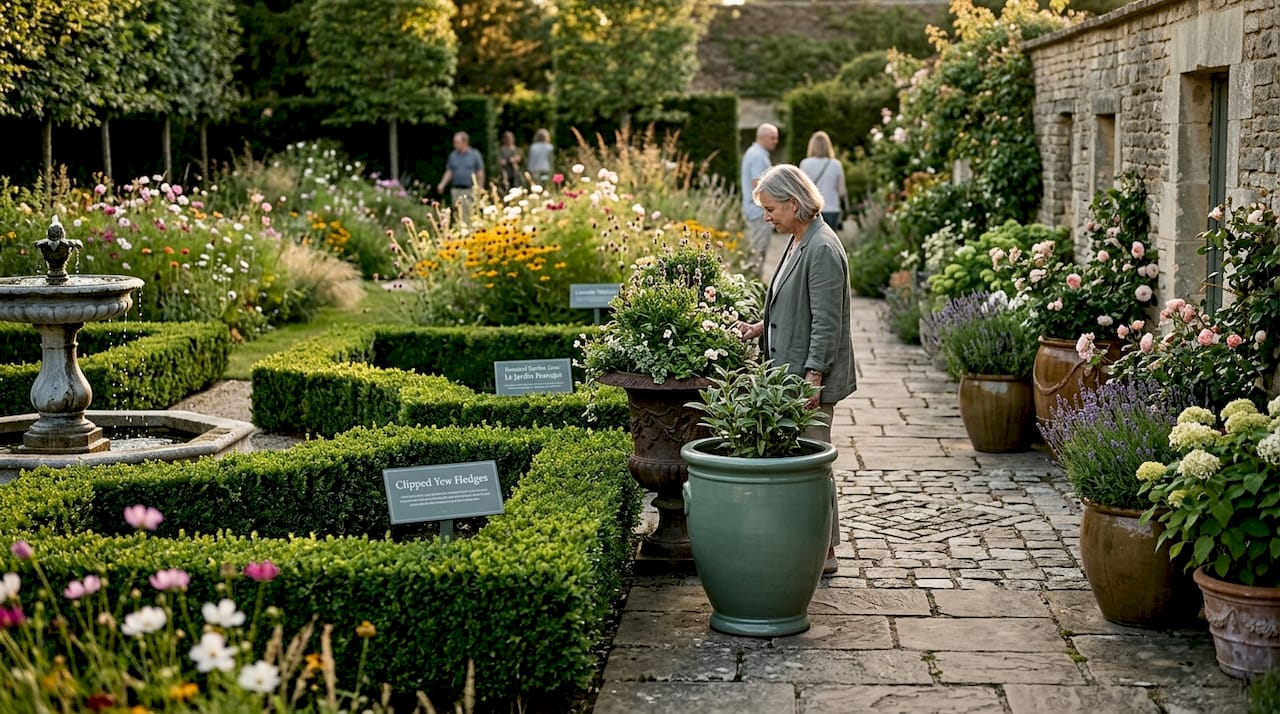
Types of garden design styles: your 2026 guide
Explore the diverse types of garden design styles in 2026. Discover how to choose the perfect aesthetic for your outdoor space!

What is a front garden redesign? UK guide 2026
What is a kitchen garden layout: a UK guide
Discover what a kitchen garden layout is and how to design one for easy access to fresh herbs and veggies right at home. Start growing today!
Choosing and Planting Ornamental Trees for Small Gardens
Transform your outdoor space with the best ornamental trees for small gardens. Expert advice on UK varieties, planting techniques, and seasonal care.
Small garden focal point ideas: 10 creative picks
A garden focal point is a design element that immediately draws the eye, organises space, and gives a small garden its personality.
Why formal garden design works for UK homeowners
Formal garden design is a landscaping approach defined by symmetry, structure, and intentional zoning that creates both visual harmony and practical outdoor living areas.