
How to design a productive kitchen garden
Create a productive kitchen garden with expert advice on beds, spacing and crop planning.
TL;DR:
- Proximity within 10 to 30 feet of the kitchen enhances garden productivity and encourages frequent visits.
- A well-designed kitchen garden should include raised beds, proper layout, and succession planting to maximise yield and ease maintenance.
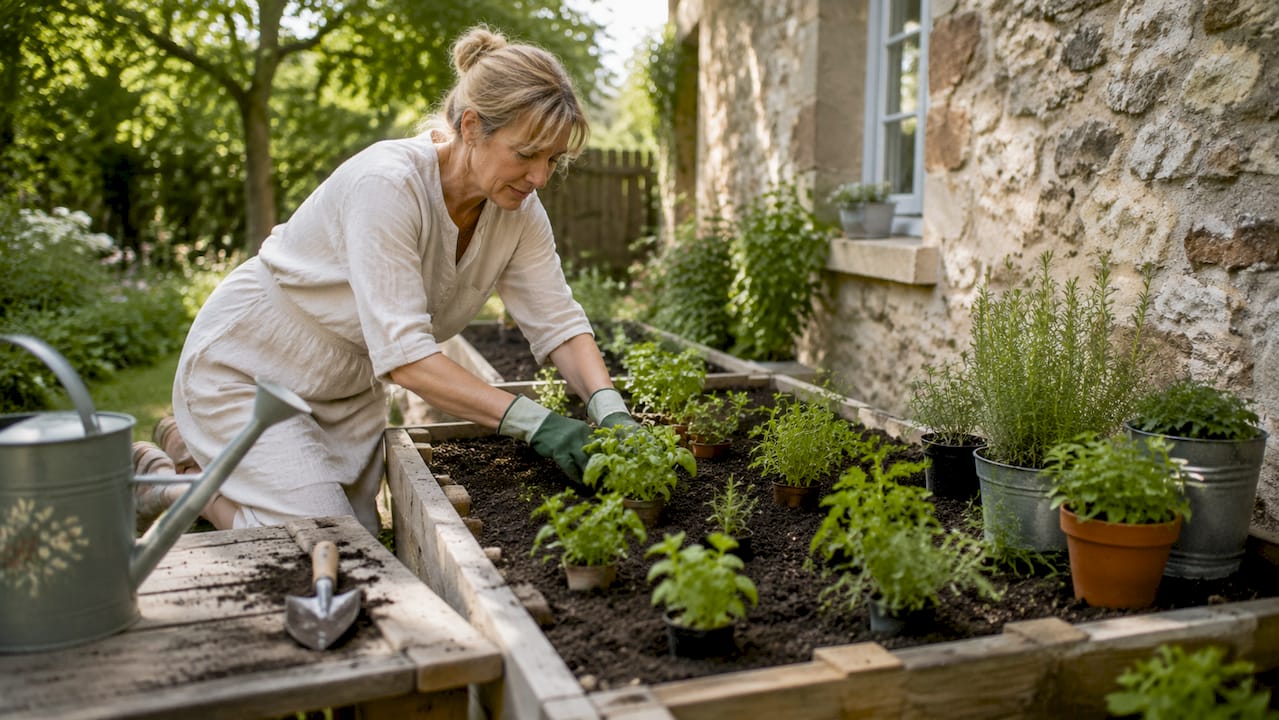
A productive kitchen garden is defined as a dedicated growing space, positioned close to your home, that supplies fresh vegetables, herbs, and fruit through deliberate layout, sunlight management, and continuous planting. The term “kitchen garden” is the recognised British horticultural standard, sometimes called a potager in the French tradition, though the principles are identical. Getting the design right from the start separates a thriving plot from one that gets abandoned by July. This guide covers proximity, sunlight, layout, succession planting, and budget so you can create an efficient vegetable garden that works for your household from day one.
How does proximity to the kitchen affect productivity?
Proximity is the single most important factor in kitchen garden success. A garden within 10–30 feet of your kitchen door receives daily visits; beyond 60 feet, visit frequency drops sharply. That drop in visits means missed harvests, unchecked pests, and beds that bolt before you notice.
This principle comes directly from permaculture Zone 1 design. Zone 1 is the area immediately surrounding your home, reserved for plants that need the most frequent attention. Herbs, salad leaves, and cut-and-come-again crops belong here. The proximity principle confirms that small, intensively managed patches outperform sprawling plots every time.
In practical terms, this means siting your kitchen garden beside the back door or beneath a kitchen window. If your sunniest spot is further away, consider splitting the garden: keep herbs and salad closest to the house, and place larger crops like courgettes or climbing beans further out. Accessibility sometimes outweighs perfect sun exposure for the plants you harvest most often.
A manageable size for most UK households sits between 200 and 500 square feet. A 6x4 metre plot is the recommended size to feed a family of four through the summer months. Starting compact keeps maintenance realistic and prevents the overwhelm that causes most new kitchen gardeners to give up.
Pro Tip: Place a small pot of chives or parsley directly beside your back door. You will use them far more often than anything planted three metres away, and it builds the daily habit of checking your garden.
- Site the garden within 10–30 feet of your kitchen door for consistent maintenance.
- Keep the total footprint between 200 and 500 square feet to stay on top of weeding and watering.
- Position the most frequently harvested crops, such as herbs and salad leaves, closest to the house.
- Reserve the outer edges of your plot for larger, lower-maintenance crops like squash or potatoes.
What are the sunlight and space requirements for a kitchen garden?
Most vegetables need 6–8 hours of direct sunlight daily to produce well. Dropping below that threshold, to 4–5 hours, reduces yield by 20–30%. In the UK, where overcast days are common, choosing the sunniest available spot is non-negotiable.
Raised beds are the standard structure for a well-planned kitchen garden layout. Keep each bed no wider than 1.2 metres so you can reach the centre from either side without stepping in. Paths between beds should be 60 centimetres to 1 metre wide, wide enough for a wheelbarrow and comfortable kneeling.
Spacing within beds can be tighter than seed packet guidance suggests. Reducing plant spacing by 20–30% in fertile, well-prepared raised beds increases planting density without reducing yield. The canopy of leaves also suppresses weeds, cutting down on maintenance time considerably.
Vertical growing structures extend your productive area without consuming more ground space. Trellises and espaliered fruit trees maximise yield and maintain sunlight distribution across the rest of the bed. Position these structures on the northern edge of your plot so they do not cast shade over lower-growing crops.
Pro Tip: Before committing to a bed position, observe the site at 9am, 12pm, and 4pm on a clear day. Note which areas are in shade and for how long. One afternoon of observation saves a season of poor harvests.
| Element | Recommended Specification | Notes |
|---|---|---|
| Sunlight hours | 6–8 hours direct sun daily | Below 5 hours reduces yield by 20–30% |
| Raised bed width | Maximum 1.2 metres | Allows reaching centre without stepping in |
| Path width | 60 cm to 1 metre | Allows wheelbarrow access and comfortable kneeling |
| Plant spacing | 20–30% tighter than packet guidance | Only in fertile, well-prepared soil |
| Vertical structures | Trellises, espaliers | Position on northern edge to avoid shading |
Which layout and planting strategies maximise yield?
A well-organised layout groups plants by their needs and growth habits. Tall plants such as climbing beans, sweet corn, and staked tomatoes go at the northern end of the plot. This prevents them from casting shade over shorter crops as the season progresses. The Almanac’s kitchen garden plan describes the kitchen garden as a dynamic system that requires this kind of strategic positioning to function well across the whole growing season.
No-dig gardening is the most effective soil preparation method for raised beds. You layer cardboard directly on the ground, then add 15–20 centimetres of good-quality compost on top. The cardboard suppresses weeds and breaks down over winter, and the compost provides the fertility needed for close planting. Charles Dowding popularised this method in the UK, and it consistently produces high-yield beds with minimal effort.
Succession planting is the practice that separates a productive garden from one that peaks in July and then fades. Staggering sowings every 2–3 weeks extends the harvest period significantly and keeps beds productive throughout the season. Radishes, lettuce, and spinach are ideal succession crops because they mature quickly and free up space for a follow-on sowing.
Companion planting adds another layer of productivity. Growing basil alongside tomatoes deters aphids. Planting marigolds at bed edges repels whitefly. Nasturtiums act as a sacrificial crop, drawing blackfly away from beans. These combinations reduce the need for intervention and keep the garden working as a system rather than a collection of individual plants.
The potager style, a formal French kitchen garden design, arranges beds in geometric patterns with low box hedging or decorative edging. It is both functional and attractive, making it a popular choice for UK homeowners who want their kitchen garden to contribute to the overall aesthetic of the garden. You can find detailed kitchen garden layout ideas on Garden-review to help you choose the right style for your space.
Here is a step-by-step planting plan for a typical UK kitchen garden:
- Mark out your beds. Use string lines and pegs to define rectangular beds no wider than 1.2 metres. Leave 60 centimetre paths between each bed.
- Prepare the soil. Lay cardboard over the bed area and cover with 15–20 centimetres of compost. Do not dig it in.
- Position tall crops first. Place climbing beans, tomatoes, or sweet corn at the northern end of the plot on trellises or canes.
- Fill mid-height zones. Courgettes, chard, and brassicas go in the middle beds where they receive full sun.
- Sow quick crops at the edges. Radishes, spring onions, and cut-and-come-again lettuce fill the southern edges and gaps between slower-growing plants.
- Plant herbs nearest the kitchen. Basil, parsley, chives, and mint go in the bed or container closest to the back door. For guidance on sowing herbs indoors before the season starts, Garden-review has a dedicated guide.
- Set a succession schedule. Every two to three weeks, sow a fresh batch of salad leaves or radishes into any cleared space. Mark the dates on a calendar.
What does it cost to set up a productive kitchen garden?
A high-efficiency 300 square foot kitchen garden costs between £500 and £1,170 to set up and yields 300–1,200 lbs of produce annually. That yield range reflects the difference between a basic setup and one with drip irrigation, quality compost, and well-chosen crops. In UK terms, the equivalent investment sits in the £400–£900 range depending on materials and bed construction.
The table below shows how budget level affects the setup and expected productivity:
| Budget Level | Approximate Cost (UK) | Key Features | Expected Annual Yield |
|---|---|---|---|
| Basic | £150–£300 | Timber raised beds, hand watering, homemade compost | Low to moderate |
| Mid-range | £300–£600 | Treated raised beds, drip irrigation, bought compost | Moderate to high |
| High-efficiency | £600–£900+ | Hardwood or metal beds, timed drip irrigation, mulch | High |
Drip irrigation on a timer is the single most effective equipment investment for a kitchen garden. It delivers water directly to the root zone, reduces evaporation, and removes the risk of forgetting to water during dry spells. Brands such as Hozelock offer affordable drip systems suited to UK raised bed setups.
Essential tools for a kitchen garden include a hand trowel, a hori-hori knife for planting and weeding, a good-quality watering can for seedlings, and a compost bin to recycle kitchen and garden waste. A cold frame or cloche extends the growing season at both ends, allowing earlier sowings in spring and later harvests into autumn. For growing plants in small urban spaces, a cold frame is particularly useful where ground space is limited.
What are the most common kitchen garden mistakes to avoid?
Soil compaction is the most damaging and most avoidable mistake in kitchen garden design. Stepping inside a raised bed destroys the soil structure that roots depend on. Beds no wider than 1.2 metres allow you to reach the centre from either side without ever putting a foot inside. This keeps the soil loose, well-drained, and full of the air pockets that roots need.
Infrequent harvesting causes more problems than most gardeners expect. Courgettes left on the plant for a few extra days grow into marrows and signal the plant to stop producing. Lettuce that is not cut bolts and turns bitter. Checking the garden daily, which proximity makes easy, prevents both problems and keeps crops producing for longer.
Neglecting crop rotation leads to a build-up of soil-borne diseases and pests. Moving brassicas, legumes, and root vegetables to different beds each year breaks pest cycles and maintains soil health. A simple three-bed rotation works well for most UK kitchen gardens.
Pro Tip: Keep a garden notebook or use a free app like Groww to record what you planted, where, and when. After one full season, you will have a personalised planting calendar that is far more useful than any generic guide.
Common mistakes to avoid:
- Overplanting in year one. Start with two or three beds and expand once you understand the maintenance demands.
- Ignoring drainage. Waterlogged soil kills roots faster than drought. Raise beds by at least 20 centimetres above ground level.
- Planting tall crops on the south side. They will shade everything behind them. Always position tall plants at the northern edge.
- Skipping succession planting. A single sowing of lettuce gives you a glut for two weeks and nothing for the rest of the season.
- Watering overhead in hot weather. Wet foliage in sun causes scorch and encourages fungal disease. Water at the base, early in the morning.
Key takeaways
A productive kitchen garden succeeds when proximity, sunlight, and succession planting work together as a system rather than as separate considerations.
| Point | Details |
|---|---|
| Proximity drives consistency | Siting your garden within 10–30 feet of the kitchen door is the top factor in long-term productivity. |
| Sunlight is non-negotiable | Most crops need 6–8 hours of direct sun; less than 5 hours reduces yield by 20–30%. |
| Raised bed width matters | Keep beds to 1.2 metres wide to prevent soil compaction and protect root health. |
| Succession planting sustains yield | Stagger sowings every 2–3 weeks to maintain continuous harvests throughout the season. |
| Start small and expand | A 200–500 square foot plot is manageable and productive for most UK households. |
What I have learned designing kitchen gardens
by Jim
The advice I give most often is also the advice most people ignore: start closer to the house than feels necessary. Every gardener I have spoken to who placed their kitchen garden at the far end of the plot has, at some point, admitted they stopped visiting it regularly. The distance feels trivial in spring when enthusiasm is high. By August, when the garden needs daily attention, those extra metres become a genuine barrier.
The other thing I have come to believe strongly is that soil health matters more than any other technical decision. You can choose the wrong variety, space plants imperfectly, or miss a week of watering and still get a reasonable harvest. But if your soil is compacted or depleted, nothing else compensates for it. The no-dig method, combined with generous compost, is the closest thing to a guaranteed result in kitchen gardening.
On aesthetics: do not treat beauty and productivity as competing priorities. A well-designed potager with geometric beds, neat paths, and climbing plants on timber frames is genuinely attractive. It adds to the garden rather than looking like an allotment dropped into a domestic space. The design choices that make a kitchen garden productive, raised beds, clear paths, vertical structures, also make it look considered and intentional.
My honest advice is to plan your first season on paper before you buy a single seed. Sketch the beds, mark the sun path, note the distance from the door. One hour of planning prevents three months of frustration.
— Jim
Plan your kitchen garden with Garden-review
Garden-review is a trusted resource for UK gardeners at every level, from first-time growers to experienced enthusiasts refining their technique.
Whether you are working with a compact urban plot or a larger suburban garden, Garden-review’s gardening guides and reviews cover everything from bed construction and soil preparation to seasonal planting calendars and tool recommendations. The site’s practical, UK-specific advice means you are never reading guidance written for a different climate or growing season. If you want to go deeper on layout principles, the small garden design guide on Garden-review is a strong next step. You will also find detailed product comparisons to help you choose the right tools and materials for your budget.
Recommended Reading
Frequently Asked Questions
Tags
Comments
Join the conversation
Create a free account to leave comments, share photos, and connect with other gardeners.