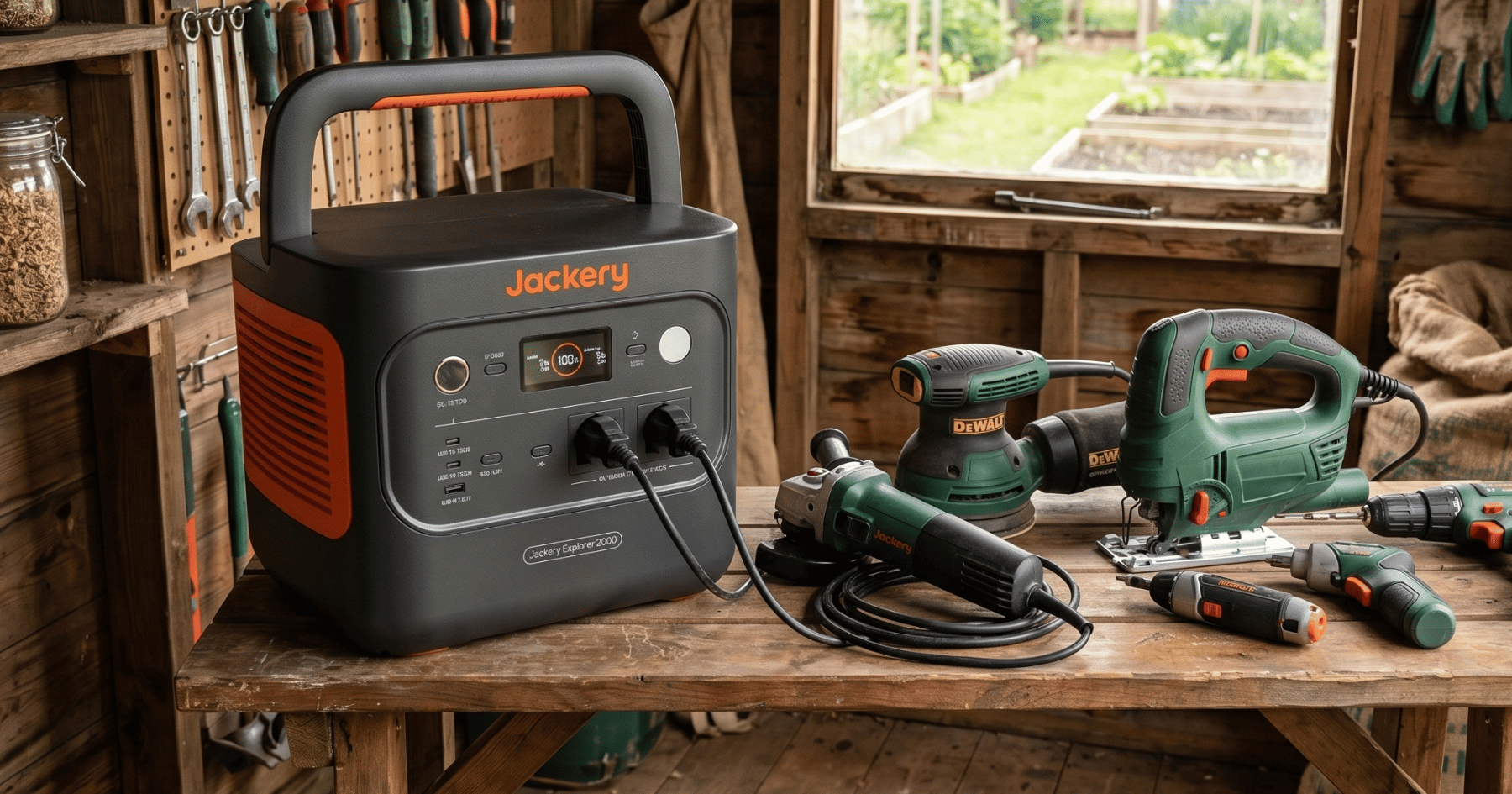
How to power your garden shed without an electrician
How much does it cost to power a garden shed? Compare mains electricity installation with solar power stations and how to power your garden without an electrician.
Key takeaways
- A permanent mains supply means unlimited power - kettles, electric heaters, heavy power tools, the lot.
- A solar power station is a large rechargeable battery unit combined with a solar panel.
- The Jackery SolarSaga 100W solar panel is the panel included in the Solar Generator 500 v2 bundle.
- There is no single right answer — it depends on what you use the shed for and what you need to power.
- One of the Solar Generator 500 v2's genuine advantages over mains installation is how simple the setup is.
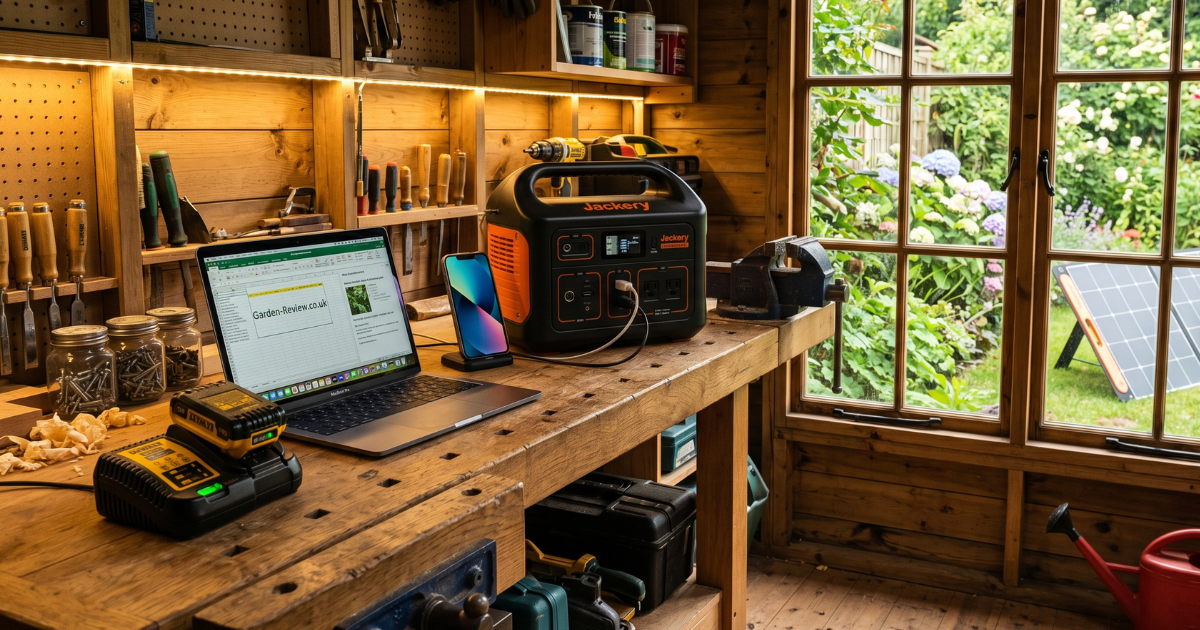
Jim Fellows — Garden-Review, Outdoor Power Equipment Specialist
Mains installation costs verified against UK trade sources · Solar output figures based on UK Met Office regional averages · Updated June 2026
Quick answer
Running mains electricity to a garden shed costs £500–£1,500 in the UK, requires a registered electrician under Part P of the Building Regulations, and means trenching armoured cable across your garden — permanently. A solar power station such as the Jackery Solar Generator 500 v2 costs £649, needs no electrician, no planning permission, no trenching, and is ready to use in under a minute. For sheds used for lighting, charging, and light power use, it's often the smarter choice.
Most garden sheds in the UK don't have mains electricity. Most garden shed owners wish they did. The solution most people assume they need - calling an electrician to dig a cable from the house — is more expensive, more disruptive, and more permanent than many people realise. But the alternative has also changed considerably in recent years.
This guide covers every realistic option for powering a UK garden shed in 2026: what mains installation actually involves and costs, what a solar power station can and can't do, and how to decide which approach makes sense for your situation.
Option 1: running mains electricity to your shed
This is what most people think of first. A permanent mains supply means unlimited power - kettles, electric heaters, heavy power tools, the lot. But there are several things worth knowing before you start calling electricians.
The legal requirement
All permanent outdoor electrical work in the UK falls under Part P of the Building Regulations. This means it must be carried out by a registered electrician - someone certified with NICEIC, ELECSA, or NAPIT. You cannot legally do this work yourself. The electrician must notify the work to the Local Authority Building Control, and you should receive a certificate on completion.
Important: don't DIY outdoor mains wiring
Running an extension lead through a window or under the back door is a common workaround, but it's a fire and shock risk and is not a substitute for a proper installation. If you're planning to sell your home, an unregistered outdoor electrical installation can also cause issues with your conveyancing solicitor.
What the installation involves
A typical garden shed electrical installation involves: digging a trench from the house to the shed (typically 450mm deep for SWA armoured cable under a garden, or 600mm under a drive), laying armoured cable, installing a small consumer unit inside the shed, fitting sockets and light fittings, and connecting the new circuit back into the main fuse box in the house. The electrician must test and certify the work on completion.
If you're willing to do the trench digging yourself, you can reduce the labour cost — but the electrical connections at both ends must still be done by the registered electrician. Some homeowners also find that their main consumer unit needs upgrading before a new outdoor circuit can be added, which adds further cost.
What does it cost?
| Scenario | Typical UK cost | Notes |
| Basic setup, shed <10m from house, you dig the trench | £350–£600 | 1–2 sockets, lighting, short cable run |
| Basic setup, electrician digs trench, 10–20m run | £600–£900 | Most common domestic scenario |
| Mid-range, multiple sockets & circuits, 20–30m run | £1,000–£1,500 | Longer cable, more outlets, RCD protection |
| Full workshop setup, consumer unit upgrade needed | £1,500–£3,000+ | Older homes with dated fuse boards |
| Jackery Solar Generator 500 v2 (complete system) | £649 | No electrician, no trench, ready in 60 seconds |
Option 2: a solar power station
A solar power station is a large rechargeable battery unit combined with a solar panel. You place the panel outside to harvest sunlight, it charges the battery, and the battery powers your shed — no mains connection, no cable, no electrician, no planning permission required.
The technology has improved dramatically in the last few years. Modern units use LiFePO4 (Lithium Iron Phosphate) batteries that last for thousands of charge cycles, charge from flat in under two hours from a wall socket, and are genuinely portable — meaning you can take the same unit camping, to the allotment, or use it as home backup during a power cut.
Featured product
Jackery Solar Generator 500 v2
Explorer 500 v2 power station + SolarSaga 100W solar panel — everything you need in one bundle
512Wh
Capacity
500W
AC Output
100W
Solar Panel
6,000
Cycle Life
£649
UK Bundle Price
How does it work in a garden shed?
The SolarSaga 100W solar panel leans against the outside of the shed, or lays flat on the roof if it's south-facing. A cable runs through a small gap (or a purpose-drilled hole) into the shed and connects to the Explorer 500 v2 power station. The panel charges the battery throughout the day. You draw power from the battery as you need it.
On a clear UK summer day, the SolarSaga 100W generates approximately 400–500Wh — roughly equivalent to a full charge of the Explorer 500 v2's 512Wh battery. On a typical overcast British day, expect 150–250Wh — still enough to top up significantly between uses. In winter months, solar input drops further, but the unit can also be charged from a mains socket indoors overnight in 1.3 hours.
No planning permission needed
Installing a solar power station in a garden shed does not require planning permission or Building Regulations approval in England, Wales, or Scotland. There are no notifications to make, no certificates to obtain, and no inspections required. You can be up and running the day the product arrives.
What can it realistically power?
| Device | Wattage | Runtime per charge | Verdict |
| LED shed lighting (×4 strips) | 6W | ~85 hours | No issue whatsoever |
| Greenhouse / shed fan | 30W | ~17 hours | Runs overnight easily |
| Laptop + phone charging | 65W | ~8 hours | Full day's work |
| 18V cordless tool battery charger | 50W average | ~10 charges | Covers a full garden session |
| Heated propagator (100W) | 100W | ~5 hours | Ideal for seedling season |
| UK kettle (2,000–3,000W) | 2,000–3,000W | Not compatible | Above 500W limit — use a travel kettle (≤500W) |
| Angle grinder / circular saw | 600–1,200W | Not suitable | Heavy power tools need mains or Explorer 2000 v2 |
Mains vs solar power station: side-by-side comparison
| Mains installation | Solar Generator 500 v2 | |
| Cost | £500–£1,500+ | £649 |
| Electrician required? | Yes — Part P legally required | No |
| Planning permission | LABC notification required | None required |
| Installation time | Days to weeks (booking, digging, cert) | Under 60 seconds |
| Power output | Unlimited (mains supply) | 500W continuous (most shed uses) |
| Noise & emissions | Silent (mains) | Completely silent, zero emissions |
| Portable? | No — fixed to the shed | Yes — camping, allotment, backup |
| Works if you move shed? | No — cable stays | Yes — just move it with you |
| Running cost | Adds to electricity bill | Free (solar) or low-cost (wall top-up) |
| Warranty | Electrical Condition Report recommended every 5 years | 5-year warranty included |
The SolarSaga 100W panel: what to know for UK sheds
The Jackery SolarSaga 100W solar panel is the panel included in the Solar Generator 500 v2 bundle. It's worth understanding what it delivers in real UK conditions before you buy.
The panel is rated at 100W peak output — meaning it will produce 100W in ideal conditions (direct sun, panel angled optimally, panel temperature cool). In real UK use, the practical average is lower. Here's what to realistically expect by season:
Summer
400–500Wh
per clear day · almost a full charge
Spring / Autumn
200–350Wh
per fair day · good top-up
Overcast UK day
80–180Wh
typical UK cloud cover
Winter
40–100Wh
supplement with mains charging
The SolarSaga 100W has an IP68 waterproof rating, meaning it can be left outside in UK rain without issue. It folds flat for storage and has two built-in kickstands so it can be propped at an angle without any mounting hardware. For shed roof mounting, you'll need to purchase a bracket kit separately — the panel itself is not designed for permanent fixed installation.
Jim's positioning tip
South-facing is optimal, but south-west works almost as well for afternoon generation. Avoid north-facing aspects entirely. Propping the panel against the shed wall at a 30–45° angle is more effective than laying it flat, even on an overcast day. Keep it clear of tree shade — even partial shading significantly reduces output on monocrystalline panels like the SolarSaga.
Which option is right for your shed?
There is no single right answer — it depends on what you use the shed for and what you need to power. Here's a straightforward guide:
Choose solar power station if...
- ✓ You need lighting, fan, laptop, phone charging, or tool battery charging
- ✓ Your shed is more than 15–20 metres from the house
- ✓ You don't want the cost or disruption of trenching
- ✓ You'd also use it camping, on the allotment, or as home backup
- ✓ You rent your property and can't make structural changes
Choose mains installation if...
- → You regularly use a kettle, large electric heater, or heavy power tools in the shed
- → The shed is less than 10 metres from the house and the cost is relatively low
- → You're converting the shed into a permanent home office or workshop
- → You own the property and are happy with a permanent installation
How to set up a solar power station in your shed: step by step
One of the Solar Generator 500 v2's genuine advantages over mains installation is how simple the setup is. Here's the full process:
Position the solar panel
Place the SolarSaga 100W on the south or south-west side of the shed, propped at 30–45° using the built-in kickstands. If you want to leave it outside permanently, a simple cable tie or bungee cord to the shed wall stops it blowing over in wind.
Route the cable into the shed
The included DC cable is approximately 3 metres long. It can pass under a door gap, through a small drilled hole (seal with a rubber grommet and silicone), or via a window. You don't need any professional to do this — it's a low-voltage DC cable, not mains wiring.
Connect panel to power station
Plug the DC cable from the SolarSaga into the solar input port on the Explorer 500 v2. The display will immediately show incoming solar wattage so you can see it working. The connection is a simple push-and-click DC connector — no tools needed.
Charge fully before first use
The unit ships partially charged. For the first use, charge it fully from the mains (1.3 hours) or leave it on solar for a full day. From that point on, the solar panel will keep it topped up during use.
Plug in and use normally
Use the AC outlets exactly as you would a mains socket. Switch the output on using the AC button on the front of the unit, plug in your devices, and the display shows live wattage draw and remaining runtime. That's the entire setup.
Recommended products
Jackery Solar Generator 500 v2 — complete bundle
Includes the Explorer 500 v2 power station and SolarSaga 100W solar panel. Everything you need to power a garden shed off-grid, delivered as one package with a 5-year warranty and 30-day money-back guarantee.
Already own a Jackery power station? The SolarSaga 100W is compatible with all Explorer v2 and Plus series units and can be bought separately.
Affiliate disclosure: This article contains affiliate links to Jackery UK. Garden-Review may earn a commission on purchases made through these links at no additional cost to you. Mains installation cost figures are sourced from UK trade comparison sites and represent typical 2026 market rates — obtain your own quotes from NICEIC-registered electricians for accurate pricing. Jim's editorial opinions are independent.
Jim Fellows is a garden machinery and outdoor power equipment specialist at Garden-Review.co.uk with over 15 years of hands-on experience testing products across residential and professional garden settings.
Frequently Asked Questions
Can I legally run power to my shed myself in the UK?
Do I need planning permission to put solar panels on my shed?
Will a solar power station work in winter or on cloudy days?
Is it worth paying for mains electricity to a shed if I'm renting?
What if I need more power than 500W?
Tags
Comments
Join the conversation
Create a free account to leave comments, share photos, and connect with other gardeners.
Related Articles

Best Jackery portable power stations for UK camping 2025: tested and ranked
Best Jackery camping power stations 2026: compare 240 v2, 500 v2, 1000 v2 and 2000 v2 for UK camping trips.
Best Jackery deals and buying guide: which model is right for you?
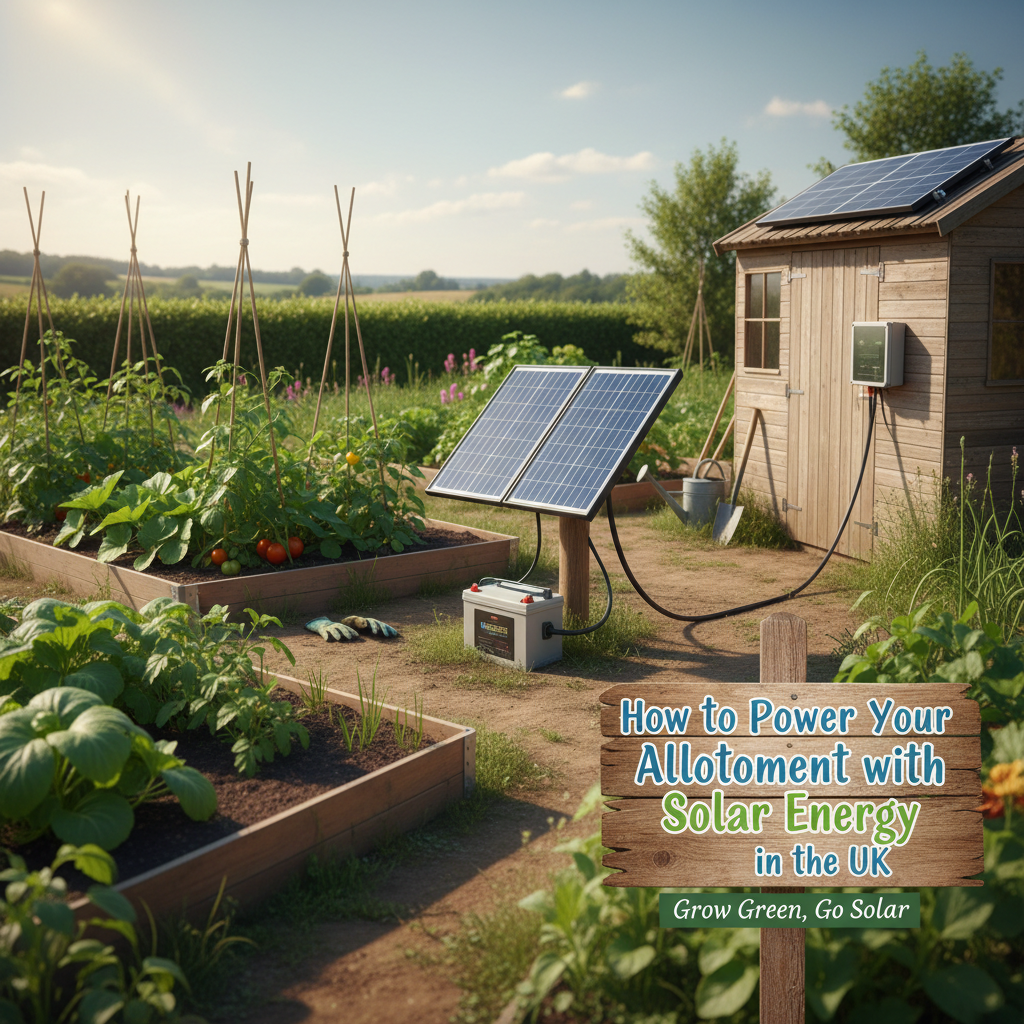
How to power your allotment with solar energy in the UK
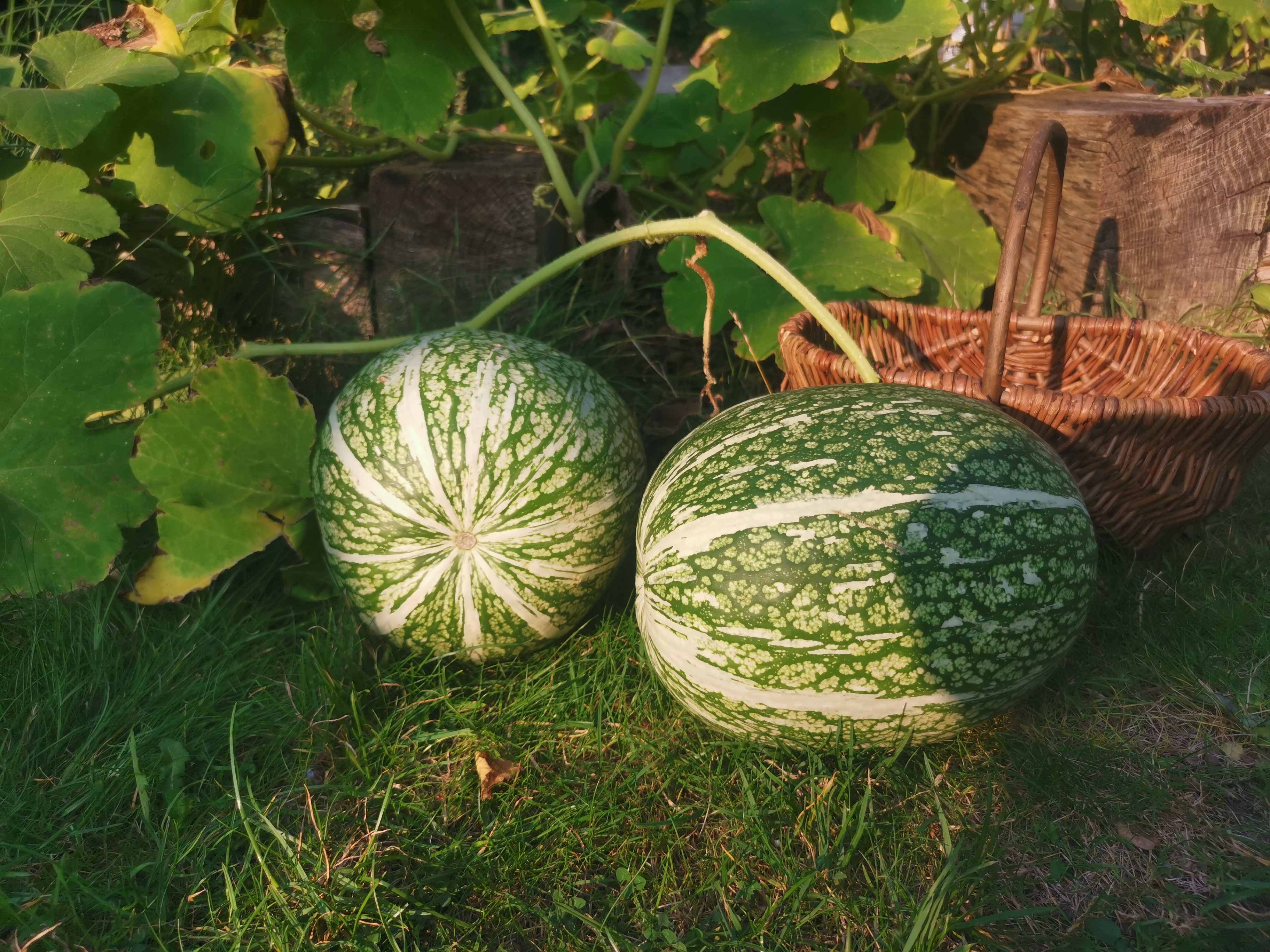
Discovering the Fig Leaf Gourd (Cucurbita ficifolia): Growing, Harvesting, and Culinary Uses in the UK
Learn how to grow, harvest, and cook Fig Leaf Gourds in the UK. Explore its global names and versatile culinary uses, from soups to preserves and desserts.

The Three Sisters: A Harmony of Growth in Vegetable Planting
In the ever-evolving world of allotment and vegetable growing, some methods stand the test of time. Among them is the ancient practice of Three Sisters planting, a technique rooted in Indigenous agricultural traditions of the Americas. This time-honoured method not only exemplifies the ingenuity of early growers but also offers a blueprint for sustainable, symbiotic […]