
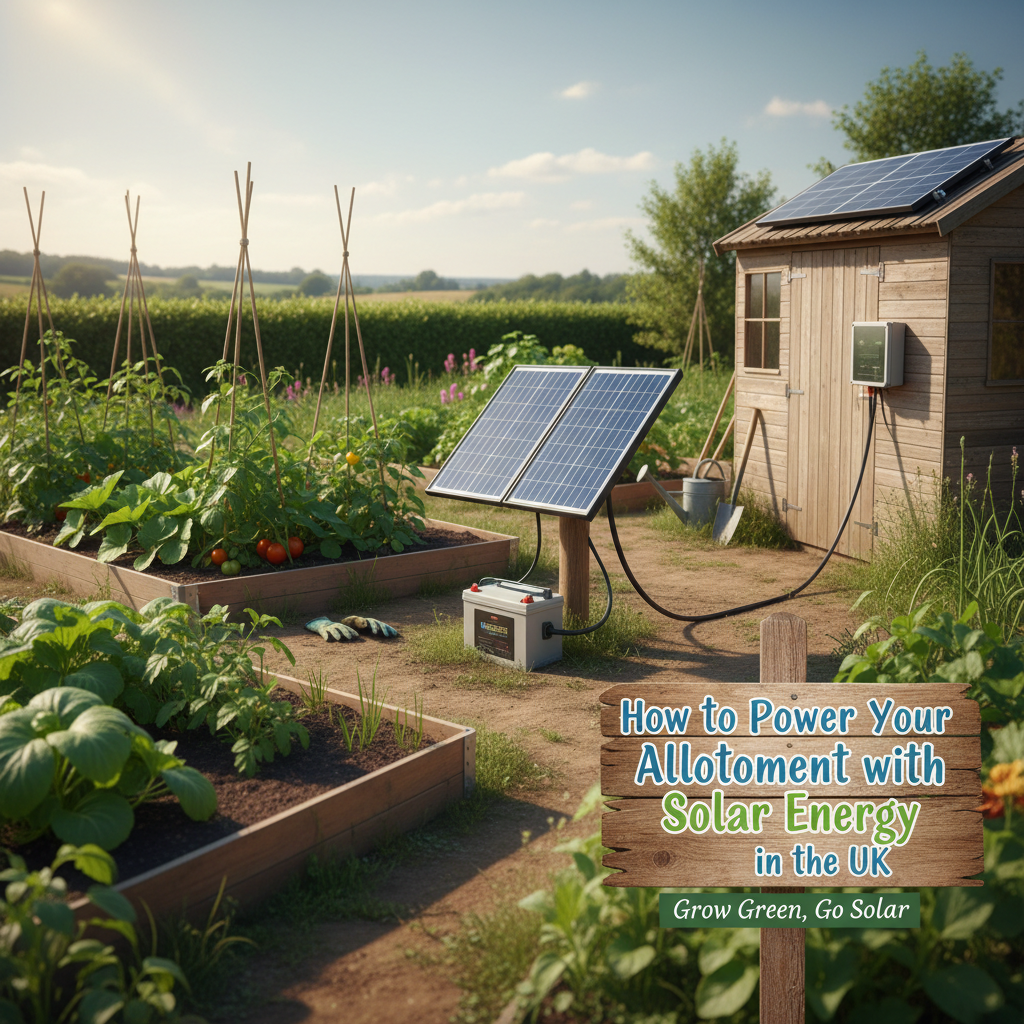
How to power your allotment with solar energy in the UK
Key takeaways
- Noise A typical petrol inverter generator runs at 58–72 dB — comparable to a power drill or busy restaurant.
- The key question for any allotment holder is what they actually need to power.
- The right unit depends on how you use your allotment and what you need to power.
- Allotments are often better solar sites than back gardens — they tend to be open, unshaded by adjacent buildings, and south-facing plots are common.
- The SolarSaga 100W panel is rated at 100W peak — the figure you'll see on the box and in the specs.
Jim Fellows — Garden-Review, Outdoor Power Equipment Specialist
Practical allotment power guide based on real plot use · Wattage figures verified against device specifications · Updated June 2026
The short answer
Most UK allotments have no mains electricity, and most allotment associations ban or restrict petrol generators due to noise and fumes. A portable solar power stationm, a rechargeable battery unit paired with a foldable solar panel - is the most practical, most affordable, and most neighbour-friendly way to bring electricity to your plot. For light use (lighting, phone and tool charging, a water pump), the Jackery Explorer 300 Plus (from £199) is all you need. For a full day's allotment work with heavier devices, step up to the Solar Generator 500 v2 (£649 with solar panel).
There are approximately 330,000 allotment plots across the UK, and the vast majority share two things in common: no mains electricity supply, and a site association that prohibits petrol generators. This leaves plot holders with a seemingly simple problem — how do you run a water pump, charge your phone, power a set of grow lights, or run a small electric hoe when there's no socket within 200 metres?
The answer, increasingly, is a portable solar power station. The technology has improved dramatically over the past few years — modern units use LiFePO4 batteries that last for thousands of cycles, weigh under 4kg at the smaller end, and recharge from a domestic wall socket in two hours if the sun isn't cooperating. This guide covers everything you need to know about using solar power on an allotment: what you can realistically run, which unit to buy, and how to get the most out of solar charging in the UK's variable climate.
Why petrol generators aren't the answer on allotments
The instinctive response to "I need power at my allotment" is often "get a generator." And while petrol generators are powerful and widely available, they're a poor fit for a communal allotment setting for several concrete reasons.
Noise
A typical petrol inverter generator runs at 58–72 dB — comparable to a power drill or busy restaurant. On a quiet allotment site shared with dozens of other plot holders, this makes enemies quickly. Most allotment tenancy agreements explicitly prohibit "nuisance noise."
Fumes
Carbon monoxide, NOx, and hydrocarbon emissions from petrol generators are unpleasant in an open garden setting and dangerous near a shed, polytunnel, or enclosed compost area. Many councils explicitly ban them on allotment sites.
Fuel storage
Storing petrol in an allotment shed raises fire risk and may breach your tenancy agreement or site insurance. Petrol goes stale within 3–6 months, causing carburettor problems in a machine you only use occasionally.
Weight and transport
Most portable petrol generators weigh 15–30kg. Carrying one to a plot, potentially across uneven paths, each visit is a significant physical effort — particularly given allotment visits are often frequent and short.
A solar power station avoids all four problems entirely. It's silent, produces no emissions, stores safely indoors between visits, and the lighter models weigh under 4kg — less than a full watering can.
What can you realistically run at an allotment?
The key question for any allotment holder is what they actually need to power. The good news is that almost everything a typical allotment plot requires falls well within the output range of a mid-sized solar power station. Here's a realistic breakdown:
| Device | Typical wattage | 300 Plus (288Wh) | 500 v2 (512Wh) | Notes |
| LED plot lighting | 10–20W | 12+ hrs | 25+ hrs | Ideal for polytunnel or shed |
| Smartphone charging | 12W average | ~20 charges | ~38 charges | Unlimited for practical purposes |
| 18V cordless tool charger | 50–70W | 3–4 charges | 6–8 charges | Covers a full day's tool use |
| Small water pump (submersible) | 60–120W | 2–4 hrs | 4–7 hrs | Bursts only — actual irrigation time much longer |
| Electric propagator / heat mat | 20–60W | 4–14 hrs | 8–25 hrs | Ideal for polytunnel seedlings |
| Electric soil cultivator / hoe | 200–400W | ~45 min | ~1.5–2 hrs | 500 v2 recommended for this |
| Polytunnel ventilation fan | 20–40W | 6–14 hrs | 12–25 hrs | Run continuously in summer heat |
| Grow lights (LED, small) | 30–50W | 5–9 hrs | 10–17 hrs | Pair with solar for continuous cycle |
Water pump tip
Most allotment water pumps are used in short bursts — pump for 2 minutes to fill a watering can, switch off, repeat. Even a pump drawing 100W only uses roughly 3.3Wh per 2-minute burst, meaning a single charge of the Explorer 300 Plus covers over 85 watering can refills. In practice, the battery will outlast your watering session by a substantial margin.
Which solar power station for your allotment?
The right unit depends on how you use your allotment and what you need to power. Here's a straight recommendation based on the most common allotment scenarios:
Getting the most from solar charging at your plot
Allotments are often better solar sites than back gardens — they tend to be open, unshaded by adjacent buildings, and south-facing plots are common. Here's how to maximise solar generation when you're at the plot.
Arrive with a full charge
Charge your power station from the mains at home the night before. The Explorer 300 Plus charges in 2 hours; the Explorer 500 v2 in 1.3 hours. Arriving full gives you maximum capacity from the start, and solar generation through the day becomes a bonus rather than your only source.
Position the panel as soon as you arrive
The SolarSaga 100W panel takes under two minutes to set up using its built-in kickstands. Position it facing south or south-west at a 30–45° angle against your plot's fence or shed wall. Every hour it sits in sun while you work is adding roughly 70–90Wh in summer conditions — that's a meaningful top-up over a 4-hour visit.
Run high-wattage devices during peak sun
If you're using an electric cultivator or water pump (the highest-draw allotment devices), schedule that use for midday when solar generation is at its peak. The panel's input partially offsets the draw, extending your effective runtime. Lower-wattage tasks — charging tools, running a fan — can run any time.
Keep the panel clear of shade
Even partial shading — a cane frame, a neighbouring plot's bean poles, a fence post shadow — significantly reduces output on monocrystalline panels. Find an unobstructed spot even if it means moving the panel mid-morning as the sun shifts. A 10-minute repositioning can recover an hour's generation.
Store the panel at your plot if your association allows it
The SolarSaga 100W is IP68 waterproof and can be left outside in all but extreme conditions. If your allotment shed is secure enough, leaving the panel propped permanently at the plot saves carrying it each visit. Check your tenancy agreement first — most associations are fine with it, but some have rules about permanent installations.
Honest solar output expectations for UK allotments
The SolarSaga 100W panel is rated at 100W peak — the figure you'll see on the box and in the specs. In UK real-world conditions, the practical daily output is lower. Here's what to realistically expect by season, which determines how you plan your allotment power:
June–August
350–500Wh
per clear day · good top-up
Apr–May / Sep
200–350Wh
fair day · moderate top-up
Overcast UK day
60–160Wh
diffuse light only
Oct–Mar
30–100Wh
supplement with mains charge
The practical upshot
During peak allotment season (April–September), a SolarSaga 100W panel will generate enough on most visits to significantly extend your runtime beyond your starting charge — often enough for the full visit on lighter-use days. In winter months, plan on charging from the mains at home and treating solar as a supplementary bonus rather than your primary source.
Do you need permission from your allotment association?
This is one of the most common questions we're asked, and the answer is almost always no — but it's worth understanding why.
A portable solar power station is not a permanent installation. It's a battery with a charging cable — legally and practically equivalent to bringing a charged drill battery or a torch to your plot. There are no mains connections, no fixed wiring, no planning implications, and no changes to the structure of your plot. Most allotment tenancy agreements that restrict "generators" are specifically referring to petrol or diesel generators — a solar power station would not fall within that restriction.
Leaving a solar panel permanently at your plot is a slightly different question. While the panel itself is moveable and requires no planning permission, some associations have rules about what can be stored on plots or leaned against fences. It's worth a quick email to your association secretary before leaving any equipment at the site permanently — in most cases they'll have no objection.
Check your specific tenancy agreement
Allotment tenancy agreements vary by council and association. While a portable power station is almost universally permitted, it's always worth a quick check of your specific agreement — particularly if you plan to leave equipment at the plot or install any fixed elements. When in doubt, ask your association secretary; they'll almost certainly say yes.
Recommended for allotment holders
Jackery portable solar power stations
All available from Jackery UK with free delivery, a 5-year warranty, and a 30-day money-back guarantee. Start with the Explorer 300 Plus for light use, or the Solar Generator 500 v2 bundle for a complete off-grid allotment power setup.
Affiliate disclosure: This article contains affiliate links to Jackery UK. Garden-Review may earn a commission on purchases made through these links at no additional cost to you. Wattage figures are sourced from device manufacturer specifications. Runtime estimates are calculated at 90% inverter efficiency and represent typical performance - actual results will vary. Solar output figures are based on UK Met Office regional averages and real-world panel testing. Jim's editorial opinions are independent.
Jim Fellows is a garden machinery and outdoor power equipment specialist at Garden-Review.co.uk with over 15 years of hands-on experience testing products across residential and professional garden settings.
Frequently Asked Questions
Tags
Comments
Join the conversation
Create a free account to leave comments, share photos, and connect with other gardeners.