
Hyundai HY9000LEK-2 Open Framed Site Generator Review
Key takeaways
- The HY9000LEK-2 is an open-frame, single-phase petrol site generator producing a maximum of 7kW / 8.75kVA.
- The SC420 — Hyundai's own 420cc OHV 4-stroke — is a well-proven engine across Hyundai's pressure washer and generator range.
- The copper-wound AVR (Automatic Voltage Regulator) alternator is one of the HY9000LEK-2's strongest practical specifications.
- The 25-litre tank is the most practically useful specification on this generator for working operators.
- At 90kg, the HY9000LEK-2 is not a machine you pick up by hand.
Our Rating
Hyundai HY9000LEK-2 Open Framed Site Generator Review
Mark Moore - Power Equipment & Site Machinery Expert
Assessed against real site, trade, and agricultural power requirements in the UK · Full specification verified across Hyundai Power Equipment UK · Reviewed June 2026
⚡ Expert Verdict
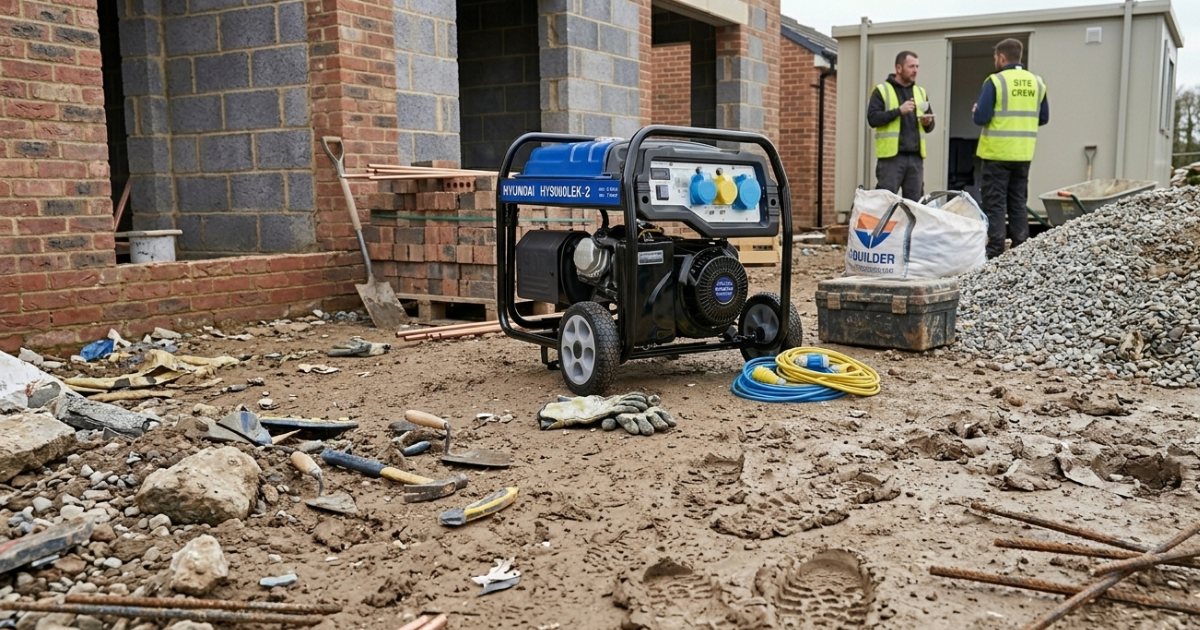
The Hyundai HY9000LEK-2 Open Framed Generator is one of the most practical 7kW site generators available in the UK under £1,000. A 420cc 14hp 4-stroke OHV engine, copper-wound AVR alternator, 25-litre long-run tank, dual-voltage sockets (230V/32A and 115V/16A), electric key start with recoil backup, onboard digital display, and a 3-year Hyundai warranty - all on a wheeled open frame that one person can move. At a trade price of roughly £695–£850 depending on supplier, it undercuts comparable rated machines from Stephill, Pramac, and Panda by meaningful margins. The open frame is the only genuine compromise: this is not a silenced canopy machine. At 65 dBA @ 7m it is quiet for open-frame output, but it is still a petrol generator, and it needs space, ventilation, and respect. If that suits your application, the HY9000LEK-2 is a seriously good buy.
4.5 / 5 — Recommended for Site, Trade & Agricultural Use
Power Output
★★★★★
AVR & Power Quality
★★★★★
Portability
★★★★☆
Value for Money
★★★★★
Hyundai HY9000LEK-2 - 7kW / 8.75kVA Petrol Open Frame Site Generator, Electric Start & Wheel Kit
Direct from Amazon & Hyundai Power Equipment UK · 3-Year Warranty · Full UK Parts Backup ·
⚠ Carbon Monoxide — Never Run Indoors
Petrol generators produce carbon monoxide — a colourless, odourless gas that kills rapidly in enclosed spaces. The HY9000LEK-2 must be operated outdoors, in open air, away from doors, windows, and ventilation intakes. Never run any petrol generator inside a building, garage, tent, or partially enclosed space under any circumstances. Fit a CO alarm near any indoor electrical equipment powered from an outdoor generator.
1. What Is the HY9000LEK-2 and Who Is It For?
The HY9000LEK-2 is an open-frame, single-phase petrol site generator producing a maximum of 7kW / 8.75kVA. It sits in a practical gap in the Hyundai Power Equipment range — above the lighter 3–4kW domestic standby machines and below the heavy-duty diesel silenced canopy units used for prime power applications. The target buyers are tradespeople, contractors, events and catering operators, farmers, and large-property owners who need a serious mobile power source on demand.
At 7kW maximum output, this generator can simultaneously run multiple power tools, light a construction site, power catering equipment, or keep a farm building's essential equipment running during a grid outage. The AVR alternator makes it safe for sensitive electronics, which is increasingly important on modern construction sites and at events where site management laptops, POS systems, and monitoring equipment need clean power.
📋 Who Should Buy This?
Construction and groundworks contractors needing mobile 230V and 115V site power. Agricultural and rural properties requiring backup power for outbuildings, pumps, or livestock equipment. Events and mobile catering operators needing a serious portable power supply. Large-property and estate owners wanting a capable petrol generator for outage cover and remote power. Not ideal for applications requiring prime power (24/7 continuous running) — this is a petrol air-cooled generator designed for standby and periodic heavy use.
2. Full Specifications
| Specification | Detail |
|---|---|
| Model | Hyundai HY9000LEK-2 |
| Engine model | Hyundai SC420 / 4-stroke OHV, air-cooled, single cylinder |
| Engine capacity | 420cc / 14hp |
| Maximum output | 7kW / 8.75kVA |
| Continuous output | 6.5kW |
| Max / continuous current | 56.5A / 28.3A |
| Voltage regulation | AVR (Automatic Voltage Regulator) — copper-wound alternator, ±3% of 230V |
| Output sockets | 1 × 230V / 32A + 2 × 115V / 16A |
| Phase | Single phase |
| Frequency | 50Hz |
| Rated speed | 3,000 RPM |
| Start method | Electric key start (primary) + recoil pull-start (backup) |
| Fuel type | Petrol (4-stroke — no mixing required) |
| Fuel tank capacity | 25 litres (long-run tank) |
| Run time @ 50% load | 11.2 hours |
| Fuel consumption @ 100% load | 4 L/hr |
| Fuel consumption @ 50% load | 2.2 L/hr |
| Engine oil type | SAE 15W-40 |
| Engine oil capacity | 1,100ml |
| Display | Digital — hours run, output voltage, frequency |
| Protections | Low oil automatic shutdown + overload protection / circuit breaker |
| Casing type | Open frame (not silenced) |
| Noise level | 65 dBA @ 7m / 97 dBA at source |
| Wheel kit | Included — puncture-proof tyres, assembles in minutes |
| Net weight | 90.4kg (net) / 93.9kg (gross) |
| Dimensions (H × W × L) | 700 × 655 × 650mm |
| Warranty | 3 years (Hyundai UK) |
| Price (direct, at time of review) | ~£695–£850 inc. VAT (supplier dependent) |
3. Engine, Output and What 7kW Actually Powers
The SC420 — Hyundai's own 420cc OHV 4-stroke — is a well-proven engine across Hyundai's pressure washer and generator range. At 14hp and 3,000rpm it's sized correctly for the alternator load: not over-stressed at maximum output, and fuel-efficient at partial load. The 4-stroke design means separate fuel and oil tanks, no premixing, and better economy than an equivalent 2-stroke at this output level.
The 7kW maximum output is the headline, but the figure that matters for planning real load is the 6.5kW continuous rating. Running a generator at sustained maximum is hard on the engine and reduces lifespan; 6.5kW is what you can depend on through a working day. For context, here is what 6.5kW continuous output will realistically handle:
| Application / load | Approx. draw | HY9000LEK-2 suitability |
|---|---|---|
| 110V site tools (grinder, drill, saw) × 2 | 1–2kW | ✓ Easily — headroom for more |
| Lighting rig (site or event) | 1–3kW | ✓ Yes, with remaining capacity for tools |
| Table saw or circular saw (230V) | 1.5–2.5kW | ✓ Yes, including startup surge |
| Electric water pump (1–2hp) | 0.75–1.5kW | ✓ Yes — common agricultural use |
| Mobile catering unit (fryer + urn + lighting) | 3–5kW | ✓ Yes — well within capacity |
| Home essential backup (fridge, heating, lights) | 1–3kW | ✓ Strong headroom for this load |
| Large air compressor (3hp+) | 2.5–4kW | ⚠ Check startup surge — may approach limit |
| Heavy 3-phase machinery | 5kW+ | ✗ Single phase only — use a 3-phase generator |
4. The Copper-Wound AVR Alternator — Why It Matters on Site
The copper-wound AVR (Automatic Voltage Regulator) alternator is one of the HY9000LEK-2's strongest practical specifications. Many open-frame generators at this price use a capacitor-regulated alternator — adequate for pure resistive loads (heaters, lighting) but producing voltage spikes and fluctuations that damage motor controllers, invertors, laptop chargers, and other electronics.
AVR regulation maintains output within ±3% of 230V regardless of load variation — meaning the voltage stays between 223V and 237V as tools start and stop. This is the reason Hyundai can claim suitability for sensitive electronic equipment. On a modern building site where site managers use laptops, contactless payment terminals, and monitoring systems alongside 110V power tools, that voltage stability has real practical value. Copper windings in the alternator mean better conductivity, less heat at load, and longer alternator service life compared to aluminium-wound equivalents at the same specification.
5. Runtime and Running Economy
The 25-litre tank is the most practically useful specification on this generator for working operators. At 50% load (around 3.5kW — a realistic mixed site load), fuel consumption is 2.2 L/hr, giving a run time of 11.2 hours per tank. That covers a full working day from a single fill at moderate load. At 100% load (sustained 7kW), consumption rises to 4 L/hr — the tank lasts roughly 6 hours at flat-out running, which is still a meaningful working session before refuelling.
| Load level | Consumption | Run time (25L tank) | Approx. fuel cost/hr* |
|---|---|---|---|
| 50% load (~3.5kW) | 2.2 L/hr | ~11.2 hours | ~£3.50–£4.00 |
| 75% load (~5.25kW) | ~3.1 L/hr | ~8 hours | ~£5.00–£5.50 |
| 100% load (7kW) | 4 L/hr | ~6.25 hours | ~£6.50–£7.00 |
*Based on UK pump petrol at approximately £1.55–£1.60/litre. Prices vary by location and time.
6. Practical Design — Portability, Sockets, and the Digital Display
At 90kg, the HY9000LEK-2 is not a machine you pick up by hand. What Hyundai have done well is the wheel kit: puncture-proof tyres on a solid axle, assembled with two bolts, with folding handles already integrated into the main frame. One person can wheel this machine across a level site surface comfortably. Loading into a van or trailer needs two people or a ramp — that is normal for a machine of this output and weight, not a criticism specific to this model.
The socket placement is a smart detail worth noting: Hyundai have positioned all three sockets (the 230V/32A and both 115V/16A) on the control panel end of the frame rather than on the sides. When you're wheeling a 90kg generator through a narrow doorway or past scaffolding on a site, the last thing you want is to snag a socket on the frame. Sockets on the control panel end mean cables run towards the operator as they work the machine — a small but practical design choice that matters on real sites.
Electric Key Start
Push-button electric start with key lock. The generator recharges its own battery during operation — no battery maintenance required when the machine is used regularly.
Recoil Backup Start
A pull-start recoil is fitted as backup. If the battery is flat or the electric start fails, you are not stranded. On a site where the generator is the only power source, this redundancy matters.
Digital Display
Shows hours run, output voltage, and frequency. Hours run is the key metric — it tells you when a service is due. Voltage and frequency confirm the generator is on-spec before connecting sensitive loads.
Low Oil Auto-Shutdown
The engine cuts out automatically before oil pressure drops to a damaging level. On a site where the generator may be left running unattended, this protection prevents a seized engine from a missed oil check.
Overload Protection
Built-in circuit breaker cuts power if the load exceeds the generator's rated capacity. Protects both connected equipment and the generator itself from sustained overload damage.
Open Frame — No Weather Protection
This machine has no silenced canopy or weather enclosure. In rain or on exposed sites, the operator must provide a generator tent or canopy. This is standard for open-frame generators and not unusual at this price point, but it is a real consideration for outdoor use.
7. Noise - The Honest Assessment
Hyundai quote 65 dBA at 7 metres. That is genuinely quiet for a 7kW open-frame petrol generator — most comparable machines in this class run at 68–72 dBA at the same distance. The improved muffler design is doing real work here. At 7 metres, 65 dBA is roughly equivalent to the noise level of an ordinary office or a busy restaurant — present and audible, but not conversation-stopping at normal distance.
At the source, the spec sheet shows 97 dBA — that is the figure that matters for the operator standing near the machine. Hearing protection is required for anyone working within 2–3 metres of the running generator for extended periods. HSE guidance requires hearing protection above 80 dBA averaged over an 8-hour shift — at 65 dBA at 7m, most site workers operating at normal distances are below this threshold, but anyone working alongside the generator is not.
⚠ Noise on Residential Sites
If operating near residential properties, check local authority permitted working hours before running a petrol generator. Most councils restrict construction noise to 08:00–18:00 Monday–Friday, 08:00–13:00 Saturday, and prohibit it on Sundays and bank holidays. 65 dBA at 7m is significantly lower than many site machines, but planning and communication with neighbours is still good practice.
8. Pros & Cons
✓ Where It Excels
- 7kW max / 6.5kW continuous — serious usable power for real site and trade loads
- 25-litre long-run tank — 11.2 hours @ 50% load; covers a full working day without refuelling
- Copper-wound AVR alternator — clean ±3% voltage for sensitive electronics alongside power tools
- Dual voltage: 230V/32A and 2 × 115V/16A — covers both domestic and site tool standards
- Electric key start with recoil backup — no single point of failure for starting
- 65 dBA @ 7m — genuinely quiet for 7kW open-frame output; improved muffler design delivers
- Digital display showing hours run, voltage and frequency — servicing and output at a glance
- Low oil auto-shutdown + overload circuit breaker — engine and load protection both present
- Socket placement on control panel end — practical design detail that matters on real sites
- Puncture-proof tyred wheel kit included — one person can move it across a site
- 3-year Hyundai UK warranty with full UK parts backup
- Competitively priced vs Stephill, Pramac, and Panda equivalents at this output
✗ Limitations to Know
- Open frame only — no silenced canopy; rain cover must be provided separately for wet weather operation
- Single phase — no three-phase output; not suitable for 3-phase motors or industrial machinery
- 90kg net weight — requires two people or a ramp to load into a van or onto a trailer
- Air-cooled 3,000rpm — not rated for prime power (24/7 continuous use); standby and periodic heavy use only
- Petrol running costs — at 4 L/hr at full load, fuel cost is a real operational consideration for daily use
- Fuel storage and carburettor care required for long-term storage — petrol goes stale after 4–6 weeks without stabiliser
- 97 dBA at source — hearing protection required for operators working immediately adjacent to the running machine
- Pre-order at time of review — shipping date July 2026 from Hyundai direct; may be available sooner via third-party stockists
9. How It Compares — UK Site Generator Market
| Model | Max output | AVR | Tank | Start | Price guide |
|---|---|---|---|---|---|
| Hyundai HY9000LEK-2 ★ | 7kW / 8.75kVA | ✓ Copper AVR | 25L | Electric + recoil | ~£695–£850 |
| Stephill SE6000M | 6kW | ✓ AVR | 12.5L | Recoil only | ~£900–£1,100 |
| Pramac S8000 petrol | 7kW | ✓ AVR | 15L | Electric + recoil | ~£1,100–£1,400 |
| Honda EU70is (inverter) | 7kW | ✓ Inverter | 11.1L | Electric + recoil | ~£4,000+ |
| Hyundai DHY12000SELR (diesel) | 8.5kW | ✓ AVR | — | Electric + recoil | ~£1,800–£2,000 |
vs Stephill SE6000M (~£900–£1,100): Stephill has long been the benchmark for UK site generators — well-built, well-supported, and genuinely reliable under sustained commercial use. The HY9000LEK-2 undercuts it by £200–£400, offers more output (7kW vs 6kW), a larger tank (25L vs 12.5L), and adds electric start. Stephill's reputation for long-term durability on hire fleets is more established, but for owner-operators the Hyundai's specification advantage at the price is hard to argue against.
vs Pramac S8000 (~£1,100–£1,400): Pramac is a well-regarded Italian manufacturer with a strong UK dealer network. At 7kW with AVR, the S8000 is a direct competitor in specification — but it costs £400–£600 more than the HY9000LEK-2 with a smaller tank (15L vs 25L). The Hyundai wins on value; the Pramac wins on brand track record for hire fleet daily use.
vs diesel (Hyundai DHY12000SELR, ~£1,800): If the machine will run for 8+ hours daily, a 1,500rpm diesel generator has better fuel economy, much longer service intervals, and a significantly longer engine lifespan. The petrol HY9000LEK-2 is better value for regular but not daily heavy use; for sustained daily running, the diesel pays for itself over time.
10. Maintenance Schedule
The digital hours-run display makes this straightforward. Set a service reminder at the appropriate intervals and stick to it — a generator that is serviced on schedule will run for thousands of hours. One that is not serviced will fail at the worst possible moment.
| Task | Interval | Notes |
|---|---|---|
| Oil check | Before each use | SAE 15W-40, 1,100ml. The low oil shutdown protects the engine — but checking before use avoids the annoyance of an unexpected shutdown during operation. |
| First oil change | After first 20 hours | Critical — new engines shed metal particles during run-in. Change oil early, then move to standard intervals. |
| Oil change | Every 100 hours | SAE 15W-40. Drain when warm for best results. Keep a record against the hours-run display. |
| Air filter clean | Every 50 hours (more frequently on dusty sites) | A blocked air filter causes rich running, power loss, and hard starting. Sites with cement dust, sawdust, or sand need more frequent checks. |
| Spark plug check / replace | Every 100 hours / annually | Check gap and electrode condition. Replace annually if used seasonally. Inexpensive insurance against hard starting. |
| Long-term storage | If storing 4+ weeks | Run the carburettor dry (run until engine stops from fuel starvation) or add fuel stabiliser. Modern E10 petrol degrades rapidly in storage and congeals in the carburettor jets — this is the most common cause of starting failures after winter storage. |
11. Detailed Score Breakdown
| Criteria | Score | Comment |
|---|---|---|
| Power output | 9.5/10 | 7kW max / 6.5kW continuous is a serious usable output for the price; covers the vast majority of site and trade applications |
| Power quality (AVR) | 9/10 | Copper-wound AVR at ±3% is correct specification for sensitive loads alongside site tools — better than capacitor-regulated competitors |
| Runtime & economy | 9/10 | 25L long-run tank with 11.2hr @ 50% load is a full working day without refuelling — genuinely useful specification for site work |
| Portability | 7.5/10 | 90kg is heavy but the wheel kit works well on level surfaces; van/trailer loading needs two people — standard for this output class |
| Ease of use | 8.5/10 | Electric key start with recoil backup, digital display, clear controls — well-executed for a site machine |
| Noise level | 8/10 | 65 dBA @ 7m is genuinely quiet for a 7kW open-frame petrol; improved muffler design delivers on the claim |
| Build quality | 8/10 | Solid open frame construction; copper-wound alternator is a quality indicator; long-term field data building as the model matures |
| Value for money | 9.5/10 | At ~£695–£850 with 7kW, 25L tank, copper AVR, electric start and 3-year warranty, it undercuts the established brands by £200–£500 at equivalent output |
| Overall | 4.5 / 5 | Highly recommended for site, trade, agricultural and backup power applications |
12. Our Verdict
The HY9000LEK-2 is a well-specified, well-priced site generator that covers the practical requirements of trade, construction, agricultural, and event power with room to spare. The 7kW output with copper AVR, the 25-litre long-run tank, dual-voltage sockets, electric start, digital display, and 3-year warranty are all specification points that would cost significantly more on Stephill, Pramac, or Panda equivalents. Hyundai's competitive pricing here is not cutting corners — the copper-wound alternator in particular is a quality indicator that shows where the engineering investment has gone.
The limitations are real but not surprising: this is an open-frame air-cooled petrol generator, which means no silenced canopy, no three-phase output, and not suitable for prime power. Those are structural characteristics of the product category, not flaws in this particular machine. If you need a silenced or three-phase unit, you need a different product — at two to three times the price. Within its design intent, the HY9000LEK-2 delivers comprehensively, and at under £850, it is one of the strongest value propositions in the UK 7kW generator market.
⚡ Garden-Review Site Power Recommendation
Buy If
You need 7kW of portable site or trade power with dual-voltage output, AVR, and long-run runtime — at a fair price under £850
Buy If
You want a farm, estate, or property backup generator with enough output to run meaningful loads during a grid outage
Consider Instead
A Hyundai diesel canopy unit (DHY12000SELR) if you need daily continuous running, weather protection, or lower long-term fuel costs
Consider Instead
A three-phase diesel generator if your site runs 3-phase machinery — no open-frame petrol generator covers this requirement
4.5 / 5 — Highly Recommended for site, trade and agricultural use
Alternatives Worth Considering
- Stephill SE6000M — 6kW, UK-built, proven hire-fleet track record; costs more but well-regarded for sustained commercial use; recoil only, smaller tank
- Pramac S8000 — 7kW, Italian build, strong UK dealer network; AVR, electric start; ~£400–£600 more than the Hyundai for similar specification
- Hyundai DHY12000SELR (diesel) — 8.5kW silenced diesel for daily or continuous use; significantly better fuel economy and engine lifespan at higher capital cost
- Hyundai DHY8000SELR-T (diesel, silenced) — 5.5kW diesel canopy with single and three-phase output; lower power but weather-protected and quieter
Expert review based on verified specifications from Hyundai Power Equipment UK and authorised distributor listings. Runtime, fuel consumption, and output figures sourced from published manufacturer data (diyflexiplan.co.uk confirmed spec sheet data, June 2026). Price range £695–£850 inc. VAT reflects pricing across authorised UK stockists at time of publication. Pricing at hyundaipowerequipment.co.uk correct at June 2026; the product is currently listed for pre-order with shipping from 20 July 2026 direct from Hyundai. This review may contain affiliate links — Garden-Review may earn a commission on purchases made through these links, at no extra cost to you. Never operate a petrol generator indoors or in enclosed spaces — carbon monoxide risk is fatal.
Frequently Asked Questions
Can I run the HY9000LEK-2 continuously 24/7?
Does the HY9000LEK-2 have 110V output for site tools?
Is the HY9000LEK-2 suitable for powering computers and sensitive equipment?
How do I store the generator when not in use?
What is the warranty on the HY9000LEK-2 Generator?
Tags
Comments
Join the conversation
Create a free account to leave comments, share photos, and connect with other gardeners.
Related Articles
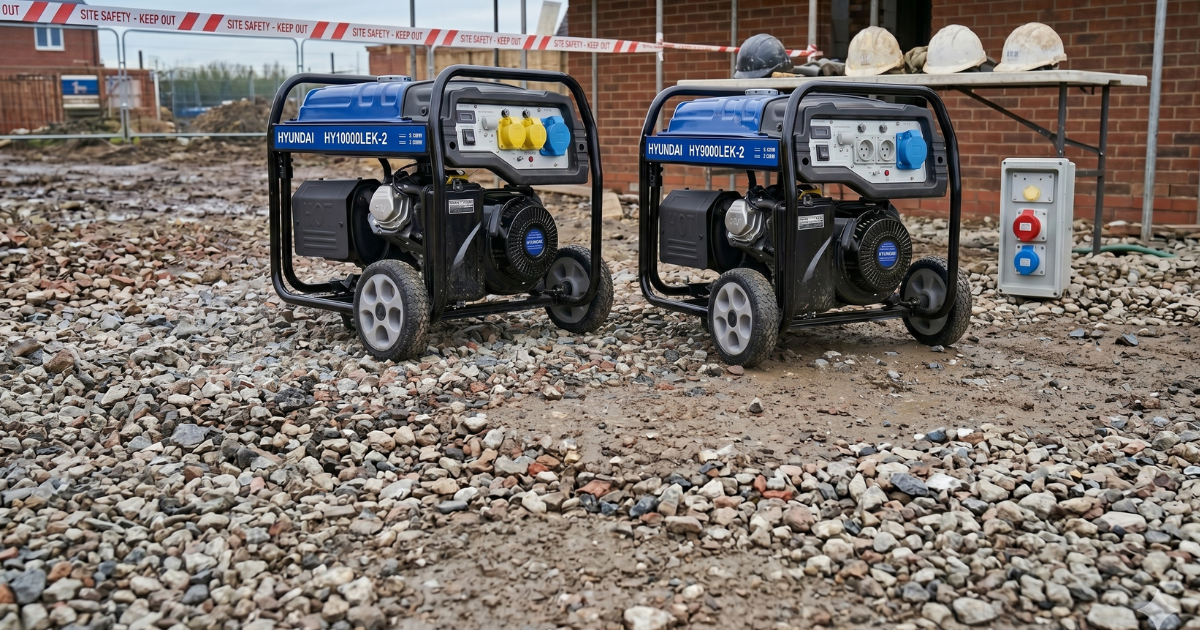
Hyundai 7kW Vs 8kW Open Framed Generator - Which should you choose?
Hyundai's HY9000LEK-2 vs HY10000LEK-2 comparison: 7kW vs 8kW Hyundai generators tested for UK sites - noise, runtime, load cases & verdict.
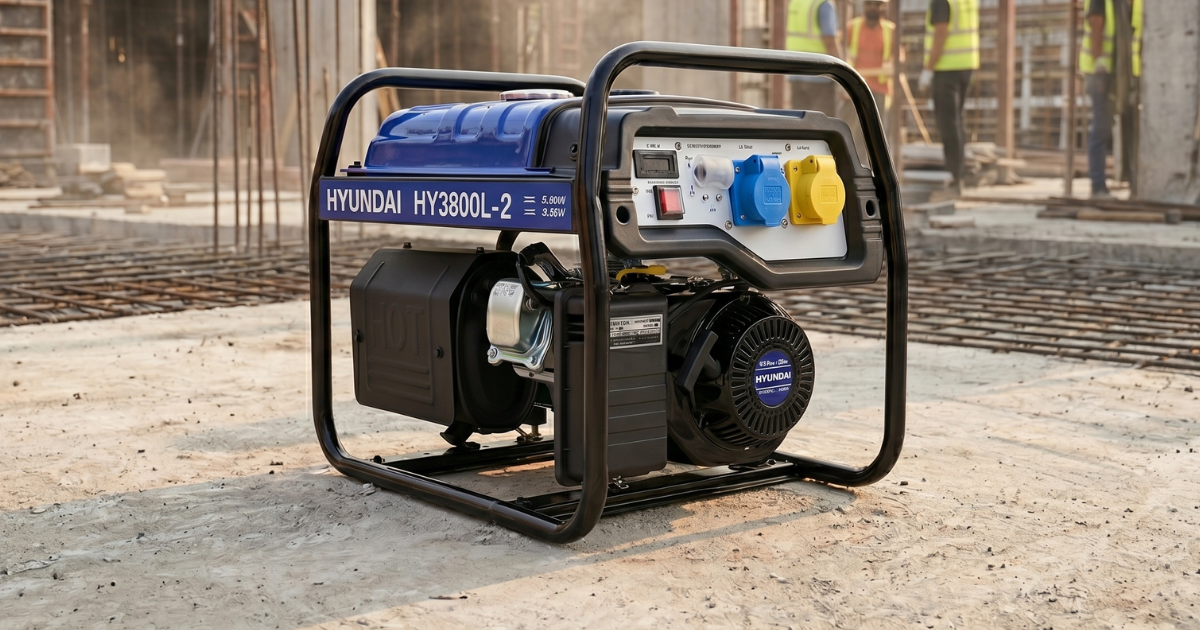
Hyundai HY3800L-2 Review - 3.2kW Petrol Site Generator Expert UK Verdict 2026
A strong machine at the price, held back from a perfect score by the missing wheel kit (a real daily frustration at 45.7kg for solo workers) and recoil-only start. Both are honest, specific limitations rather than general caution.
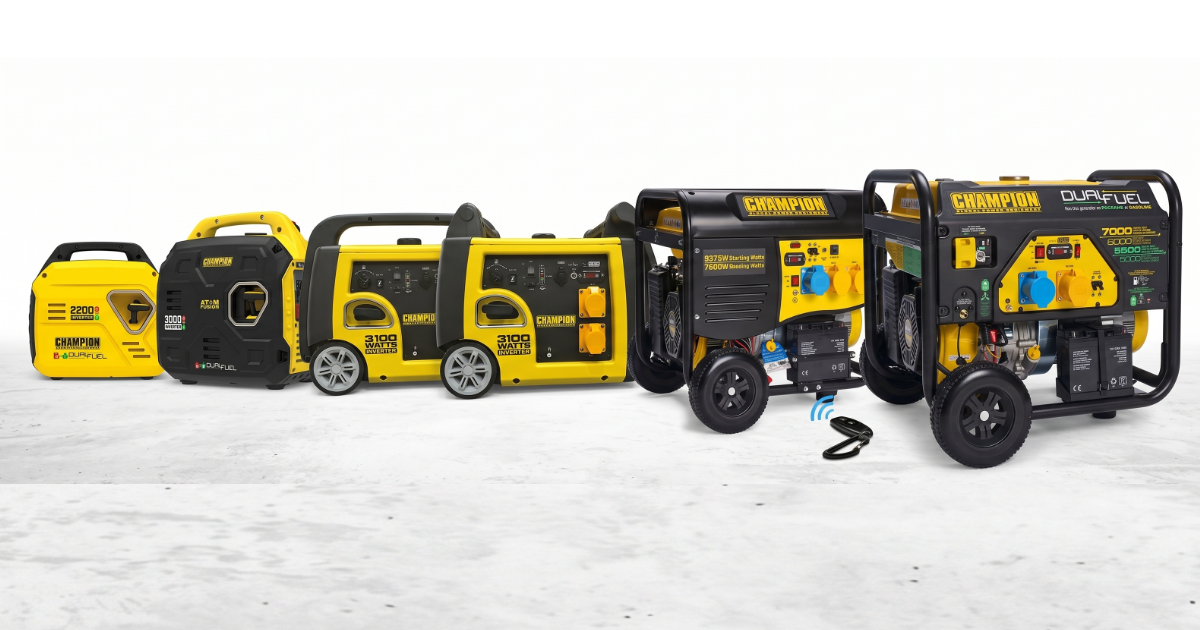
Champion Generator Buying Guide
Which Champion generator is right for you? Camping, caravan, home backup or trade - a plain-English guide to every model in the range
P1 P1000i 1000W Petrol Inverter Suitcase Generator Review
The P1 P1000i is a lightweight and affordable inverter generator designed for low-power applications. It’s ideal for charging electronics and running small appliances while camping, but its limited output means it won’t handle high-demand devices.
Hyundai DHY18COM-1 Review: 17kW / 20.4kVA* Compact Diesel Generator, S 1500rpm, Single Phase
A compact, professionally specified 17kW diesel generator with a 4-cylinder water-cooled engine, DSE6120 MKIII control panel, AVR alternator, ATS compatibility, and red diesel approval - engineered for prime power and serious standby use.
Hyundai Inverter Generator Buying Guide (2026)
Discover the latest Hyundai inverter generator range for 2026 in this comprehensive buying guide, covering everything from ultra-portable camping models to powerful home backup units. Whether you need quiet, fuel-efficient power for caravans, van life, or off-grid living, Hyundai’s inverter generators deliver clean pure sine wave electricity for safe use with sensitive electronics. Explore detailed comparisons, key specifications, and expert mini-reviews to help you choose the perfect generator for your needs.