
How to Grow Blueberries in the UK: Complete Planting & Care Guide
Blueberries are hardy, near pest-free and crop for 20+ years - but they are fussy about one thing: soil pH. Our complete UK guide covers the best varieties, ericaceous compost, container growing, rainwater, feeding, pruning and harvesting.
Key takeaways
- Blueberries ( Vaccinium corymbosum and its hybrids) are perfectly suited to the cool, damp British summer.
- Grow at least two different varieties with overlapping flowering times.
- Blueberries are members of the heather family and demand acidic soil with a pH of 4.5 to 5.5 .
- The ideal planting window in the UK is late autumn to early spring (November to March), while bushes are dormant.
- Blueberries have shallow, fibrous roots and hate to dry out - but they equally hate stagnant water.
Quick Answer
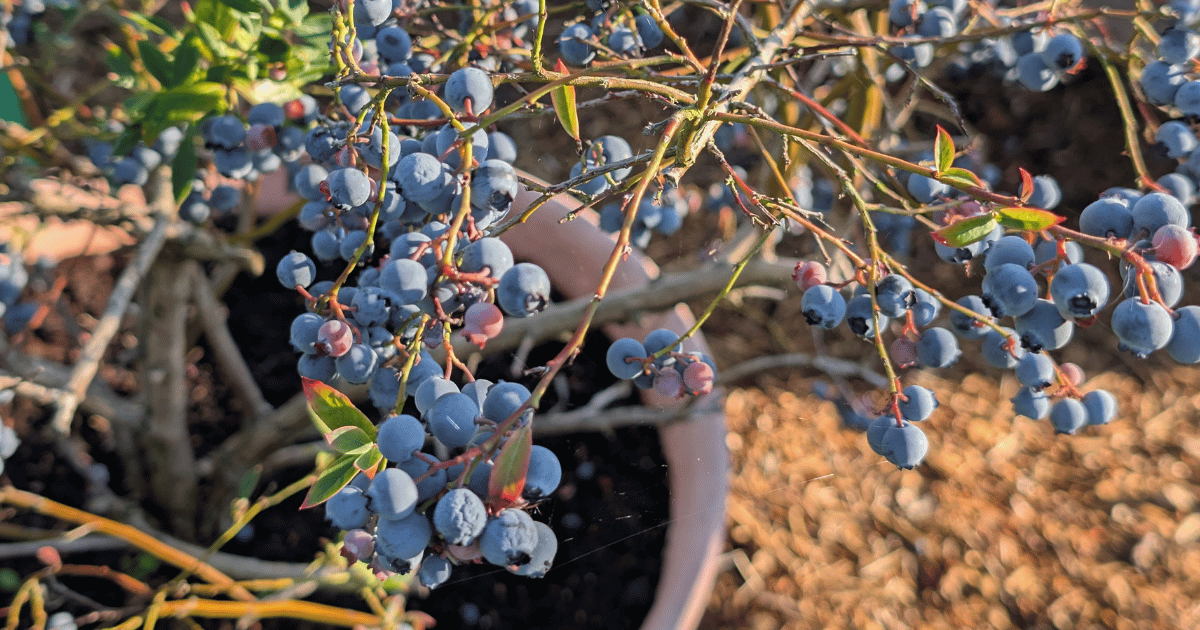
To grow blueberries in the UK, plant two different varieties in peat-free ericaceous compost at pH 4.5-5.5, in full sun to light shade, between November and March. Most UK soils are too alkaline, so growing in a 30-50cm container is the easiest route. Water with rainwater, feed monthly with an ericaceous liquid feed from March to August, prune in late winter, and net the bushes from mid-June. Expect fruit from mid-July to early September.
Written by Jim Fellows
Garden & Outdoor Specialist, Garden-Review.co.uk · Updated July 2026
Home-grown blueberries have a sweetness and depth of flavour that supermarket punnets simply cannot match - and they are one of the most rewarding soft fruits you can grow in a British garden. Blueberries are hardy, largely pest-free, and productive for two decades or more once established. The catch? They are fussy about one thing: soil. Get the acidity right and everything else falls into place.
This guide walks you through everything a UK gardener needs to know, from choosing the best varieties for our climate to planting, pruning, feeding, and harvesting a bumper crop of glossy blue berries year after year.
Why Grow Blueberries in the UK?
Blueberries (Vaccinium corymbosum and its hybrids) are perfectly suited to the cool, damp British summer. Unlike many fruits, they thrive without a heatwave - a run of mild days and cool nights actually intensifies their flavour.
Compact
Most varieties top out at 1.2-1.5m - ideal for smaller gardens.
Ornamental
White spring blossom, blue-black fruit and fiery red-orange autumn foliage.
Container-friendly
Arguably the easiest fruit bush to grow well in a pot.
Long-lived
A well-tended bush crops reliably for 20+ years.
Choosing the Best Blueberry Varieties for the UK
Grow at least two different varieties with overlapping flowering times. They will still self-pollinate, but cross-pollination dramatically increases yield and berry size.
| Season | Variety | Why choose it |
|---|---|---|
| Early (July) | 'Duke' | Reliable, heavy cropper with firm, sweet berries. An excellent starter variety. |
| Early (July) | 'Earliblue' | Vigorous and hardy, tolerates a cooler spring. |
| Mid (late Jul-Aug) | 'Bluecrop' | The RHS Award of Garden Merit workhorse. Drought-tolerant by blueberry standards and consistently productive. |
| Mid (late Jul-Aug) | 'Patriot' | Very hardy with exceptionally large berries. A good choice for northern gardens. |
| Late (late Aug-Sep) | 'Chandler' | Famous for enormous coin-sized berries and a long picking window. |
| Late (late Aug-Sep) | 'Jersey' | Old-fashioned, sweet-flavoured variety that shrugs off wet British summers. |
| Pots & small gardens | 'Top Hat' | A true dwarf reaching only 60cm - perfect for a patio. |
| Pots & small gardens | 'Sunshine Blue' | Semi-evergreen with pink flowers; tolerates slightly higher soil pH than most. |
| Novelty | 'Pink Lemonade' | Produces sweet pink berries rather than blue. |
The Golden Rule: Soil pH
Blueberries are members of the heather family and demand acidic soil with a pH of 4.5 to 5.5. Most UK garden soils sit between pH 6 and 7 - too alkaline. Before planting, test your soil with an inexpensive pH kit or digital meter.
Don't bother trying to acidify an alkaline bed with sulphur chips and hope for the best - it rarely holds for long. Change the growing medium instead, not the garden.
- Grow in a container filled with peat-free ericaceous compost - by far the easiest approach for most UK gardens.
- Build a raised bed at least 40cm deep, filled with ericaceous compost mixed with composted pine bark.
- Plant in open ground only if your soil is naturally acidic - typically areas where heather, rhododendrons or pines grow wild.
When and Where to Plant
The ideal planting window in the UK is late autumn to early spring (November to March), while bushes are dormant. Container-grown plants can go in at any time of year, provided you keep them well watered through their first summer.
Choose a spot in full sun to light shade. Six hours of direct sun a day will give you the sweetest berries. Shelter from cold, drying winds protects the spring blossom from frost damage - which is critical for a good crop.
Planting Blueberries Step by Step
In the Ground
- Dig a hole twice as wide as the root ball and the same depth.
- Mix the excavated soil 50:50 with peat-free ericaceous compost and a generous handful of composted pine bark.
- Tease out the roots and set the plant at the same depth it sat in its pot - never deeper.
- Backfill, firm gently and water in well with rainwater.
- Mulch with 5cm of pine needles, composted bark or leaf mould to lock in moisture and slowly acidify the soil.
- Space bushes 1.2-1.5m apart, or 60cm for dwarf varieties.
In a Container
- Choose a pot at least 30cm across for a young plant, moving up to 45-50cm as it matures.
- Ensure generous drainage holes and use crocks at the base.
- Fill with fresh peat-free ericaceous compost.
- Plant at the same depth as before and mulch the surface with bark chips.
- Stand the pot on pot feet to prevent waterlogging in winter.
Watering Blueberries in the UK
Blueberries have shallow, fibrous roots and hate to dry out - but they equally hate stagnant water. The single most important rule is to water with rainwater whenever possible. Tap water across much of England, particularly the south and east, is hard and alkaline and will gradually push the compost pH out of range.
- Install a water butt if you don't already have one - see our guide to the best water butts for 2026.
- Water container-grown plants daily in hot weather; established garden plants weekly during dry spells.
- If you have to use tap water for a stretch, top-dress with fresh ericaceous compost in autumn to compensate.
Hosepipe ban? Stored rainwater keeps blueberries alive legally when restrictions bite. Our ban-proof watering kit guide covers butt pumps, drip kits and soaker hoses.
Feeding Blueberries
Feed sparingly - blueberries are light feeders and easily damaged by strong fertilisers. Use a specialist ericaceous liquid feed or a slow-release granular ericaceous fertiliser once a month from March to August. Never use general-purpose or lime-based feeds, which will scorch the roots.
Top-dress container plants each spring with a 3-5cm layer of fresh peat-free ericaceous compost, and repot completely every two to three years.
Pruning: Simple Annual Care
Pruning is straightforward and best done in late winter (February to early March), before the buds break.
Years 1-2
Do nothing beyond snipping out obviously dead, damaged or diseased wood. Let the plant build a strong framework.
Year 3 Onwards
Aim for a balanced bush of 6-8 healthy stems of mixed ages. Each winter:
- Remove one or two of the oldest, thickest, darkest-barked stems at the base - these are the least productive.
- Cut out any weak, whippy or crossing branches.
- Shorten the tips of the previous summer's growth by a third if it has become excessively long.
Fresh, pale, one- and two-year-old wood carries the heaviest fruit, so the goal is to keep encouraging new growth from the base.
Pollination and Fruit Set
Blueberries flower in April and May, when British weather can still throw a late frost. If frost is forecast, drape open flowers with horticultural fleece overnight. Bees - particularly bumblebees - are the primary pollinators, so avoid using insecticides while flowers are open.
Common Problems and How to Fix Them
| Symptom | Likely cause | Fix |
|---|---|---|
| Yellowing leaves (chlorosis) | Rising soil pH locking out iron | Switch to rainwater, apply sequestered iron, top-dress with fresh ericaceous compost. |
| Poor fruit set | Only one variety, late frost on blossom, or few pollinators | Plant a companion variety and fleece the flowers when frost is forecast. |
| Berries disappearing | Blackbirds and pigeons | Net bushes or use a fruit cage from mid-June. Keep netting taut so birds cannot become trapped. |
| Notched leaves, sudden collapse | Vine weevil grubs in the compost | Treat containers with a biological nematode drench in spring and autumn. |
| White dusty coating on leaves | Powdery mildew in a humid summer | Improve airflow by thinning stems and avoid overhead watering. |
Harvesting Blueberries
British blueberries ripen from mid-July to early September depending on variety. A berry is only ready when it is fully blue with a soft, dusty bloom - and, crucially, comes away from the stalk with the gentlest tug. If you have to pull, wait another few days. Pick every 3-4 days, as berries continue to sweeten on the bush.
Freshly picked berries keep for a week in the fridge and freeze beautifully - spread them on a tray, freeze until solid, then bag up.
Growing Blueberries in Pots: Quick Recap
- Pot size: 30cm minimum, 45-50cm for a mature bush.
- Compost: peat-free ericaceous.
- Water: rainwater, daily in summer.
- Feed: monthly ericaceous liquid feed, March to August.
- Winter: move to a sheltered spot and raise on pot feet.
- Repot: refresh compost every 2-3 years.
Blueberry Growing Year Planner
| Season | Key task |
|---|---|
| Late winter (Feb-Mar) | Prune and top-dress with fresh ericaceous compost. |
| Spring (Apr-May) | Start liquid feeding, protect blossom from frost, mulch heavily. |
| Early summer (Jun) | Net against birds, water consistently, watch for vine weevil. |
| Summer (Jul-Aug) | Harvest ripe berries every few days, continue feeding. |
| Autumn (Sep-Oct) | Final harvest, enjoy the autumn colour, plant new bushes. |
| Winter (Nov-Jan) | Bare-root planting window, check container drainage. |
Jim'sThoughts
Blueberries reward a little upfront effort - mainly on soil - with decades of easy, generous cropping. Whether you have a full garden bed, a raised planter or just a sunny patio corner with room for a pair of pots, there is no reason not to grow your own. Start with two well-chosen varieties, water with rainwater, feed lightly, and prune with confidence in late winter. In a few short summers you will be picking bowlfuls of the sweetest berries you have ever tasted.
Related Reading
How we produced this guide: this is a research-based horticultural guide compiled from established UK growing practice and variety performance in British conditions, rather than a hands-on trial of individual cultivars. Growing conditions vary considerably by region and soil type - test your own soil pH before planting.
Frequently Asked Questions: Growing Blueberries
Tags
Comments
Join the conversation
Create a free account to leave comments, share photos, and connect with other gardeners.