
How to Grow Rhubarb: A Complete UK Planting, Feeding and Harvesting Guide
Rhubarb crops every spring for the best part of a decade with almost no attention. Jim Fellows covers varieties, planting crowns, feeding, forcing, harvesting properly and the mistakes that kill a crown.
Key takeaways
- Variety matters more than most people expect, mainly because it determines when you pick.
- Jim's tip: when buying a bare-root crown, look for firm, fleshy roots and at least one fat, undamaged bud.
- Rhubarb stays put for five years or more, so it does not belong in a crop rotation.
- November is ideal - the soil is still warm enough for roots to settle before winter.
- It can be done, but rhubarb is a big, hungry, thirsty plant and a small pot will simply starve it.
Quick answer
Plant bare-root rhubarb crowns between November and March in an open, sunny spot with deep, rich, free-draining soil. Space them 90cm apart with the buds at or just below soil level, mulch generously with well-rotted manure each year, and remove flower spikes as they appear. Take no stalks in the first year, a light crop in the second, and full harvests from year three - always pulling rather than cutting, and stopping by early July.
Difficulty: easy. First proper harvest: year 3. Productive life: 5–10 years before division. Leaves are toxic - stalks only.
By Jim Fellows - Garden Machinery Specialist, Garden-Review
Jim has spent more than two decades around British gardens and allotments, first in grounds maintenance and now writing about the tools and techniques that keep them productive. He has grown rhubarb on the same Lincolnshire allotment plot for over fifteen years - Timperley Early for the first pull of the season, Victoria for the bulk of it - and still forces a crown under a dustbin every January.
Published: · Last reviewed: 9 September 2026 · Category: Growing Guides
Rhubarb is about as close as British gardening gets to something for nothing. Plant a crown properly, feed it once a year, and it will crop every spring for the best part of a decade with almost no attention in between. It is hardy, it is unbothered by our climate, and it produces at exactly the time of year when there is nothing else to pick.
This guide covers everything from choosing a variety and planting a crown to feeding, forcing, harvesting properly and dealing with the handful of things that go wrong. If you already have an established plant that needs splitting or re-siting, see our companion guide on how to transplant rhubarb.
On this page
- Choosing a variety
- Crowns, potted plants or seed?
- Where to plant rhubarb
- How to plant a rhubarb crown
- Growing rhubarb in containers
- Watering, feeding and mulching
- Rhubarb year: month-by-month calendar
- When and how to harvest
- Forcing rhubarb for early stalks
- Dividing and renewing the crown
- Problems and how to fix them
- Frequently asked questions
Choosing a variety
Variety matters more than most people expect, mainly because it determines when you pick. Two plants - one early, one maincrop - will stretch your season from March to early July. If you only have room for one, an early variety earns its keep because it arrives when nothing else does.
| Variety | Season | Best for |
|---|---|---|
| Timperley Early | Very early - March onward | The standard first choice, and the best variety for forcing. Reliable and vigorous. |
| Victoria | Maincrop - May to July | Heavy cropper with thick green-and-red stalks. The classic allotment workhorse. |
| Champagne / Early Champagne | Early | Deep red, sweeter, tender stalks. Excellent forced. |
| Stockbridge Arrow | Early to maincrop | Very heavy yields of long red stalks; arrow-shaped leaves. A commercial favourite. |
| Raspberry Red | Early to maincrop | Strong red colour right through the stalk - good if you want pink crumble, not grey. |
| Livingstone | Autumn cropping | Unusual low-dormancy type that crops into autumn. Worth adding as a third plant. |
Crowns, potted plants or seed?
- Bare-root crowns (recommended). Sold dormant from autumn to early spring, usually as a chunk of root with one to three visible buds. Cheapest, easiest to establish, and true to variety. Plant as soon as they arrive.
- Potted plants. Available in growth through spring and summer. More expensive but you can plant them almost any time as long as you water well. Useful if you have missed the bare-root window.
- A division from a friend's plant. Free, and the fastest route to a productive crown - provided the parent plant is healthy. See how to lift and divide a crown for the correct method.
- Seed. Possible, but slow and variable - seedlings do not come true to type, and you are looking at three years before a worthwhile harvest. Only worth it if you enjoy the process.
Jim's tip: when buying a bare-root crown, look for firm, fleshy roots and at least one fat, undamaged bud. Reject anything soft, shrivelled or smelling sour - that is rot, and it will not recover.
Where to plant rhubarb
Rhubarb stays put for five years or more, so it does not belong in a crop rotation. Put it at the end of a plot, along a boundary, or in a bed of its own.
- Sun: open and sunny is best. It survives light dappled shade but produces thinner, slower stalks.
- Soil: deep, rich and moisture-retentive but never waterlogged. Rhubarb is a heavy feeder with a big root system.
- pH: around 6.0–6.8. Most UK garden soil is fine untouched.
- Drainage: the one non-negotiable. Winter waterlogging causes crown rot. On heavy clay, plant on a low mound or in a raised bed.
- Space: 90cm (3ft) between plants and from any wall, hedge or path. A mature crown is a metre across and shades out anything beside it.
- Avoid: under trees (dry, shaded root competition) and frost pockets that sit wet.
How to plant a rhubarb crown
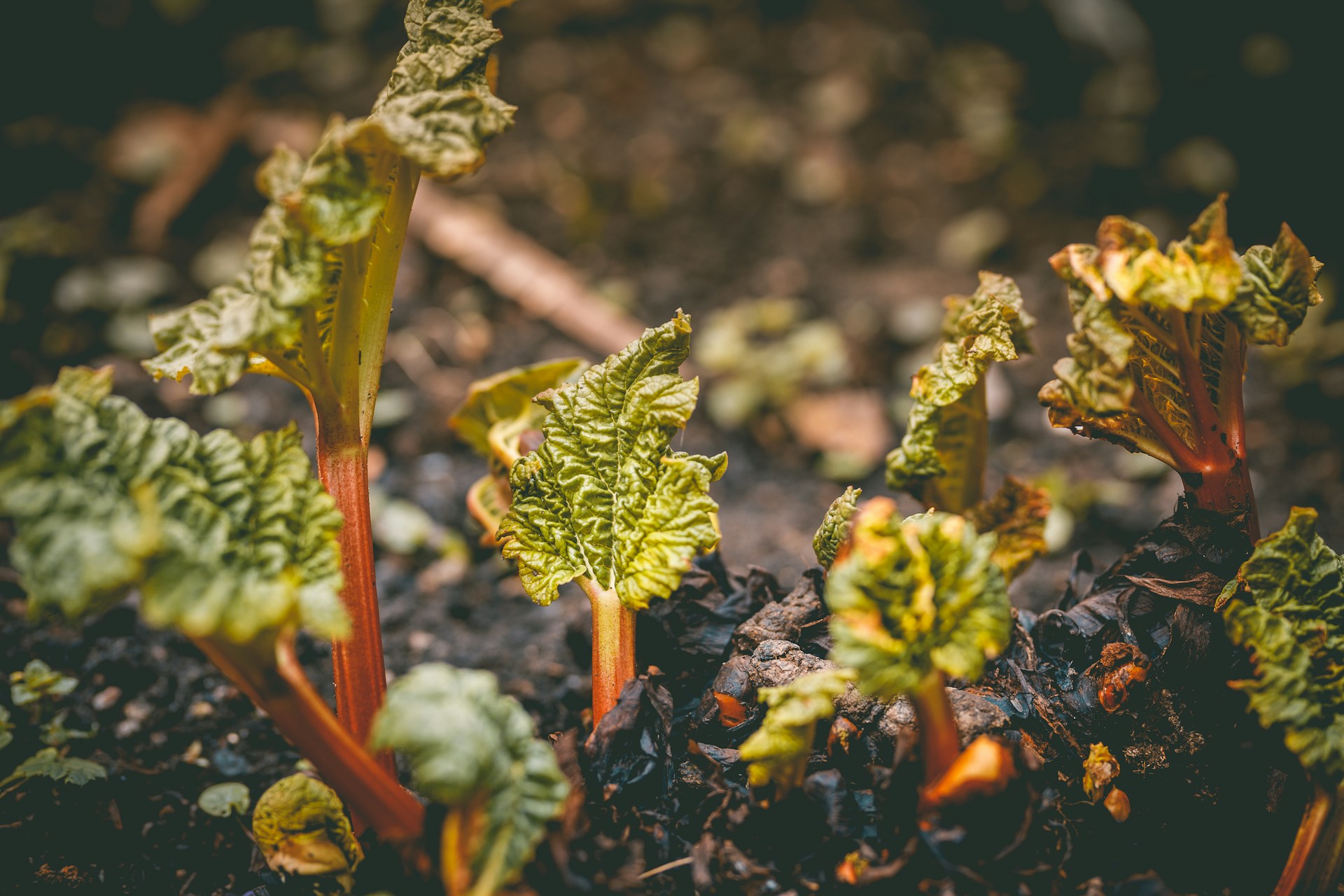
Best time: November to March, while the crown is dormant. November is ideal - the soil is still warm enough for roots to settle before winter.
Step 1 - Clear the ground properly
Remove every scrap of perennial weed root - couch grass, bindweed, ground elder. Once rhubarb is established you will never get them out from under it.
Step 2 - Dig deep and enrich
Dig over a square metre per plant to a full spade's depth and work in two buckets of well-rotted manure or garden compost per square metre. This is your one easy opportunity to get organic matter down where the roots will live. Manure must be at least a year old - fresh manure scorches roots.
Step 3 - Dig a wide hole and set the crown
Make the hole wide enough to spread the roots without bending them. Sit the crown so the buds are at soil level, or no more than 2.5cm (1in) below. On heavy or wet ground, keep the buds level with the surface or fractionally proud.
Step 4 - Backfill, firm and water
Firm gently with your boot to remove air pockets, then water in even in winter. Check the buds have not disappeared under soil as you backfilled.
Step 5 - Mulch around, not over
Spread well-rotted manure in a ring around the plant, keeping a clear gap around the buds themselves. Mulch heaped over a crown traps moisture against it and causes rot. Mark the position with a cane - a dormant crown is invisible until March.
The single most common mistake: planting the crown too deep. Buried buds sit in cold wet soil all winter and rot before they push through. If in doubt, plant shallower than feels right.
Growing rhubarb in containers
It can be done, but rhubarb is a big, hungry, thirsty plant and a small pot will simply starve it.
- Use a container at least 50cm (20in) wide and deep - half-barrel scale.
- Fill with soil-based compost such as John Innes No.3, enriched with well-rotted manure. Multipurpose compost alone is exhausted by midsummer.
- Check drainage holes are clear and raise the pot on feet.
- Water far more often than in open ground, and feed with a general-purpose fertiliser through spring.
- Refresh the compost and divide every two to three years rather than five.
Containers dry out fastest exactly when restrictions bite, so stored rainwater is worth having - see our guides to water butts and rainwater storage and watering kit for a hosepipe ban.
Watering, feeding and mulching
- Water in dry spells, particularly in the first two years and especially for container plants. Established crowns are fairly drought-tolerant but produce thin stalks if they go short in late spring.
- Mulch every autumn or late winter with a generous layer of well-rotted manure or compost, kept clear of the crown. This one job does most of the feeding.
- Feed in spring from the second year with a balanced general fertiliser, or a high-nitrogen feed if growth is sluggish.
- Remove flower spikes immediately. A tall, knobbly, cauliflower-like stem will appear on stressed or older plants. Cut it out at the base - flowering diverts serious energy into seed production.
- Let the leaves die back naturally in autumn. Once they have collapsed, clear them away so slugs have nowhere to overwinter.
- Keep weeds down by hand rather than by hoeing close in - the crown sits near the surface and damages easily.
Rhubarb year: month-by-month
| Period | Jobs |
|---|---|
| November–December | Best month to plant new crowns. Clear dead foliage. Lift and divide congested plants. Mulch with manure. |
| January–February | Cover a mature crown to force it. Continue planting and dividing when the ground is workable. |
| March–April | Harvest forced stems. First outdoor pulls from early varieties. Apply spring feed. Watch for slugs on emerging buds. |
| May–June | Main harvest period. Remove flower spikes. Water in dry weather. |
| July–August | Stop harvesting by early July. Water in drought. Let leaves build reserves. |
| September–October | Leave foliage to die back naturally. Prepare ground for new crowns. Order bare-root plants. |
When and how to harvest rhubarb
Restraint in the first two years is what produces a plant that crops heavily for a decade.
| Year | Harvest |
|---|---|
| Year 1 | None at all. Every leaf feeds the crown. |
| Year 2 | A light crop only - a few stalks per plant, stopping by early June. |
| Year 3 onward | Full harvests from spring until early July, never taking more than half the stalks at once. |
The right technique
- Pull, do not cut. Grip the stalk low down, twist and pull outward so it comes away cleanly at the base. Cut stubs rot back into the crown.
- Leave at least half the stalks on the plant at any time so it keeps feeding itself.
- Stop by early July. The plant needs the rest of the summer to rebuild reserves for next spring. Later stalks also get tough and more acidic.
- Cut the leaves off immediately and compost them. Rhubarb leaves contain high levels of oxalic acid and should never be eaten - but they are perfectly safe on a compost heap.
Forcing rhubarb for early stalks
Forcing means excluding light in late winter so the crown produces long, pale, tender, notably sweeter stems weeks ahead of the outdoor crop. It is the best thing you can do with rhubarb, and the easiest.
- Choose an established crown - at least three years old and vigorous. Never force a newly planted or recently divided plant.
- In January or February, clear away debris and cover the crown with a traditional terracotta forcer, a large upturned bucket, or a dustbin weighted down. Block any light gaps.
- Wait roughly six to eight weeks, checking occasionally. Piling straw or manure around the outside speeds things up slightly.
- Harvest the pale stems when they reach about 20–30cm, then remove the cover.
- Give that crown the rest of the year off. Do not take any more stalks from it that season, and do not force the same plant two years running - forcing is genuinely exhausting for the crown. This is why it pays to have two or three plants and rotate.
Dividing and renewing the crown
After five or six years a crown becomes congested: lots of thin stalks instead of a few fat ones, and a woody, hollow centre with growth only around the edges. That is not a failure - it is the plant telling you it is due for division.
Lift the whole crown with a digging fork in the dormant season, cut it into sections each carrying at least one strong bud and a good chunk of root, discard the dead middle, and replant. One old crown will usually give you three or four vigorous new plants.
📖 Full step-by-step method, including tools, planting depth by soil type and aftercare: How to transplant rhubarb - when and how to move a crown
Problems and how to fix them
| Symptom | Cause | Fix |
|---|---|---|
| Thin, spindly stalks | Congested crown, shade, poor soil, or over-harvesting | Feed and mulch heavily; divide in winter; move if shaded |
| Tall knobbly flower stem | Stress, heat, drought, or an ageing crown | Cut it out at the base straight away; water and feed; divide if it recurs annually |
| Soft brown smelly crown, stalks collapsing at the base | Crown rot, usually from waterlogging | No cure. Remove and dispose of the plant, do not compost it, do not replant rhubarb in that spot. Improve drainage. |
| Emerging buds chewed in spring | Slugs and snails | Clear winter debris, and protect new shoots in March |
| Sudden collapse; white fungal sheets and black bootlace strands in the roots | Honey fungus | Remove and dispose of affected material; do not take divisions from an infected plant |
| Nothing emerges in spring after planting | Crown planted too deep, or a rotten/budless crown | Scrape soil back to expose the top of the crown; wait until June before writing it off |
Kit worth having
A mature rhubarb crown is heavy work, so a proper full-size stainless steel digging fork beats a border fork every time. For the ground prep, bagged well-rotted farmyard manure is easier than sourcing a trailer-load for one or two plants. And if you want an early crop, a terracotta rhubarb forcer does the job with more dignity than a dustbin - though the dustbin works just as well.
Related guides
- How to transplant rhubarb: when and how to move a crown
- How to grow blueberries in the UK
- What to plant in September
- What to do in the garden in September
- Water butts and rainwater storage
How this guide was produced
This guide is based on established UK horticultural practice and long-running allotment experience of growing, forcing and dividing rhubarb. It is a growing guide rather than a product test: no tool or variety mentioned here has been laboratory-tested by Garden-Review, and any kit suggestions reflect general category guidance rather than hands-on comparative testing. Conditions vary widely across the UK, so treat timings as a guide and adjust for your own soil, aspect and local climate.
Affiliate disclosure: some links on this page are affiliate links. If you buy through them we may earn a small commission at no extra cost to you. This never affects what we recommend or how we write our guides.
Frequently Asked Questions: How to Grow Rhubarb
When is the best time to plant rhubarb in the UK?
How long does rhubarb take to grow?
Why is my rhubarb thin and spindly?
Should I cut or pull rhubarb stalks?
When should I stop picking rhubarb?
Are rhubarb leaves poisonous?
How often should rhubarb be divided?
Why has my rhubarb flowered?
Can rhubarb grow in shade?
Tags
Comments
Join the conversation
Create a free account to leave comments, share photos, and connect with other gardeners.
Related Articles
How to Transplant Rhubarb: When and How to Move a Crown
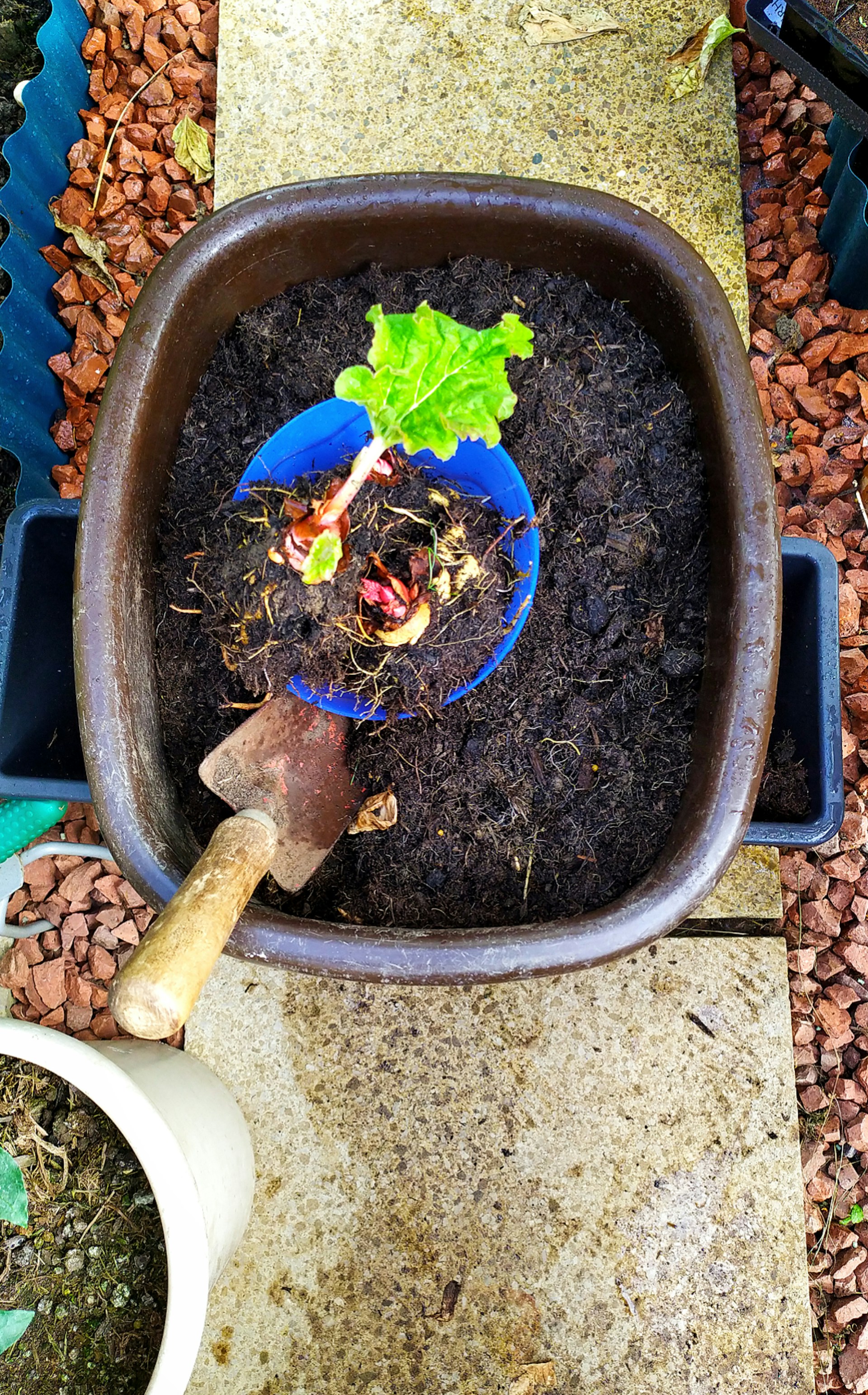
Move and divide rhubarb between November and March while it is dormant. Jim Fellows on lifting a crown, splitting it properly, the planting depth that kills crowns, and when you can harvest again.
How to Grow Blueberries in the UK: Complete Planting & Care Guide
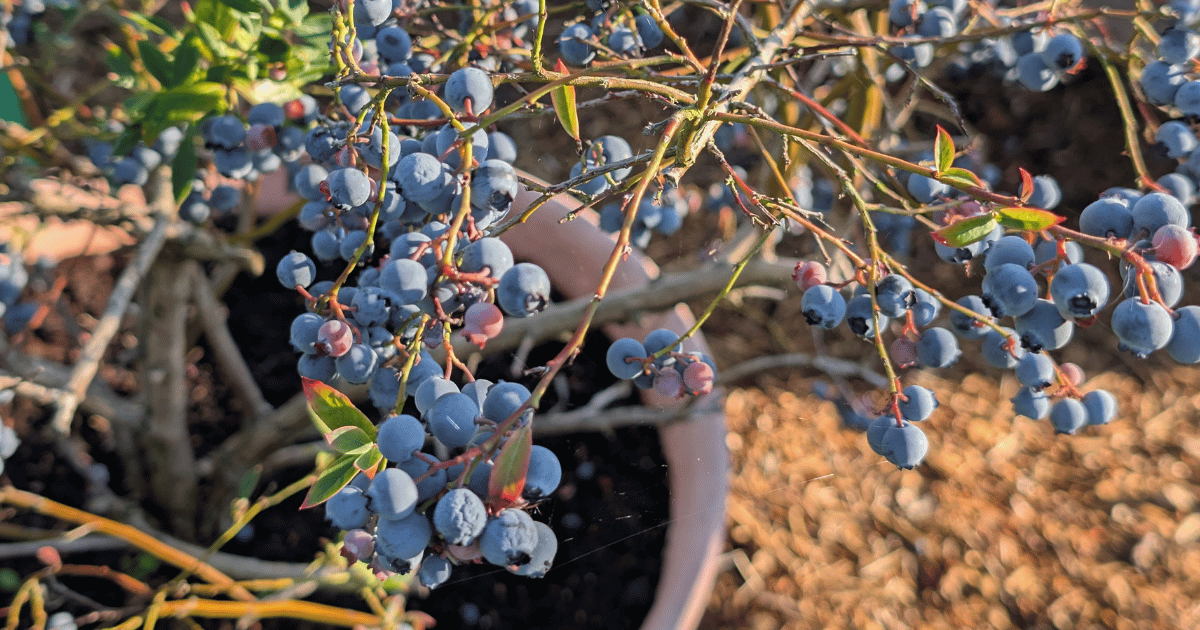
Blueberries are hardy, near pest-free and crop for 20+ years - but they are fussy about one thing: soil pH. Our complete UK guide covers the best varieties, ericaceous compost, container growing, rainwater, feeding, pruning and harvesting.
Harvesting & Storing UK Fruit and Veg: Month-by-Month Guide
A practical UK guide to harvesting fruit and vegetables at their peak and storing them correctly, from curing onions to keeping potatoes and apples fresh all winter.
What to Plant in May: Your UK Garden Guide
May is a pivotal month in the UK gardening calendar, marking the true arrival of warmer weather and the departure of late frosts across much of the nation. This comprehensive guide from Garden-Review will help you get the most out of your garden, detailing exactly what vegetables, herbs, flowers, and fruits you can confidently sow and plant for a bountiful year.