
How to Transplant Rhubarb: When and How to Move a Crown
Move and divide rhubarb between November and March while it is dormant. Jim Fellows on lifting a crown, splitting it properly, the planting depth that kills crowns, and when you can harvest again.
Key takeaways
- In practice that means between late autumn and early spring - roughly November to March .
- Rhubarb should be lifted and divided every five to six years as routine maintenance, whether or not you want to move it.
- Nothing exotic, but a mature rhubarb crown can weigh 20kg or more with soil attached, so use decent kit rather than a bent border fork.
- Rhubarb is going to sit in this spot for five or six years, so it is worth ten minutes of thought.
- Step 1 - Cut back any remaining top growth If you are working in November there may still be collapsed leaves and stalk bases on the crown.
Quick answer
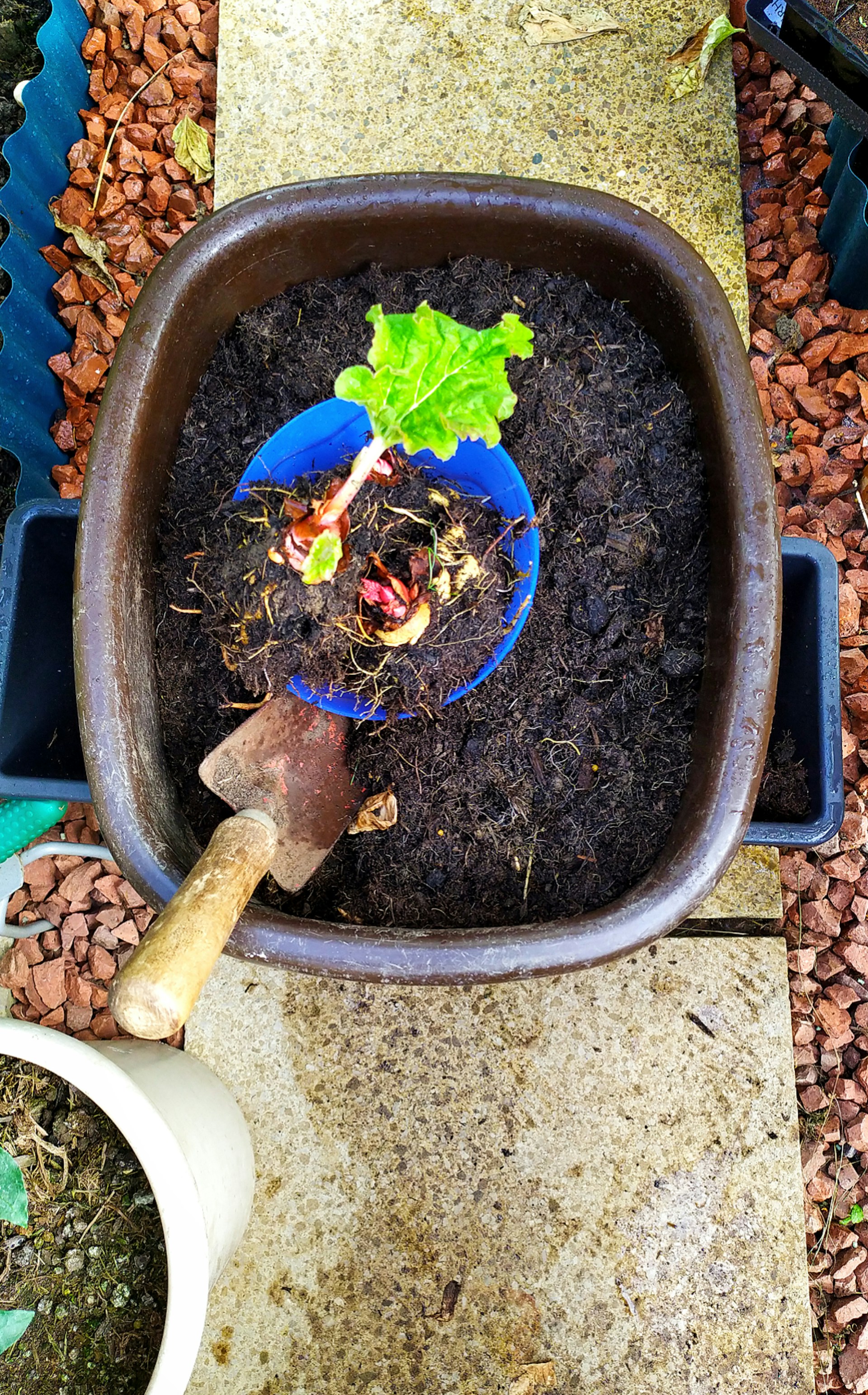
Transplant rhubarb while the plant is dormant - between late autumn and early spring (November to March in the UK), on a day when the ground is not frozen or waterlogged. Lift the whole crown with a garden fork, cut it into sections that each carry at least one fat bud and a good chunk of root, then replant 90cm apart in rich, free-draining soil with the buds sitting just at or a little below the surface. Do not harvest any stalks in the first season after moving.
Total job time: 1–2 hours for one established crown. Difficulty: easy, but heavy work. Best month: November or February.
By Jim Fellows - Garden Machinery Specialist, Garden-Review
Jim has spent more than two decades around British gardens and allotments, first in grounds maintenance and now writing about the tools and techniques that keep them productive. He has grown rhubarb on the same Lincolnshire allotment plot for over fifteen years and has lifted, split and re-sited more crowns than he cares to count - including two house moves with a Timperley Early in a builder's bucket.
Published: · Last reviewed: 9 September 2026 · Category: Growing Guides
Rhubarb is one of the most forgiving crops in the British garden, but it is not immortal in one spot. After five or six years a crown becomes congested, the stalks get thinner and stringier, and the centre of the plant turns woody and unproductive. Moving and dividing it fixes all of that - and gives you three or four new plants for nothing.
This guide covers when to transplant rhubarb in the UK, how to lift a crown without wrecking it, how to divide it properly, how deep to replant, and what to do (and not do) in the two seasons afterwards. It also covers the two situations where transplanting goes wrong most often: moving at the wrong time of year, and planting the crown too deep. If you are starting from scratch rather than moving an existing plant, read our companion guide on how to grow rhubarb first.
On this page
- When to transplant rhubarb in the UK
- Signs your rhubarb needs moving or dividing
- Tools and materials you will need
- Choosing and preparing the new site
- How to transplant rhubarb: step by step
- Planting depth - the mistake that kills crowns
- Transplanting rhubarb into a pot
- Aftercare and when you can harvest again
- Troubleshooting: what can go wrong
- Frequently asked questions
When to transplant rhubarb in the UK
Transplant rhubarb when it is dormant. In practice that means between late autumn and early spring - roughly November to March. The plant has died back above ground, all its energy is stored in the crown and roots, and it will not notice being lifted the way a plant in full leaf would.
If you want a single best window, take November. The soil is still warm enough for roots to settle before winter properly bites, and the crown then gets the cold spell it actually wants - rhubarb needs a period of chilling to break dormancy and produce a decent spring flush. February to early March is the next best option, and is often easier on heavy clay that sits wet all winter.
Jim's rule of thumb: if you can still see leaves, it is too early. If the buds have started to swell and show pink, you are at the back end of the window - move it, but expect a quiet first year.
Days to avoid
- Frozen ground. You will not get a fork in cleanly and you will snap roots rather than lift them.
- Waterlogged soil. Working sodden ground destroys the structure, and a divided crown sitting in cold water is the fastest route to crown rot.
- Anything in the growing season. Moving rhubarb in May or June is possible in an emergency (a house move, say) but you will lose a year of cropping and may lose the plant. If you have no choice, cut all the foliage off first, take as big a rootball as you can lift, and water it religiously.
Signs your rhubarb needs moving or dividing
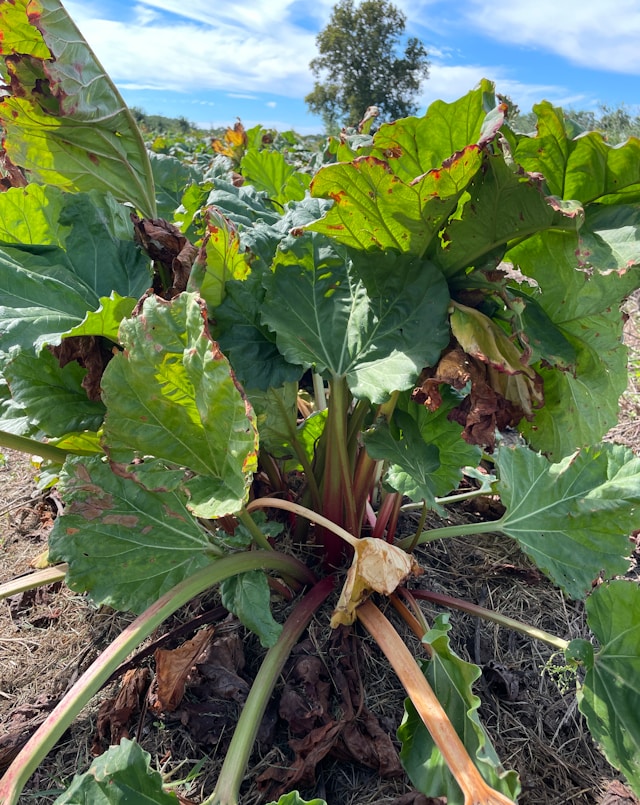
Rhubarb should be lifted and divided every five to six years as routine maintenance, whether or not you want to move it. Beyond that the crown gets so congested that the buds compete with each other and quality drops off. Look for these signs:
| What you are seeing | Likely cause | What to do |
|---|---|---|
| Lots of thin, spindly stalks instead of a few fat ones | Congested crown, too many competing buds | Lift and divide this winter |
| Dead, woody, hollow centre with growth only round the edges | Crown has aged out in the middle - normal after 5+ years | Divide and discard the old centre |
| Pale, floppy, slow growth | Too much shade - often from a tree or hedge that has grown since planting | Move to a sunnier spot |
| Repeated flowering spikes every year | Stress or old age in the crown | Remove flower stems, then divide in winter |
| Soft, brown, foul-smelling buds; stalks collapsing at the base | Crown rot - usually waterlogging | Do not replant infected material; see troubleshooting below |
Tools and materials you will need
Nothing exotic, but a mature rhubarb crown can weigh 20kg or more with soil attached, so use decent kit rather than a bent border fork.
- A full-size digging fork - the main lifting tool. A stainless or forged-head fork with a solid ash or fibreglass shaft. Border forks bend.
- A sharp spade - for slicing the crown and for the planting hole. A treaded blade saves your boot soles.
- An old bread knife, pruning saw or bolster chisel - for cutting through a dense, woody crown when the spade will not go cleanly.
- Well-rotted manure or garden compost - two full buckets per square metre. Fresh manure will scorch; it must be at least a year old.
- A wheelbarrow or heavy-duty tarpaulin - to move the crown without dragging it across the lawn.
- Gloves and a watering can.
Kit shortcuts
If your fork is past it, this is the job that will finish it off. Browse stainless steel digging forks and treaded digging spades on Amazon. For the ground prep, a bag or two of well-rotted farmyard manure is easier than sourcing a trailer-load if you only have one crown to move.
Choosing and preparing the new site
Rhubarb is going to sit in this spot for five or six years, so it is worth ten minutes of thought. Prepare the new bed before you lift the old crown - divisions should be out of the ground for the shortest time possible.
What rhubarb wants
- Full sun, or light dappled shade. It will survive in shade but the stalks will be thin and slow.
- Free-draining but moisture-retentive soil. Rhubarb is greedy and thirsty, but it will not tolerate sitting in winter water. On heavy clay, plant on a slight mound or build a raised bed.
- Slightly acidic to neutral soil, around pH 6.0–6.8. Most UK garden soil is fine as it is.
- Space. Allow 90cm (3ft) between crowns and the same from any wall or hedge. A mature plant is a metre across and casts real shade over anything next to it.
- Somewhere out of the way. Because you will not be digging this bed again for years, put it at the end of a plot rather than in the middle of a rotation.
Preparing the ground
- Clear perennial weeds completely. Couch grass, bindweed and ground elder are almost impossible to get out from under an established rhubarb crown later. Fork out every root fragment now.
- Dig over to a full spade's depth across an area about a metre square per plant.
- Work in two buckets of well-rotted manure or compost per square metre. Rhubarb is a heavy feeder and this is your one easy chance to get organic matter down where the roots will be.
- Let the bed settle for a few days if you can, so the crown does not sink as the soil drops.
How to transplant rhubarb: step by step
Step 1 - Cut back any remaining top growth
If you are working in November there may still be collapsed leaves and stalk bases on the crown. Pull or cut them away so you can see exactly where the buds are. Leaves are toxic - compost them rather than feeding them to livestock, though they are perfectly safe on a heap.
Step 2 - Mark out and drive the fork in wide
Work about 30cm (12in) out from the edge of the crown, not right up against it. Push the fork in vertically to its full depth, then work all the way round the plant, easing the fork back each time. You are cutting the anchoring roots and loosening the whole rootball before you try to lift anything.
Step 3 - Lever the crown out
Once it rocks freely, get the fork underneath and lever upward, working from two or three sides in turn rather than trying to flip it in one go. Lift with your legs - an old crown on wet soil is genuinely heavy. Slide it onto a tarp or into a barrow. Some deep roots will snap; that is fine and does no lasting harm.
Step 4 - Knock off surplus soil and inspect
Bang the crown gently against the ground or the barrow to shed loose soil so you can see the structure. You are looking for the buds, or "eyes" - fat pinkish-white points on the top of the crown. You also want to spot the dead woody centre and any soft, brown, rotten tissue, which gets cut out and binned.
Step 5 - Divide the crown
Drive a sharp spade straight down through the crown, or saw through it with an old bread knife if the tissue is woody. Aim for pieces roughly the size of a clenched fist to a small grapefruit.
Every division must have at least one strong bud and a decent portion of fleshy root attached. Two or three buds per division is ideal - those establish fastest. A big old crown will usually give you three or four good divisions plus a woody middle to throw away. Do not be tempted to make a dozen tiny pieces: single-bud scraps with little root take years to amount to anything.
Step 6 - Replant at the right depth
Dig a hole wide enough to spread the roots without folding them. Sit the division in with the buds just at soil level, or no more than 2.5cm (1in) below it. On heavy or wet ground, set the buds level with - or fractionally proud of - the surface. Backfill, firm gently with your boot, and check again that the buds have not disappeared under soil.
Step 7 - Water and mulch
Water in well even in winter - it settles soil around the roots and removes air pockets. Then mulch with a good layer of well-rotted manure or compost in a ring around the plant, keeping it clear of the buds themselves. Manure heaped over the crown traps moisture against it and invites rot.
Step 8 - Label it
A dormant rhubarb crown is invisible from December to March. More than one gardener has put a fork through their own newly transplanted divisions. Push a cane or marker in at each one.
Planting depth - the mistake that kills crowns
If a transplant fails, planting depth is the usual culprit. Gardeners instinctively bury a root as they would a shrub, and rhubarb hates it. Buried buds sit in cold, wet soil all winter and rot before they ever push through.
| Your soil | Where the buds should sit |
|---|---|
| Light, sandy, free-draining or prone to drying out | Up to 2.5cm (1in) below the surface |
| Average loam | Level with the surface, tips just visible |
| Heavy clay or ground that lies wet in winter | Level or slightly proud, ideally on a low mound or raised bed |
Transplanting rhubarb into a pot
Rhubarb can be grown in a container, but it is a large, hungry plant and a small pot will starve it. If you are moving a division into a pot rather than open ground:
- Use a container at least 50cm (20in) across and equally deep - think half-barrel, not patio pot.
- Fill with a soil-based compost such as John Innes No.3, enriched with well-rotted manure. Multipurpose compost alone runs out of nutrients by midsummer.
- Make sure drainage holes are genuinely open and raise the pot on feet.
- Water far more often than you would in the ground - a container crown will wilt in a dry fortnight. Feed with a general-purpose fertiliser in spring.
- Expect to divide and refresh the compost every two to three years rather than five.
Containers dry out fastest exactly when hosepipe restrictions bite, so it is worth having stored water to hand - see our guides to watering kit for a hosepipe ban and water butts and rainwater storage.
Aftercare and when you can harvest again
This is where patience pays. A transplanted crown is rebuilding its root system, and every stalk you pull is energy taken away from that job.
| Season after transplanting | What to do |
|---|---|
| First spring and summer | Harvest nothing at all. Let every leaf feed the crown. Water in dry spells, keep weeds down, remove any flower spike as soon as it appears. |
| Second year | Take a light crop only - a few stalks from each plant, and stop by early June. |
| Third year onward | Crop normally from spring until late June or early July, never taking more than about half the stalks at once. |
Ongoing care
- Harvest by pulling, not cutting. Grip low, twist and pull so the stalk comes away cleanly at the base. Cut stubs rot back into the crown.
- Mulch every autumn or early spring with well-rotted manure, keeping it off the crown.
- Remove flower stems immediately. Flowering diverts a huge amount of energy into seed production.
- Do not force it for at least two years. Forcing under a bucket or terracotta forcer is hard on the plant; a newly moved crown has nothing spare.
📖 For the full picture on soil, varieties, feeding, forcing and the harvesting calendar, see our main guide: How to grow rhubarb - a complete UK guide
Troubleshooting: what can go wrong
| Symptom | Cause | Fix |
|---|---|---|
| Nothing emerges the following spring | Buds planted too deep, or division had no viable bud | Scrape soil back to expose the crown top; if the tissue is firm and white it may still come. Wait until June before giving up. |
| Soft, brown, smelly crown; stalks collapse at the base | Crown rot, typically Phytophthora, driven by waterlogging | No chemical cure. Dig out and dispose of the plant, do not compost it, and do not replant rhubarb in that spot. Improve drainage before trying again elsewhere. |
| Weak, thin stalks in year one | Entirely normal after division | Leave it alone, feed and mulch, do not harvest. |
| Flower spike appears in the first year | Transplant stress | Cut it out at the base as soon as you see it. |
| Crown lifts easily but roots are riddled with white fungal sheets and black "bootlaces" | Honey fungus | Remove and dispose of affected material; do not move divisions from an infected plant to clean ground. |
Related guides
- How to grow rhubarb: a complete UK guide
- How to grow blueberries in the UK
- What to plant in September
- What to do in the garden in September
- Water butts and rainwater storage
- Beat the hosepipe ban: watering kit guide
How this guide was produced
This guide is based on established UK horticultural practice and long-running allotment experience of growing and dividing rhubarb. It is a technique guide rather than a product test: no specific tool mentioned here has been laboratory-tested by Garden-Review, and any tool recommendations reflect general category guidance rather than hands-on comparative testing. Growing conditions vary widely across the UK, so treat timings as a guide and adjust for your own soil and local climate.
Affiliate disclosure: some links on this page are affiliate links. If you buy through them we may earn a small commission at no extra cost to you. This never affects what we recommend or how we write our guides.
Frequently Asked Questions: How to Transplant Rhubarb: When and How to Move a Crown
Can you transplant rhubarb in spring?
Can you transplant rhubarb in summer?
How deep should rhubarb be planted?
How often should rhubarb be divided?
How far apart should transplanted rhubarb be planted?
Can I harvest rhubarb the year after transplanting?
How many plants will one crown give me?
Does transplanted rhubarb need feeding straight away?
Can rhubarb be moved to a spot where rhubarb grew before?
Tags
Comments
Join the conversation
Create a free account to leave comments, share photos, and connect with other gardeners.
Related Articles
How to Grow Rhubarb: A Complete UK Planting, Feeding and Harvesting Guide
Rhubarb crops every spring for the best part of a decade with almost no attention. Jim Fellows covers varieties, planting crowns, feeding, forcing, harvesting properly and the mistakes that kill a crown.
How to Grow Blueberries in the UK: Complete Planting & Care Guide
Blueberries are hardy, near pest-free and crop for 20+ years - but they are fussy about one thing: soil pH. Our complete UK guide covers the best varieties, ericaceous compost, container growing, rainwater, feeding, pruning and harvesting.
Harvesting & Storing UK Fruit and Veg: Month-by-Month Guide
A practical UK guide to harvesting fruit and vegetables at their peak and storing them correctly, from curing onions to keeping potatoes and apples fresh all winter.