
Best Air Compressors for Nail Guns
Looking for the best air compressors for nail guns in the UK in 2026? This guide compares 7 top air compressors for brad nailers, finish nailers, framing nailers, and flooring staplers. We explain which compressors suit DIY joinery, first-fix framing, and workshop use - including tank size, PSI, noise levels, and the best quiet compressors for UK home garages.
Key takeaways
- Seven compressors from Machine Mart and Hyundai matched to every common UK nail gun application — from pin nailers and brad guns to first-fix framing nailers and flooring staplers.
- The compressor requirements for different nailer types vary significantly — but not because of air volume.
- Because nail guns fire intermittently, the practical question is: how many nails can I fire before the compressor needs to cycle?
- The Clarke Bandit V is the lowest-cost entry point into pneumatic nailer use in this guide.
- ★ Why This Is Our Top Pick for Nail Gun Use The HY5508X is the compressor that the overwhelming majority of UK DIYers should buy for nail gun use.
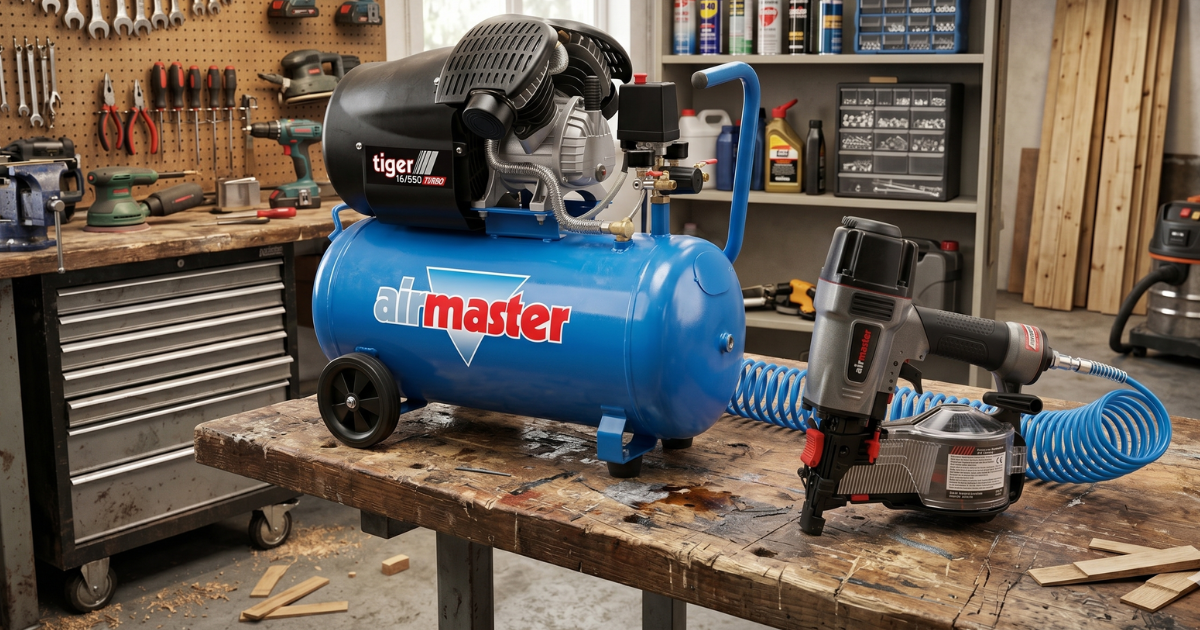
Best Air Compressors for Nail Guns UK 2026
Seven compressors from Machine Mart and Hyundai matched to every common UK nail gun application — from pin nailers and brad guns to first-fix framing nailers and flooring staplers. Includes the nail gun CFM guide, why tank size matters more than CFM for nailers, and which machine is best for which type of nailing work.
⚡ Quick Answer — Best Compressor for Nail Guns UK 2026
Pin nailer / brad nailer / interior 2nd fix - residential: Hyundai HY5508X 8L Silent (~£130–£160) - our Top Pick for most UK DIYers. Runs any 2nd fix nailer silently from a residential garage.
Brad nailer - budget, site use: Clarke Bandit V 8L (~£114–£130) — cheapest entry, portable, works for all brad and finish nailers.
Brad + finish nailer + occasional first-fix: Hyundai HY7524X 24L (~£180–£220) or Airmaster Tiger 8/260 24L (~£150–£180). First-fix framing nailers & flooring nailers: Clarke Raider 15/550 50L (~£250–£300) or Hyundai HY3050V 50L (~£270–£330). Professional site use — multiple tools + nailer: Airmaster 14/100P 100L belt-drive (~£400–£480).
Best all-round silent machine for home joinery: Hyundai HY27550 50L 60 dB (~£295–£370).
⚡ The Critical Difference Between Nail Guns and Spray Guns
Unlike spray painting which requires continuous air flow, nail guns fire in discrete bursts - typically consuming 0.1–0.4 cubic feet of air per shot. Between each nail, the compressor has time to partially or fully recharge the tank. This means the critical specification for nail gun use is tank size (your air reserve) rather than CFM output. A small 8L compressor with 4 CFM is perfectly capable of running a brad nailer all day - it simply cycles its motor every 20–30 nails to refill the tank. You will never experience pressure drop problems mid-nail the way you would mid-spray-pass.
Practical result: Almost any compressor in this guide handles any brad or finish nailer. The upgrade to a larger machine only becomes meaningful when you're running a high-consumption first-fix framing nailer at volume, or running a nailer simultaneously with other air tools.
All 7 Picks at a Glance
| # | Model | Tank | CFM | Noise | Nail Gun Suitability | Best For | Price |
|---|---|---|---|---|---|---|---|
| 1 | Clarke Bandit V | 8L | 4.2 CFM | ~90 dB | Pin · Brad · Finish · Staple | Budget site/outdoor use | ~£114–£130 |
| 2 | Hyundai HY5508X ★ Top Pick | 8L | 4 CFM | ~60 dB | Pin · Brad · Finish · Staple | Residential 2nd fix | ~£130–£160 |
| 3 | Airmaster Tiger 8/260 | 24L | 7–8 CFM | ~88 dB | All nailers incl. framing | Workshop multi-tool value | ~£150–£180 |
| 4 | Hyundai HY7524X | 24L | 5.2 CFM | ~62 dB | All nailers incl. light first-fix | Quiet 24L all-rounder | ~£180–£220 |
| 5 | Hyundai HY27550 | 50L | 11 CFM disp. / 6 CFM FAD | 60 dB | All nailers + spray + tools | Silent home joinery workshop | ~£295–£370 |
| 6 | Clarke Raider 15/550 | 50L | 14.5 CFM | ~90 dB | All nailers · dual tool use | First-fix / site budget pick | ~£250–£300 |
| 7 | Airmaster 14/100P | 100L | 14 CFM | ~75 dB | All nailers + multi-tool | Professional / site workshop | ~£400–£480 |
In This Guide
- Nail Gun Types - Which Do You Need?
- CFM & Tank Requirements by Nailer
- 1. Clarke Bandit V - Budget Portable
- 2. Hyundai HY5508X ★ Top Pick
- 3. Airmaster Tiger 8/260 — Value 24L
- 4. Hyundai HY7524X - Quiet 24L
- 5. Hyundai HY27550 - Silent 50L
- 6. Clarke Raider 15/550 - 1st Fix Budget
- 7. Airmaster 14/100P - Professional
- Setting the Right Pressure for Your Nailer
- Which Compressor for Which Nailing Job?
- Frequently Asked Questions
1. Nail Gun Types — Which One Do You Need?
The compressor requirements for different nailer types vary significantly — but not because of air volume. They vary because different nailers drive different nail gauges into different materials, requiring different amounts of pressure per shot. Understanding which nailer type you need determines which compressor is appropriate. Here's how they break down for UK DIY and trade work.
Pin Nailer (23-gauge)
0.1–0.3 CFM · 60–100 PSI
Fires headless 23-gauge pins 10–50mm. Invisible holes, minimal holding power. Used for delicate trim, beading, decorative mouldings, and temporarily holding glued assemblies while adhesive cures. Any compressor in this guide handles a pin nailer effortlessly.
Brad Nailer (18-gauge)
0.5–1 CFM · 60–100 PSI
Fires 18-gauge brad nails 15–50mm. The UK DIYer's most versatile nailer — architrave, skirting, dado rail, cabinet backs, beading, window boards. Small hole, modest but adequate holding power. The 18-gauge brad nailer handles approximately 90% of interior 2nd-fix DIY tasks.
Finish Nailer (15–16-gauge)
1–2.5 CFM · 70–120 PSI
Fires 15–16-gauge finish nails 25–64mm. Higher holding power than brad nails — used for heavier skirting boards, stair components, MDF panelling, and 2nd-fix work where the joint needs more strength. Slightly larger hole than a brad but still filled easily.
Flooring Nailer / Stapler
2–3 CFM · 70–100 PSI
Purpose-built for fixing tongue-and-groove solid hardwood and engineered flooring. Fires cleats or staples at a fixed angle into the tongue. Moderately demanding — higher than a brad nailer but manageable from a 24L machine. Repetitive operation makes tank size more important.
First-Fix / Framing Nailer (1st Fix)
2.5–4.5 CFM · 70–120 PSI
Fires large 10–12-gauge nails 50–90mm for structural work — timber framing, stud walls, decking joists, fencing, roof structure. Highest air consumption of any nailer. Needs a larger tank to maintain comfortable working pace. A 50L machine makes framing work genuinely productive.
Staple Gun / Upholstery Stapler
0.5–1.5 CFM · 60–100 PSI
Fires wide-crown staples for upholstery, fabric, insulation, roofing felt, carpet grippers. Similar air requirement to a brad nailer. An 8L compact machine handles upholstery staplers for furniture, workshops, and light trade use without any difficulty.
2. CFM & Tank Requirements by Nail Gun Type
Because nail guns fire intermittently, the practical question is: how many nails can I fire before the compressor needs to cycle? The answer depends on tank size, working pressure, and the air consumed per nail - not on CFM output. The table below shows the minimum practical tank size for comfortable working pace, not the absolute minimum for the gun to operate.
| Nail Gun Type | CFM Needed | PSI at Gun | Min Practical Tank | Minimum pick from this guide |
|---|---|---|---|---|
| Pin nailer (23-gauge) | 0.1–0.3 CFM | 60–100 PSI | 6L | Clarke Bandit V or HY5508X |
| Brad nailer (18-gauge) | 0.5–1 CFM | 60–100 PSI | 6–8L | Clarke Bandit V or HY5508X |
| Finish nailer (15–16-gauge) | 1–2.5 CFM | 70–120 PSI | 8L | HY5508X or Bandit V |
| Upholstery stapler | 0.5–1.5 CFM | 60–100 PSI | 6–8L | HY5508X or Bandit V |
| Flooring nailer / stapler | 2–3 CFM | 70–100 PSI | 24L | HY7524X or Tiger 8/260 |
| Roofing nailer | 2–3 CFM | 70–120 PSI | 24L | HY7524X or Tiger 8/260 |
| First-fix / framing nailer | 2.5–4.5 CFM | 70–120 PSI | 50L | Raider 15/550, HY3050V or HY27550 |
ⓘ Why PSI Matters More Than CFM for Nail Guns
Every compressor in this guide produces 7–8 bar (100–116 PSI) maximum pressure - more than sufficient for any nail gun, which typically operates at 60–120 PSI. However, always set your compressor regulator to the manufacturer's recommended operating pressure for your specific nail gun, not maximum. Over-pressurising a brad nailer drives nails too deeply and splits delicate timber. Set it 10–15 PSI below the tool's maximum and adjust upward by small increments until the nail seats correctly.
Setting the Right Pressure for Your Nail Gun
Getting the operating pressure right is as important as matching the compressor size. Every compressor in this guide produces 100–116 PSI maximum — far higher than any nail gun's working pressure. Always set the regulator down to your nailer's specified operating range before nailing. Here's how to dial in the correct setting.
🔧 Start low, adjust upward
Begin at the bottom of the recommended pressure range for your nail gun (typically 60–70 PSI for brad nailers, 80–90 PSI for finish and framing nailers). Fire a test nail into a scrap piece of the same material you're working with. If the nail sits proud (not driven far enough), increase pressure by 5 PSI increments. If it sinks below the surface, reduce pressure. Stop when the nail sits flush or with a very shallow set that can be filled.
⚠ Never exceed maximum PSI
Running a nail gun above its rated maximum PSI damages the tool's internal components, particularly O-rings and driver mechanisms. It can also create a safety hazard if nails are driven with excess force, potentially blowing through thin materials or deflecting unpredictably. The maximum PSI is printed on the nailer body — always stay below it.
💡 Adjust for material hardness
Softwood MDF and pine require lower pressure than hardwood oak or dense plywood. A pressure setting that works correctly in pine softwood may leave nails proud in hardwood — increase by 5 PSI. Similarly, very thin or delicate materials like pre-finished trim may require lower pressure to prevent surface bruising. Re-test with each new material type.
💧 Add inline oiler for nailer life
Air nailers have internal moving parts that benefit from light lubrication. Adding 3–5 drops of pneumatic tool oil into the nailer's air inlet before each session significantly extends the tool's working life. Some nailers specify an inline oiler — if yours does, fit one. Do not use WD-40 or general lubricants — use dedicated pneumatic tool oil only.
Which Compressor for Which Nailing Job?
Interior 2nd-fix — residential garage
Hyundai HY5508X — 60 dB, 15kg, use at any hour
2nd-fix — budget, site / detached workshop
Clarke Bandit V — lowest price, portable, adequate
2nd-fix extended sessions + flooring — quiet
Hyundai HY7524X — 24L, 62 dB, fewer motor cycles
Workshop all-rounder — nailers + spray painting
Hyundai HY27550 — 50L silent, covers both applications
First-fix framing — detached garage, budget
Clarke Raider 15/550 — 50L, 14.5 CFM, most capable per £
2nd-fix + flooring — workshop, not residential
Airmaster Tiger 8/260 — 24L, twin outlets, best value
Professional / trade — all-day nailers + tools
Airmaster 14/100P — belt-drive, 100L, all-day commercial use
Frequently Asked Questions
★ Garden-Review Verdict — Nail Gun Compressors
Nail guns are the most forgiving air tool application for compressor selection — almost any machine above 6 litres and 4 CFM handles 2nd-fix nailers without issue. The decision that genuinely matters for most UK DIYers is not CFM but noise: the Hyundai HY5508X at 60 dB allows you to fit skirting and architrave in a residential home at almost any hour without neighbour concern, while the Clarke Bandit V at 90 dB cannot be used in the same setting without causing genuine noise disruption.
The step up to a 24L machine (HY7524X or Airmaster Tiger 8/260) is worth it when you need a flooring nailer, extended nailer sessions without motor-cycling interruptions, or the flexibility of a compressor that handles other tools as well as nailers. For first-fix framing work, the Clarke Raider 15/550 or Hyundai HY3050V are the correct 50L machines. For professional carpenters and joiners running nailers all day, the Airmaster 14/100P is the investment that matches the workload.
★ Top Pick — most UK DIYers
Hyundai HY5508X
8L · 60 dB · £130–£160
Budget site / outdoor
Clarke Bandit V
8L · 90 dB · £114–£130
Quiet 24L for flooring + sessions
Hyundai HY7524X
24L · 62 dB · £180–£220
First-fix framing
Clarke Raider 15/550
50L · 90 dB · £250–£300
Nail gun CFM and PSI requirements sourced from Quincy Compressor, All About Air Compressors, Screwfix Buying Guide, and Nailer Guy (all May 2026). HY5508X and HY7524X specifications sourced from Hyundai Power Equipment UK and Amazon UK authorised listings. Clarke Bandit V and Airmaster specifications from Machine Mart UK and Clarke International. Airmaster 14/100P duty cycle and belt-drive pump speed from Machine Mart technical documentation. Hyundai HY27550 FAD (150 L/min / 6 CFM) confirmed from multiple Hyundai UK authorised stockists. Prices are guide ranges as of May 2026 — verify current pricing before purchase. James Hartley is Workshop Tools Editor at Garden-Review.co.uk. He holds City & Guilds Level 3 Engineering and has no commercial relationship with Machine Mart, Clarke, Airmaster, or Hyundai Power Equipment.
Tags
Comments
Join the conversation
Create a free account to leave comments, share photos, and connect with other gardeners.
Related Articles
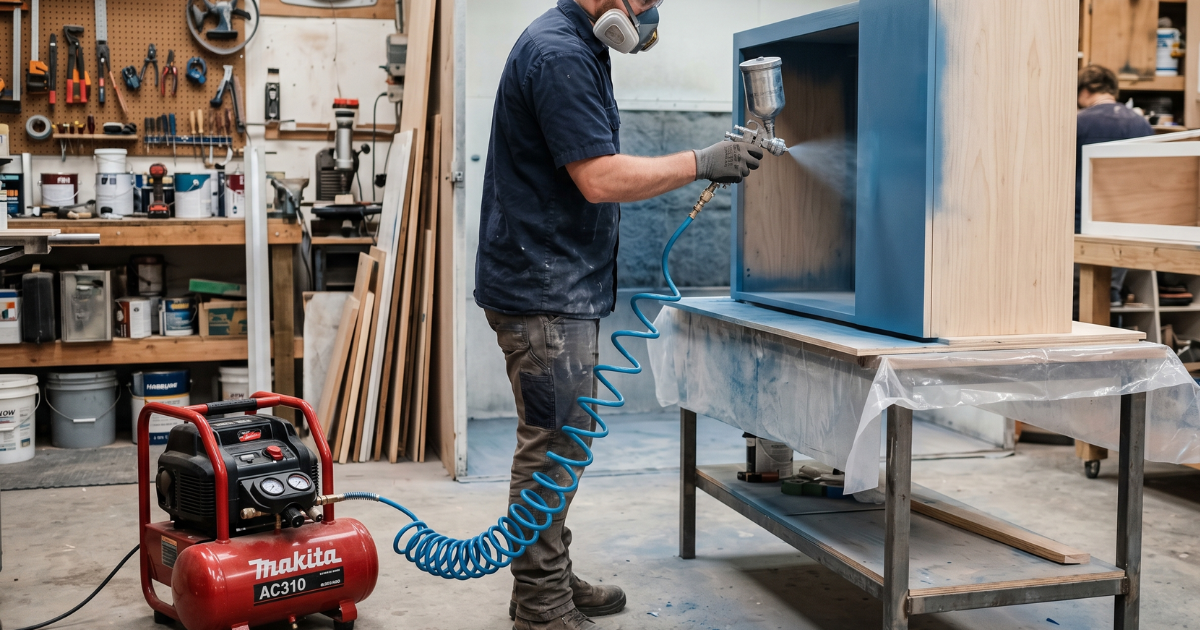
Best Air Compressors for Spray Painting
Looking for the best air compressors for spray painting in the UK in 2026? This guide compares 6 of the best spray painting air compressors, covering everything from quiet airbrush compressors to high-CFM workshop machines for HVLP spray guns and automotive bodywork. We explain the real difference between advertised CFM and usable Free Air Delivery (FAD), helping you choose the right compressor for furniture spraying, fences, cabinets, LVLP touch-up work, and full automotive paint jobs.
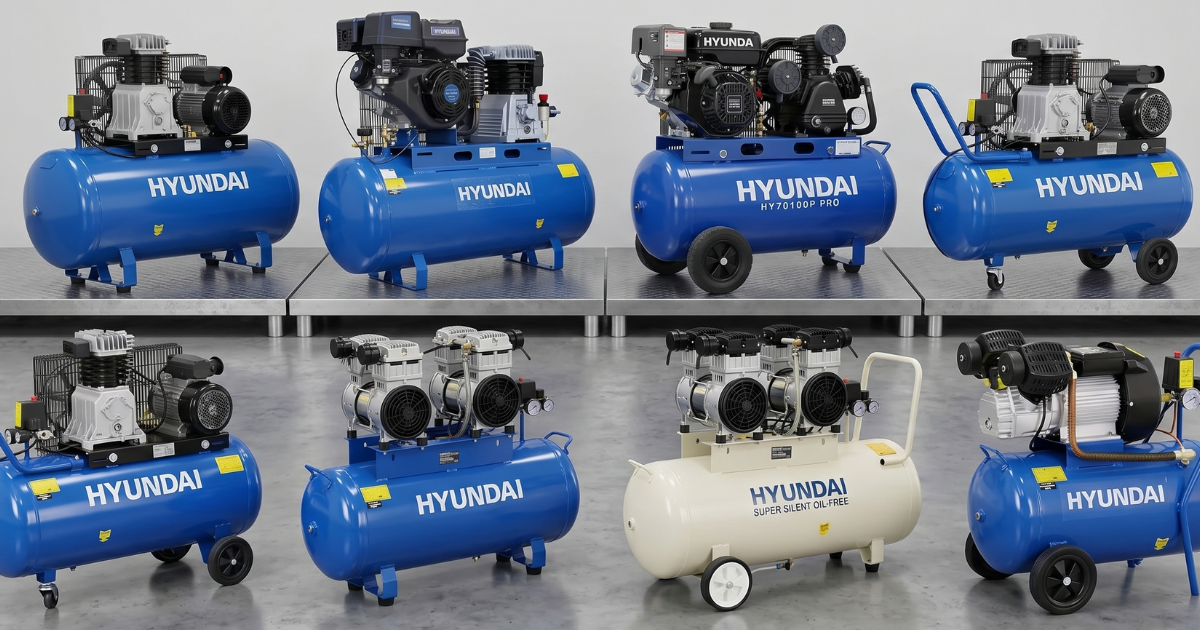
Hyundai Air Compressor Buying Guide 2026
Choose the right Hyundai air compressor with this 2026 UK buying guide. From quiet oil-free models like the HY7524X to powerful V-Twin and belt drive compressors such as the HY3050V and HY3150SX, this guide helps you match Hyundai performance and FAD output to your tools for home, garage, or professional use.
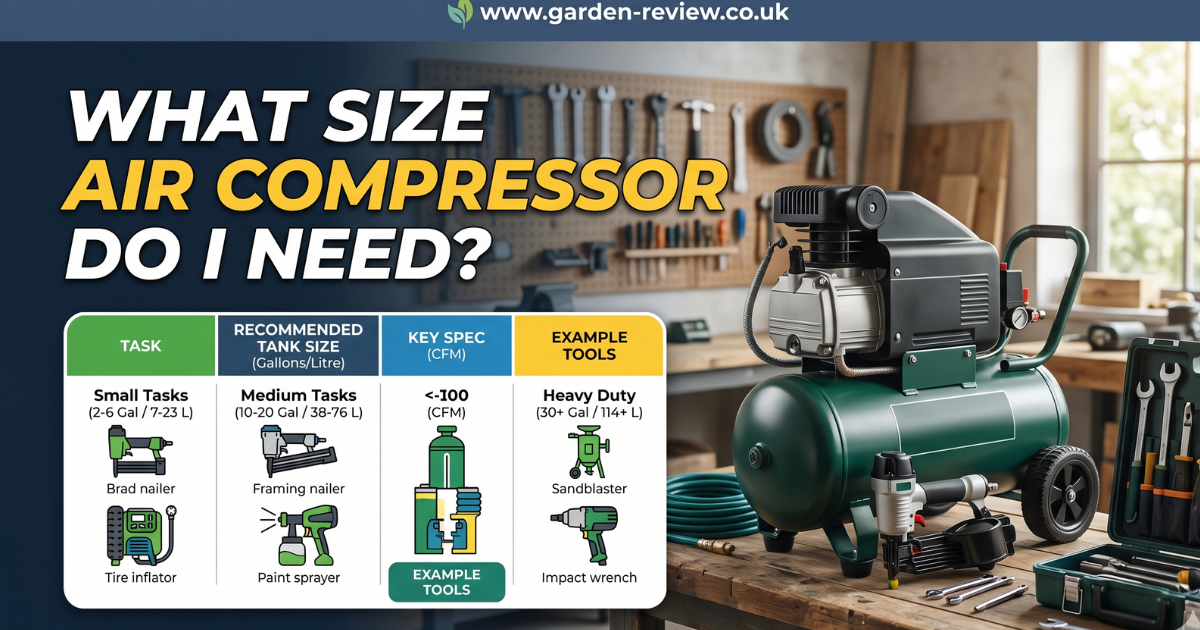
What Size Air Compressor Do I Need? Workshop Guide
CFM, tank size, PSI, duty cycle - explained in plain English, with a step-by-step sizing method and a full tool-by-tool chart for every common application.
Air Compressor Buyer’s Guide for 2026
Air Compressor Buyer’s Guide UK 2026: Learn CFM, PSI, tank sizes and the best compressor for DIY, garages and workshops.
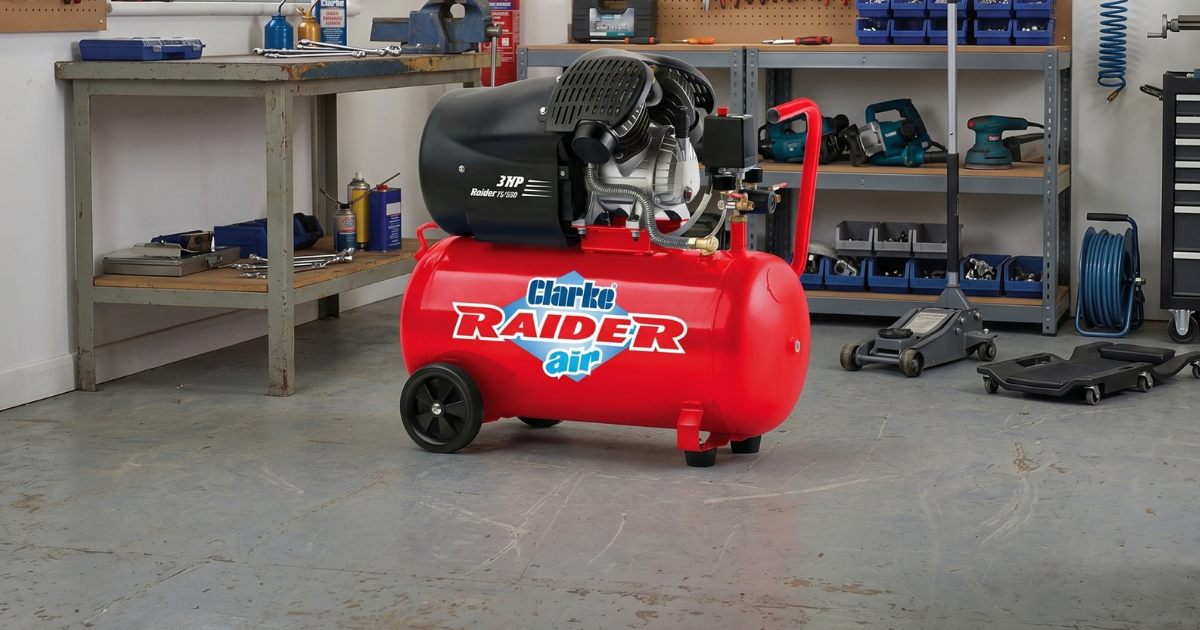
Best Air Compressors for DIY UK
Looking for the best air compressors for DIY UK projects in 2026? This guide compares 9 of the best DIY air compressors available, covering everything from compact 8L compressors for nail guns and tyre inflation to powerful 100L workshop models for spray painting and air tools. We explain which compressor is best for home garages, quiet residential use, DIY workshops, and sustained tool use - with honest pros, cons, noise levels, CFM guidance, and real-world UK buying advice.
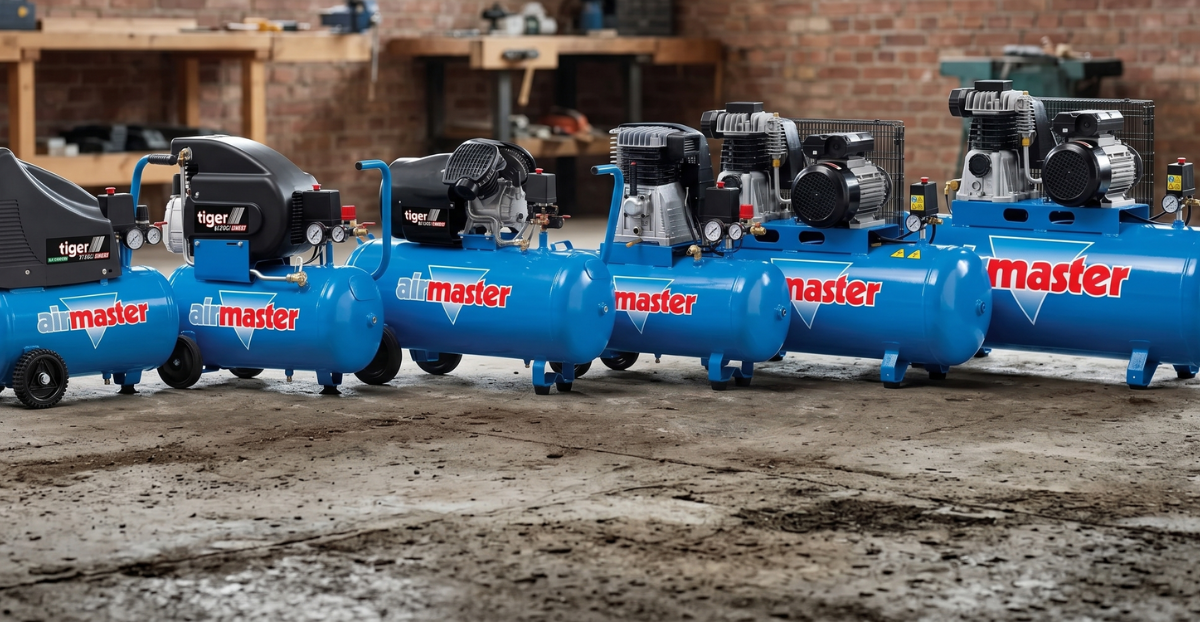
Airmaster Air Compressor Buying Guide 2026
Everything you need to know before buying an Airmaster compressor - from the compact Tiger range for home workshops to the heavy-duty belt-driven industrial models.