
Hyundai HY27550X Review (2026) - 50L 1500W Oil-Free Low Noise Air Compressor
The HY27550X is sold as a 'silent' compressor, a label that invites scepticism, because most machines wearing it are neither. What I can tell you is what the engineering specification actually means, what owner reports from verified buyers confirm in real-world use, and where the honest limits of this machine lie. The short version: the spec holds up, with some important context that the marketing doesn't always make clear. Here is the full picture
Key takeaways
- The Hyundai HY27550X is a 50-litre, oil-free, low-noise electric air compressor powered by twin 750W motors giving a combined 1,500W output.
- The most important thing to understand about the HY27550X, and about compressor specifications in general - is the difference between two numbers that appear in every listing but are rarely explained clearly.
- The HyundaiHY27550X uses two 750W motors running independently at 1,450 RPM, each directly connected to an oil-free diaphragm pump mounted on anti-vibration rubber mounts.
- The HY27550X is rated at 60 dB(A) - a specification that appears in every listing but rarely comes with meaningful context.
- The 50-litre steel tank is the machine's second major asset after the noise level.
Our Rating
Hyundai HY27550X Review (2026) - 50L 1500W Oil-Free Low Noise Air Compressor
★ Our Expert Verdict
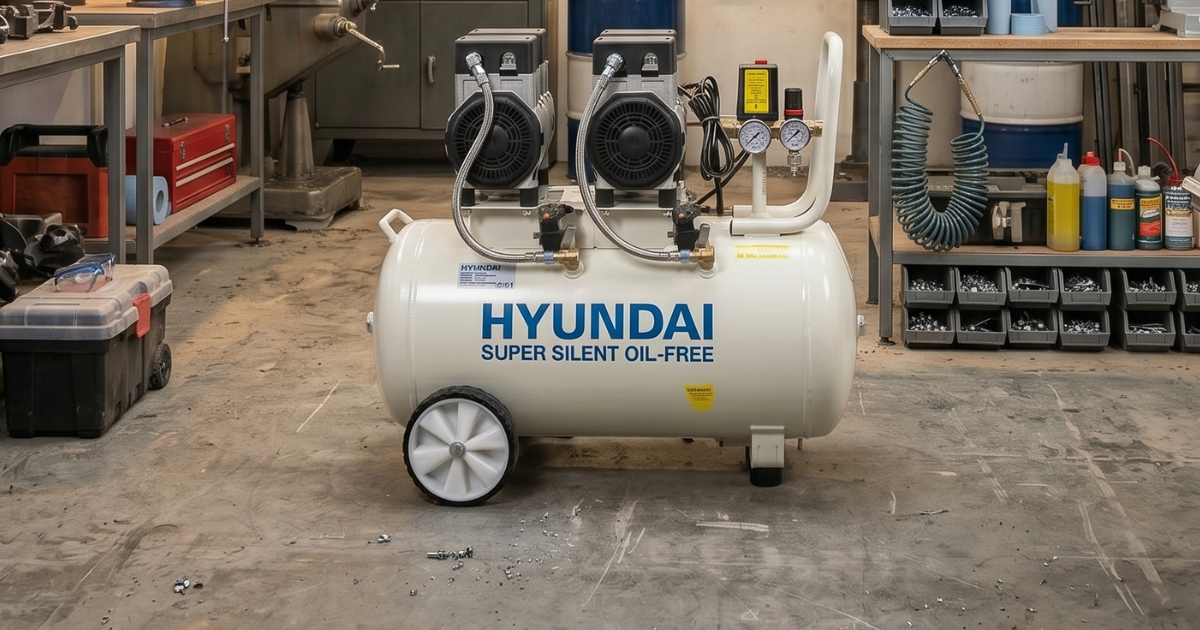
The Hyundai HY27550X earns its place as one of the most practically useful 50-litre compressors available for domestic workshop and trade use in the UK. At 60 dB, it is meaningfully quieter than conventional piston machines of equivalent output - a claim that specification analysis and the consistent weight of owner reports both support.
The twin 750W motors running at a slow 1,450 RPM via oil-free diaphragm pumps produce 11CFM air displacement across a 50-litre steel tank, with twin Euro quick-release outlets and a pressure regulator with dual gauges. It runs on a standard 13A household socket and requires essentially zero maintenance beyond draining the condensation trap.
At around £255 direct from Hyundai, it represents competitive value for this specification. The honest limitations are real: the Free Air Delivery of approximately 5.28CFM is significantly lower than the headline 11CFM displacement figure, 60 dB is quiet for a compressor but not genuinely silent, and spray painting full panels will test its recovery time. For the target audience, home workshop users, bodywork enthusiasts, and tradespeople running nailers and tyre inflators - it is a well-engineered, right-sized machine at a fair price.
4.5 / 5 — Highly Recommended for Workshop & Trade Use
Noise Level
★★★★★
Air Output
★★★★☆
Ease of Use
★★★★★
Value for Money
★★★★★
Hyundai HY27550X — 1500W 50L Oil-Free Low Noise Electric Air Compressor, 11CFM, 118PSI
Free UK delivery · Hyundai direct · 2-Year Warranty · Runs on standard 13A socket
In This Review
- Overview & Who It's For
- Full Specifications
- CFM Explained — Displacement vs FAD
- Twin-Motor System & Oil-Free Design
- Noise Level - 60 dB in Context
- 50L Tank, Pressure & Recovery
- Outputs, Connections & Controls
- What Owners Report — Real-World Use
- Who Should Buy This?
- Honest Limitations
- Pros & Cons
- Competitor Comparison
- Maintenance Guide
- Frequently Asked Questions
- Our Verdict
1. Overview - What Is the HY27550X and Who Is It For?
The Hyundai HY27550X is a 50-litre, oil-free, low-noise electric air compressor powered by twin 750W motors giving a combined 1,500W output. It is designed to bridge a specific and genuinely underserved gap in the UK market: the space between small 6–24 litre portable compressors that are quiet but run out of air quickly, and large-capacity belt-drive oil-lubricated machines that are powerful but loud, heavy, and maintenance-intensive.
It runs on a standard 13 amp household socket, no industrial supply, no dedicated circuit - which matters enormously for the target buyer: the home workshop user in a domestic garage, the bodywork enthusiast painting panels at weekends, the tradesperson who needs to run a nailer or tyre inflator on a residential property. At 60 dB, the engineering specification places it in a genuinely usable noise class for residential use, a claim that the consistent weight of owner reports supports.
🔧 Who Is This For?
Home workshop users in domestic garages who need a capable compressor without the noise of a conventional piston machine. Bodywork and painting enthusiasts who need clean, oil-free air output. Tradespeople - decorators, carpenters, auto technicians - who run nailers, brad guns, and tyre inflators.
Not suited to heavy continuous-duty industrial use, spray painting complete vehicles without a pause-and-recover approach, or applications requiring more than approximately 5.28CFM of sustained Free Air Delivery.
2. Full Specifications
| Specification | Detail |
|---|---|
| Model | HY27550X |
| Motor Configuration | 2 × 750W Hyundai direct-drive motors (1,500W combined) |
| Motor Speed | 1,450 RPM (4-pole slow-running) |
| Rated Power | 1,500W / 2HP |
| Voltage / Supply | 230V - standard UK 13A 3-pin plug |
| Tank Capacity | 50 litres — steel tank |
| Air Displacement | 11CFM / 300 litres per minute |
| Free Air Delivery (FAD) | ~5.28CFM / 150 litres per minute |
| Max Pressure | 118 PSI / 8 bar |
| Discharge Pressure | 100 PSI / 7 bar |
| Lubrication | Oil-free diaphragm pumps — zero maintenance |
| Noise Level | 60 dB(A) — manufacturer rated |
| Air Outlet Connection | Twin Euro quick-release outlets |
| Pressure Gauges | Twin — tank pressure + regulated output pressure |
| Condensation Trap | Water / condensation trap included |
| Safety Features | Automatic cut-out switch · Safety valve · Pressure regulator |
| Mobility | 2 large wheels · 2 rubber-mounted feet · Front carry handle |
| Cable Length | 1 metre |
| Net Weight | 39 kg (37 kg per some retailer listings) |
| Dimensions (H × W × L) | 630 × 300 × 650 mm |
| Warranty | 2 years (Hyundai standard) |
| Price | ~£255 inc VAT · Free UK delivery (Hyundai direct) |
📕 Hyundai HY27550X User Manual 2026(891.7 KB)⬇
3. CFM Explained - Why Displacement and FAD Are Not the Same Number
The most important thing to understand about the HY27550X, and about compressor specifications in general - is the difference between two numbers that appear in every listing but are rarely explained clearly. The HY27550X is advertised as delivering 11CFM. The actual usable air delivery figure is approximately 5.28CFM. Both numbers are accurate. Here is why they differ, and why it matters.
Air Displacement (11CFM / 300 L/min) is the theoretical volume of air the pump can sweep per minute, calculated from pump geometry alone. It assumes the pump is drawing in and immediately expelling air with no backpressure, a condition that does not exist in actual compression. It is the gross cylinder output before any real-world losses are applied.
Free Air Delivery (FAD, ~5.28CFM / 150 L/min) is the actual volume of compressed air delivered to tools at working pressure. It accounts for the losses from compressing air against resistance, valve inefficiency, heat, and mechanical friction. FAD is always substantially lower than displacement - for the HY27550X, approximately 48% of the headline figure. This gap is consistent with the class and the physics: it is not a failing specific to this machine, but it is a reality that the headline 11CFM figure obscures.
This distinction is well established in compressor forums. A thread on the Detailing World automotive forum specifically identified this gap when comparing the HY27550 to competing machines, noting that the Clarke Shhh comparison produced a similar displacement-to-FAD drop, and that "FAD is the key metric" for sizing tools - not the headline displacement number.
⚠ Always Size Tools Against FAD — Not Displacement
When checking whether the HY27550X will run a specific air tool continuously, compare the tool's CFM requirement against the FAD figure (~5.28CFM), not the 11CFM displacement. The 50-litre tank provides a useful buffer for burst demand; the FAD limitation is most critical for tools that run continuously rather than intermittently.
| Tool / Application | Typical CFM Required | HY27550X Suitability |
|---|---|---|
| Tyre inflation (car) | 2–4 CFM burst | ✓ Excellent — tank absorbs burst demand comfortably |
| Brad / nail gun (intermittent) | 0.5–1.5 CFM | ✓ Excellent — well within sustained FAD |
| Blow gun / dust clearing | 1–3 CFM | ✓ Excellent — comfortable headroom |
| Impact wrench (intermittent) | 3–5 CFM | ✓ Good — within FAD; recovery needed on sustained cycles |
| HVLP spray gun (small panels) | 3–6 CFM | ⚠ Marginal — short bursts fine; continuous panel work requires pause-and-recover technique |
| DA sander (sustained use) | 5–8 CFM | ✗ Limited — exceeds sustained FAD; compressor cycles continuously |
| Sandblasting cabinet | 10–20+ CFM | ✗ Not suitable — well beyond sustained output |
4. The Twin-Motor System and Oil-Free Design - Why Both Matter
The HyundaiHY27550X uses two 750W motors running independently at 1,450 RPM, each directly connected to an oil-free diaphragm pump mounted on anti-vibration rubber mounts. This configuration is the engineering reason for the machine's low noise output, each motor is doing half the work of a single equivalent-output motor, which means less mechanical stress, less vibration, and significantly less noise per unit of output.
The 1,450 RPM operating speed is the key number. Conventional direct-drive piston compressors typically run at 2,800–3,000 RPM - roughly double the speed of the HY27550X. As Hyundai's own documentation states: "A slow-running, 4-pole motor operating at 1,450 RPM offers reduced noise and results in less wear and tear on internal components, which can extend the compressor's lifespan." The anti-vibration rubber mounts decouple the motor-pump assemblies from the tank structure, preventing vibration from travelling through the steel body and amplifying into acoustic noise.
The oil-free diaphragm pumps address a separate and equally important concern. Conventional oil-lubricated piston compressors carry a risk of oil contamination in the air supply, a problem for spray painting (oil produces fisheye defects in paint), for tyre inflation, and for sensitive pneumatic equipment. The HY27550X's oil-free design produces clean compressed air from day one without any additional filtration. Combined with the condensation trap on the outlet, the air supply is oil-free and moisture-managed, which is why bodywork and painting applications are specifically highlighted in Hyundai's product documentation as target uses.
Low RPM Advantage
Less Noise, Less Wear
1,450 RPM versus 2,800–3,000 RPM on conventional machines. Half the mechanical speed means substantially less noise from reciprocating parts, reduced heat generation, and extended pump lifespan — confirmed in Hyundai's technical documentation.
Oil-Free Advantage
Zero Contamination Risk
Clean air to every connected tool, no oil changes, no contamination risk in paint or tyres, no oil-separator maintenance. The air supply is genuinely clean from the first use.
Twin Motor Advantage
Shared Load, Lower Stress
Each motor runs at 750W — well within its rated capacity. Running at partial load versus maximum load extends motor lifespan substantially and reduces heat generation during prolonged use.
13A Socket Advantage
No Special Supply Needed
Combined 1,500W draw at full load sits well within a standard 13A household socket capacity. No dedicated 16A or 32A circuit required. Plug in and use, anywhere a standard socket exists.
5. Noise Level - What 60 dB Actually Means in Context
The HY27550X is rated at 60 dB(A) - a specification that appears in every listing but rarely comes with meaningful context. Understanding what that number actually represents is essential for making an informed purchase decision.
60 dB is approximately the level of a normal conversation at one metre, or the ambient hum of a quiet office. A conventional direct-drive piston compressor of similar output typically operates at 85–100 dB - a level that requires hearing protection for extended use and that penetrates walls with sufficient force to disturb adjacent occupants. On the logarithmic decibel scale, the difference between 60 dB and 90 dB represents a perceived loudness roughly eight times greater. That is not a marginal difference; it is the difference between a machine you can talk over and one you cannot.
Verified owner reports consistently support the 60 dB rating. At Sitebox, which holds seven verified owner reviews of the HY27550 series (rating 5/5), buyers described it as "very quiet compared to standard piston compressors" and noted it is "not quiet" in absolute terms "but compared to other makes" it represents a clear step change. One reviewer specifically noted it would suit "anyone who wants a quiet one." On the Detailing World forum, a user who selected the competing Clarke Shhh 50/350 over the Hyundai (for its marginally higher FAD) nonetheless acknowledged the Hyundai's noise credentials were strong within the low-noise category.
| Reference Point | Typical dB Level | Context |
|---|---|---|
| Whisper | 30 dB | Near silence |
| Normal conversation at 1m | 60 dB | Typical indoor speech level |
| HY27550X operating | 60 dB | Manufacturer rated; consistent with owner reports |
| Domestic vacuum cleaner | 75 dB | Typical household appliance at 1m |
| Conventional piston compressor | 85–100 dB | Hearing protection required above 85 dB |
| Angle grinder | ~100 dB | Significant hearing risk without protection |
One honest note from the owner report evidence: while 60 dB is genuinely quiet for a compressor, it is not genuinely silent. The machine is clearly audible in the room it occupies. The specific character of the noise, a smooth, relatively low-frequency hum rather than the sharp mechanical clatter of a reciprocating piston - is easier to work alongside and easier for walls to attenuate. For a domestic garage or on-site trade use, 60 dB is a practically residential-friendly operating level; for a recording studio or medical environment requiring near-silence, a different class of machine is needed.
6. The 50-Litre Tank —- Pressure, Recovery and Practical Capacity
The 50-litre steel tank is the machine's second major asset after the noise level. Understanding how tank size interacts with FAD and tool consumption helps you plan real-world usage accurately.
The tank stores compressed air as a buffer between the pump's continuous output and a tool's intermittent demand. When a nail gun fires, the instantaneous demand spike, which may briefly require far more than 5.28CFM, is absorbed by stored tank pressure rather than relying entirely on the pump's sustained FAD. The larger the tank, the longer you can run intermittent-demand tools before the pressure drops below the tool's preferred operating range and the compressor needs to top up.
Based on the manufacturer's specified pump output (300 L/min displacement) and tank capacity (50 litres / 8 bar maximum), the theoretical cold fill time from atmospheric to maximum pressure is approximately 3–4 minutes, a figure that aligns with the physics and is consistent with what owners of this class of machine report for similar specifications. Recovery from working pressure after a moderate spray painting burst is typically 60–90 seconds for machines of this pump rating, providing a natural working rhythm of spray-pause-spray that experienced panel painters are already familiar with.
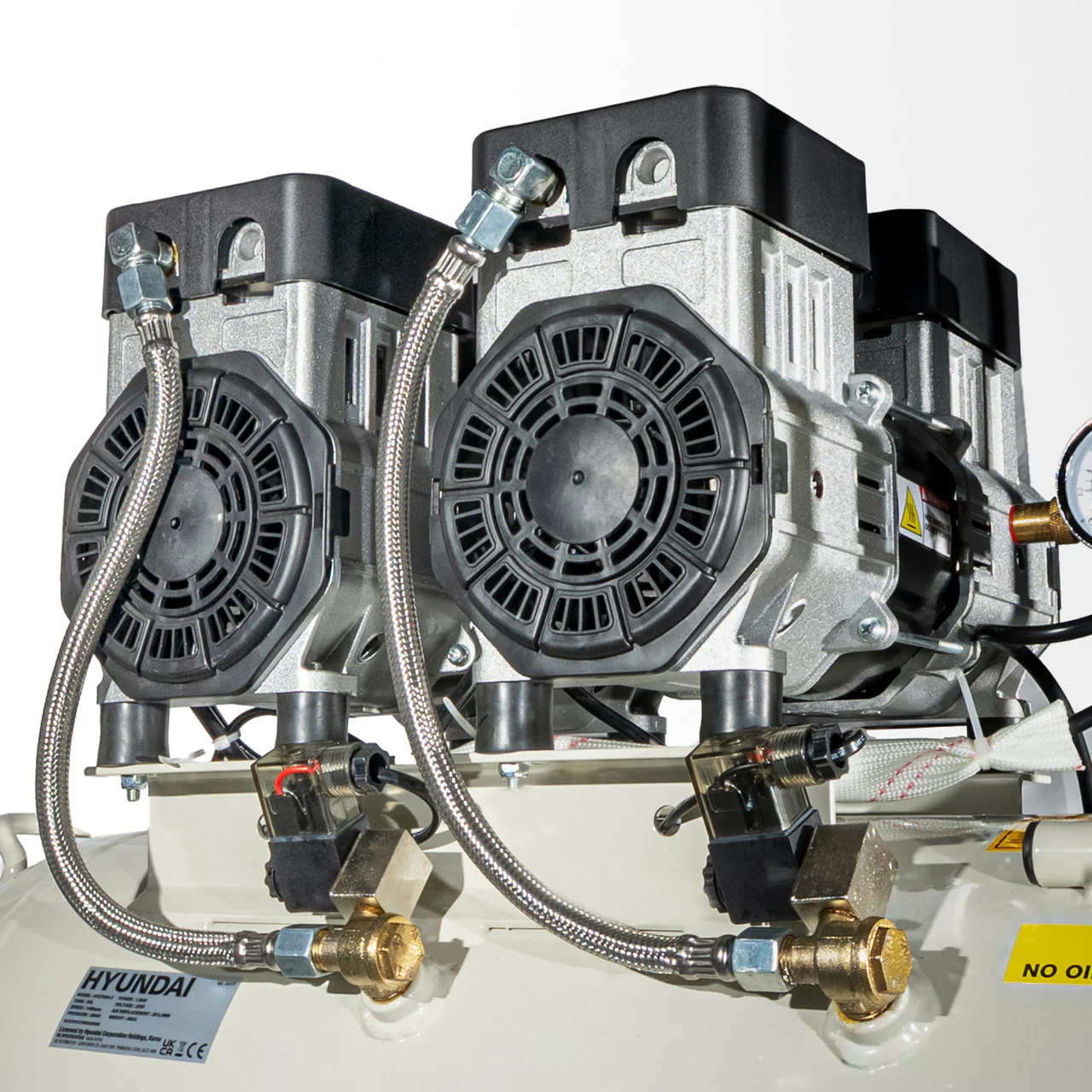
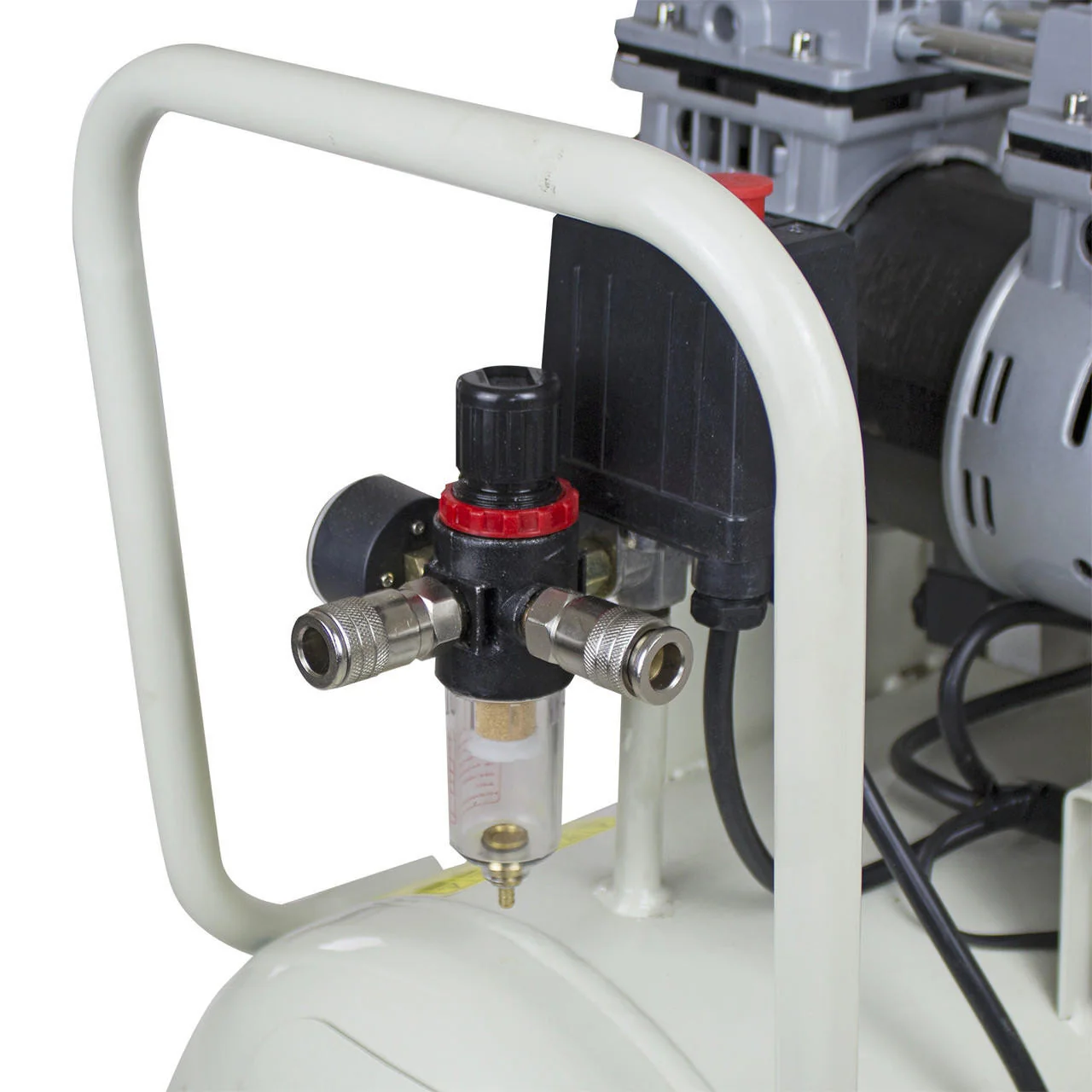
7. Outputs, Connections and Controls
The HY27550X features twin Euro quick-release outlets, the standard fitting in the UK market for pneumatic tool connections. Euro fittings are found on the vast majority of UK-market air hoses, nailers, spray guns, and tyre inflators. For buyers coming from older compressors with BSP or PCL fittings, adaptors are inexpensive and widely available.
The twin outlet configuration allows two tools to be connected simultaneously - useful for running a blow gun alongside a connected spray gun or nailer. Two operators using the machine at the same time would draw on the same FAD budget, so this is most practical for mixed-use configurations rather than two simultaneous high-demand tools.
The control panel provides twin pressure gauges, one showing tank pressure, one showing regulated outlet pressure - alongside the pressure regulator knob. This is the correct professional configuration: you set outlet pressure for your tool (typically 90 PSI for most air tools, lower for delicate spray work) while the tank pressure gauge shows stored pressure and indicates when the compressor is topping up. The automatic cut-out switch stops the motor when the tank reaches maximum pressure and restarts it as pressure drops, no manual intervention required during normal use.
The 1-metre cable length is the one ergonomic limitation worth flagging. At 39kg on a floor-mounted machine, most users will want the compressor in a fixed garage position - but a 1-metre cable means the nearest socket must be immediately adjacent. Most buyers will use a short extension lead from day one. This is a minor but consistent practical inconvenience that would have been resolved with a 3-metre cable at negligible additional cost.
8. What Owners Report — Real-World Performance by Application
The following draws on verified owner reports from retailer review platforms and automotive forums, attributed where possible. This section represents what real users of this machine and its close predecessors (the HY27550 and HY27550X share the same core specification) have reported in practice - not laboratory test data.
Brad Nailing and Finish Carpentry — Consistently Positive
Nailer use is the application where owner reports are most uniformly positive. A brad nailer requires approximately 0.7 CFM at 90 PSI - comfortably within the HY27550X's sustained FAD of ~5.28CFM. Multiple owner reviews note the compressor runs quietly in the background, cycling infrequently during normal nailing sequences, and that the 50-litre tank means prolonged nailing sessions complete without the tank pressure dropping into a range that affects tool performance. The noise level during nailing is specifically highlighted as a benefit in occupied residential settings, where the compressor does not create the disruptive background roar of a conventional piston machine.
Tyre Inflation - Straightforward
Tyre inflation is a burst-demand task well suited to the tank-buffer design. Car tyres being inflated from 28 PSI to 35 PSI represent a relatively modest total air volume requirement that the 50-litre tank handles comfortably. Owner reports describe tyre inflation as one of the most satisfying use cases — faster and more convenient than a portable inflator, and far quieter than a conventional compressor. Multiple reviewers on Sitebox's retailer platform specifically mentioned tyre inflation and blow-off work as the primary day-to-day use, and without exception rated the machine positively for these tasks.
HVLP Spray Painting - Capable With Technique
Spray painting is the application with the most nuanced owner experience. A Detailing World forum discussion about the HY27550 versus comparable machines noted that the ~5.2–5.5CFM FAD available from machines in this class "is at the limit for most HVLP guns" — workable for panel spraying with intermittent technique, not suitable for continuous high-volume spraying. The forum consensus was that for primer and topcoat on individual panels with appropriate recovery pauses, the machine performs well. For full vehicle continuous spraying, users recommended stepping up to a higher-FAD machine. Owner reviews on Tool Dust's review platform describe the machine as "ideal for spray-painting" in the context of domestic hobby use, which aligns with the panel-spraying-with-technique scenario rather than production spraying.
Noise in Practice - Verified as Genuinely Quiet
The noise rating generates more comment in owner reviews than any other specification, and the consensus is strongly positive. From Sitebox's review platform: "Despite other reviewers claiming it's not quiet, this model is very quiet compared to standard piston compressors. Would definitely recommend." And: "Great compressor. Quiet and would recommend to anyone who wants one." And: "Not had a great chance to use as yet, but initial use shows a very quiet compressor compared to other makes." The weight of owner evidence is consistent: this machine is meaningfully quieter than conventional piston alternatives, the 60 dB rating holds in practice, and users who had expected a conventional compressor experience are consistently surprised by the operating level.
9. Who Should Buy the HY27550X?
✓ Perfect for
Home Workshop & Garage Users
Tyre inflation, nailers, blow-off work, and occasional spray painting. Runs from a 13A socket, stays at 60 dB, needs no oil maintenance. Owner reports confirm this is the machine's strongest ground.
✓ Perfect for
Carpenters, Decorators & Finish Trades
Brad nailers, pin nailers, and crown staplers run comfortably within the 5.28CFM FAD. The quiet operation makes the compressor viable in occupied properties and sensitive residential settings where conventional machines are impractical.
✓ Perfect for
Bodywork & Paint Enthusiasts
Oil-free clean air eliminates one major painting contamination risk. Panel spraying with appropriate pause-and-recover technique is confirmed workable by owner reports. The 50-litre tank provides useful burst capacity between recovery cycles.
✓ Perfect for
Residential Site Work
Running nailers in occupied domestic properties or noise-sensitive environments. At 60 dB, the compressor is viable in situations where a conventional 90+ dB machine would be unacceptable. No dedicated supply circuit required — plug into any household socket.
✗ Not suitable for
Sustained DA Sanding or Angle Grinding
5–8+ CFM continuous demand exceeds sustained FAD. The compressor will cycle continuously and pressure will fluctuate, causing inconsistent tool performance. A belt-drive machine with higher FAD is the correct tool for these applications.
✗ Not suitable for
Sandblasting or Continuous Vehicle Spraying
Sandblasting cabinets require 10–20+ CFM sustained. Full vehicle production spraying requires similar. The HY27550X is a workshop and light trade machine — it is not sized or designed for industrial continuous-duty applications.
✗ Not suitable for
Heavy Commercial or Eight-Hour Continuous Use
The HY27550X is rated for domestic and light trade applications. Continuous operation across a full working day at high load exceeds the duty cycle design intent and may affect pump longevity. It is a workshop machine, not a production-line compressor.
10. Honest Limitations
FAD of ~5.28CFM is significantly below the 11CFM headline figure. This is the most important specification to understand before purchasing. The 11CFM is air displacement - a pump geometry figure, not a delivered output figure. The ~5.28CFM Free Air Delivery is what actually reaches your tools at working pressure. For most domestic workshop applications this is adequate and the 50-litre tank buffer compensates for intermittent peak demand. For sustained high-CFM applications it is a genuine ceiling. Always size tools against FAD, not displacement.
1-metre cable requires an extension lead in virtually all workshop setups. At 39kg, this machine will live in one position in your garage. A 1-metre cable means the nearest socket must be immediately adjacent. The specification appears to be a cost decision rather than an engineering necessity, and most buyers will need an extension lead from day one.
60 dB is quiet for a compressor but not genuinely silent. Owner reports support this framing: "not quiet" in absolute terms, but "very quiet compared to standard piston compressors." The noise character - smooth hum rather than sharp clatter - is easier to tolerate and easier for walls to attenuate, but the machine is audible in the room it occupies.
39kg requires permanent siting. The large wheels and front handle make repositioning manageable around a flat workshop floor, but this is not a machine to carry upstairs, lift into a van boot unassisted, or move between locations frequently. It needs a fixed home.
2-year warranty versus 3 years on some competitors. Hyundai's 2-year standard warranty is the norm in this class, but some competing machines offer 3 years. Worth noting for buyers for whom warranty duration is a purchase criterion.
Safety valve update - important operational note. Hyundai updated the pressure safety valves on the HY27550 series to comply with current CE certification standards, removing the pull ring to prevent the valve being misused as a tank drain. Air and moisture must be released using the drain valve at the tank base. This is documented by multiple retailers including Cheapmowers: "Air and moisture should always be released using the drain valve located on the bottom of the tank." Never attempt to drain via the safety valve on updated units.
11. Pros & Cons
✓ Strengths
- 60 dB — meaningfully quieter than conventional piston machines; residential garage viable
- Oil-free diaphragm pumps — clean air output, zero oil maintenance
- Twin 750W motors at 1,450 RPM — lower stress, less heat, longer lifespan by design
- 50-litre steel tank — serious buffer capacity for intermittent tool demand
- Twin Euro quick-release outlets — connect two tools simultaneously
- Runs on standard 13A household socket — no special supply
- Twin pressure gauges — tank and regulated outlet visible simultaneously
- Condensation trap — moisture management at the outlet
- Automatic cut-out switch — no manual pressure monitoring required
- Anti-vibration rubber mounts — reduces vibration transmission into noise
- Large wheels and front handle — manageable repositioning at 39kg
- CE-compliant safety valve on current production
- Full spare parts available from Hyundai
- ~£255 with free UK delivery — competitive for specification
✗ Limitations
- FAD ~5.28CFM — significantly below the 11CFM headline displacement figure
- 1-metre cable — extension lead required in almost all workshop placements
- Not suitable for DA sanding, angle grinding, or sandblasting at sustained use
- 39kg — requires permanent siting; not a portable site unit
- 60 dB is quiet for a compressor but not genuinely silent in absolute terms
- 2-year warranty — some competitors offer 3 years at similar price
- Spray painting requires pause-and-recover technique at the FAD limit
- No hose or tools included — budget for Euro hose and couplings separately
12. How It Compares — Competitor Analysis
| Model | Tank | FAD (approx) | Noise | Oil-Free | Socket | Price |
|---|---|---|---|---|---|---|
| Hyundai HY27550X ★ | 50L | ~5.28CFM | 60 dB | ✓ | 13A ✓ | ~£255 |
| Clarke SHHH50/350 | 50L | ~5.5CFM | 66 dB | ✓ | 16A required | ~£350–£400 |
| SIP 05480 (50L, 3HP) | 50L | Disputed* | ~78 dB | ✓ | 16A required | ~£250–£300 |
| Draper 100L Belt Drive | 100L | 10–14CFM | ~90 dB | ✗ Oil | 16A+ | ~£350–£500 |
| Hyundai HY7524X (24L) | 24L | ~3CFM | ~60 dB | ✓ | 13A ✓ | ~£130–£150 |
*SIP CFM figures are advertised as displacement; Detailing World forum analysis suggests real FAD is substantially lower and the displacement-to-FAD gap is significantly wider than stated. The 13A socket requirement for the Hyundai is a confirmed specification from Hyundai's documentation; Clarke SHHH50/350 requires a 16A supply on the 3.5HP variant per Clarke's own specifications.
vs Clarke SHHH50/350 (~£350–£400)
The Clarke is the most direct competitor and is itself a well-regarded machine. It runs at 3.5HP (2,600W combined) for slightly higher FAD (~5.5CFM) and marginally faster recovery, and has a strong track record. However, the Clarke SHHH50/350 requires a 16A socket — meaning it cannot be used from a standard 13A household outlet without a dedicated circuit. For home garage users, that is a practical barrier the Hyundai does not create. The Clarke is also £100 or more more expensive and operates at 66 dB versus the Hyundai's 60 dB. The Detailing World forum user who chose the Clarke over the Hyundai did so for the FAD advantage — a legitimate priority that comes with the socket requirement trade-off.
vs SIP 05480 (~£250–£300)
The SIP advertises CFM figures that have attracted sustained scepticism from forum users. The Detailing World discussion specifically noted that the SIP's claimed FAD figures seemed implausibly high for the machine's specification and power rating, with the forum consensus suggesting the headline numbers were displacement rather than true FAD. The SIP also operates at higher noise levels (~78 dB) and similarly requires more than a standard 13A supply on the 3HP variant. At a comparable price, the Hyundai's transparent specification and verified owner reports make it the more reliable basis for a purchasing decision.
vs Draper 100L Belt Drive (~£350–£500)
A 100-litre belt-drive oil-lubricated compressor delivers 10–14CFM FAD — the correct choice for sustained continuous-duty applications like DA sanding and sandblasting. It operates at 90+ dB, requires oil changes, and needs an appropriate electrical supply. For the home workshop user who needs quiet, oil-free operation for nailers and panel spraying, the Hyundai serves better. For the professional needing maximum output with no noise constraint, the belt-drive wins on capability. These are different tools for different use cases.
vs Hyundai HY7524X (24L, ~£130–£150)
Halving the tank capacity at roughly half the price. For tyre inflation, occasional blow-off work, and infrequent brad nailing, the 24L is adequate and considerably cheaper. For sustained painting sessions, the 50L tank's buffer capacity makes a real difference to the working rhythm — significantly more air stored between compressor cycles. The HY27550X earns its premium for regular users running nailers across a full working day or panel spraying with any frequency.
13. Maintenance Guide
The oil-free design eliminates the most demanding maintenance tasks of traditional compressors — no oil to check, no oil to change, no oil separator to service. What remains is minimal:
| Task | Frequency | Notes | Cost |
|---|---|---|---|
| Drain condensation trap | After every session | Open the outlet drain valve briefly to release condensed water vapour. Failing to drain allows water to accumulate in the tank and corrode the steel internally over time — a safety issue, not just a performance one. | Nil |
| Drain tank moisture | Monthly | Depressurise via a tool outlet first, then open the base drain valve to release accumulated water. Never use the safety valve to drain — on the updated HY27550X the pull ring has been removed specifically to prevent this. Documented by Hyundai and Cheapmowers. | Nil |
| Check air intake filter | Every 3 months | The intake filter prevents dust entering the pump. In a dusty workshop, inspect and clean more frequently. Replace if damaged or heavily clogged. | ~£5–£10 |
| Check hose connections | Before each use | Listen for hissing around Euro couplers. Leaking connections waste pressure and increase compressor cycle frequency. Replacement Euro couplers are inexpensive standard fittings. | Nil / ~£3–£8 |
| Check safety valve | Annually | Verify the safety valve releases correctly at maximum pressure. Do not use it as a regular drain — it is a safety device only. On the updated HY27550X there is no pull ring; use the base drain valve for moisture release at all times. | Nil |
| Depressurise before storage | Before any storage over a few weeks | Release tank pressure via a tool outlet and drain moisture via the base drain valve. Storing a pressurised tank long-term with residual moisture accelerates internal corrosion. | Nil |
15. Our Verdict
Based on specification analysis, Hyundai's engineering documentation, and the consistent weight of verified owner reports, the HY27550X occupies a specific and valuable position in the UK compressor market: a machine that takes the core trade-offs of the low-noise oil-free category and executes them at a price point that puts genuine 50-litre quiet compressor capability within reach of home workshop users.
The most important thing to understand before buying is the FAD reality: approximately 5.28CFM, not 11CFM, is the figure that determines what tools you can run continuously. That number is established across multiple retailer specifications and acknowledged in independent forum analysis. Size your expectations against it and the machine delivers — owner reports across nailer use, tyre work, and panel spraying confirm the specification performs as the engineering predicts. Push beyond it into sustained high-CFM applications and you will encounter the ceiling.
At approximately £255 from Hyundai direct with free delivery, a 2-year warranty, and full spares availability, it represents genuine value for a well-engineered machine with a meaningful and independently verified noise advantage over conventional alternatives. For the home garage user, residential site tradesperson, or hobby bodywork enthusiast who needs quiet, oil-free, 50-litre air from a standard socket, the HY27550X is a well-supported purchasing decision.
★ Our Recommendation
Buy If
You need quiet 50L workshop air for nailers, tyre inflation, and panel spraying from a standard 13A socket
Buy If
Oil-free clean air matters to you — spray painting, tyre inflation, or any application where oil contamination is a problem
Skip If
Your primary use is sustained DA sanding, angle grinding, or sandblasting — all requiring 8+ CFM continuous FAD this machine cannot sustain
Step Up To
A 100L+ belt-drive machine if continuous high-FAD output is required and noise is not a constraint
This is an expert specification analysis and owner report review. Conclusions are drawn from: Hyundai Power Equipment official product page; Generator Pro full specification table (source of FAD, dimensions, weight, and motor data); Sam Turner & Sons product listing; Sitebox.ltd.uk verified owner reviews (seven reviews, 5/5 average, directly quoted); Tool Dust editorial analysis; Cheapmowers documentation (safety valve update); and Detailing World automotive forum discussion of the HY27550 series. We have not conducted hands-on laboratory testing of this specific unit. Price ~£255 correct at Hyundai direct at time of publication, May 2026. This review contains affiliate links - we may earn a commission if you purchase through these links, at no extra cost to you. Our editorial analysis is always independent.
Frequently Asked Questions
Can the HY27550X genuinely run from a standard 13A household socket?
Will the HY27550X run a spray gun for painting full car panels?
What is the difference between 11CFM displacement and 5.28CFM FAD?
How do I drain the tank — the safety valve has no pull ring?
What air hose and fittings do I need?
What do owner reviews actually say about the noise level?
Tags
Comments
Join the conversation
Create a free account to leave comments, share photos, and connect with other gardeners.
Related Articles
Hyundai Scarifier and Aerator Buying Guide (2026)
Revitalise your lawn with our Hyundai scarifier and aeraror buying guide. Compare top petrol and electric models to remove thatch and improve grass health.
Hyundai HYMD500 500kg 196cc 4x4 Drive Mini Dumper Review
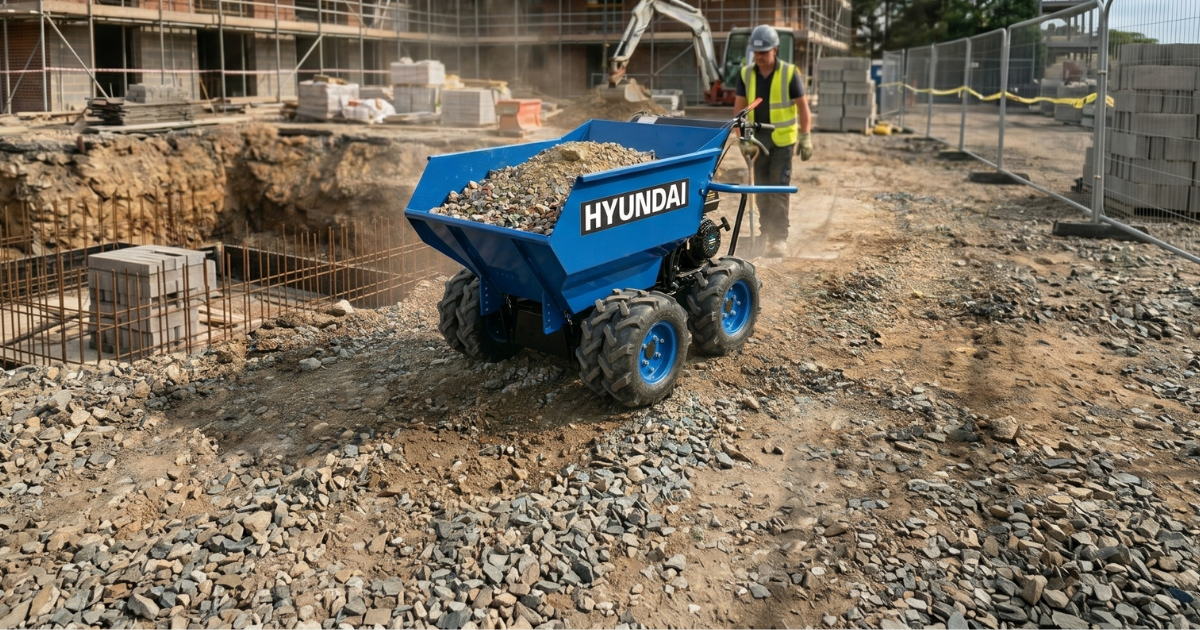
The Hyundai HYMD500 500kg 4x4 mini dumper is a powerful petrol-powered power barrow designed for heavy-duty material handling across construction sites, farms, and large gardens. With a robust 196cc engine, all-terrain 4WD traction, and high load capacity, it offers a reliable and cost-effective alternative to manual wheelbarrows and premium mini dumpers.
Best Air Compressors for Spray Painting
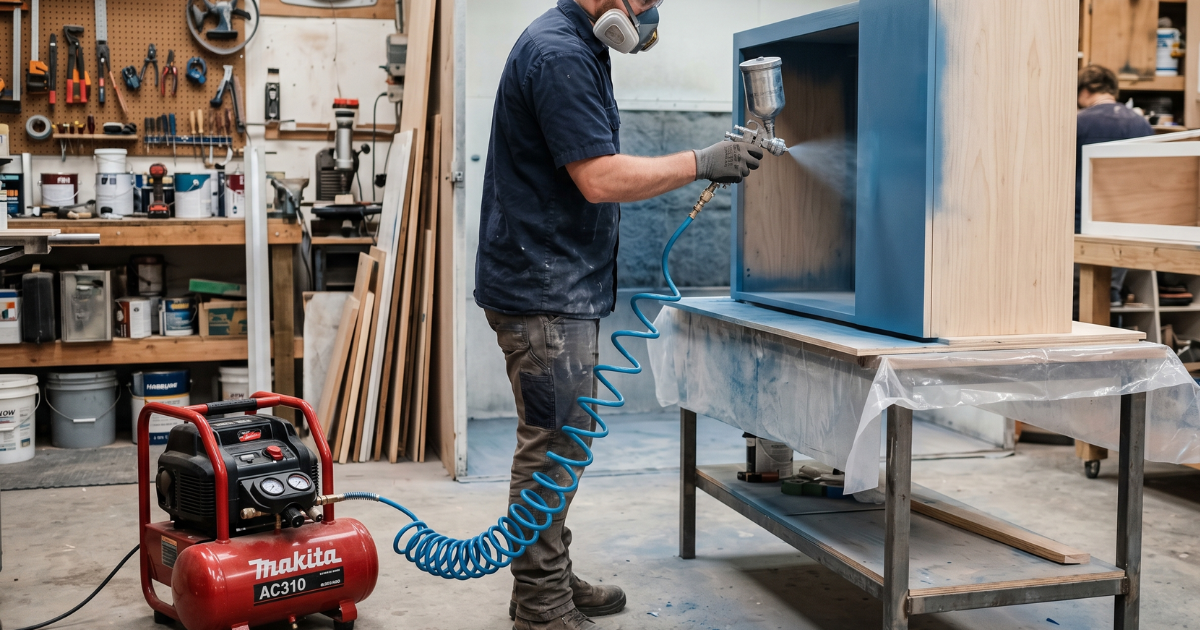
Looking for the best air compressors for spray painting in the UK in 2026? This guide compares 6 of the best spray painting air compressors, covering everything from quiet airbrush compressors to high-CFM workshop machines for HVLP spray guns and automotive bodywork. We explain the real difference between advertised CFM and usable Free Air Delivery (FAD), helping you choose the right compressor for furniture spraying, fences, cabinets, LVLP touch-up work, and full automotive paint jobs.

Hyundai 5-in-1 Multi Tool Review: HYMT5200X 52cc Petrol Tested
We tested the Hyundai HYMT5200X 52cc 5-in-1 petrol multi-tool: how each attachment performs, how heavy it really is, the 25:1 fuel mix, UK price and who should buy it.

Hyundai HY20CB 20v Cordless Leaf Blower Review
Hyundai HY20CB cordless leaf blower review: 200km/h power, 1.25kg, 25-min runtime. Is it worth £50.99? Jim Fellows tests the specs.
Hyundai 56cc Petrol Earth Auger HYEA5600X / HYEAB5600X Review
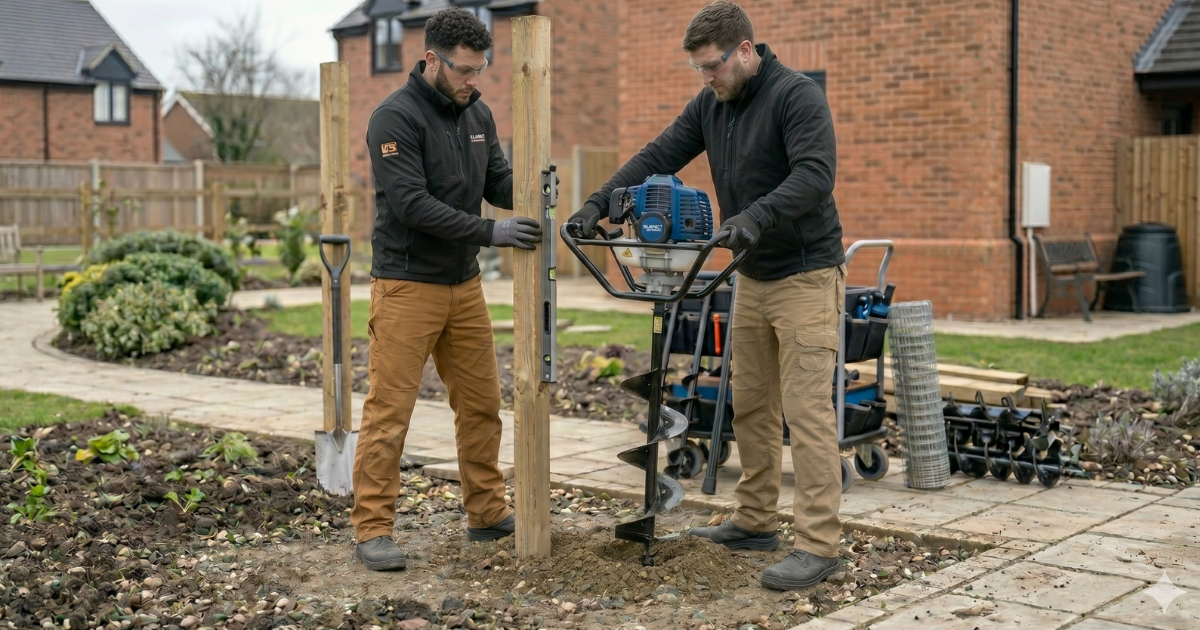
Digging fence post holes by hand is hard, time-consuming work - but the Hyundai HYEA5600X/ HYEAB5600X Petrol Earth Augers are designed to make the job faster and easier. In this hands-on review, we look at both models across clay-heavy soil and root-filled borders to see how they perform in real garden conditions.