Air Plants Guide: Growing Tillandsia in UK Homes
Master the art of growing air plants in the UK. Discover watering tips, lighting needs, and how to keep Tillandsia thriving through British winters.
Key takeaways
- Air plants, or Tillandsia , are among the most fascinating additions to any UK indoor garden.
- To grow a healthy air plant, you must understand their anatomy.
- While there are hundreds of species, some are better suited to our temperate climate and indoor light levels than others.
- Because our homes are often centrally heated in winter (which dries the air) and naturally humid in autumn, you must adjust your routine seasonally.
- In their native tropical habitats, air plants get dappled but bright sunlight.
Introduction to Air Plants: The Soil-Free Wonders
Air plants, or Tillandsia, are among the most fascinating additions to any UK indoor garden. Members of the bromeliad family, these architectural wonders have evolved to survive without soil, clinging instead to trees or rocks in the wild. For the British gardener, they offer a unique opportunity to bring greenery into small spaces, bathrooms, and modern displays without the mess of potting compost.
However, because they don't grow in soil, they have very specific needs regarding humidity, light, and ventilation—especially during our dark, damp UK winters. This guide will walk you through everything you need to know to keep your air plants thriving in a British climate.
Understanding How Air Plants Work
To grow a healthy air plant, you must understand their anatomy. Instead of roots that drink water, Tillandsia use tiny silver scales on their leaves called trichomes. These scales act like sponges, absorbing moisture and nutrients directly from the air.
In the UK, our indoor environments can vary wildly. A draughty Victorian terrace will have different humidity levels than a modern, centrally-heated flat. Knowing your home's microclimate is the first step to becoming a successful air plant parent.
Top Air Plant Varieties for UK Homes
While there are hundreds of species, some are better suited to our temperate climate and indoor light levels than others. Here are our top recommendations:
1. Tillandsia ionantha (The Sky Plant)
This is the most popular choice for beginners. It’s hardy, compact, and features silvery-green leaves that turn a vibrant blushing red when it’s about to bloom with purple tubular flowers.
2. Tillandsia xerographica (The Queen of Air Plants)
Known for its large, sculptural, silvery-grey rosettes, this species is more drought-tolerant than most. It’s a slow grower but makes a stunning focal point on a shelf or coffee table.
3. Tillandsia usneoides (Spanish Moss)
Though it looks like a lichen, this is a true air plant. It grows in long, cascading strands. In the UK, it thrives best in high-humidity areas like a bright bathroom or kitchen.
4. Tillandsia bulbosa
This variety has a distinctive 'alien' look with twisting, succulent-like leaves and a bulbous base. It prefers slightly more moisture and less direct sun than the silver-leaved varieties.
The Golden Rules of Watering in the UK
Watering is where most UK gardeners go wrong. Because our homes are often centrally heated in winter (which dries the air) and naturally humid in autumn, you must adjust your routine seasonally.
The Soaking Method
Once a week, submerge your air plants in a bowl of water for about 30 to 60 minutes.
- Expert Tip: Always use rainwater or filtered water if possible. The chlorine and fluoride in UK tap water can clog the delicate trichomes over time. If you must use tap water, let it sit out for 24 hours to allow the chlorine to dissipate.
The Drying Phase (Crucial!)
After soaking, shake the plants gently to remove excess water and lay them upside down on a towel in a well-ventilated spot. They must dry completely within 4 hours. If water sits in the 'cup' or base of the plant, it will rot and die within days.
Misting
In the height of summer or when the radiators are blasting in January, your plants will appreciate a misting between soaks. Aim for 2-3 times a week, ensuring they have enough airflow to dry quickly.
Light Requirements for the British Home
In their native tropical habitats, air plants get dappled but bright sunlight. In the UK, our light is much weaker.
- Spring and Summer: Place them in bright, indirect light. An East or West-facing windowsill is ideal. Avoid South-facing windows in mid-summer, as the glass can magnify the heat and scorch the leaves.
- Autumn and Winter: Move them to the brightest spot possible. A South-facing window is often necessary during the dark months of December and January to ensure they get enough energy to survive.
Seasonal Care Calendar for UK Gardeners
Spring (March - May)
As daylight hours increase, your air plants will wake up.
- Action: Increase watering frequency to once a week.
- Feeding: Start using a specific Bromeliad or Air Plant fertiliser at quarter-strength once a month. Add it to your soaking bowl.
Summer (June - August)
This is the peak growing season.
- Action: Watch out for leaf curling—this is a sign of dehydration. You may need to soak them twice a week if we are experiencing a UK heatwave.
- Ventilation: Keep windows open to ensure good air circulation, which prevents fungal issues.
Autumn (September - November)
As the temperature drops and we turn the heating on, the humidity in our homes plummets.
- Action: Move plants away from direct radiator heat. The dry air from a radiator will crisp the tips of the leaves very quickly.
Winter (December - February)
This is the 'danger zone' for air plants in the UK.
- Action: Reduce soaking to once every 10-14 days, but supplement with more frequent misting. Ensure they are dried thoroughly in a warm (but not hot) spot. Light is the biggest challenge; consider a small LED grow light if your home is particularly dark.
Displaying Your Air Plants Creatively
One of the joys of Tillandsia is the freedom of display. Because they don't need soil, you can get creative:
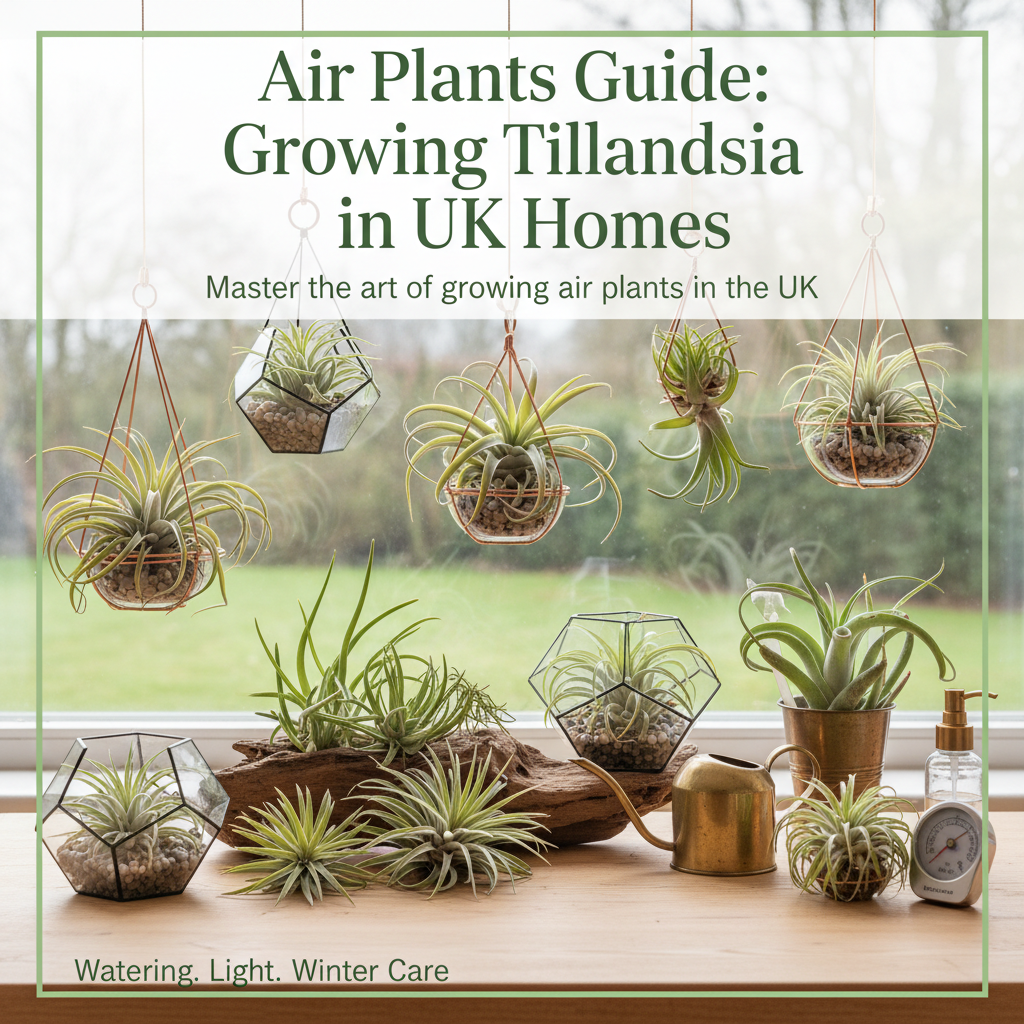
- Hanging Terrariums: Glass globes look beautiful but can trap too much moisture. Ensure the opening is large enough for air to circulate.
- Driftwood and Rocks: Use waterproof glue (like E6000) or floral wire to attach plants to pieces of sea glass or driftwood found on British beaches.
- Wire Frames: Geometric metal frames allow for 360-degree airflow, making them one of the healthiest ways to house your plants.
Warning: Avoid placing air plants in copper containers. Copper is toxic to Tillandsia and will eventually kill them.
Flowering and Pups: The Life Cycle
Most air plants bloom only once in their lifetime. The flower spikes can be incredibly vibrant, lasting from a few days to several weeks.
After the plant has finished flowering, don't throw it away! It will soon begin to produce 'pups' (baby plants) at its base. Leave the pups attached until they are at least one-third the size of the mother plant. You can then gently pull them away to start a new plant, or leave them to grow into a large 'clump'.
Common Troubleshooting Tips
- Brown, Crispy Tips: This is usually a sign of low humidity or underwatering. Increase misting and ensure you aren't using softened water (which is high in salt).
- Black or Slimy Base: This is rot, usually caused by the plant sitting in water. Unfortunately, once rot reaches the core, the plant is usually beyond saving. Ensure you dry them upside down after every soak.
- Small White Spots: If the whole plant looks 'dusty' or silvery, don't worry—those are the trichomes! However, if you see cotton-wooly patches, it might be mealybugs. Treat with a cotton bud dipped in surgical spirit.
Air plants are the perfect bridge between traditional gardening and interior design. While they are low-maintenance, they are not 'no-maintenance'. By respecting their need for high-quality water, bright British light, and excellent air circulation, you can enjoy these exotic wonders all year round. Whether you're starting with a single Ionantha on a shelf or a dramatic Xerographica centrepiece, you’re now equipped to help your air plants thrive in the UK.
Tags
Comments
Join the conversation
Create a free account to leave comments, share photos, and connect with other gardeners.