
How to Grow Snowdrops: Complete UK Care Guide
Snowdrops are delicate, nodding late-winter flowers that thrive in cool, moist shade and are best planted or divided while still in leaf.
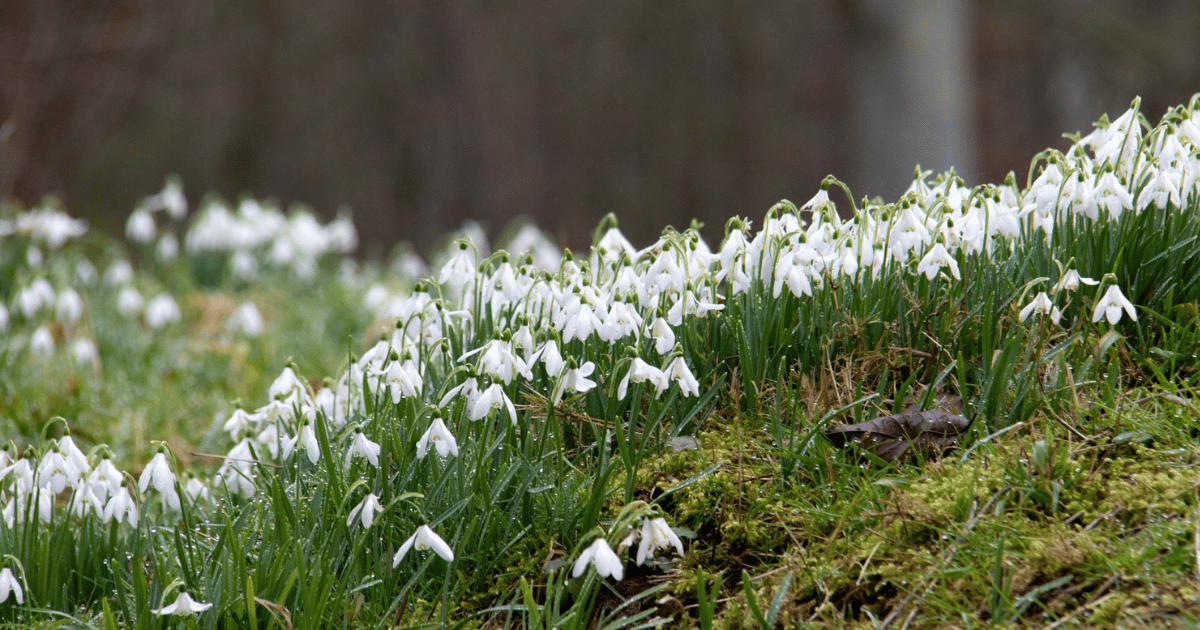
Snowdrops (Galanthus) are delicate, nodding white flowers that appear from January to March, often the very first bulbs to bloom in the UK gardening year. They thrive in cool, moist, humus-rich soil in dappled shade, and establish best when planted "in the green" rather than as dry bulbs, making them a rewarding, low-maintenance addition to borders and woodland-style planting.
Key takeaways
- Snowdrops establish best when planted "in the green", just after flowering, rather than as dry bulbs.
- They prefer cool, moist, humus-rich soil in light or dappled shade.
- Divide congested clumps every three to five years to keep them flowering well.
- Rare galanthophile cultivars can command significant interest among collectors for subtle differences in markings.
- Leaving foliage to die back naturally is essential for strong flowering the following year.
| Attribute | Detail |
|---|---|
| Botanical name | Galanthus nivalis and cultivars |
| Plant type | Hardy bulb |
| Height & spread | 10-20cm height; spread 8cm |
| Hardiness | RHS H6 (fully hardy) |
| Position | Light or dappled shade |
| Soil | Moist, humus-rich, well-drained soil |
| Flowering period | January to March |
| Planting depth | 8-10cm (dry bulbs); at soil level when planting in the green |
| Difficulty | Easy to moderate |
Choosing varieties
Beyond the common single snowdrop, there is a huge range of cultivars prized by collectors, known as galanthophiles, for their subtle variations in petal markings and form.
| Variety | Feature | Height | Flowering time |
|---|---|---|---|
| Galanthus nivalis | Common single snowdrop | 10cm | January-February |
| 'Flore Pleno' | Double flowers | 15cm | February |
| 'S. Arnott' | Large, honey-scented, vigorous | 20cm | February |
| 'Atkinsii' | Tall, elegant, early | 20cm | January-February |
| Galanthus elwesii | Larger leaves and flowers | 18cm | January-February |
| 'Magnet' | Long pedicels, distinctive swaying flowers | 18cm | February |
When and where to plant
Snowdrops are best planted "in the green", meaning while still in leaf, from late February through to April, just after flowering has finished. This gives far more reliable establishment than dry bulbs bought in autumn, which can shrivel before rooting. Choose a site in light or dappled shade, such as beneath deciduous trees and shrubs, with soil that stays reliably moist but does not become waterlogged. See our plant guides for more shade-loving planting companions.
How to plant
- If planting in the green, gently separate small clumps or single plants, keeping roots and foliage intact.
- Dig a hole large enough to accommodate the roots without bending them, at the same depth as they were previously growing.
- Space plants or small clumps around 8-10cm apart for a naturalistic look.
- Firm soil back around the roots and water in well to help them settle.
- If planting dry bulbs in autumn, plant at a depth of 8-10cm and soak briefly before planting to reduce the risk of them drying out.
Dividing clumps
Snowdrops multiply readily by offsets and benefit from being divided every three to five years, or whenever clumps become congested and flowering starts to decline. Lift clumps carefully with a fork just after flowering while still in leaf, gently tease the bulbs apart by hand, and replant immediately in groups spaced a few centimetres apart, watering well to help them re-establish.
Aftercare and feeding
Snowdrops need little feeding, though a light mulch of leaf mould or well-rotted garden compost applied in autumn helps replicate their natural woodland habitat and retains moisture. Keep the soil around clumps moist, particularly during dry spells in late winter and early spring while they are in active growth.
What to do after flowering
Once flowers fade, leave the foliage untouched to die back naturally, as it continues to feed the bulb for the following season. This is also the ideal window for lifting and dividing clumps while they are still identifiable and in leaf, before the foliage disappears completely by early summer.
Growing in pots
Snowdrops can be grown in containers of peat-free compost kept in a cool, shaded position, which is a useful way to display special galanthophile cultivars up close. However, they generally perform and multiply better when planted out in the ground, so consider moving potted clumps into a border after a season or two.
Common problems
| Problem | Symptom | Fix |
|---|---|---|
| Narcissus bulb fly | Occasionally attacks snowdrop bulbs, causing hollowing | Remove and destroy affected bulbs |
| Grey mould (botrytis) | Grey fuzzy growth on leaves and flowers in damp conditions | Improve air circulation; remove affected material promptly |
| Poor flowering | Sparse flowers despite healthy leaves | Divide congested clumps; mulch to retain moisture |
| Failure to establish | Dry bulbs fail to sprout | Plant in the green instead of as dry bulbs |
Month-by-month care calendar
| Month | Task |
|---|---|
| January-March | Flowering period; enjoy display |
| Late February-April | Plant and divide clumps in the green |
| May-June | Foliage dies back naturally |
| September-October | Plant dry bulbs if in the green stock unavailable |
| Autumn | Mulch with leaf mould around established clumps |
Snowdrop FAQs
What does 'planting in the green' mean for snowdrops?
When is the best time to plant snowdrops?
What are galanthophile cultivars?
How often should snowdrop clumps be divided?
Do snowdrops grow well in pots?
Why have my snowdrops not multiplied?
Tags
Comments
Join the conversation
Create a free account to leave comments, share photos, and connect with other gardeners.
Related Articles

5 Bulbs you can grow in water in time for Christmas
Bringing indoor bulbs like hyacinth, paperwhite, and amaryllis in water enhances Christmas décor with fragrant and vibrant displays.
How to Get Rid of Flies and Wasps in Your Garden: UK Guide
Wasps peak in late summer as colonies max out and turn to scavenging, while flies breed fast around bins and fallen fruit all season - this guide covers prevention, physical control and when a chemical treatment is actually needed.

How to Care for a Snake Plant: Complete UK Guide
Snake plants are one of the toughest houseplants around, tolerating low light and irregular watering while purifying indoor air.
How to Grow Astilbe: Complete UK Care Guide
Astilbe brings feathery plumes of colour to moist, shady borders in summer, but needs consistently damp soil to prevent scorched, crispy foliage.
How to Care for a Spider Plant: Complete UK Guide
Spider plants are cheerful, resilient houseplants that produce cascades of plantlets, making them ideal for beginners and easy propagation.
How to Get Rid of Moss in Your Lawn: UK Guide
Moss thrives in compacted, shaded or poorly drained UK lawns, and lasting control means combining scarifying and iron sulphate treatment with fixing the underlying drainage, shade and fertility issues.