
JCB Pro 18V 2000Nm and 2300Nm Impact Wrenches Review
JCB's Pro 18V wrench family jumps from 620Nm to proper heavy-duty territory: 1,800/2,000Nm on a 3/4" drive and 2,100/2,300Nm on a full 1" drive - both still running the same 18V batteries as the rest of the range. Here's who actually needs that much torque, and how the pair stacks up against Makita's 40V XGT wrench and the 1/2" flagships from DeWalt and Milwaukee.
Key takeaways
- By Mark Moore , Power Tools Editor · Updated 8 September 2026 · 13 min read ⚡ Quick Verdict JCB has doubled down on its wrench range at exactly the point most 18V platforms give up.
- On the 2000, that's 1,800Nm working with 2,000Nm in reserve.
- The torque figures matter, but the drive size is what actually gates what you can bolt to these wrenches.
- All four run the same Pro 18V batteries - buy the biggest wrench you need and it still charges on the same dock as your drill.
- This is the more interesting comparison, because most cordless brands simply don't compete at this torque and drive size without asking you to leave their mainstream battery platform.
Our Rating
JCB Pro 18V 2,000Nm & 2,300Nm Impact Wrenches Review
POWER TOOLS › JCB Pro 18V › Reviews
JCB Pro 18V 2,000Nm & 2,300Nm Impact Wrenches Review - JCB-18PIW-2000 & JCB-18PIW-2300
By Mark Moore, Power Tools Editor · Updated 8 September 2026 · 13 min read
⚡ Quick Verdict
JCB has doubled down on its wrench range at exactly the point most 18V platforms give up.
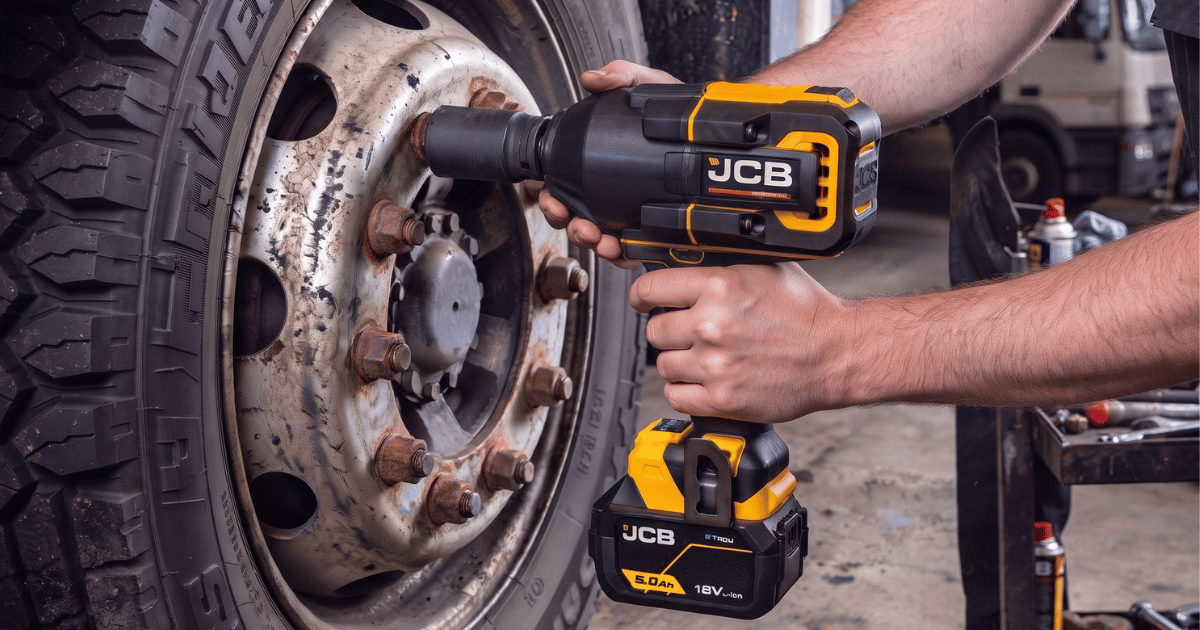
The 3/4" JCB-18PIW-2000 (1,800Nm fastening / 2,000Nm breakaway, £224.99) and the full 1" 18PIW-2300 (2,100Nm / 2,300Nm, £249.99) both run on the same Pro 18V batteries as the drills, drivers and the 620 wrench we already rated 4.5/5 - no second battery ecosystem required. That single fact is the story: Makita hits similar numbers only by moving you onto its separate 40V XGT platform, and DeWalt's and Milwaukee's flagship "high torque" wrenches mostly top out on a 1/2" drive at well under half this torque.
These two aren't for wheel nuts on the driveway - they're for HGV and plant wheels, agricultural machinery and structural fastening - but for that buyer, JCB has just built the most affordable route into proper heavy-duty cordless torque without leaving its own battery system.
Twelve months ago the top of JCB's Pro 18V wrench range was the 620Nm 18PIW-620, which we rated 4.5/5 as a farm-and-plant nut-buster that comfortably out-torqued its £94.00 350Nm sibling. JCB Tools has now leapfrogged that entirely with two new wrenches that move into a different weight class altogether: a 3/4"-drive 2,000Nm model and a full 1"-drive 2,300Nm model. This review covers what each does, where they sit against the rest of the Pro 18V wrench family, how they measure up against the DeWalt/Makita/Milwaukee competition, and - most importantly - who genuinely needs this much torque and who should save their money.
(System context in our Pro 18V buying guide.)
Specifications
| JCB-18PIW-2000 | JCB-18PIW-2300 | |
|---|---|---|
| Drive | 3/4" square, friction ring | 1" square, friction ring |
| Motor | 18V brushless | 18V brushless |
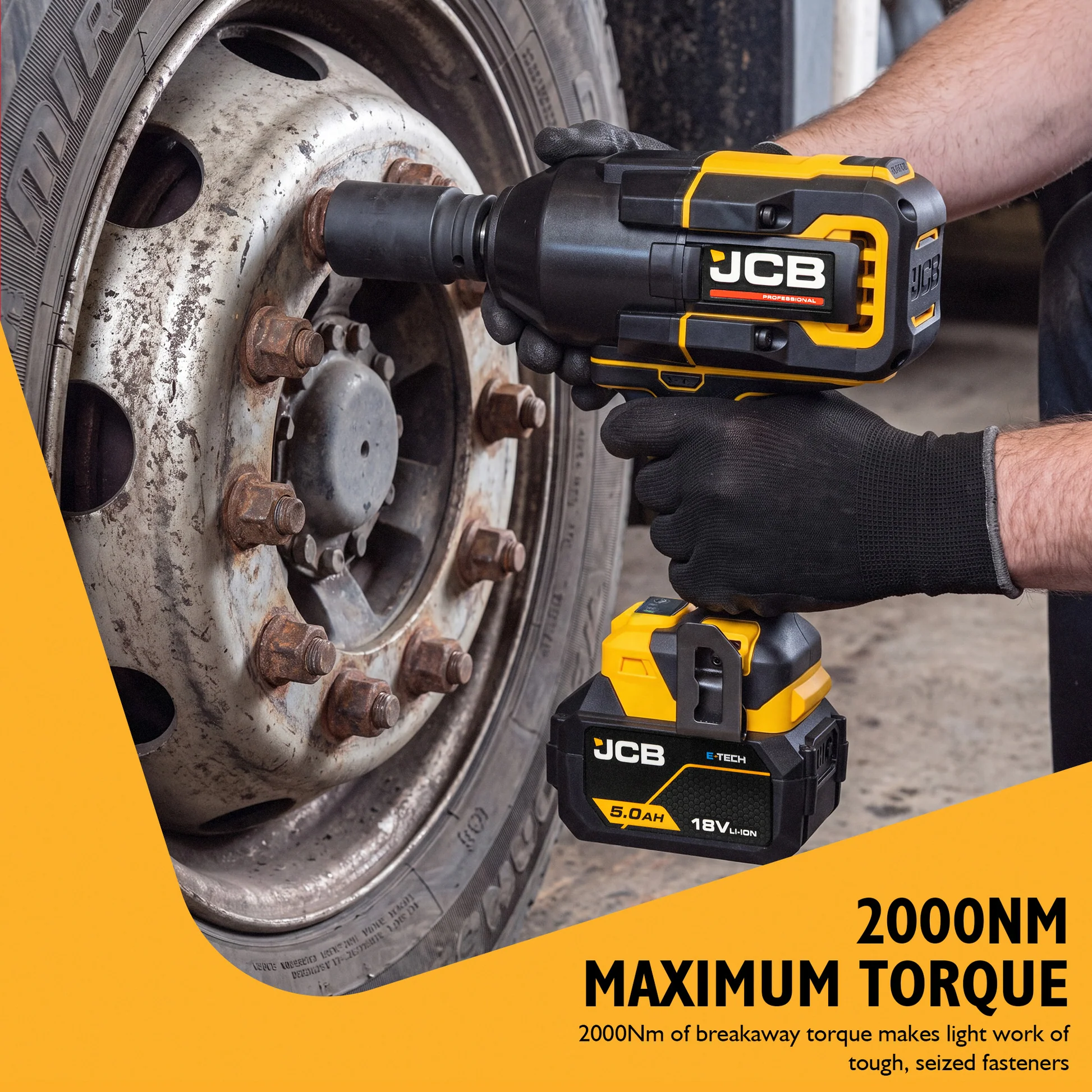
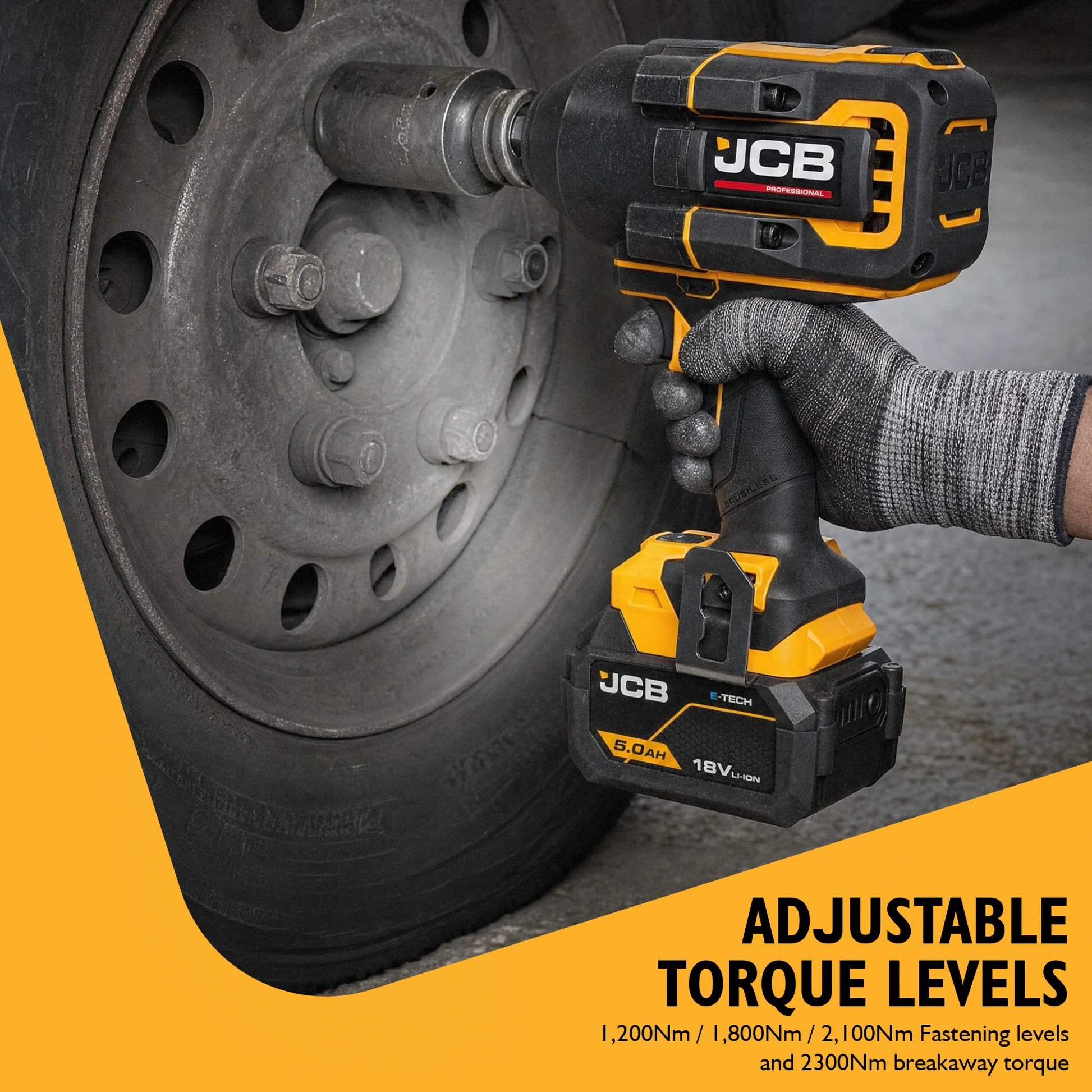
| Fastening torque settings | 800 / 1,450 / 1,800Nm | 1,200 / 1,800 / 2,100Nm |
| Max breakaway torque | 2,000Nm | 2,300Nm |
| No-load speed | 0-1,150 / 0-1,450 / 0-1,850rpm | 0-1,150 / 0-1,450 / 0-1,850rpm |
| Impact rate | 0-1,000 / 0-1,800 / 0-2,400bpm | 0-1,000 / 0-1,800 / 0-2,400bpm |
| Weight (bare) | 3.74kg | 4.0kg |
| Kit contents | Body only + belt clip (no battery/charger) | Body only + belt clip (no battery/charger) |
| Warranty | 3-year limited (subject to terms) | 3-year limited (subject to terms) |
| Price (body only) | £224.99 | £249.99 |
Torque literacy, restated for the big numbers
As with the 620, JCB publishes both figures rather than hiding behind one headline number: fastening torque is what the wrench drives and runs down fasteners with; breakaway torque is the hammering peak reserved for cracking a seized nut loose. On the 2000, that's 1,800Nm working with 2,000Nm in reserve. On the 2300, it's 2,100Nm working with 2,300Nm in reserve. Both step up through three fastening settings plus a dedicated breakaway mode, so you're not stuck choosing between "gentle" and "structural failure" - a wheel nut on a light trailer and a corroded pivot pin on a 20-tonne excavator get genuinely different settings on the same tool.
3/4" vs 1": why drive size is the real headline here
The torque figures matter, but the drive size is what actually gates what you can bolt to these wrenches. Most cordless impact wrenches - including nearly every "high torque" model from the big three - use a 1/2" square drive, the same size as a typical car socket set. JCB's own 350 and 620 are 1/2" drive. The 2000 steps up to 3/4" drive, the size used on HGV and heavy plant wheel nuts, and the 2300 goes further still to a full 1" drive, the size reserved for the heaviest structural and agricultural fastening. You cannot run a 1/2" chrome socket on either of these safely, and you shouldn't want to - impact-rated 3/4" and 1" sockets are a different, chunkier category of accessory, and buying into this pair means budgeting for the right sockets alongside the tool.
Where they sit in the JCB Pro 18V wrench family
| Wrench | Drive | Fastening / breakaway | Price (bare) | Best for |
|---|---|---|---|---|
| JCB-18PIW-350 | 1/2" | - / 350Nm | £94.00 | Car DIY, wheel swaps, general workshop |
| JCB-18PIW-620 | 1/2" | 400 / 620Nm | £130 | Farm, scaffold, plant, daily trade use |
| JCB-18PIW-2000 | 3/4" | 1,800 / 2,000Nm | £224.99 | Light-commercial and plant wheels, ag machinery |
| JCB-18PIW-2300 | 1" | 2,100 / 2,300Nm | £249.99 | HGV wheels, heavy plant, structural fastening |
Read top to bottom, it's a genuinely coherent range now rather than a single wrench with a big brother: 350 for the driveway, 620 for the farm and trade van, and the 2000/2300 for the yard, the depot and the plant workshop. All four run the same Pro 18V batteries - buy the biggest wrench you need and it still charges on the same dock as your drill.
How they compare to the wider market
This is the more interesting comparison, because most cordless brands simply don't compete at this torque and drive size without asking you to leave their mainstream battery platform. Here's how the field looks at the time of writing:
| Wrench | Drive | Platform | Fastening / breakaway | Price (bare) |
|---|---|---|---|---|
| JCB 18PIW-2000 | 3/4" | JCB Pro 18V | 1,800 / 2,000Nm | £224.99 |
| JCB 18PIW-2300 | 1" | JCB Pro 18V | 2,100 / 2,300Nm | £249.99 |
| Makita TW001G | 3/4" | Makita 40V XGT (separate) | 1,800 / 2,050Nm | £249.99 ex. VAT (~£300 inc.) |
| Milwaukee M18 FUEL ONE-KEY | 1/2" | Milwaukee M18 | 1,491 / 2,034Nm | ~£175-210 |
| DeWalt DCF899 | 1/2" | DeWalt 18V XR | 950 / 1,625Nm | ~£205-246 |
Three things stand out. First, DeWalt's flagship "high torque" wrench - a 1/2"-drive tool - doesn't get near JCB's new pair on breakaway torque, let alone fastening torque, and can't touch either on drive size. Second, Milwaukee's ONE-KEY 1" and 1/2" high-torque wrenches post competitive breakaway numbers but Milwaukee's mainstream M18 range still centres on 1/2" drive for this category, and its true 1"-drive flagships typically sell well north of £350-400 bare. Third, the closest genuine match on paper is Makita's TW001G: near-identical torque to the 2000 at a similar price - except it runs on Makita's 40V XGT platform, a separate battery and charger system from Makita's mainstream 18V LXT range. Buy into it and you're funding a second battery ecosystem. JCB's pair matches or beats that torque while staying on the same 18V packs as the rest of the Pro range - the drill, the driver, the grinder and the 350/620 wrenches all share the same charger.
The honest context beyond cordless: at this torque level you're also encroaching on territory traditionally held by pneumatic (air) impact wrenches and petrol-driven equivalents used in HGV depots, railway tracks and industrial plant yards. JCB Tools isn't claiming to replace a shop's air line entirely, but for mobile, one-off or no-compressor jobs - a breakdown on the roadside, a tractor in a field, a scaffold tower on site - a cordless wrench that matches air-tool torque figures is a genuinely useful development, not just a spec-sheet exercise.
Who these are actually for
Be honest with yourself before spending £225-250 on a bare tool. These are built for:
- HGV and commercial vehicle tyre fitters - truck and trailer wheel nuts routinely use 3/4" and 1" drives and torque well beyond car spec.
- Agricultural machinery mechanics - tractor and combine wheels, PTO shaft bolts and undercarriage fasteners that sit outdoors, corrode, and fight back.
- Plant hire and construction plant maintenance - excavator, dumper and roller track and wheel bolts, where JCB's own brand heritage is directly relevant.
- Scaffolders and structural steel erectors - heavy bolted connections on staging and steelwork.
- Recovery and breakdown operators handling HGVs and plant, where a compressor isn't always on hand.
These are not for ordinary car DIY. If your heaviest job is seasonal wheel swaps, a caravan hitch or general workshop use, buy the 620 or the 350 instead - both are lighter, cheaper, use ordinary 1/2" sockets you probably already own, and comfortably out-torque anything a passenger car needs. The 2000 and 2300 are heavier (3.74-4kg bare, before you add a 5.0Ah battery), physically larger, and genuinely overkill - and more expensive - for that use case.
✔ Pros
Genuinely heavy-duty torque and drive sizes (3/4" and 1") on the same 18V platform as the rest of the range
· Honestly published working vs breakaway figures
· Stepped settings plus dedicated breakaway mode
· Undercuts Makita's cross-platform 40V equivalent
· 3-year warranty and free Loxa insurance when bought direct
· Brushless motor, LED light, dust-protected electronics on both
✘ Cons
Body-only, no battery or charger in the box
· Needs 5.0Ah packs (or bigger) for realistic runtime at this power draw
· 3/4" and 1" impact sockets are a separate purchase most car-DIY toolboxes won't already have
· Seriously overkill and heavy for anything short of commercial/agricultural/plant work
Batteries, sockets and the final-torque habit
Both wrenches ship bare - no battery, no charger - and at this power draw, treat 5.0Ah Pro packs (£54.98 each) as the realistic minimum rather than an upgrade; 2.0Ah packs will work but will not last a shift of this kind of fastening. Make sure your socket set actually matches the drive: 1/2" chrome sockets have no place on either tool, and impact-rated 3/4"/1" sockets are worth budgeting for alongside the wrench itself. And as with the 620: an impact wrench removes and runs fasteners down - it is not a torque-setting tool. Final-tighten safety-critical fasteners (wheels especially) with a calibrated torque wrench to the manufacturer's specification, every time.
🏆 Mark's Verdict
JCB has used these two wrenches to fill a real gap rather than pad out a spec sheet. The 2000 and 2300 hit torque and drive-size numbers that used to mean either a specialist 1" wrench well over £350 or jumping to a separate 40V battery platform - and JCB has put both within £225-250, on the same batteries as the rest of the Pro 18V range. For HGV, plant, agricultural and heavy trade users whose fasteners genuinely require this, that's an easy recommendation. For everyone else: this isn't your wrench - the 620 or 350 already have you covered, at a fraction of the price and weight.
Check the 2,000Nm 3/4" Impact Wrench at JCB Tools (£224.99) →
About the Author
Mark Moore covers power tools and workshop equipment for Garden Review, with a focus on cordless platforms and trade value. His reviews are based on detailed product research, specification analysis and verified owner feedback rather than manufacturer claims.
How we review: Based on detailed analysis of JCB Tools' official specifications and product documentation, direct comparison against published specs for competing brands, and our own previously verified JCB Pro 18V testing and owner feedback. Prices verified September 2026 and subject to change.
Garden Review is reader-supported. Links to JCB Tools on this page are affiliate links - we may earn a commission on qualifying purchases at no extra cost to you. This does not influence our advice or ratings. Prices for JCB and competitor products verified September 2026 and subject to change. Always use impact-rated sockets matched to the correct drive size, and final-torque safety-critical fasteners with a calibrated torque wrench.
JCB Pro 18V Impact Wrenches Review: Frequently Asked Questions
What's the real difference between the 2,000Nm and 2,300Nm wrenches?
Do these need different batteries to the rest of the JCB Pro 18V range?
Are these suitable for car DIY?
How do they compare to Makita's 40V XGT wrench?
What sockets do I need?
Tags
Comments
Join the conversation
Create a free account to leave comments, share photos, and connect with other gardeners.
Related Articles
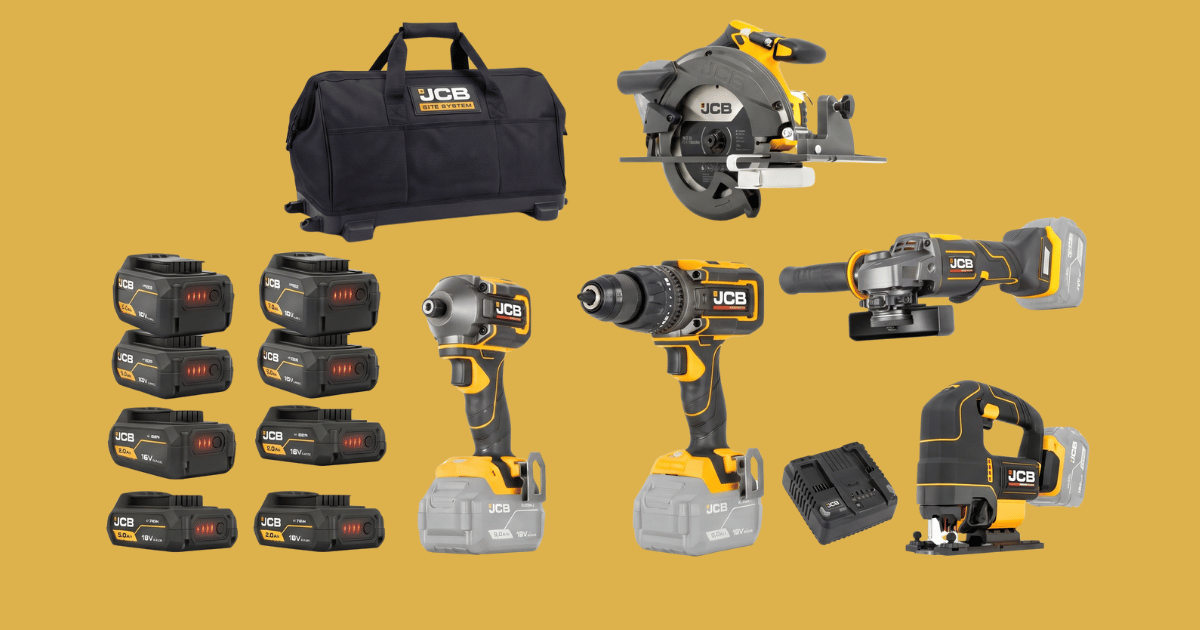
JCB 18V 5-Piece Pro Kit Review (JCB-18PKIT-8): Is £549.99 Good Value in 2026?
A detailed UK review of the JCB 18V 5-Piece Pro Kit (JCB-18PKIT-8) — five brushless tools, four E-TECH batteries and a dual fast charger for £549.99. We break down the cost per tool, the specs that matter, and who should buy it.

Limited Edition Aston Martin F1 and JCB Roller Tools Cabinet | British Engineering Excellence
In a world where craftsmanship and innovation go hand in hand, two of Britain’s most distinguished engineering giants, Aston Martin Formula One® Team and JCB Tools UK, have joined forces to create a tool storage solution that sets new standards in design, durability, and desirability. Launched in August 2024, the Limited Edition Aston Martin F1 […]
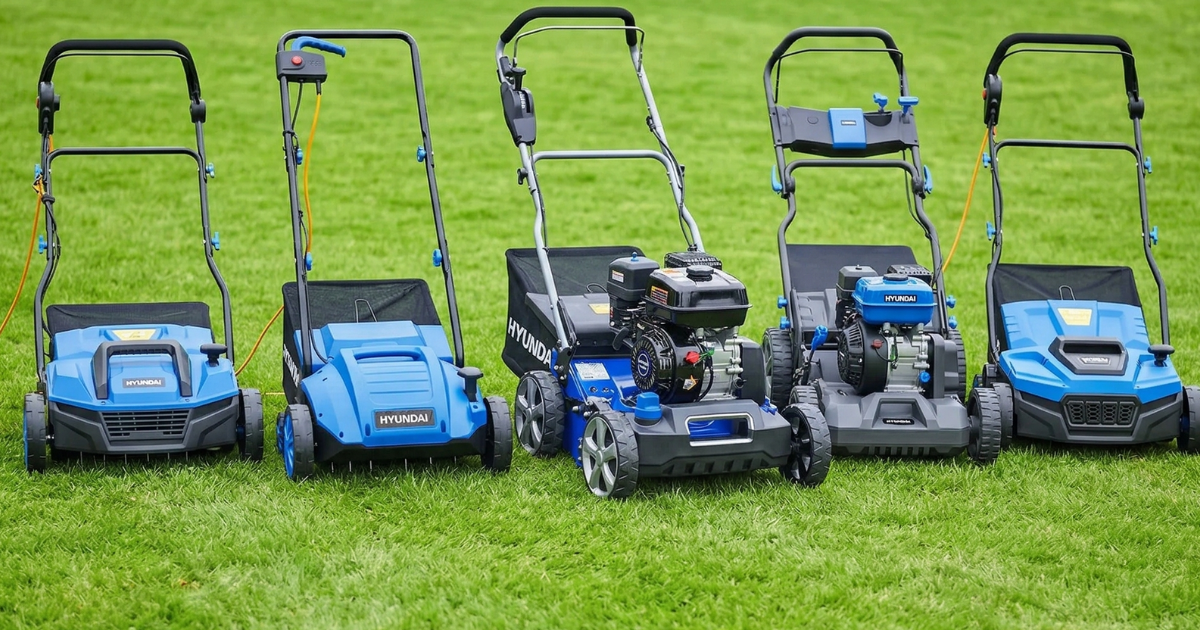
Hyundai Scarifier and Aerator Buying Guide (2026)
Revitalise your lawn with our Hyundai scarifier and aeraror buying guide. Compare top petrol and electric models to remove thatch and improve grass health.

UK Tool Theft on the Rise
Tool theft in the UK has escalated into a significant concern for tradespeople, with recent statistics highlighting the severity of the issue. In 2023, there were 44,514 reported tool thefts, marking a 5% increase from the previous year. This shocking statistic equates to a tool being stolen every 12 minutes, amounting to an estimated £98m.
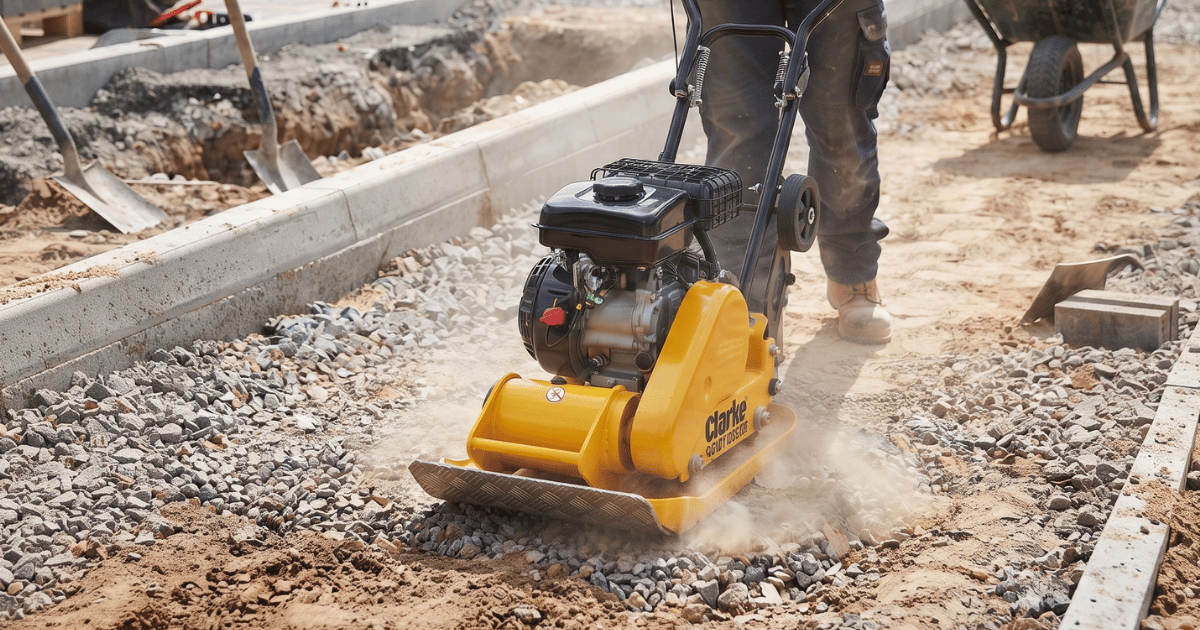
Clarke CPCP1 2HP Petrol Compactor Plate Review
Clarke CPCP1 2HP petrol compactor plate review: 8200N centrifugal force, 200mm compaction depth, 50kg build, £453.59 RRP. Jim Fellows breaks down the specs for driveway and patio projects.
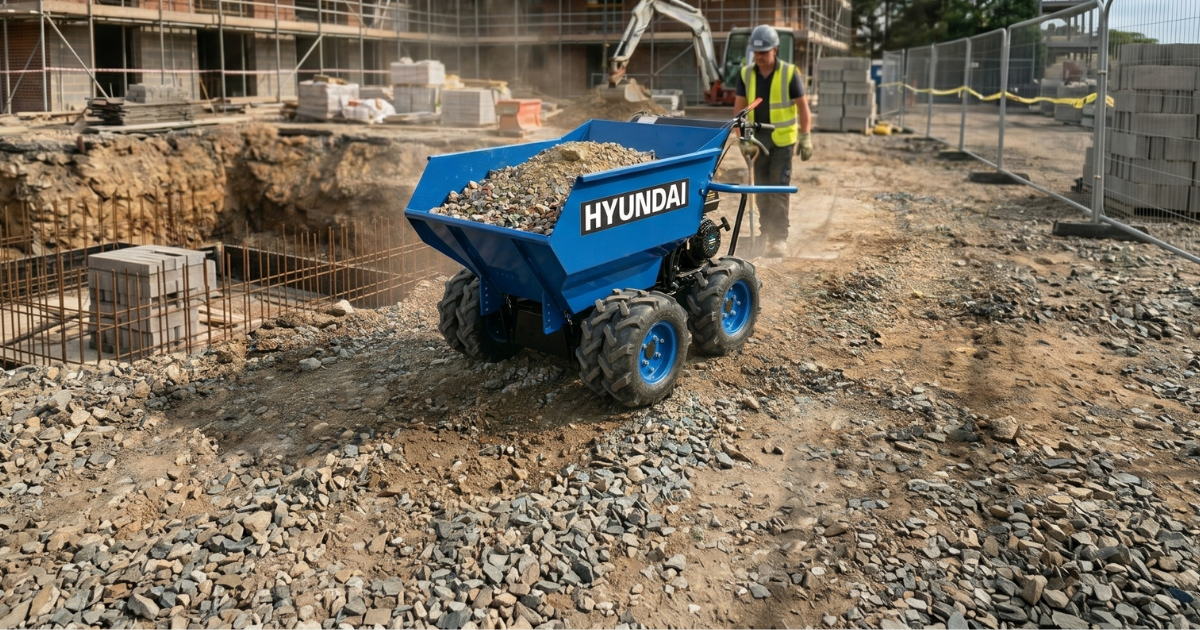
Hyundai HYMD500 500kg 196cc 4x4 Drive Mini Dumper Review
The Hyundai HYMD500 500kg 4x4 mini dumper is a powerful petrol-powered power barrow designed for heavy-duty material handling across construction sites, farms, and large gardens. With a robust 196cc engine, all-terrain 4WD traction, and high load capacity, it offers a reliable and cost-effective alternative to manual wheelbarrows and premium mini dumpers.