
Best Air Purifying House Plants UK - NASA Approved List
Discover the best NASA-approved air purifying house plants for UK homes. Improve your indoor air quality with these low-maintenance, toxin-busting plants.
Key takeaways
- In 1989, NASA conducted a landmark study to identify the most effective indoor plants for filtering toxins.
- When selecting plants for a British interior, it is essential to consider light levels and central heating.
- Growing houseplants in the UK presents unique challenges, primarily due to the significant shift in daylight hours between summer and winter.
- To see a measurable difference in air quality, the Rule of Thumb is to have 2-3 plants in 8-inch to 10-inch pots for every 100 square feet of space.
- Since these plants release oxygen at night, they are biologically suited for sleeping quarters.
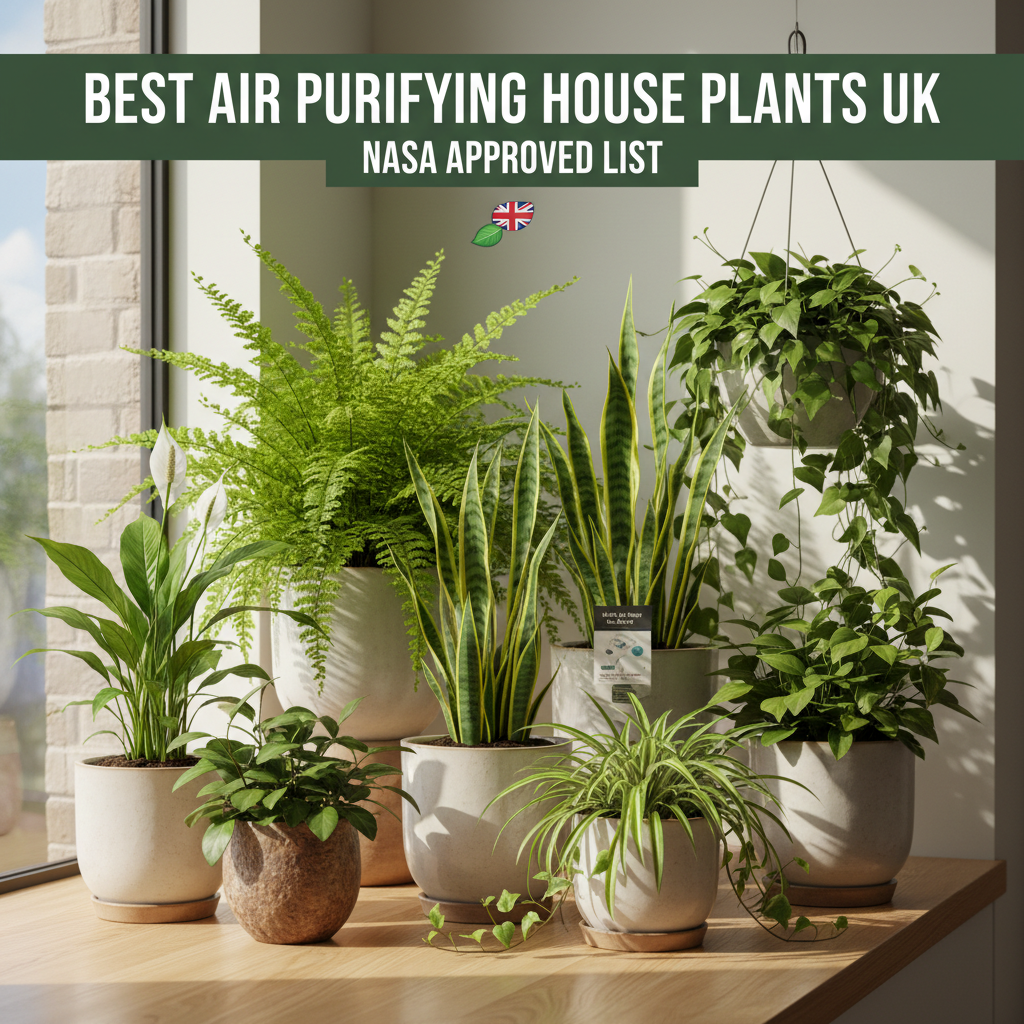
The best air purifying house plants for UK homes include the Snake Plant, Peace Lily, Spider Plant, and Aloe Vera. These NASA-approved plants work by absorbing harmful toxins such as formaldehyde, benzene, and trichloroethylene from the air while releasing oxygen. For optimal results in a British indoor climate, experts recommend placing at least one medium-sized plant per 10 square metres of living space.
Tips for Cleaner Indoor Air
- NASA Findings: Certain houseplants can remove up to 87% of air toxins in 24 hours.
- Top UK Choices: Peace Lilies and Snake Plants are highly resilient to lower light levels found in UK winters.
- Health Benefits: These plants help reduce headaches, respiratory irritation, and improve sleep quality.
- Safety First: Many air-purifying plants are toxic to cats and dogs; always check pet-safety before buying.
- Ease of Care: Most varieties listed are low-maintenance, requiring watering only when the top inch of soil is dry.
What is the NASA Clean Air Study?
In 1989, NASA conducted a landmark study to identify the most effective indoor plants for filtering toxins. While the research was originally intended for space stations, the findings are incredibly relevant for modern UK homes, which are often heavily insulated and lack natural ventilation. These "super plants" neutralise Volatile Organic Compounds (VOCs) that off-gas from synthetic carpets, flat-pack furniture, and household cleaning products.
Top 10 NASA-Approved Air Purifying Plants for UK Homes
When selecting plants for a British interior, it is essential to consider light levels and central heating. Here is a breakdown of the most effective varieties that thrive in our specific climate.
1. Snake Plant (Sansevieria trifasciata)
Also known as "Mother-in-Law’s Tongue," the Snake Plant is perhaps the most hardy air purifier available. Unlike most plants, it converts CO2 into oxygen at night, making it the ideal bedroom plant. It specifically targets formaldehyde, nitrogen oxides, and benzene.
2. Peace Lily (Spathiphyllum)
The Peace Lily is an aesthetic powerhouse. According to NASA, it is one of the few plants that can help filter all five primary indoor toxins, including ammonia. In the UK, they thrive in damp environments like bathrooms but need to be kept away from cold draughts during the winter months.
3. Spider Plant (Chlorophytum comosum)
The Spider Plant is perfect for beginners. It is incredibly resilient and produces "babies" that can be easily propagated. It is particularly effective at removing carbon monoxide and xylene, which can accumulate in homes with attached garages or gas fireplaces.
4. English Ivy (Hedera helix)
While often seen climbing UK garden walls, English Ivy is a potent indoor air purifier. Research suggests it is particularly effective at reducing airborne faecal particles and mould, making it a brilliant choice for humid British bathrooms.
5. Aloe Vera
Beyond its medicinal sap, Aloe Vera filters formaldehyde and benzene. It loves a sunny British windowsill. A unique feature of Aloe is that its leaves will develop brown spots if the chemical level in your home becomes high, acting as a natural bio-monitor.
Comparison of the Best Air Purifying House Plants
| Plant Variety | Primary Toxins Removed | Light Requirement | Pet Friendly? |
|---|---|---|---|
| Snake Plant | Formaldehyde, Benzene, Xylene | Low to High | No |
| Peace Lily | Ammonia, Benzene, Formaldehyde | Medium Shadow | No |
| Spider Plant | Carbon Monoxide, Xylene | Bright Indirect | Yes |
| Boston Fern | Formaldehyde, Xylene | High Humidity | Yes |
| Areca Palm | Toluene, Xylene | Bright Light | Yes |
How to Care for Air Purifying Plants in the UK Climate
Growing houseplants in the UK presents unique challenges, primarily due to the significant shift in daylight hours between summer and winter. Following these seasonal steps ensures your air-cleaning "tech" stays functional year-round.
Spring and Summer (March - August)
- Feeding: Use a balanced liquid fertiliser once a month. The RHS recommends a seaweed-based feed for foliage plants.
- Watering: Increasing light levels means higher water consumption. Check soil moisture twice a week.
- Pruning: Remove any yellowing leaves to ensure the plant directs energy to new, toxin-absorbing growth.
Autumn and Winter (September - February)
- Light Maximisation: Move plants closer to south-facing windows. The low UK winter sun is rarely strong enough to scorch leaves.
- Humidity Management: Central heating dries out indoor air. Place plants like the Peace Lily or Boston Fern on a tray of wet pebbles to maintain local humidity.
- Reduce Water: Most air-purifying plants go dormant in winter. Overwatering in December is the number one cause of houseplant death in the UK.
Do Houseplants Really Filter Air? The Expert Verdict
"While a single plant won't replace a high-end HEPA filter, the cumulative effect of 'indoor greening' significantly improves psychological well-being and reduces the presence of harmful particulates in the home." - Garden-Review Horticultural Expert
To see a measurable difference in air quality, the Rule of Thumb is to have 2-3 plants in 8-inch to 10-inch pots for every 100 square feet of space. In a standard UK terraced house living room, this equates to roughly 4 to 5 medium-sized plants.
Which Plants are Best for Specific Rooms?
The Bedroom: Snake Plant and Aloe Vera
Since these plants release oxygen at night, they are biologically suited for sleeping quarters. They help maintain a fresh environment even with the windows closed during freezing British winters.
The Home Office: Devil’s Ivy (Pothos)
If you spend all day at a desk with a computer and printer, Devil's Ivy is excellent. It thrives under fluorescent lights and targets the VOCs commonly found in office equipment and inks.
The Kitchen: Spider Plant
Spider plants are excellent at absorbing grease and carbon monoxide produced during cooking. They are also non-toxic, making them safe if they accidentally end up near food preparation areas.
Frequently Asked Questions
Which houseplant produces the most oxygen?
Can these plants grow in a dark UK home?
Are air-purifying plants safe for cats and dogs?
How often should I clean the leaves of my plants?
Do I need to repot my air-purifying plants every year?
Tags
Comments
Join the conversation
Create a free account to leave comments, share photos, and connect with other gardeners.