
Autumn Garden Maintenance: Complete Guide for UK Gardeners
Essential guide to autumn garden maintenance in the UK. Master lawn care, planting bulbs, and winter protection to ensure a thriving garden. Read more!
Key takeaways
- The UK’s cool, damp autumns create ideal conditions for soil recovery and root growth.
- After a busy summer, lawns are often compacted and nutrient-depleted.
- Plant bulbs at two to three times their own depth for the best results.
- Autumn pruning balances garden tidiness, plant health, and wildlife support.
- A slightly untidy garden supports biodiversity and helps wildlife survive winter.
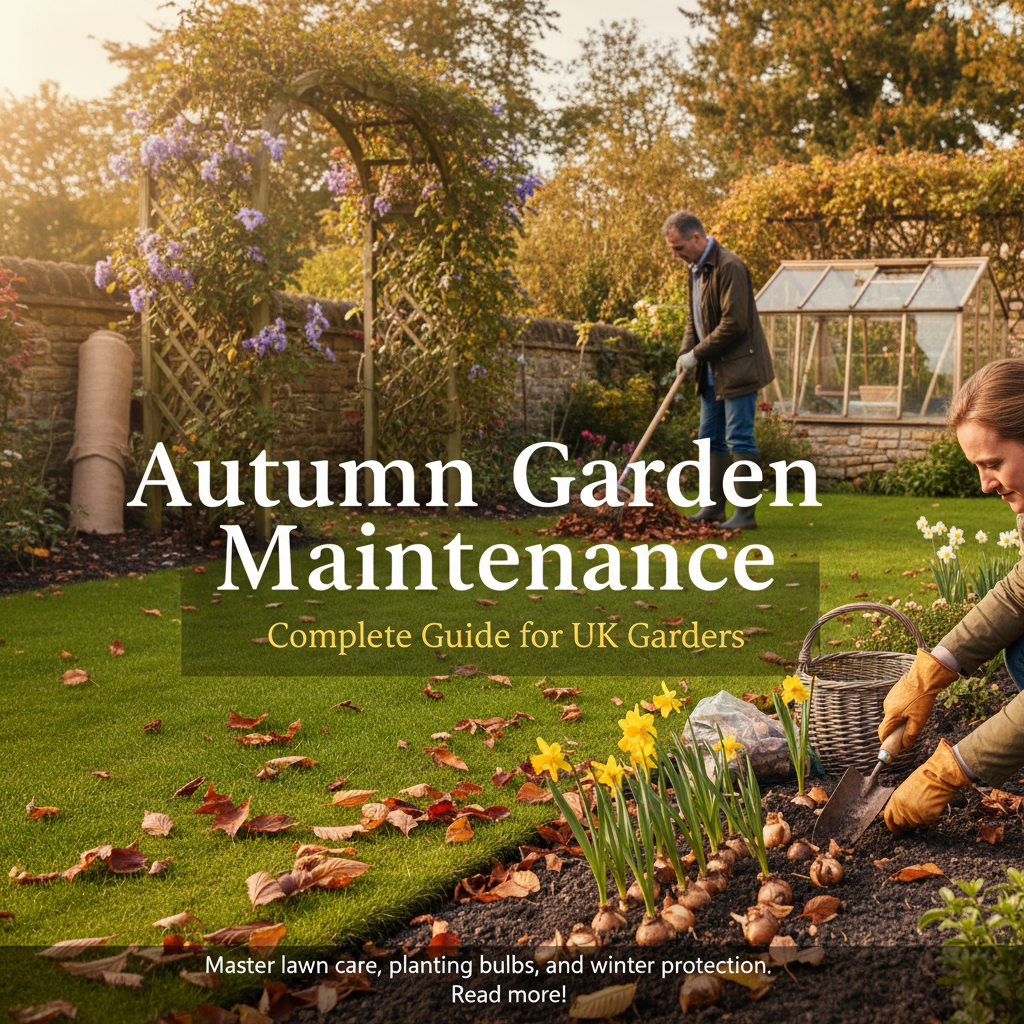
The best time to start your autumn garden maintenance in the UK is from late September through to November. Essential tasks include clearing fallen leaves, scarifying lawns, planting spring bulbs, and protecting tender perennials before the first frost. Thorough autumn preparation keeps your garden healthy through winter and ready to thrive in spring.
- Best Time: September to mid-November (before the ground freezes).
- Key Lawn Tasks: Rake, scarify, aerate, and apply autumn lawn fertiliser.
- Planting: Spring bulbs such as daffodils, crocuses, and tulips.
- Pruning: Cut back faded perennials and prune climbing roses.
- Protection: Lift or protect tender plants like dahlias.
- Wildlife: Leave seed heads and leaf piles for overwintering animals.
Why Is Autumn Garden Maintenance Important in the UK?
The UK’s cool, damp autumns create ideal conditions for soil recovery and root growth. According to the Royal Horticultural Society (RHS), soil remains warm after summer while rainfall increases, making autumn the perfect time for planting and lawn repair.
Proper maintenance reduces disease risk, improves soil structure, and protects your investment in plants against winter frosts.
How to Prepare Your Lawn for Winter
After a busy summer, lawns are often compacted and nutrient-depleted. Autumn care focuses on recovery, not growth.
1. Raking and Scarifying
Remove thatch (dead grass and moss) to allow air and water to reach the roots. Use a spring-tine rake or a mechanical scarifier for larger lawns.
2. Aeration
Use a garden fork or hollow-tine aerator to make holes 10–15cm deep at 10cm intervals. This improves drainage and prevents winter waterlogging.
3. Top Dressing and Feeding
Apply a dedicated autumn lawn feed, which is low in nitrogen and high in potassium and phosphorus to strengthen roots and improve frost resistance.
| Task | Recommended Month | Purpose |
|---|---|---|
| Scarifying | September / early October | Removes moss and dead organic matter |
| Aerating | October | Prevents soil compaction and waterlogging |
| Feeding | Late September / October | Strengthens roots for winter |
| Last Mow | Early November | Maintain grass height at ~5cm |
What Should You Plant in Autumn?
Spring-Flowering Bulbs
Plant bulbs at two to three times their own depth for the best results.
- September–October: Crocus, daffodils, hyacinths, alliums.
- November: Tulips (later planting reduces tulip fire disease).
Bare-Root Hedging and Trees
November marks the start of bare-root planting season. These plants are cheaper, establish quickly, and are more environmentally friendly than container-grown stock.
Ideal choices include hornbeam, beech, and native hedging mixes.
Winter Bedding
- Viola cornuta: Flowers through frost.
- Cyclamen coum: Thrives in dry shade.
- Erica carnea: Provides winter nectar for bees.
When Should You Prune and Cut Back?
Autumn pruning balances garden tidiness, plant health, and wildlife support.
What to Cut Back Now
- Herbaceous perennials: Remove soft, decaying foliage.
- Climbing roses: Prune side shoots to prevent wind rock.
- Soft fruit: Cut summer-fruiting raspberries to ground level.
What to Leave Until Spring
- Ornamental grasses: Provide winter structure.
- Hydrangeas: Old flower heads protect buds.
- Seed heads: Feed birds and support wildlife.
How to Protect Tender Plants from Frost
- Lift tubers: Dahlias and cannas after first frost.
- Wrap plants: Use fleece or hessian for tender trees and palms.
- Mulch: Apply a 10cm layer of organic mulch over roots.
Essential Maintenance for Ponds and Hard Landscaping
- Ponds: Net ponds to prevent leaf decay and toxic gas build-up.
- Greenhouses: Clean glass to maximise winter light.
- Garden furniture: Clean, oil, and store under cover.
Gardening for Wildlife in Autumn
A slightly untidy garden supports biodiversity and helps wildlife survive winter.
- Hedgehog highways: Create gaps in fences.
- Bug habitats: Leave logs and hollow stems.
- Bird feeding: Provide high-energy foods.
FAQs on 'Autumn Garden Maintenance'
When is the last date to mow my lawn in the UK?
How do I stop my pots from freezing and cracking?
Should I clear all fallen leaves?
Can I plant roses in autumn?
When should Mediterranean plants be moved indoors?
How do I store dahlia tubers for winter?
Tags
Comments
Join the conversation
Create a free account to leave comments, share photos, and connect with other gardeners.