
How to Care for a Spider Plant: Complete UK Guide
Spider plants are cheerful, resilient houseplants that produce cascades of plantlets, making them ideal for beginners and easy propagation.
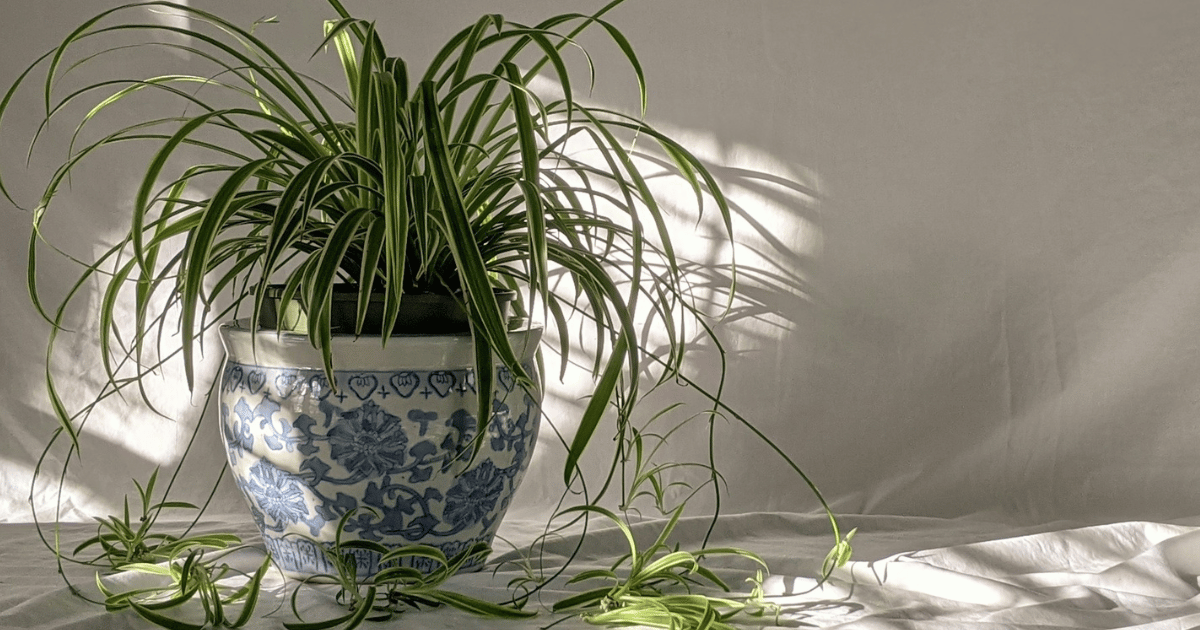
The spider plant, Chlorophytum comosum, is a classic, easy-going houseplant well suited to UK homes, tolerating a range of light levels and occasional neglect while producing arching, variegated leaves and cascades of baby plantlets. Its main sensitivity is to tap water minerals, which cause brown leaf tips, so using rainwater or filtered water keeps it looking its best.
Key takeaways
- Spider plants tolerate a wide range of light, from bright indirect to partial shade.
- Brown tips are usually caused by fluoride and chlorine in tap water.
- Plantlets, or pups, form on long stolons and are easy to propagate.
- Non-toxic to cats and dogs, making it a safe pet-friendly choice.
- Slightly root-bound plants often flower and produce more plantlets.
| Attribute | Detail |
|---|---|
| Botanical name | Chlorophytum comosum |
| Plant type | Evergreen perennial |
| Mature size indoors | 30-60cm, trailing plantlets further |
| Light | Bright indirect light to partial shade |
| Watering | Weekly in summer, every 10-14 days in winter |
| Humidity | Average room humidity is fine |
| Temperature range | 13-24°C |
| Toxic to pets | No, non-toxic to cats and dogs |
| Difficulty | Very easy |
Choosing a healthy plant and varieties
Choose a plant with firm, upright leaves and good variegation, avoiding any with widespread brown tips or soft, translucent patches at the base. A slightly root-bound plant in a small pot is not a problem and may even flower and produce plantlets sooner.
| Variety | Leaf appearance | Notes |
|---|---|---|
| Chlorophytum comosum 'Vittatum' | Green leaves with central white stripe | The most widely available form |
| Chlorophytum comosum 'Variegatum' | Green leaves with white margins | Slightly more compact growth |
| Chlorophytum comosum 'Bonnie' | Curly, twisted leaves | Compact habit, striking texture |
| Chlorophytum comosum 'Hawaiian' | Bright yellow-green leaves | Needs slightly brighter light for best colour |
| Chlorophytum laxum | Narrower, grass-like leaves | Less common, similar easy care |
Light and position
Spider plants thrive in bright, indirect light but tolerate partial shade well, making them versatile for various rooms in a UK home. Avoid harsh direct midday sun, which can scorch and bleach the leaves, and in winter, keep the plant near a brighter window to maintain steady growth through darker months.
Watering
Water once the top few centimetres of compost have dried out, roughly weekly in summer and every 10-14 days in winter. The fleshy roots store some moisture, so spider plants cope better with slight underwatering than sitting in soggy compost, which quickly leads to root rot.
Humidity and temperature
Spider plants are adaptable and cope fine with average UK room humidity, though a little extra humidity can help reduce brown tips in centrally heated homes over winter. Keep temperatures between 13-24°C, and avoid placing the plant near cold draughts or icy windowsills in winter.
Feeding
Feed monthly during spring and summer with a balanced liquid houseplant feed at half the recommended strength, as spider plants are sensitive to fertiliser salt build-up, which contributes to brown tips. Stop feeding entirely in autumn and winter while growth slows.
Potting mix and repotting
A general-purpose, free-draining houseplant compost suits spider plants well.
- Choose a pot with drainage holes, only one size larger than the current one.
- Use a peat-free multipurpose compost with a little added perlite.
- Gently loosen the fleshy, tuberous roots without breaking too many.
- Position at the same depth as before and backfill with fresh compost.
- Repot every one to two years, or leave slightly root-bound to encourage flowering.
Pruning, cleaning and support
Trim brown or damaged leaf tips with clean scissors, cutting at an angle to follow the natural leaf shape rather than cutting straight across. Wipe leaves periodically with a damp cloth to remove dust. Hanging baskets or a raised shelf work well to display the cascading stolons and plantlets without support needed.
Propagation
Spider plants are among the easiest houseplants to propagate thanks to their plantlets.
- Wait until a plantlet on a stolon has developed small root nubs.
- Snip the plantlet from the stolon using clean scissors.
- Place the plantlet in a glass of water or directly into moist compost.
- Keep in bright, indirect light until roots are a few centimetres long.
- Pot into houseplant compost once well rooted.
Common problems
| Problem | Symptom | Fix |
|---|---|---|
| Tap water sensitivity | Brown, crispy leaf tips | Switch to rainwater or filtered water |
| Overwatering | Yellowing leaves, soggy compost | Reduce watering and improve drainage |
| Root rot | Mushy, dark roots and base | Remove rotten roots and repot in fresh, dry compost |
| Pests | Spider mites or aphids on leaves | Wipe leaves and treat with insecticidal soap |
| No plantlets | Healthy plant but no baby plants forming | Ensure good light and allow plant to become slightly root-bound |
Seasonal care calendar
| Season | Care focus |
|---|---|
| Spring | Resume feeding, repot if needed, propagate plantlets |
| Summer | Water regularly, watch for new plantlets forming |
| Autumn | Gradually reduce feeding and watering |
| Winter | Water sparingly, keep away from cold draughts |
Find more pet-friendly houseplant ideas in our plants section, or check our how-to guides for propagation tips.
Spider Plant FAQs
Why does my spider plant have brown tips?
What are the small plantlets on my spider plant?
How do I propagate spider plant plantlets?
Is a spider plant toxic to cats and dogs?
Why isn't my spider plant producing plantlets?
How often should I water a spider plant?
Tags
Comments
Join the conversation
Create a free account to leave comments, share photos, and connect with other gardeners.
Related Articles

How to Care for a Snake Plant: Complete UK Guide
Snake plants are one of the toughest houseplants around, tolerating low light and irregular watering while purifying indoor air.
How to Care for Orchids: Complete UK Guide
Moth orchids are elegant, long-flowering houseplants that thrive in bark mix and bright, indirect light, often reflowering for years.
How to Care for a Peace Lily: Complete UK Guide
Peace lilies are elegant, forgiving houseplants that dramatically droop when thirsty, making them one of the easiest plants to read.
How to Get Rid of Flies and Wasps in Your Garden: UK Guide
Wasps peak in late summer as colonies max out and turn to scavenging, while flies breed fast around bins and fallen fruit all season - this guide covers prevention, physical control and when a chemical treatment is actually needed.

5 Bulbs you can grow in water in time for Christmas
Bringing indoor bulbs like hyacinth, paperwhite, and amaryllis in water enhances Christmas décor with fragrant and vibrant displays.
How to Grow Astilbe: Complete UK Care Guide
Astilbe brings feathery plumes of colour to moist, shady borders in summer, but needs consistently damp soil to prevent scorched, crispy foliage.