
How to Get Rid of Couch Grass UK - Complete Removal Guide
Learn how to get rid of couch grass UK with our complete removal guide. Discover organic digging tips, smothering techniques, and effective chemical fixes.
Key takeaways
- Couch grass ( Elymus repens ), also known as twitch, scutch, or quick grass, is a perennial grass species that is a notorious pest in UK gardens.
- For many UK gardeners, especially those managing organic allotments or small borders, digging is the most effective way to clear the ground.
- If you have a large area, such as a new allotment plot completely over-run by couch grass, digging every inch may be physically impossible.
- While many UK gardeners prefer organic methods, chemical intervention is sometimes necessary for severe infestations or when couch grass has grown into the roots of established hedges.
- In fact, most products that kill couch grass will also kill your lawn.
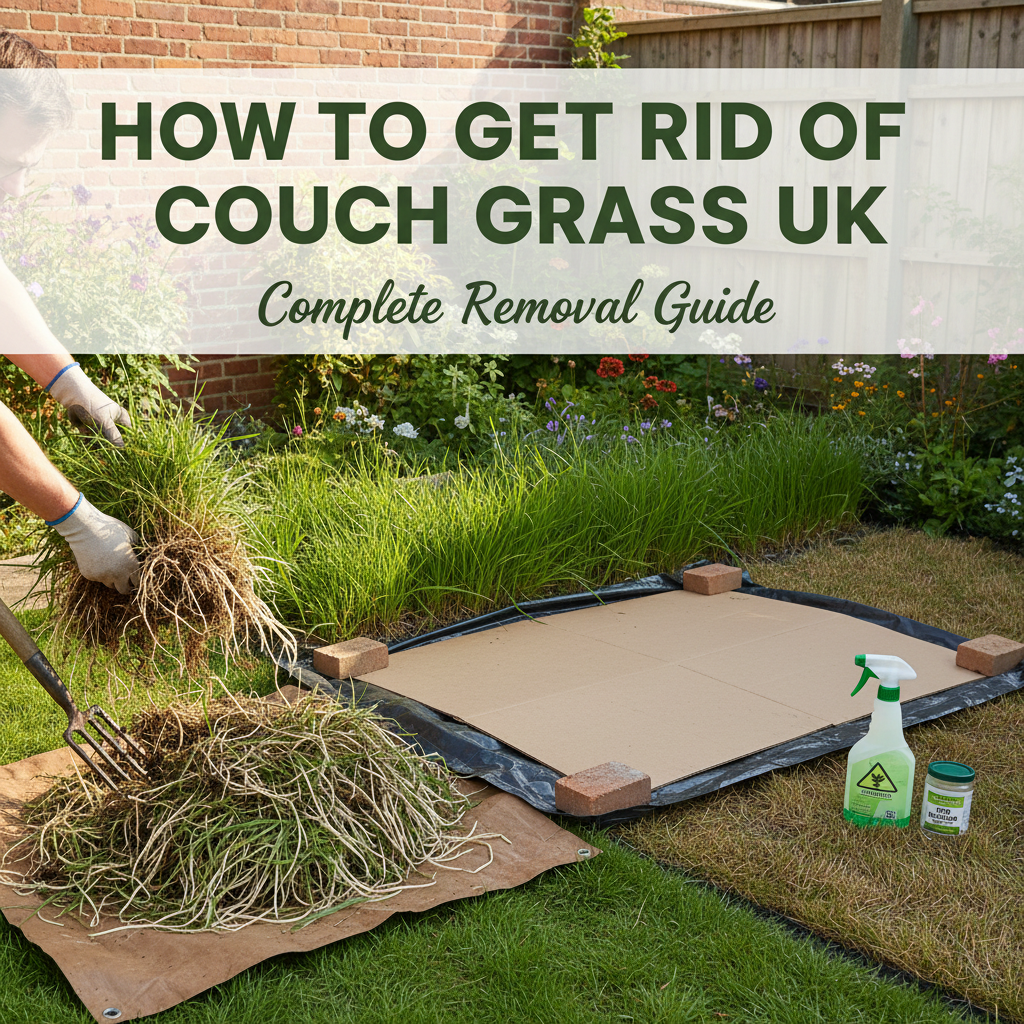
To get rid of couch grass in the UK, you must choose between manual extraction, mulching (smothering), or targeted systemic herbicides. Effective removal requires patience as the weed spreads via underground white rhizomes; even a 1cm fragment left in the soil can regenerate into a new plant. For the best results, tackle couch grass during its active growing season between March and October.
Top Tips for Couch Grass Control
- Identification is crucial: Look for the distinctive white, sharp-tipped underground rhizomes and "auricles" (small ears) at the base of the leaf blade.
- Never rotovate: Mechanically tilling soil infested with couch grass will chop the rhizomes into hundreds of pieces, exponentially increasing the infestation.
- Persistence is mandatory: Whether using organic or chemical methods, you will likely need to revisit the site for two consecutive growing seasons.
- Timing matters: Apply treatments or start digging in spring when the plant is actively growing and vulnerable.
- Dispose carefully: Do not add couch grass roots to your home compost heap unless it is a hot composting system; otherwise, you will spread the weed elsewhere.
What is Couch Grass and Why is it Invasive?
Couch grass (Elymus repens), also known as twitch, scutch, or quick grass, is a perennial grass species that is a notorious pest in UK gardens. Unlike annual weeds that grow from seed, couch grass is a "rhizomatous" perennial. This means it possesses a complex network of underground stems (rhizomes) that store energy and spread horizontally through the soil.
In the UK climate, couch grass thrives in almost any soil type, from heavy clay to sandy loam. It is particularly problematic because its roots can penetrate through the root balls of prized perennials and shrubs, making it extremely difficult to extract without uprooting your ornamental plants. The Royal Horticultural Society (RHS) classifies it as one of the most persistent weeds for home gardeners.
How to Identify Couch Grass Correctly
Before beginning removal, ensure you aren't dealing with common lawn grass. Couch grass has several distinguishing features:
- The Roots: Thick, white, fleshy underground stems with sharp, pointed tips that can pierce through potato tubers or even plastic membranes.
- The Leaves: Rough, flat, bluish-green leaves that are often hairy on the upper surface.
- The Base: If you pull back the leaf, you will see "auricles"—small, claw-like appendages that wrap around the stem at the junction of the leaf blade.
How to Get Rid of Couch Grass UK: Manual Removal Methods
For many UK gardeners, especially those managing organic allotments or small borders, digging is the most effective way to clear the ground. However, it requires a meticulous approach.
The "Fork and Sift" Method
This is the gold standard for non-chemical removal. Do not use a spade, as this will slice through the rhizomes, leaving fragments behind to regrow.
- Wait for damp soil: Attempting to dig couch grass out of parched, hard summer soil is a recipe for failure. Wait for rainfall in autumn or spring.
- Use a garden fork: Carefully lift the soil to loosen it. Work in small sections (roughly 50cm x 50cm).
- Hand-sift the earth: Shake the soil through your fingers or use a garden sieve. You must remove every single white stringy root you find.
- Deep check: Couch grass rhizomes typically sit in the top 15-20cm of soil, but they can dive deeper if the soil is loose.
- Follow-up: Invariably, you will miss a piece. Check the area every two weeks and immediately fork out any new green shoots that appear.
Suppression and Smothering (The "No-Dig" Approach)
If you have a large area, such as a new allotment plot completely over-run by couch grass, digging every inch may be physically impossible. In this scenario, smothering the weed is the best ecological option.
The Cardboard and Mulch Technique: This method starves the grass of light, eventually exhausting the energy reserves in the rhizomes.
- Clear any tall top-growth with a brush cutter or mower.
- Lay thick, brown corrugated cardboard over the entire area, overlapping the edges by at least 15cm to prevent the grass from finding a gap.
- Cover the cardboard with a 10-15cm layer of organic matter, such as well-rotted manure or woodchips.
- Leave this in place for a minimum of 12 to 18 months. Do not be tempted to dig it up early.
Chemical Control: When and How to Use Herbicides
While many UK gardeners prefer organic methods, chemical intervention is sometimes necessary for severe infestations or when couch grass has grown into the roots of established hedges.
The most effective chemical for couch grass is Glyphosate. This is a systemic herbicide, meaning it is absorbed by the leaves and transported down into the root system, killing the entire plant. In the UK, you can find this in products like Roundup or Weedol Rootkill.
| Method | Type | Best For | Success Rate |
|---|---|---|---|
| Digging | Organic | Small borders and vegetable patches | High (if meticulous) |
| Smothering | Organic | Empty plots and large new gardens | Moderate (takes 1+ year) |
| Glyphosate Spray | Chemical | Large clear areas with no nearby plants | High |
| Spot Gel/Wand | Chemical | Couch grass growing inside other plants | High (targeted) |
Safety Tips for Chemical Use in the UK
If using glyphosate, follow these recommended guidelines:
- Apply on a still day: Avoid spray drift onto your prized roses or vegetables.
- Wait for growth: Do not spray dormant grass. The plant must have plenty of green leaf area to absorb the chemical.
- Allow time: It can take 7–21 days for the herbicide to travel to the tips of the rhizomes. Resist the urge to dig the grass up as soon as it turns yellow.
How to Manage Couch Grass in Lawns
Getting rid of couch grass in an established lawn is uniquely challenging because most selective lawn weedkillers (which kill broad-leaved weeds like dandelions) will not affect couch grass, as it is a member of the grass family itself. In fact, most products that kill couch grass will also kill your lawn.
The "Slice and Pull" Strategy: If you have small patches in a lawn, use a sharp knife to cut a circle around the patch, lift the turf, and manually extract the rhizomes before relaying the turf or sowing new seed. For widespread infestations, the only option is often to kill the entire lawn with a non-selective herbicide and start again from seed or turf after the weed is completely dead.
Disposing of Couch Grass: The Golden Rules
UK gardeners often make the mistake of putting couch grass on the compost heap. This is a significant error. Unless your compost heap reaches a sustained temperature of over 55°C (which most domestic "cold" heaps do not), the rhizomes will survive and you will simply redistribute the problem next year.
Safe Disposal Options:
- The "Drowning" Method: Submerge the roots in a bucket of water for 4–6 weeks until they turn into a slimy black mush. This liquid can then be used as a nitrogen-rich plant feed.
- The "Sun-Baking" Method: Leave the roots on a concrete slab or piece of corrugated iron in full sun until they are brittle and snap easily. Only then can they be safely composted.
- Green Waste Bin: Most UK councils use industrial-scale hot composting which will kill couch grass rhizomes.
- Burning: If you have a garden incinerator, burning the dried roots is 100% effective.
Frequently Asked Questions
Can I kill couch grass with vinegar or salt?
How long do couch grass seeds stay viable in the UK?
When is the best month to spray couch grass in the UK?
Why does couch grass keep coming back after I dig it up?
Is there a "couch grass killer" that won't kill my other plants?
Tags
Comments
Join the conversation
Create a free account to leave comments, share photos, and connect with other gardeners.