
How to Care for Orchids at Home UK - Watering & Light Guide
Master orchid care in the UK with our expert guide. Learn the secrets to watering, light requirements, and repotting for healthy, re-blooming orchids.
Key takeaways
- In the UK, the biggest challenge for orchid owners is balancing light levels with the often-dull winter months.
- Overwatering is the primary cause of orchid death in British households.
- Most orchids sold in UK garden centres are "intermediate" growers.
- Over time, the bark-based compost breaks down and stops providing the essential airflow that orchid roots (which are epiphytic, or "air-growing") require.
- Once your orchid has dropped its last petal, do not throw it away!
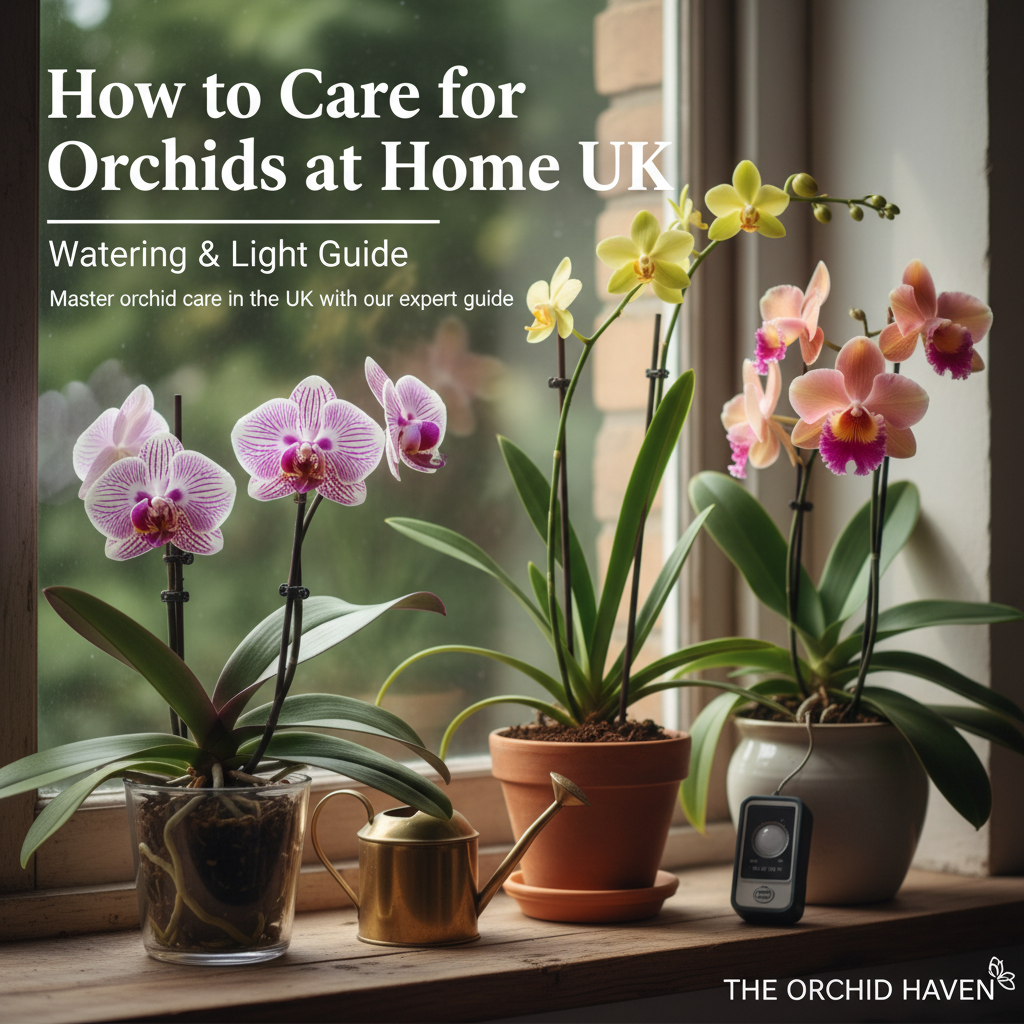
To care for orchids at home in the UK, place them in bright, indirect light (such as an east or west-facing windowsill), maintain temperatures between 18°C and 24°C, and water only when the roots appear silvery-grey. Use the "soak and drain" method with tepid rainwater, and repot every 2-3 years using specific orchid bark compost.
Tips for Orchid Care UK
- Light: Bright, filtered sunlight is essential; avoid direct midday sun which scorches leaves.
- Watering: Use the "drainage hole check"—water when roots look silvery, avoid "wet feet."
- Humidity: Orchids love 50-70% humidity; use bark chips or a pebble tray in centrally heated UK homes.
- Feeding: Use a dedicated "Orchid Focus" or similar fertiliser every two weeks during the growing season (March to September).
- Repotting: Never use standard potting soil; always use free-draining pine bark or coconut husk.
What is the Best Location for Orchids in a UK Home?
In the UK, the biggest challenge for orchid owners is balancing light levels with the often-dull winter months. The most common variety, the Phalaenopsis (Moth Orchid), thrives in bright, indirect light. During the spring and summer, an east-facing windowsill is ideal as it provides gentle morning sun. Avoid south-facing windows in high summer unless you have a sheer curtain to filter the intensity.
According to RHS guidelines, if your orchid’s leaves turn a very dark green, it likely needs more light. Conversely, yellowing leaves or red-tinged edges often indicate too much direct sun exposure. In the height of a UK winter (December and January), a south-facing window may actually be the best spot to maximise the limited daylight hours.
How to Water Orchids Properly: The "Goldilocks" Method
Overwatering is the primary cause of orchid death in British households. Because the UK climate can be damp, evaporation rates are lower than in tropical regions. You should never water an orchid on a fixed schedule. Instead, follow these steps:
- Inspect the roots: If the roots visible through the clear plastic pot are bright green, the plant has enough moisture. If they look silvery-grey or white, it is time to water.
- The Soak: Submerge the inner plastic pot in a bowl of tepid rainwater (or distilled water) for 10–15 minutes. Note: UK tap water can be "hard" in many regions, leading to mineral buildup; rainwater is always preferred.
- The Drain: This is the most critical step. Lift the pot out and let all excess water drain away completely. Never let the orchid sit in a decorative pot filled with water, as this leads to root rot.
- The Crown: Ensure no water settles in the "crown" (the center where leaves meet), as this can cause crown rot.
Monthly Watering Adjustments for the UK Climate
| Season | Frequency (Approximate) | Key Action |
|---|---|---|
| Spring (Mar-May) | Every 7-10 days | Increase watering as new growth appears. |
| Summer (Jun-Aug) | Every 5-7 days | Mist leaves occasionally to increase humidity. |
| Autumn (Sep-Nov) | Every 10-14 days | Reduce frequency as light levels drop. |
| Winter (Dec-Feb) | Every 14-21 days | Keep roots on the drier side to avoid rot. |
Temperature and Humidity Requirements
Most orchids sold in UK garden centres are "intermediate" growers. They prefer daytime temperatures of 18°C to 24°C and a slight drop at night to around 15°C. This nocturnal temperature drop is actually what triggers the plant to produce a new flower spike. If your home is kept at a constant 21°C via central heating 24/7, your orchid may grow leaves but refuse to bloom.
"A common mistake in UK homes is placing orchids directly above a radiator. The rising dry heat dehydrates the flowers and roots rapidly. Instead, use a humidity tray—a saucer filled with pebbles and a layer of water—to create a moist microclimate around the plant."
A Step-by-Step Guide to Repotting Orchids
Orchids should generally be repotted every 2 to 3 years. Over time, the bark-based compost breaks down and stops providing the essential airflow that orchid roots (which are epiphytic, or "air-growing") require. The best time for repotting in the UK is late spring, just after the orchid has finished flowering.
Recommended Materials
- Clear plastic orchid pots (with side drainage holes).
- Specialist Orchid Compost (composed of pine bark or coconut husk).
- Sterilised pruning snips.
- Cinnamon powder (a natural antifungal for cut roots).
Repotting Orchicds Process
- Remove the plant: Gently ease the orchid out of its old pot. If roots are stuck to the sides, soak the pot first to make them more pliable.
- Clean the roots: Shake off the old bark. Use your sterilised snips to cut away any mushy, black, or hollow brown roots. Healthy roots should feel firm.
- Disinfect: Optionally, dust any cut root ends with a tiny bit of cinnamon to prevent infection.
- Position the plant: Place the orchid in the new pot, ensuring it is at the same depth as before.
- Fill with Bark: Gently drop fresh bark around the roots, tapping the pot on the table to help the bark settle into the gaps. Do not press down hard.
How to Encourage Re-blooming in the UK
Once your orchid has dropped its last petal, do not throw it away! To encourage a second flush of flowers, look at the stem (spike). If it is still green, cut it back to just 1cm above the second or third 'node' (the little bumps on the stem). Very often, a new side-shoot will emerge within weeks. If the stem has turned brown and woody, cut it off completely at the base of the plant to allow the orchid to direct energy into its leaves and roots for next year.
Comparison: Popular Orchid Varieties for UK Homes
| Variety | Ease of Care | Flowering Period | UK Humidity Need |
|---|---|---|---|
| Phalaenopsis | Beginner | Up to 6 months | Moderate |
| Dendrobium | Intermediate | Spring/Summer | High |
| Cymbidium | Experienced | Winter/Spring | Moderate (needs cool nights) |
| Oncidium | Intermediate | Autumn | Moderate |
Frequently Asked Questions
Why are my orchid leaves turning yellow?
Do I need a clear pot for my orchid?
Can I use ordinary potting soil for orchids?
How do I make my orchid flower again?
Is UK tap water safe for orchids?
When should I feed my orchid?
Tags
Comments
Join the conversation
Create a free account to leave comments, share photos, and connect with other gardeners.