
How to Get Rid of Flies and Wasps in Your Garden: UK Guide
Wasps peak in late summer as colonies max out and turn to scavenging, while flies breed fast around bins and fallen fruit all season - this guide covers prevention, physical control and when a chemical treatment is actually needed.
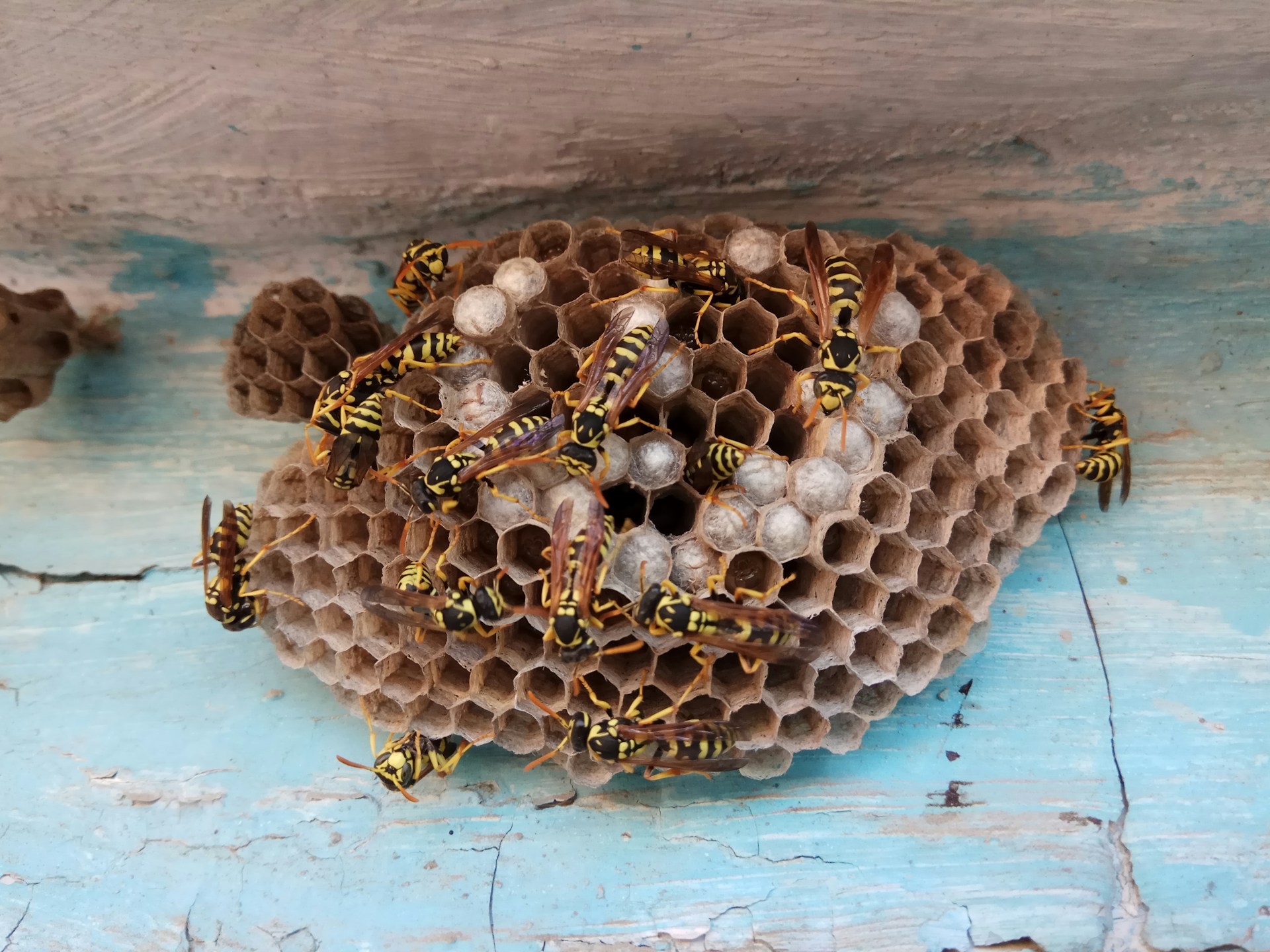
Flies and wasps turn up in UK gardens for the same reason at different times of year: flies breed fast around anything rotting, sugary or damp from midsummer onwards, while wasps become a real nuisance from late summer as their colonies peak and worker wasps switch from hunting insects to scavenging for anything sweet on your patio table. Neither is dangerous to control, but both respond best to a mix of prevention, physical control and, where genuinely needed, a targeted product rather than blanket spraying.
Key takeaways
- Wasp activity peaks from August into September as colonies reach maximum size and workers turn to sugary scavenging.
- Fruit flies and house flies breed in anything rotting, fermenting or left uncovered - bins, compost, fallen fruit and drinks left outdoors.
- An electric fly swatter deals with individual flies indoors or on the patio without any chemical residue near food.
- A sealed fruit fly trap is more effective than a swatter for a breeding population around a kitchen bin or fruit bowl.
- Only treat an active wasp nest with a proper wasp-and-nest killer, applied at dusk when workers are inside and less likely to swarm; a large or hard-to-reach nest is safer left to a pest controller.
| Problem | Affects | Peak season | Severity | Non-chemical control | Chemical control availability | Prevention |
|---|---|---|---|---|---|---|
| Wasps | Outdoor dining, fruit trees, anyone with a sting allergy | Late summer to early autumn | Low nuisance to serious if allergic | Traps, covering food and drink, nest avoidance | Wasp and nest killer sprays widely available | Remove food sources, seal bins, treat nests early in the season |
| House and fruit flies | Kitchens, bins, compost heaps, fruit bowls, greenhouses | Midsummer through early autumn | Low health risk, high nuisance and hygiene concern | Electric swatters, sealed traps, fly screens | Limited; mainly trap- and hygiene-based for amateur use | Bin hygiene, covering food, clearing rotting fruit and compost |
How to tell what you are dealing with
Wasps are the black-and-yellow banded insects hovering persistently around food, drinks or fruit trees, often tracing the same flight path back to a nest in a wall cavity, roof space, shed or hole in the ground. House flies are the larger, buzzing insects drawn to bins, pet waste and anything decaying, while fruit flies are much smaller, slower-flying and cluster around ripe or fermenting fruit, empty wine glasses and kitchen bins. Persistent activity in one spot, rather than the odd insect passing through, usually points to a nest or breeding site nearby rather than a one-off nuisance.
| Symptom | Likely cause | Key difference |
|---|---|---|
| Banded insects circling a fixed point, entering a wall or roof gap | Wasp nest nearby | Consistent flight path to and from one entry point |
| Small flies clustering around fruit bowl or bin | Fruit flies breeding on rotting produce | Tiny size, slow erratic flight, found near ripe or fermenting food |
| Larger flies around bins, compost or pet waste | House or bluebottle flies | Larger body, loud buzz, drawn to waste rather than fruit specifically |
| Wasps concentrated on a fruit tree or fallen fruit | Windfall apples, pears or plums fermenting on the ground | Activity stops once fallen fruit is cleared |
Why late summer is the worst time of year
A wasp colony builds slowly from a single queen in spring to several thousand workers by August, and for most of that time the workers are out hunting other insects to feed developing larvae - genuinely useful pest control you rarely notice. Once the colony stops producing new larvae in late summer, that supply of sugary larval secretion dries up, and workers switch to foraging for sugar themselves, which is why wasps suddenly seem far more interested in your drink than they were in July. Flies follow a simpler pattern: warm, humid weather speeds up breeding cycles, so populations around bins, compost and fallen fruit build steadily from June and only ease once temperatures drop in autumn.
Prevention around the garden and patio
Most fly and wasp problems are really food-source problems. Keep bin lids closed and bins away from seating areas, clear fallen fruit from under trees promptly rather than letting it ferment on the ground, and cover food and sweet drinks whenever you are eating outside. A citronella diffuser on the table adds a further layer of deterrent for casual outdoor dining without needing to spray anything directly on food. See our how-to guides for wider seasonal garden maintenance.
Non-chemical and physical controls compared
| Method | Best for | Effort |
|---|---|---|
| Electric fly swatter, e.g. YISSVIC Electric Fly Swatter | Individual flies indoors, in greenhouses or on the patio | Low; instant, no chemical residue near food |
| Sealed fruit fly trap, e.g. Super Ninja Fruit Fly Trap | A breeding population around a kitchen bin or fruit bowl | Low; set and leave, empty periodically |
| Citronella diffuser, e.g. Zero In 60-Day Citronella Diffuser | General deterrent for outdoor dining and patios | Very low; passive, pet-safe when used as directed |
| Removing fallen fruit and sealing bins | Cutting off the food source for both wasps and flies | Low but needs to be kept up through the season |
| Fly screens on doors and windows | Keeping flies out of the house entirely | Low once fitted |
Chemical controls and their limits
A wasp-and-nest killer such as Karlsten Wasp & Nest Killer Spray is intended for treating an active nest directly, not for spraying at flying wasps individually, which rarely works and risks provoking a swarm. Always check the current product label before use, treat nests at dusk or after dark when workers are inside and less active, wear long sleeves, and keep well back - a large nest, one in a loft space you cannot safely reach, or any nest near a route children or pets use regularly is better left to a professional pest controller. There is no equivalent chemical spray recommended for amateur use against general fly populations; control relies on hygiene, trapping and physical barriers instead.
What does not work
Swatting at wasps or waving your arms around one tends to make it more aggressive rather than driving it away; the better response is to stay still or move away slowly. Ultrasonic pest repellers have little robust evidence behind them for either flies or wasps. Treating the odd wasp you see indoors does nothing about the nest producing it - if wasps keep appearing in the same room, the priority is finding the entry point and, if a nest is confirmed nearby, treating that rather than the individual insects.
Month-by-month action calendar
| Month | Action |
|---|---|
| May-June | Early wasp nests are small and easiest to treat if found now; keep bins sealed as fly activity picks up |
| July | Fly numbers build in warm weather; keep fruit bowls covered and compost turned |
| August-September | Peak wasp nuisance as colonies max out; clear windfall fruit promptly; treat confirmed nests at dusk |
| October | Wasp activity fades with colder weather; flies persist indoors as temperatures drop outside |
| November-April | Low activity outdoors; check loft and shed spaces for early signs of new nest-building in spring |
Frequently Asked Questions: How to Get Rid of Flies and Wasps in Your Garden: UK Guide
Is it worth treating a wasp nest myself?
Why are there suddenly so many wasps in late summer?
Do fly swatters actually work better than sprays?
Is citronella actually effective, or just folklore?
Tags
Comments
Join the conversation
Create a free account to leave comments, share photos, and connect with other gardeners.
Related Articles
How to Get Rid of Slugs and Snails: UK Control Guide
Slugs and snails cause ragged holes and seedling losses across UK gardens, but a combination of nematodes, barriers, resistant planting and good hygiene keeps damage manageable without banned chemicals.
Box Blight: How to Identify and Treat It in UK Gardens
Box blight causes brown patches and defoliation in buxus, and is often confused with box tree caterpillar damage; both need different responses, and many UK gardeners are now switching to alternative hedging plants.
Black Spot on Roses: How to Treat and Prevent It
Black spot is the most common rose disease in UK gardens, causing dark leaf spotting and premature leaf fall, and is best managed through strict sanitation, resistant cultivars and well-timed preventative treatment rather than chemicals alone.

How to Care for a Snake Plant: Complete UK Guide
Snake plants are one of the toughest houseplants around, tolerating low light and irregular watering while purifying indoor air.
How to Grow Astilbe: Complete UK Care Guide
Astilbe brings feathery plumes of colour to moist, shady borders in summer, but needs consistently damp soil to prevent scorched, crispy foliage.
How to Care for a Spider Plant: Complete UK Guide
Spider plants are cheerful, resilient houseplants that produce cascades of plantlets, making them ideal for beginners and easy propagation.