
Manual Log Splitters Explained
Kindling crackers, axes, slide-hammers, foot and hand-pump hydraulic splitters: where each works, where it gets hard, and what to buy.
Key takeaways
- By Mark Moore — Power Tools Specialist, Garden-Review Published October 2026 · Last checked October 2026 · Approx.
- The designs differ a lot in how much force they deliver and which muscles do the work.
- Specs from manufacturer and retailer listings, checked October 2026.
- <ul> <li><strong>Kindling and small logs.</strong> This is where manual tools beat everything else.
- Wikipedia notes that "as the temperature gets colder, the fibers in the log become more brittle making the logs easier to split." A frosty morning is a good time to tackle stubborn rounds by hand.
Manual Log Splitters Explained: Where Lever, Foot & Hand-Pump Splitters Work and Where They Become Hard Work
By Mark Moore — Power Tools Specialist, Garden-Review
Published October 2026 · Last checked October 2026 · Approx. 13-minute read
Quick answer
Manual log splitters work best for kindling and small, straight-grained stove logs, for occasional use, and wherever you want no fuel, no cable and no noise. Kindling crackers and slide-hammer splitters handle small seasoned logs quickly and safely. Foot-operated and hand-pump hydraulic splitters (1–10 tonnes) take on bigger rounds, but slowly: expect around 13–15 pumps for a full stroke on 8-tonne foot models. They become hard work with large or knotty hardwood, green wood, and high volumes. If you're splitting a whole delivery of rounds each winter, look at an electric or petrol splitter instead.
In this guide
How we put this guide together: this is a research-based guide, not a hands-on test. I worked from manufacturers' specifications and manuals (Forest Master, Logosol, Sealey, Fiskars), UK retailer listings, verified-buyer reviews, and independent UK and US owner discussion. Where sources disagree on a spec, I say so. Garden-Review earns a commission if you buy through the Amazon links below, at no extra cost to you; it doesn't change what we recommend.
The six types of manual log splitter
"Manual" covers anything powered by your own muscles. The designs differ a lot in how much force they deliver and which muscles do the work.
1. Kindling crackers (static wedge)
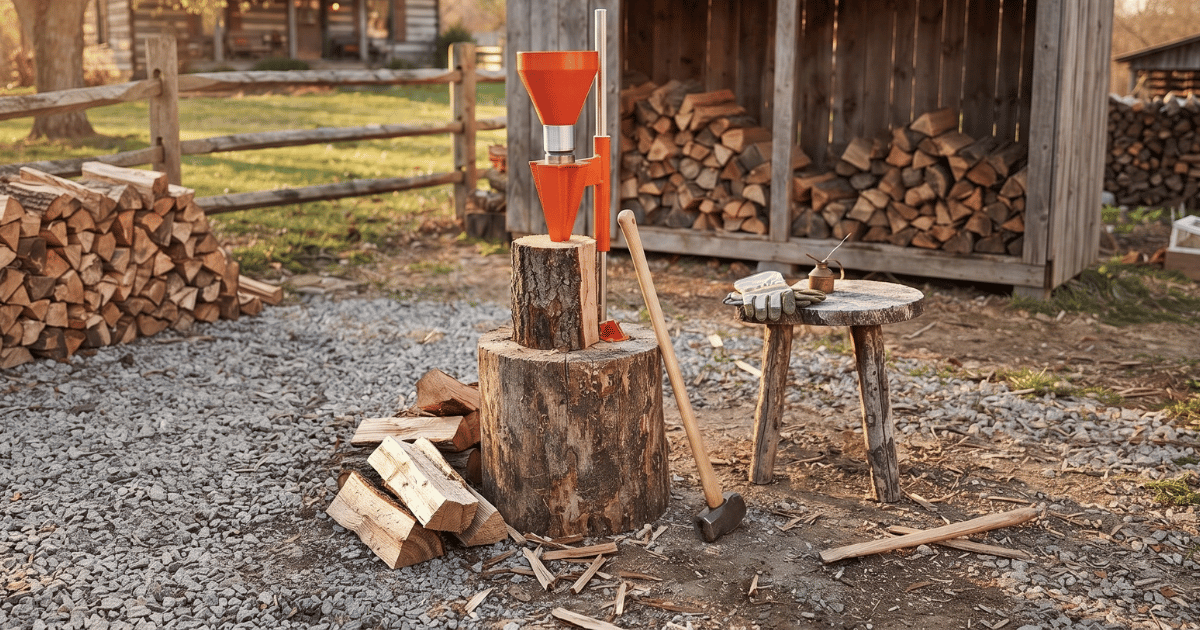
A fixed, upward-facing wedge inside a ring or cage. You stand a small log on the blade and tap the top with a hammer or mallet. Your hands never go near an edge, which makes them one of the safest ways to make kindling. The limit is the opening: the Kindling Cracker Original takes logs up to about 6.5in (16.5cm) across, and the Kabin Kindle around 6in.
2. Splitting axes and mauls
A splitting axe has a wedge-shaped head that bursts wood apart rather than cutting it. A maul is heavier, with "a head mass of 6 to 8 lb, or approximately 2.7 to 3.6 kg" (Wikipedia), and one side shaped like a sledgehammer. Mauls are less likely to stick and stay effective after the edge dulls, while axes are lighter and quicker to swing. Lever axes such as the Finnish Leveraxe use an off-centre head that twists as it enters the wood, prising the log apart. That reduces how hard you need to swing.
3. Slide-hammer splitters
A wedge on a vertical pole, with a sliding weight you lift and drop. The Logosol Smart-Splitter, the best-known example, uses a 3.5kg striking weight dropped from about 1m. Logosol says it delivers "up to 14 metric tons of force". You don't swing anything, and it hits the same spot every time.
4. Foot-operated hydraulic
A small hydraulic jack pushes the log onto a wedge as you pump a pedal. They range from light horizontal units such as Sealey's 1.2-tonne LS450H (9.5kg) up to 8-tonne vertical machines like The Handy and Sealey LS575VH. Using your legs is the big advantage: you work standing upright, and leg muscles are stronger than arms.
5. Hand-pump (lever) hydraulic
The same principle, but you pump long hand levers instead of a pedal. Charles Bentley's 10-ton model is a typical example. They're usually horizontal and heavier, around 40kg, so you work at bench or ground level.
6. Dual foot/hand hydraulic
Forest Master's DUO10T combines both. It works vertically with foot pedals or horizontally with hand levers, and has twin blades that split from both ends of the log. It's the most capable manual design here, rated at 10 tonnes.
Manual splitters compared
| Type | Typical log size | Speed | Effort | Works for | Becomes hard work with |
|---|---|---|---|---|---|
| Kindling cracker | Up to ≈ 15–17cm | Fast | Low | Kindling, small stove logs | Anything wider than the ring |
| Splitting axe or maul | Any (in stages) | Fast with skill | High | Straight-grained rounds, fit users | Knots, elm, volume, bad backs |
| Slide-hammer | Up to 55cm long; width limited by base | Medium | Low to medium | Seasoned stove logs, kindling | Green or stringy wood |
| Foot hydraulic (1–2t) | Up to 25cm × 45cm | Slow | Medium (legs) | Small logs, kindling | Hardwood rounds, knots |
| Foot hydraulic (8t) | Up to ≈ 58cm long | Slow (≈ 13–15 pumps) | Medium (legs, knees) | Mixed stove logs | Big volumes |
| Hand-pump hydraulic (10t) | Stove logs | Slow | Medium (arms) | Bigger rounds, occasional use | Long sessions |
| Dual foot/hand (DUO10T) | Up to 51cm × 30cm vertical | Medium (two-speed) | Low to medium | Large and knotty rounds, by hand | Daily high volume |
Specs from manufacturer and retailer listings, checked October 2026. Speed and effort ratings are my comparative assessment from specs and owner reports, not timed tests.
Where manual splitters work
- Kindling and small logs. This is where manual tools beat everything else. A kindling cracker or slide-hammer will turn small logs into kindling faster than you could set up a powered splitter.
- Seasoned, straight-grained wood. Dry ash, birch and most softwoods part easily. Forest Master says its Smart Splitter needs seasoned wood to work effectively.
- Small volumes. Topping up a log basket or splitting part of a bought load. As one review site put it, "If you split only a few logs at a time, then a manual log splitter is usually ideal."
- Anywhere, silently. No socket, no fuel and, as Sealey notes, "no noise or fumes". That makes them good for terraced gardens, campsites and early mornings.
- Cheap and long-lived. Kindling crackers and axes have almost nothing to go wrong. Logosol backs the Smart-Splitter for "the normal lifetime of the tool", and Fiskars has offered 25 years on its X25 axe.
Where manual splitters become hard work
- Knots and twisted grain. An axe will bounce off or stick. The DUO10T's twin blades help, and Forest Master's manual notes that "if a knot is encountered at one end the splitter will continue to split the log from the other end."
- Green or stringy wood. Fresh-cut logs tend to absorb a blow rather than crack. One Smart-Splitter buyer noted it "depends on the wood and how green it is", and that you may "still need a bomb and mallet for the most stubborn logs".
- Big diameters. Kindling crackers stop at the ring size, and light foot splitters at around 25cm. Even the 10-tonne DUO10T is rated at 30cm vertical (Forest Master quotes up to 50–60cm horizontally).
- Volume. Pumping 13–15 strokes per log adds up fast. One review site warns manual splitting "can be time consuming not to mention tiring when splitting logs for long periods of time". A DUO10T owner reported sore knees after two days' use.
- Your body. Swinging an axe for hours is hard on backs and shoulders. A US owner who switched to a manual hydraulic splitter explained that "the swinging of a maul/ax is getting to be difficult, getting harder to hit the target".
Tip from the experts: cold helps. Wikipedia notes that "as the temperature gets colder, the fibers in the log become more brittle making the logs easier to split." A frosty morning is a good time to tackle stubborn rounds by hand.
Foot and hand-pump hydraulics explained
Manual hydraulic splitters use a bottle jack: each pump pushes a little oil into the ram, which moves the log a few millimetres onto the wedge. That's how a person can generate 8–10 tonnes of force. It's also why they're slow. Published figures:
- The Handy 8 Ton (foot): about 13 pumps for full ram travel
- Sealey LS575VH 8 tonne (foot, vertical): about 15 pumps for full travel
- Sealey LS450H (foot, 1.2 tonne): "4 or 5 pumps on the foot pump and the log splits", according to one reviewer, on small logs
- Forest Master DUO10T: a two-speed system. The left pedal lifts quickly with lower force, and the right pedal applies the full 10 tonnes. Forest Master quotes 16–20mm of lift per stroke using both together.
The two-speed approach matters. The DUO10T manual explains: use the left pedal to raise the log, switch to the right pedal for full force when resistance builds, then "once the log begins to split, the resistance will drop and you can switch back to the left pedal". With softwood, you may be able to split entirely on the faster pedal.
Look after the seals. One review site warns that hydraulic seals can fail "when put under too much pressure". If a log won't go, stop and turn it rather than forcing it. Forest Master also warns: "DO NOT top up hydraulic unit using brake fluid. Use hydraulic jack oil only," and recommends replacing the oil after a year. If your hydraulic splitter loses pressure, see our guide to slow rams and leaks.
Technique and safety
- Eye protection, always. Forest Master's manual: "Always wear safety goggles. Everyday spectacles are not sufficient protection." Striking metal wedges can throw steel chips.
- Use a proper chopping block. The best bases are flush-cut hardwood rounds about a foot tall, ideally at least twice the diameter of the log you're splitting. Slide-hammers need a block with a drilled hole for the pole.
- Mind your feet with axes. Stand with feet apart so a glancing blow goes into the ground, not your shin. Never lift the maul and a stuck log above head height.
- Hands off the log on hydraulics. The DUO10T manual says: "DO NOT steady the log with your hands" and "Keep hands away from splits and cracks which open in logs. They may close suddenly."
- One operator only. Don't let a helper reach in to free a jammed log.
- Split along the grain, with the widest end of irregular logs uppermost on vertical machines.
- Work smarter on big rounds. Take slabs off the edge rather than aiming for the middle. Wikipedia suggests striking "off-center of the log, usually removing 1/4 of the mass".
- Wear gloves and safety boots.
Shop safety goggles Shop riggers' gloves Shop splitting wedges
Manual log splitters worth shortlisting
These research-based picks cover each type. Manual splitters go in and out of stock often, so check the live listing.
| Model | Type | Force / weight | Max log | Best for |
|---|---|---|---|---|
| Kindling Cracker Original | Static wedge | Cast iron | ≈ 16.5cm across | Kindling |
| Fiskars X25 / X-series | Splitting axe | ≈ 2.4–2.5kg | Any (in stages) | Fit users, mixed wood |
| Logosol Smart-Splitter | Slide-hammer | 3.5kg drop weight | 55cm long | Safe, swing-free splitting |
| Sealey LS450H | Foot hydraulic | 1.2t / 9.5kg | 25cm × 45cm | Light, foldable |
| Forest Master DUO10T | Dual foot/hand hydraulic | 10t / 35kg | 51cm × 30cm (vertical) | Biggest rounds by hand |
| Charles Bentley 10 Ton | Hand-pump hydraulic | 10t / ≈ 40kg | Stove logs | Value 10-tonne |
BEST FOR KINDLING
Kindling Cracker Original — cast-iron static splitter
The simplest and safest way to make kindling. A recycled cast-iron ring holds a fixed wedge: you drop a small log in and tap it with a hammer or mallet, and your hands never come near the edge. The opening is about 6.5in (16.5cm), so it's for kindling and small stove logs, not rounds. Bolt or screw it to a block or stump so it doesn't walk. There's little to wear out, which makes it a buy-once tool for any wood-burner or fire-pit owner.
- Static wedge · cast iron · ≈ 16.5cm opening
- Pick it for: kindling, small logs, safety
- Skip it if: you need to split rounds
BEST SPLITTING AXE
Fiskars X25 Splitting Axe XL — 2.5kg, 77cm
Fiskars' X-series axes are a common recommendation for medium-to-large logs. They have a PTFE-coated head that's less prone to sticking and a shock-absorbing composite handle. The X25 weighs around 2.4–2.5kg and is made in Finland, and UK retailer Knivesandtools listed a 25-year warranty and a 4.8/5 rating from 99 buyers. It suits anyone comfortable swinging an axe who wants speed on straight-grained rounds. Some UK retailers now list the newer X32 as the replacement, so check the X32 on Amazon too.
- Splitting axe · ≈ 2.4–2.5kg · 72–77cm
- Pick it for: fast splitting if you're fit and practised
- Skip it if: you have back or shoulder problems, or very knotty wood
BEST SWING-FREE SPLITTER
Logosol Smart-Splitter — slide-hammer
A wedge on a pole with a 3.5kg weight you lift and drop. There's no swinging, so there's no missed strike. Logosol claims up to 14 tonnes of force per strike and over 500,000 units sold. It takes logs up to 55cm long (40cm recommended), and diameter is limited only by your base block. The trade-offs are that it works best on seasoned wood and needs a big base log with a drilled hole. Verified buyers are broadly positive. One found it "easy for me as a female senior citizen to use", while another warned "the video ad makes it look a little simpler than it is". It's ideal if you want to stop swinging an axe.
- Slide-hammer · 3.5kg drop weight · ≈ 9.5–12kg total · up to 55cm logs
- Pick it for: safety, older users, seasoned stove logs
- Skip it if: your wood is mostly green or very knotty
BEST LIGHTWEIGHT FOOT SPLITTER
Sealey LS450H — 1.2 tonne, foot-operated horizontal
A compact, foldable foot splitter from UK tool brand Sealey. "Each step on the foot pedal exerts a splitting force of up to 1.2tonne," it takes logs up to 25cm across and 45cm long, and it weighs just 9.5kg. The pedal adjusts to suit the user, and it folds flat for storage. It's for small logs and kindling rather than hardwood rounds; one review site called it "great for splitter smaller logs and kindle", but noted it "needs a good bit of leg work".
- Foot hydraulic · 1.2t · 25cm × 45cm · 9.5kg · folding
- Pick it for: small logs, small spaces, light users
- Skip it if: you split hardwood rounds over 20cm
BEST HEAVY-DUTY MANUAL SPLITTER
Forest Master DUO10T — 10 ton, foot or hand, twin blade
The most capable manual splitter here. It works vertically with two foot pedals (a fast lift pedal and a full-force pedal) or horizontally with hand levers. Its patented twin blades split from both ends, which helps with knots. It's rated at 10 tonnes, takes logs up to 51cm long and 30cm across vertically (Forest Master quotes up to 50–60cm horizontally), weighs 35kg, and has a safety valve against overloading. Owners rate it 4.5/5 on Forest Master's site. One said "if you're looking for something that will split really big rounds this is it", though another reported sore knees after two days of use. The warranty is 1 year on parts. It was listed at £309.95 but out of stock on Forest Master's own site when checked.
- Dual foot/hand hydraulic · 10t · 51cm logs · 35kg · two-speed
- Pick it for: big or knotty rounds without an engine or cable
- Skip it if: you split for hours every week
BEST VALUE 10-TONNE HAND PUMP
Charles Bentley 10 Ton Manual Hydraulic Log Splitter
A horizontal hand-pump splitter from UK garden brand Charles Bentley, giving 10 tonnes of force for well under the price of a powered machine. At around 40kg it's sturdy but not something you carry far. Pumping the levers by hand is slower than using your legs, so it suits occasional splitting of bigger stove logs rather than long sessions. Some buyers have reported occasional oil leaks, so check the seals and oil level on delivery. Charles Bentley also sells an 8-ton foot-operated version if you'd rather pump with your legs.
- Hand-pump hydraulic · 10t · ≈ 40kg · horizontal
- Pick it for: occasional bigger logs on a budget
When to move up to a powered splitter
Consider a powered splitter if you recognise any of these:
- You're splitting most of a winter's wood yourself, not just topping up.
- Your rounds are regularly over 30cm, knotty or green.
- Splitting is leaving you with sore knees, shoulders or back.
- You find yourself putting the job off because it takes too long.
If you split near a socket, read choosing an electric log splitter: a 5–7 tonne electric model runs from a 13A plug. For remote sites, big rounds or high volume, see when a petrol log splitter makes sense. For ranked picks across every type, see Best Log Splitters UK 2026.
Manual log splitter buying checklist
- ☐ What are you splitting? Kindling, stove logs or rounds
- ☐ Max diameter and length versus your typical logs
- ☐ Arms or legs? Foot pedals are easier on your back; hand levers suit bench work
- ☐ Speed: pumps per stroke, or a two-speed pedal
- ☐ Wood type: seasoned wood suits slide-hammers; knotty wood suits twin-blade hydraulics
- ☐ Storage and weight: 9.5kg folding to 40kg static
- ☐ Base block for crackers, slide-hammers and axes
- ☐ Safety kit: goggles (not everyday glasses), gloves and boots
- ☐ Spares and warranty: seals and oil for hydraulic models
Frequently asked questions
Are manual log splitters any good?
Yes, for kindling, small to medium seasoned logs and occasional use. They're quiet, cheap to run and need no power. They become hard work with large, knotty or green rounds and with high volumes, where an electric or petrol splitter is faster.
What is the best manual log splitter for kindling?
A static kindling cracker such as the Kindling Cracker Original is the simplest and safest choice. You tap the log onto a fixed wedge with a hammer, so your hands stay away from the blade. A slide-hammer such as the Logosol Smart-Splitter also works well for kindling and seasoned stove logs.
Is a foot-operated log splitter better than a hand-pump one?
For most people, yes. Legs are stronger than arms and you work standing upright. The trade-off is knee strain over long sessions. Hand-pump models suit bench-height work and people who'd rather use their arms.
How many tonnes does a manual log splitter need?
Around 1–2 tonnes is enough for kindling and small logs up to about 20–25cm. For mixed stove logs and harder wood, look for 8–10 tonnes. Even then, knots and grain matter as much as the tonnage.
Is a splitting axe or a maul better?
A maul is heavier, around 2.7–3.6kg of head weight, and is less likely to stick in big rounds. A splitting axe is lighter and quicker for medium logs. Lever axes such as the Leveraxe twist as they strike to reduce effort. Whichever you choose, use a solid chopping block and keep your feet apart.
Why won't my manual hydraulic splitter split a log?
The log may be too large or knotty, the oil may be low, or there may be air in the system. Stop rather than forcing it, as that can damage the seals. Rotate the log, top up with hydraulic jack oil (never brake fluid), and bleed the pump as the manual describes.
About the author
Mark Moore is Garden-Review's Power Tools Specialist, covering hand, mains, cordless and petrol equipment for UK homes and gardens. His guides focus on matching the tool to the job, including when a simpler, unpowered option does the job better, and are built from manufacturer documentation, safety guidance and owner feedback. Garden-Review is independent and reader-supported; see our methodology note above.
More in this hub: Log Splitters hub · Log splitter buying guides · Log splitter reviews · Choosing an electric splitter · Petrol log splitter guide · Best ash vacuums
Sources: Forest Master DUO10T product page and DuoCut user manual; Forest Master Smart Splitter listing; Tooled-Up Logosol Smart Log Splitter listing and verified reviews; Toolstop Sealey LS450H listing; Knivesandtools Fiskars X25 listing; Garden Tool Box and Pyracantha manual log splitter reviews; Chainsaw Journal on the Vipukirves Leveraxe; Wikipedia "Splitting maul"; Hearth.com owner forum. Checked October 2026.
Tags
Comments
Join the conversation
Create a free account to leave comments, share photos, and connect with other gardeners.
Related Articles
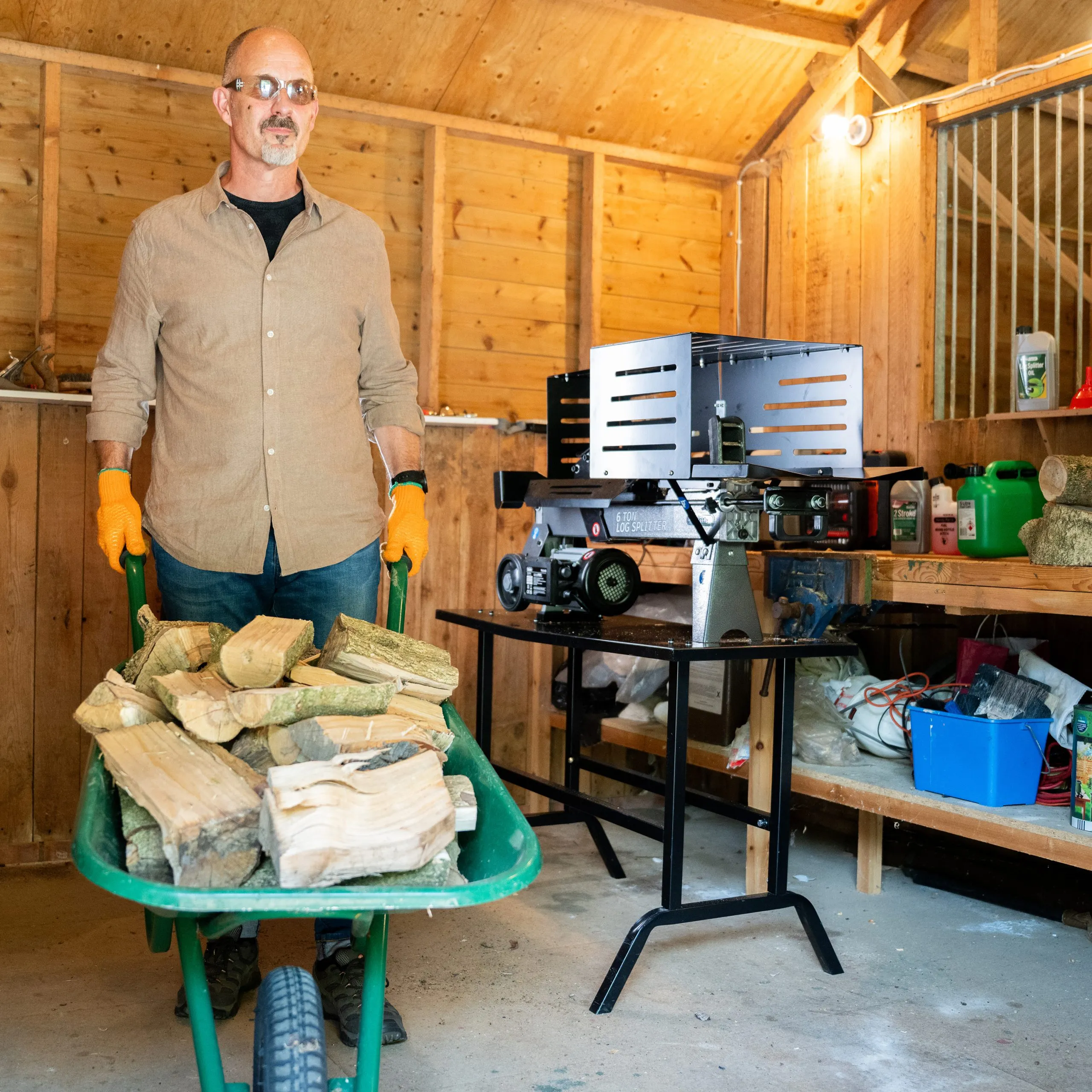
Electric Log Splitter Guide UK: Power, Tonnage & Leads
How to choose an electric log splitter: 13A mains power, real splitting force, safe extension leads and what size suits your wood burner.
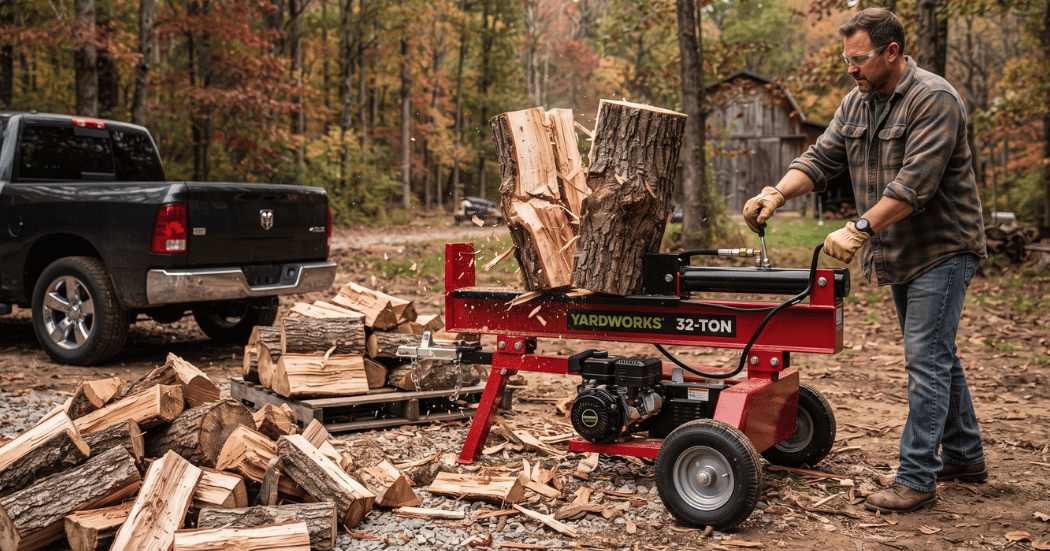
Petrol Log Splitter Buying Guide: When Petrol Makes Sense
When a petrol log splitter beats electric: remote sites, big rounds and high-volume splitting. Tonnage, cycle times, towing, fuel and hire.
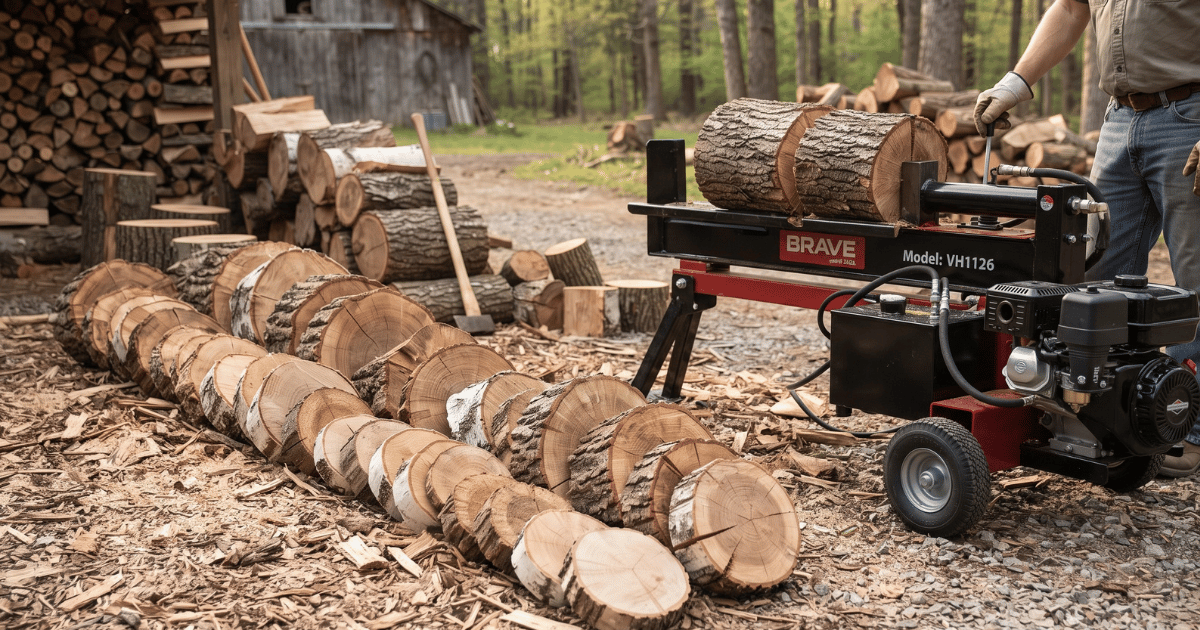
Log Splitter Tonnage Guide UK: What Size Do You Need?
What tonnage log splitter do you need? Match force to log diameter, wood species, grain, knots and moisture, not the badge alone.
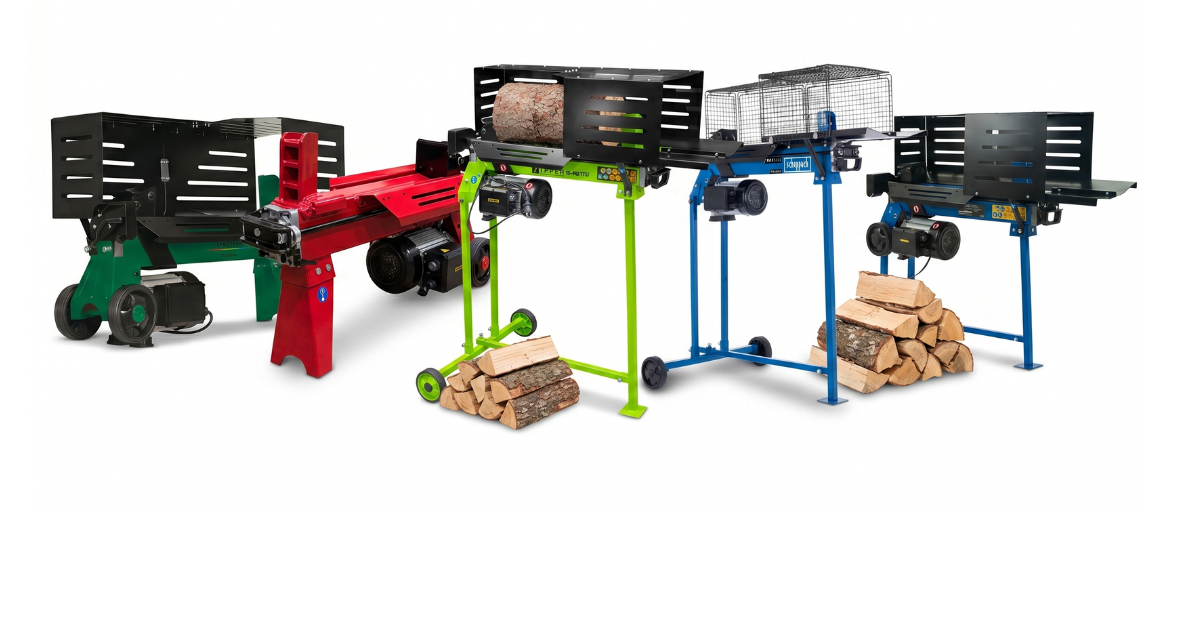
Best 7 Ton Horizontal Log Splitters for 2026
Discover the best 7-ton horizontal log splitters for 2026, including top models from Hyundai, Scheppach, Zipper, Titan and Spectrum. Compare key differences in build quality, safety features, and performance to find the ideal electric log splitter for home firewood use, balancing power, reliability, and value for money.
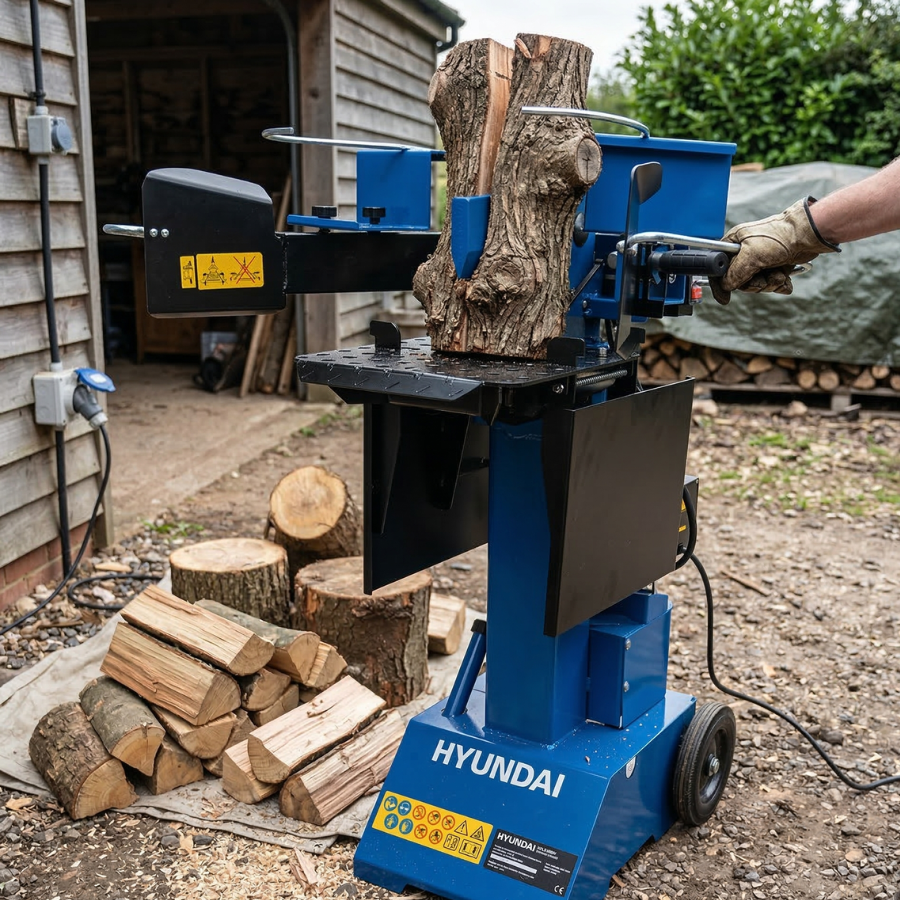
Hyundai HYLS8000V Log Splitter: A UK Gardener's In-Depth Review
The Hyundai HYLS8000V 8-tonne electric log splitter is a serious contender for converting large quantities of timber into usable firewood. In this comprehensive UK review, we delve into its performance, features, safety, and overall value, helping you decide if this robust machine is the ideal choice for your garden or smallholding.
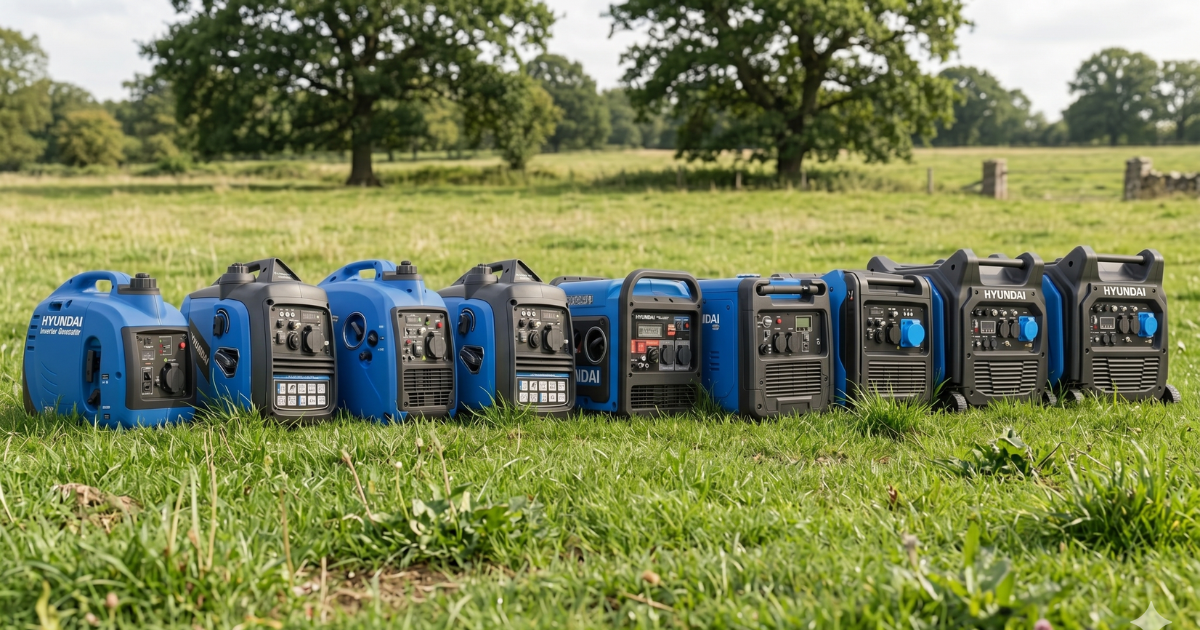
Hyundai Inverter Generator Buying Guide (2026)
Discover the latest Hyundai inverter generator range for 2026 in this comprehensive buying guide, covering everything from ultra-portable camping models to powerful home backup units. Whether you need quiet, fuel-efficient power for caravans, van life, or off-grid living, Hyundai’s inverter generators deliver clean pure sine wave electricity for safe use with sensitive electronics. Explore detailed comparisons, key specifications, and expert mini-reviews to help you choose the perfect generator for your needs.