
Log Splitters Reviews
Independent, hands-on UK reviews of the latest log splitters — ratings, pros, cons and the real-world performance you need to know.
Read all reviewsLog Splitters Buying Guide
Choosing your first or next log splitter? Our buying guides, comparisons and best-of lists explain exactly what to look for and which features actually matter.
Browse buying guidesLatest Log Splitters Articles

Forest Master FM8FF-HTW 8 Ton Honda Petrol Kinetic Log Splitter Review
A specifications-based look at Forest Master's 8 ton petrol kinetic log splitter, covering its claimed three-second cycle, pre-built delivery and practical buying considerations.
7 Oct 2026

SIP 8 Ton Petrol Log Splitter Review
With an 8-ton hydraulic splitting force and a 196cc petrol engine, this SIP model targets rural firewood work. We assess its published specifications and the details worth checking before buying.
6 Oct 2026

Lumag HB8N Petrol Log Splitter Review
The Lumag HB8N combines a listed 8-ton splitting force with a 196cc Loncin petrol engine and vertical layout. We assess its specifications and the practical details worth checking before buying.
6 Oct 2026

Platinum PLS7HWS 7 Ton Electric Log Splitter Review
The Platinum PLS7HWS combines a listed 7-ton splitting pressure with a 2200W motor, stand and wheels. Here is what its specifications suggest, and what to check before buying.
6 Oct 2026

Forest Master USBB Kindling Splitter Review
A specification-based look at the Forest Master USBB, a manual kindling splitter with mounting screws and a protective blade cover, aimed at small dry wood rather than heavy log processing.
6 Oct 2026

Ezasin 20 Ton Petrol Log Splitter Review
The Ezasin 20-ton petrol log splitter promises substantial splitting force and quick cycling. We assess its published specifications, preparation requirements and suitability for larger firewood jobs.
6 Oct 2026
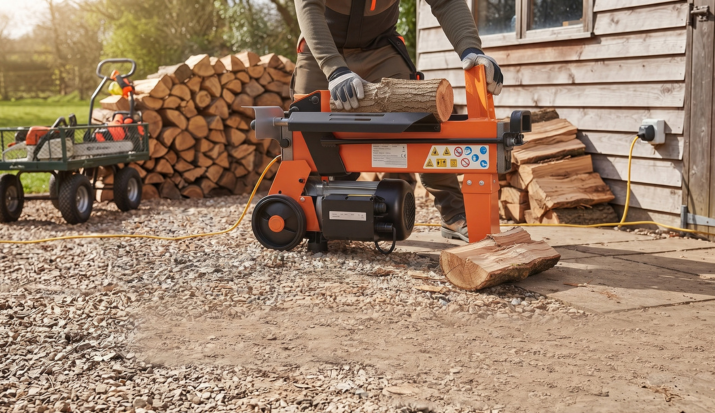
Forest Master FM8D-TC 5 Ton Electric Log Splitter Review
A specification-based look at the Forest Master FM8D-TC, a 5-ton electric log splitter with a 2200W motor, enclosed guard and capacity for logs up to 370mm long.
6 Oct 2026

Scheppach HL810 Vertical Electric Log Splitter Review
The Scheppach HL810 combines 8-tonne splitting force with a 3000W electric hydraulic system. We assess its published specifications, handling considerations and suitability for domestic firewood preparation.
5 Oct 2026
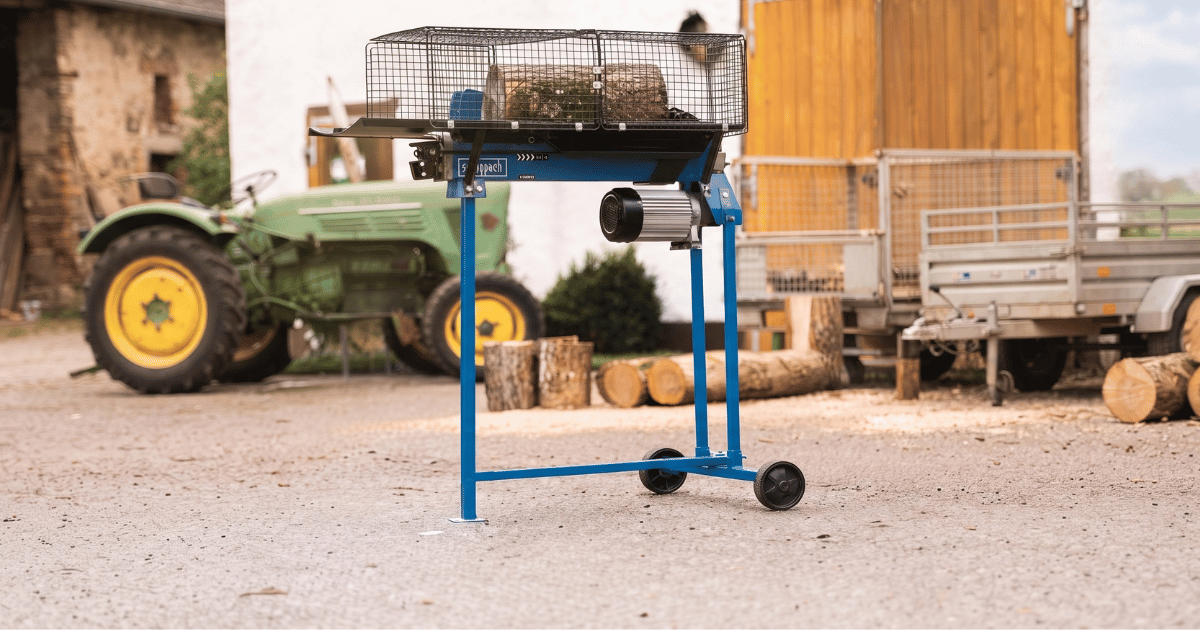
Scheppach HL760LS Electric Log Splitter Review
The Scheppach HL760LS combines seven tonnes of splitting force with a raised stand and automatic ram return. Here is what its listed specifications suggest for domestic firewood preparation.
5 Oct 2026
Electric, petrol or manual?
The best power source depends on your workload and where the machine will be used. Compare the practical differences before focusing on tonnage.
| Type | Best suited to | Typical force | Mobility and noise | Maintenance |
|---|---|---|---|---|
| Electric | Domestic firewood and regular small batches | About 4–8 tonnes | Quiet, but needs suitable mains power | Low |
| Petrol | Remote sites, large rounds and sustained work | Often 7 tonnes and above | Mobile, louder and heavier | Engine and hydraulic upkeep |
| Manual | Kindling and occasional light use | Varies by lever or hydraulic design | Portable and quiet | Very low |
Figures are broad manufacturer-stated ranges, not measured performance. Grain, knots, moisture and log diameter all affect the force required.
What splitting force do you need?
A 4–6 tonne machine often covers straight-grained, seasoned domestic firewood. Step up when rounds are wider, greener, knotty or hardwood. Maximum log length and diameter matter as much as the headline tonnage.
Read the sizing guidesUse it safely
Set the splitter on stable ground, follow its two-hand control procedure, keep hands away from the wedge and wear suitable eye and foot protection. Never exceed the maker's log limits or modify a safety guard.
Browse practical adviceLog splitter FAQs
What size log splitter do I need?
For occasional domestic firewood, a 4–6 tonne electric splitter is often enough for straight-grained, seasoned logs. Larger, knotty or green hardwood may need 7 tonnes or more. Treat the maker's tonnage figure as a guide and check its stated maximum log diameter and length too.
Are electric log splitters any good?
Electric log splitters suit most UK homes because they are quieter, lower-maintenance and easier to store than petrol machines. Their limits are mains access and lower output when working through very large, knotty or green rounds.
Is a vertical or horizontal log splitter better?
Horizontal models are compact and convenient for manageable logs that can be lifted onto the bed. Vertical machines reduce heavy lifting and usually suit larger rounds, but cost more and require more storage space.
Should I hire or buy a log splitter?
Hiring can make sense for a single large pile and avoids maintenance and storage. Buying is usually more convenient when you process firewood several times a year, provided the machine matches your normal log size and you can store it safely.