
How to Install a Solar-Powered Garden Pond: UK Guide
Learn how to install and maintain a solar-powered garden pond in the UK. Discover expert tips on placement, plant selection, and the best solar pumps.
Key takeaways
- For many British gardeners, the need to dig trenches for armoured SWA cables is the biggest barrier to installing a pond.
- Correct positioning is critical for a successful solar-powered pond in the UK.
- Kidney-shaped ponds look natural, while rectangular designs suit modern gardens.
- Aquatic plants act as a natural biological filter and are essential for clear water.
- Clean debris, divide plants, and wipe solar panels to remove winter grime.
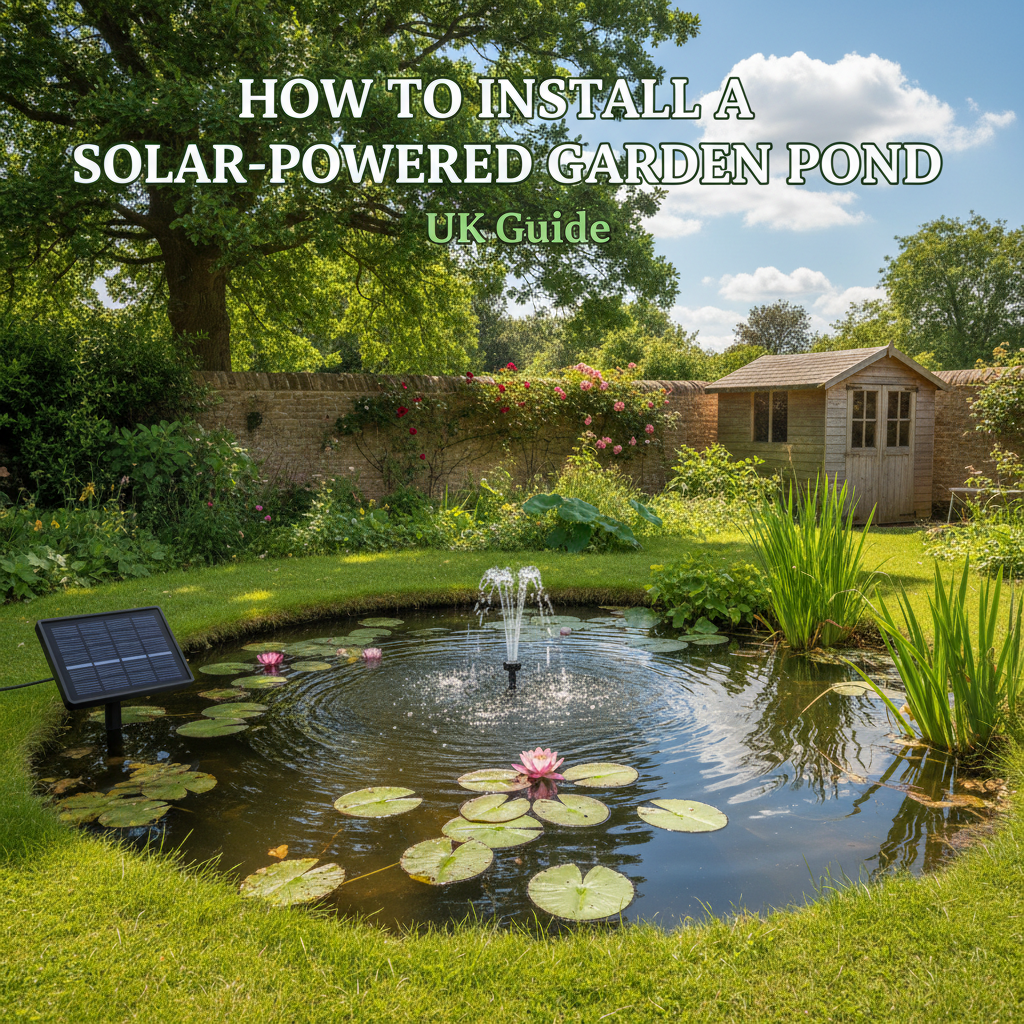
Installing a solar-powered garden pond involves selecting a sunny location that receives at least 6 hours of direct sunlight, excavating a hole with varied depth shelves, and installing a durable liner. By using a solar pond pump with battery backup, you can maintain healthy oxygen levels and water circulation without complex outdoor electrical wiring or increased energy costs.
Everything You Need to Know about Solar-Powered Pond Installation
- Best Time to Start: March to May (Spring)
- Key Benefit: No mains wiring required; eco-friendly and safe for children and pets
- Solar Requirements: Panels must face south for maximum UK efficiency
- Maintenance Level: Low to medium (filter cleaning and plant thinning)
- Cost Estimate: £150 – £500 depending on size and pump specification
Why Choose a Solar-Powered Water Feature in the UK?
For many British gardeners, the need to dig trenches for armoured SWA cables is the biggest barrier to installing a pond. Solar-powered pond systems eliminate this issue by using photovoltaic panels to power pumps and filtration.
With UK electricity prices fluctuating, solar ponds offer a long-term, low-cost solution while supporting local wildlife such as frogs, newts, and dragonflies.
The Benefits of Solar Pond Pumps
Modern solar pond pumps often include battery storage, ensuring continued circulation during cloudy weather—essential in the UK climate.
| Feature | Solar Powered Pond | Mains Powered Pond |
|---|---|---|
| Installation | Easy DIY; no electrician required | External GCSE-certified socket needed |
| Running Costs | £0 per year | £30 – £120 per year |
| Safety | Low voltage; safe near water | High voltage; RCD protection required |
| Reliability | Weather and battery dependent | Constant 24/7 operation |
| Environmental Impact | Carbon neutral | Grid energy dependent |
Where Is the Best Place to Put a Solar Pond?
Correct positioning is critical for a successful solar-powered pond in the UK.
- Maximum Sunlight: Solar panels require 6–8 hours of direct sunlight. Panels should face south and remain unshaded.
- Avoid Overhanging Trees: Decaying leaves increase ammonia levels and harm wildlife.
- Level Ground: An uneven base causes visible liner edges and uneven water pressure.
RHS Advice on Pond Siting
The Royal Horticultural Society recommends positioning ponds where they are visible from the house. This improves enjoyment and allows easy monitoring during dry summer periods.
How to Install a Solar-Powered Pond: Step-by-Step
Phase 1: Planning and Marking Out (March)
Begin in early spring. Use a hose or rope to outline the shape. Kidney-shaped ponds look natural, while rectangular designs suit modern gardens.
- Minimum Depth: At least 60cm (2ft) to allow amphibians to hibernate safely
- Marginal Shelves: Create shelves at 20cm and 40cm for aquatic plants
Phase 2: Excavation and Lining
- Dig the hole and remove sharp stones or roots.
- Add 5cm of damp sand or pond underlay.
- Lay an EPDM rubber liner with a 30cm overhang.
- Fill slowly with water and trim excess liner once full.
Phase 3: Installing the Solar Pump
- Pump Placement: Raise on a brick to prevent silt intake
- Panel Angle: 30–45 degrees facing south
- Connections: Attach tubing to fountain or waterfall feature
Best Plants for a UK Solar Pond
Aquatic plants act as a natural biological filter and are essential for clear water.
Oxygenating Plants
- Hornwort (Ceratophyllum demersum): Free-floating and highly effective
Floating Plants
- Water Lilies (Nymphaea): Choose pygmy varieties for small ponds
Marginal Plants
- Water Iris (Iris pseudacorus): Excellent for wildlife habitats
Seasonal Pond Maintenance in the UK
Spring (March – May)
Clean debris, divide plants, and wipe solar panels to remove winter grime.
Summer (June – August)
Top up with rainwater, monitor algae, and ensure adequate plant shade.
Autumn (September – November)
Use pond netting to catch leaves and reduce fountain run-time.
Winter (December – February)
Do not break ice. Melt a hole with hot water and store pumps if freezing is likely.
Comparing Solar Pond Pump Types
| Pump Type | Best Use | Average UK Price |
|---|---|---|
| Direct Solar | Daytime decorative fountains | £25 – £50 |
| Solar with Battery Backup | 24/7 circulation and lighting | £60 – £150 |
| Solar Oxygenator | Fish health in stagnant water | £30 – £70 |
| Solar Filtration Kit | Large ponds with fish | £150+ |
Frequently Asked Questions
Do solar pond pumps work in UK winter?
Can a solar-powered pond support fish?
How do I stop my solar pond turning green?
Is a solar pond safe for wildlife?
How long do solar pond batteries last?
Tags
Comments
Join the conversation
Create a free account to leave comments, share photos, and connect with other gardeners.
Related Articles

Best Garden Lighting: The Ultimate UK Homeowner's Guide
Discover the best garden lighting options for UK homes. From solar DIY to professional mains systems, learn about IP ratings, wildlife safety, and more.

How to Create a Traditional English Garden: The Ultimate UK Guide
Transform your outdoor space with our guide to traditional English gardens. Learn design secrets, plant selection, and UK-specific maintenance tips now!

Best Plants for Shade UK: North Facing Garden Guide
Discover the best plants for shade UK gardens. Our guide covers north-facing garden ideas, ferns, hostas, and shrubs to transform your shady borders today.

Garden Plant Diseases UK: Identify & Treat Common Problems
Identify and treat common UK garden plant diseases with our expert guide. Learn to spot fungal blights and bacterial cankers to keep your garden healthy.
How to Propagate Hydrangeas: A Complete UK Guide
Learn how to propagate hydrangeas with our expert UK guide. Step-by-step instructions for softwood cuttings, timing, and care to grow new plants for free!

Best Tasting Tomato Varieties UK 2026
Discover the best tasting tomato varieties UK 2026. From the sweetest cherry tomatoes to rich heirlooms, learn which varieties win on flavour and yield.