
Cordless Leaf Blowers Buying Guide (UK 2026)
Battery platforms, runtime, CFM and weight compared — how to pick a cordless leaf blower that actually suits your garden and your existing tool ecosystem.
Key takeaways
- The case for cordless is simple: no cable to drag around beds and borders, no trip hazard, and no need to plan your route around a socket.
- The single most important buying decision isn't the blower - it's the battery ecosystem it locks you into.
- Prices fluctuate on Amazon — always confirm the live price at checkout before buying.
- For larger plots where even a 56V cordless blower runs out of puff, look at our Backpack Leaf Blowers guide instead.
Jim Fellows, Garden Machinery Specialist
Based on manufacturer specifications, verified UK retail pricing, and category testing experience with cordless battery-platform garden tools. Updated September 2026.
Cordless Leaf Blowers Buying Guide (UK 2026)
Part of our Complete Leaf Blowers Buying Guide. This piece covers battery-powered handheld blowers specifically - no cable, no fuel, and increasingly capable of matching corded performance for typical UK gardens.
Quick Answer
For most UK gardens, a 18V–20V cordless blower with a 2–4Ah battery is enough for weekly tidy-ups of patios, paths and small lawns. Buy into a battery platform you already own where possible - a bare "tool only" blower on a Makita 18V LXT or Hyundai 20V battery you already have is cheaper and more sustainable than another single-use tool. Budget models like the Hyundai HY20CB (£50.99) suit light debris; step up to a 56V system like EGO Power+ if you want corded-equivalent airflow with no cable.
Why Buy Cordless?
The case for cordless is simple: no cable to drag around beds and borders, no trip hazard, and no need to plan your route around a socket. The trade-off is finite runtime and, historically, lower airflow than a corded or petrol machine of similar price. That gap has narrowed significantly as battery voltage has climbed - 18V/20V platforms are genuinely good for light-to-moderate garden debris, and 56V systems like EGO's now rival 3000W corded blowers on paper.
Battery Platform Matters More Than the Blower Itself
The single most important buying decision isn't the blower - it's the battery ecosystem it locks you into. If you already own a Makita 18V LXT drill, a Hyundai 20V trimmer, or a DeWalt 18V system, buying a "tool only" (bare) blower on the same platform is almost always the cheaper and more practical route, since you skip paying for another battery and charger you don't need. If you're starting from scratch, weigh the blower price against how much you'd also use that battery family for other tools - trimmers, hedge cutters, drills - before committing.
Cordless Leaf Blowers Compared
| Model | Platform | Air Speed | Weight | Approx. Price |
|---|---|---|---|---|
| ★ Hyundai HY20CB | 20V (2nd Gen), incl. battery | 200 km/h / 80 CFM | 1.25 kg | £50.99 |
| Makita DUB185Z | 18V LXT, body only | ~197 km/h | 1.5 kg (bare) | ~£55–£70 body only |
| Makita DUB185SF | 18V LXT, incl. 3.0Ah + charger | ~197 km/h | ~2.1 kg | ~£90–£110 |
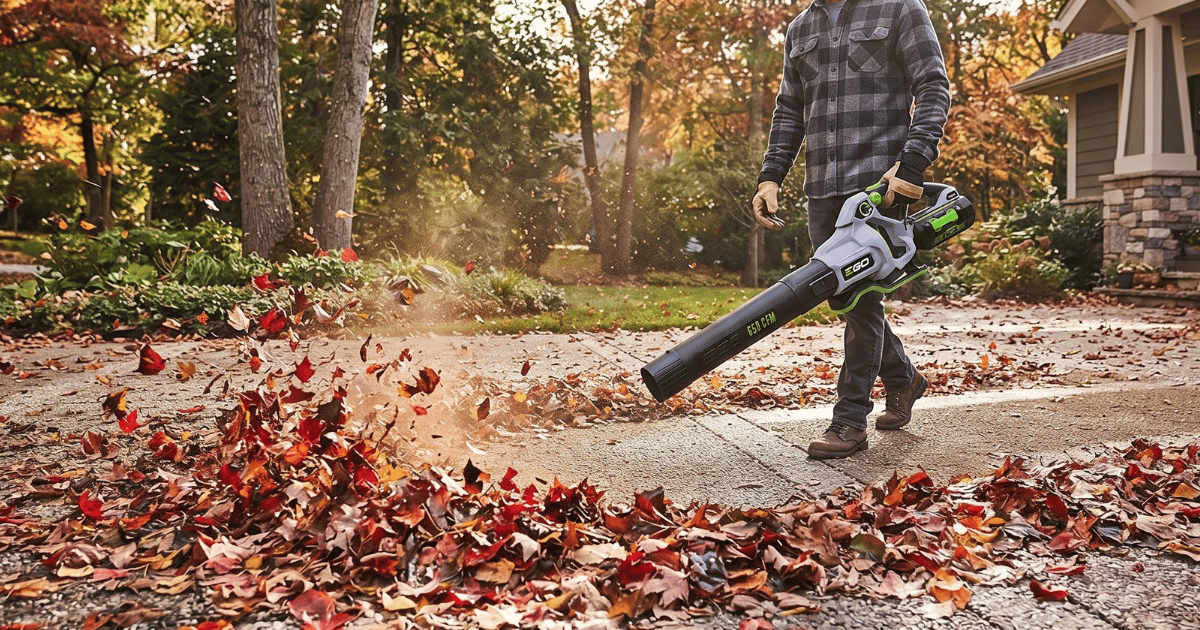
| EGO Power+ LB6504 | 56V, incl. 5.0Ah + charger | Variable-speed, 650 CFM | ~3.5 kg | ~£180–£220 |
Prices fluctuate on Amazon — always confirm the live price at checkout before buying.
Best Budget Pick: Hyundai HY20CB
Light, fast to start, and priced for anyone who wants a no-fuss tool for weekly patio and path clearance. We've reviewed it in full - including where its single-speed, 80 CFM output falls short for heavier or wetter debris.
Read our full Hyundai HY20CB review →
Best for Existing 18V LXT Owners: Makita DUB185Z / DUB185SF
If you already run Makita's 18V LXT platform for drills, impact drivers or a strimmer, the DUB185Z (body only) is the sensible add-on - no reason to buy another battery and charger you don't need. New to Makita? The DUB185SF bundle includes a 3.0Ah battery and charger, which then works across the rest of the LXT range.
Best for Corded-Rivalling Power: EGO Power+ LB6504
EGO's 56V ARC Lithium system is the strongest argument yet that cordless can match corded output. At 650 CFM with variable speed control, the LB6504 competes directly with 3000W mains blowers on raw performance - for a price premium and roughly 3.5 kg to carry. Worth it if you specifically want cordless freedom without accepting a performance downgrade.
✓ Cordless Pros
- No cable, no trip hazard, no route planning
- Shared batteries across a wider tool range
- Quieter than petrol at a given power level
- Instant start, no fuel mixing or servicing
✗ Cordless Cons
- Finite runtime - spare batteries cost extra
- Entry-level models trail corded on raw CFM
- Premium high-output batteries add real weight
- Battery degrades over years, unlike a plug
Not Sure Cordless Is Right for You?
If your garden has a socket within easy reach and you don't already own a compatible battery platform, a corded blower will usually out-perform an entry-level cordless one for less money - see our Corded Leaf Blowers Buying Guide. For larger plots where even a 56V cordless blower runs out of puff, look at our Backpack Leaf Blowers guide instead.
Related Reading
Affiliate disclosure: Garden-Review.co.uk earns a commission on purchases made through affiliate links on this page at no extra cost to you. We maintain full editorial independence - products are selected and ranked on merit. Prices correct at time of writing and subject to change.
Methodology: based on manufacturer specifications, verified UK retail pricing at the time of writing, and category testing experience with cordless garden tools. Always confirm current pricing at checkout.
Cordless Leaf Blowers Buying Guide (UK 2026) FAQs
Tags
Comments
Join the conversation
Create a free account to leave comments, share photos, and connect with other gardeners.