
Compare JCB Tools Cement Mixers
Compare JCB electric and petrol cement mixers. Discover which 134L model suits home projects, commercial sites, or remote landscaping jobs.
Key takeaways
- Every cement mixer in the JCB Tools range features a heavy-duty 134L seam-welded drum with a 100L mixing capacity .
- The Project: Building a small extension or laying a 20m² patio in a suburban garden.
- The paddles are positioned to ensure no "dead spots" of dry powder at the back of the drum.
- If you opt for the Petrol models (JCB-CM150P or JCB-CMH150P), remember that modern E10 petrol can attract moisture.
Our Rating
JCB Tools Cement Mixers
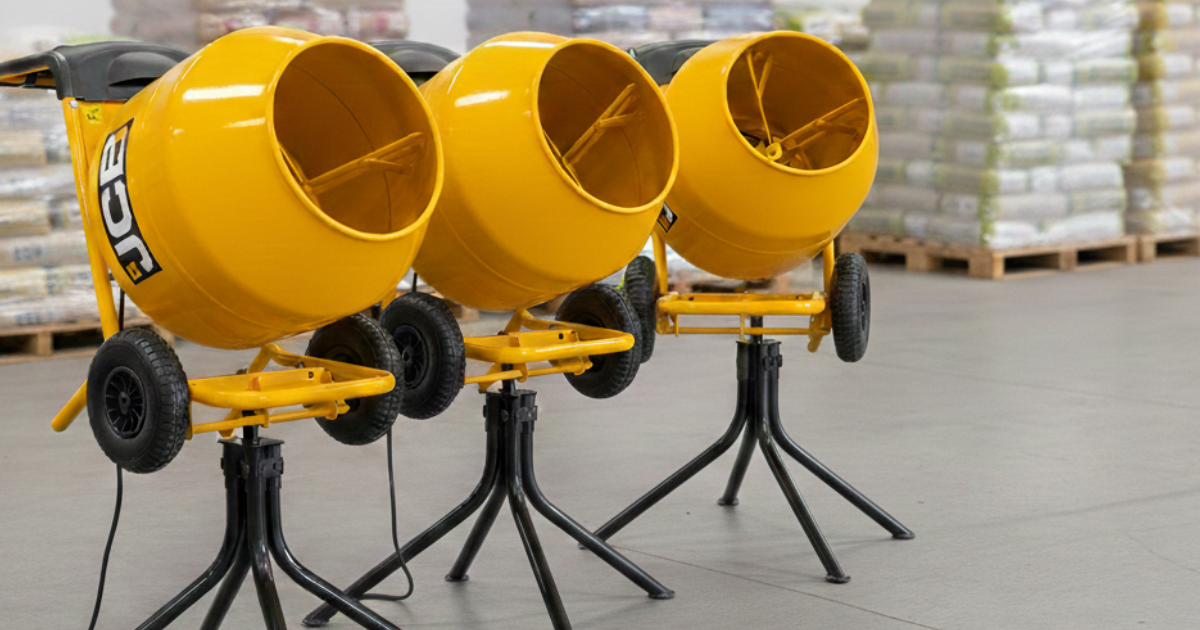
Whether you’re a professional contractor laying a foundation or a dedicated DIYer building a garden wall, the quality of your mix - and the reliability of your machine - can make or break your timeline.
JCB Tools has designed a range of mixers that prioritise two things: durability and portability. But with electric and petrol options available, which one belongs on your site? We’ve broken down the range to help you decide.
JCB Tools Cement Mixer at a Glance
Every cement mixer in the JCB Tools range features a heavy-duty 134L seam-welded drum with a 100L mixing capacity. They all share a robotically welded one-piece chassis and 12” puncture-proof composite wheels, ensuring they can survive the rough-and-tumble of a British building site.
| Feature | JCB-CM150E (230V) | JCB-CM150E-110 | JCB-CM150P (Petrol) | JCB-CMH150P (Honda) |
|---|---|---|---|---|
| Power | 550W Electric | 550W Electric | 133cc JCB Engine | 160cc Honda GX160 |
| Voltage | 230V (Standard) | 110V (Site-Safe) | N/A | N/A |
| Best For | Home & Workshop | Commercial Sites | Remote Locations | Industrial/Hire Use |
| Noise Level | Low (84.5 dB) | Low (84.5 dB) | Moderate (96 dB) | Moderate (96 dB) |
User Scenarios: Cement Which Mixer for You?
Scenario A: Cement Mixer for Residential Renovations
The Project: Building a small extension or laying a 20m² patio in a suburban garden.
The Recommendation: JCB Electric 230V 134L Seam Welded Cement Mixer 550W 100L Working Capacity | JCB-CM150E
Why? You have access to standard household power. The 230V electric motor is quieter than petrol alternatives (84.5 dB vs 96 dB), keeping the neighbours happy. It’s light enough to wheel through a standard garden gate and easy to store in a garage.
Scenario B: The Professional Contractor on a New Build-
The Project: All-day use on a regulated commercial construction site.
-
The Recommendation: JCB 110V 134L Seam Welded Tip Up Cement Mixer 550W Electric Motor | JCB-CM150E-110
-
Why? Most UK construction sites mandate 110V power for safety. This model plugs directly into your site transformer. With a "No Voltage Release" switch, it won't unexpectedly restart if the power cuts out and then returns - a vital safety feature for professionals.
Scenario C: The Remote Landscaper
The Project: Fencing and gate-post installation in a rural field or a new driveway where power hasn't been connected yet.
The Recommendation: JCB Petrol 133cc 134L Seam Welded Cement Mixer 100L Working Capacity | JCB-CM150P
Why? Total freedom. Powered by a reliable 133cc JCB engine, this mixer doesn't care about extension leads. Its "Neutral" tilt position is perfect for dry mixing aggregates before adding water, reducing airborne dust.
Scenario D: The High-Intensity "Hire" User
-
The Project: Constant, daily use across multiple varied sites.
-
The Recommendation: JCB Cement Mixer Honda GX160 Petrol Engine 134L Seam Welded Drum 100L Working Capacity JCB-CMH150P
-
Why? The Honda GX160 is the "Gold Standard" of small engines. It is legendary for starting on the first pull and holding its value. If you are a tool hire company or an industrial contractor, the extra investment in the Honda engine pays for itself in reduced downtime.
The Garden-Review of the JCB Cement Mixers
Based on industry feedback and comparative testing (Notes inspired by Garden-Review and Trade-Point insights):
-
Drum Design: Users frequently note that the "Fast-Mix" dual paddles are significantly easier to clean than those on older "Belle-style" mixers. The paddles are positioned to ensure no "dead spots" of dry powder at the back of the drum.
-
The Stand: A common note among reviewers is the stability of the four-legged stand. While some rival brands use a three-legged "H-stand" that can be tippy on uneven ground, the JCB stand provides a wider footprint.
-
Build Quality: "Robotically welded" isn't just a buzzword. Reviewers highlight the lack of vibration during operation compared to cheaper, bolt-together chassis models. The puncture-proof wheels are a major plus - nothing kills a workday like a flat tire on a 70kg machine.
-
The Gearbox: The maintenance-free sealed gearbox is a favorite feature. Traditional mixers often require messy greasing of open gears; the JCB's internal gear reduction keeps the grit out and the grease in.
Pro-Tip: Longevity & Fuel
If you opt for the Petrol models (JCB-CM150P or JCB-CMH150P), remember that modern E10 petrol can attract moisture. If you aren't using the mixer for more than four weeks, JCB recommends draining the fuel tank and running the engine until it stops to clear the carburetor. This simple step can save you a service bill in the spring!
If you need a "set it and forget it" tool for your home, the 230V Electric is unbeatable for the price. If you’re earning your living with it, the Honda-powered JCB-CMH150P is the professional’s choice for long-term reliability.
Tags
Comments
Join the conversation
Create a free account to leave comments, share photos, and connect with other gardeners.
Related Articles
Hyundai HYCM160E 160L Electric Cement Mixer Review
Hyundai HYCM160E 160L Electric Cement Mixer Review: A powerful upgrade for serious DIYers and small contractors, the Hyundai HYCM160E delivers a 650W motor, 160L drum, and 100L mixing capacity for faster, more efficient concrete mixing. Ideal for driveways, extensions, and larger construction projects. In this review, we assess its build quality, output, and whether it’s the right choice for high-demand mixing tasks.
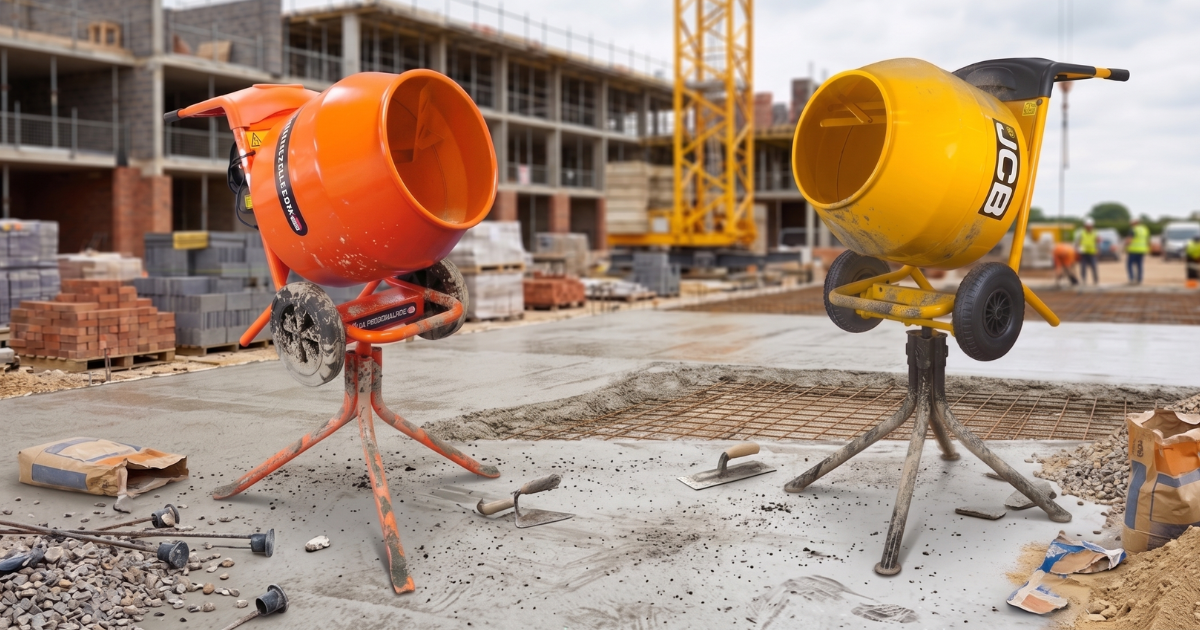
JCB vs Altrad Belle: Which Cement Mixers Truly Deliver for Professional Site Use?
Compare JCB vs Altrad Belle cement mixers for pro sites — performance, durability and value insights to help contractors pick the right heavy-duty mixer.
Hyundai HYCM63E 220W 63L Electric Cement Mixer Review
The Hyundai HYCM63E Electric Cement Mixer is a compact, user-friendly solution designed for small DIY projects, offering reliable performance with minimal setup and maintenance. Compared to the more powerful Hyundai HYCM160E Electric Cement Mixer, it sacrifices capacity and speed in favour of portability, affordability, and ease of use - making it an ideal choice for homeowners tackling light construction tasks rather than large-scale builds.

Limited Edition Aston Martin F1 and JCB Roller Tools Cabinet | British Engineering Excellence
In a world where craftsmanship and innovation go hand in hand, two of Britain’s most distinguished engineering giants, Aston Martin Formula One® Team and JCB Tools UK, have joined forces to create a tool storage solution that sets new standards in design, durability, and desirability. Launched in August 2024, the Limited Edition Aston Martin F1 […]
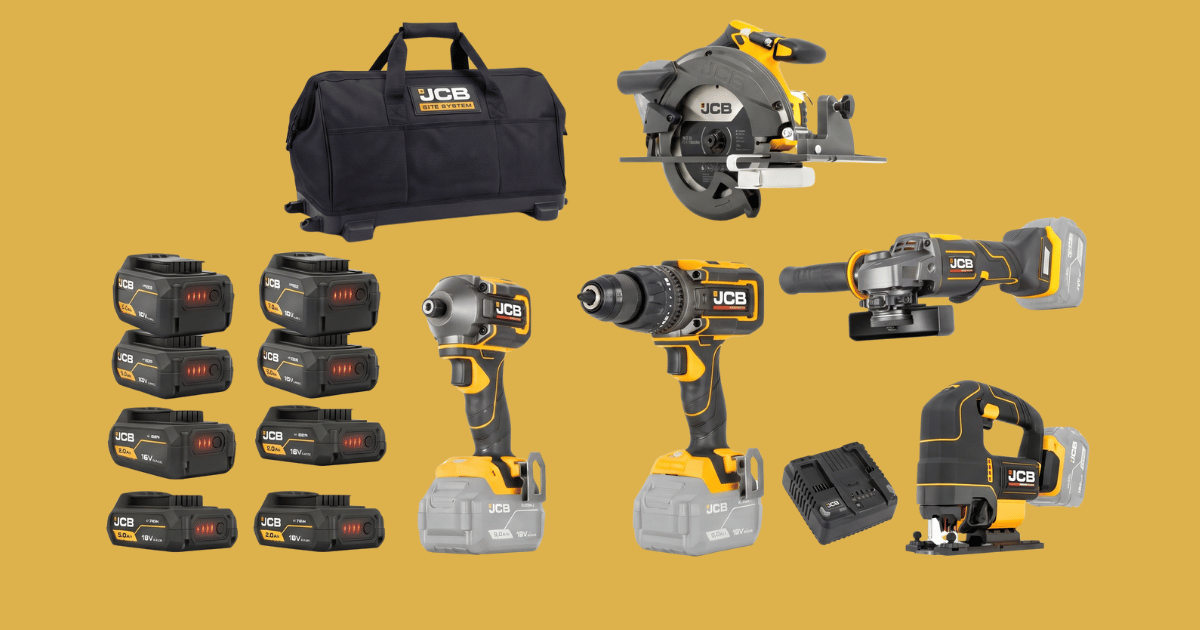
JCB 18V 5-Piece Pro Kit Review (JCB-18PKIT-8): Is £549.99 Good Value in 2026?
A detailed UK review of the JCB 18V 5-Piece Pro Kit (JCB-18PKIT-8) — five brushless tools, four E-TECH batteries and a dual fast charger for £549.99. We break down the cost per tool, the specs that matter, and who should buy it.
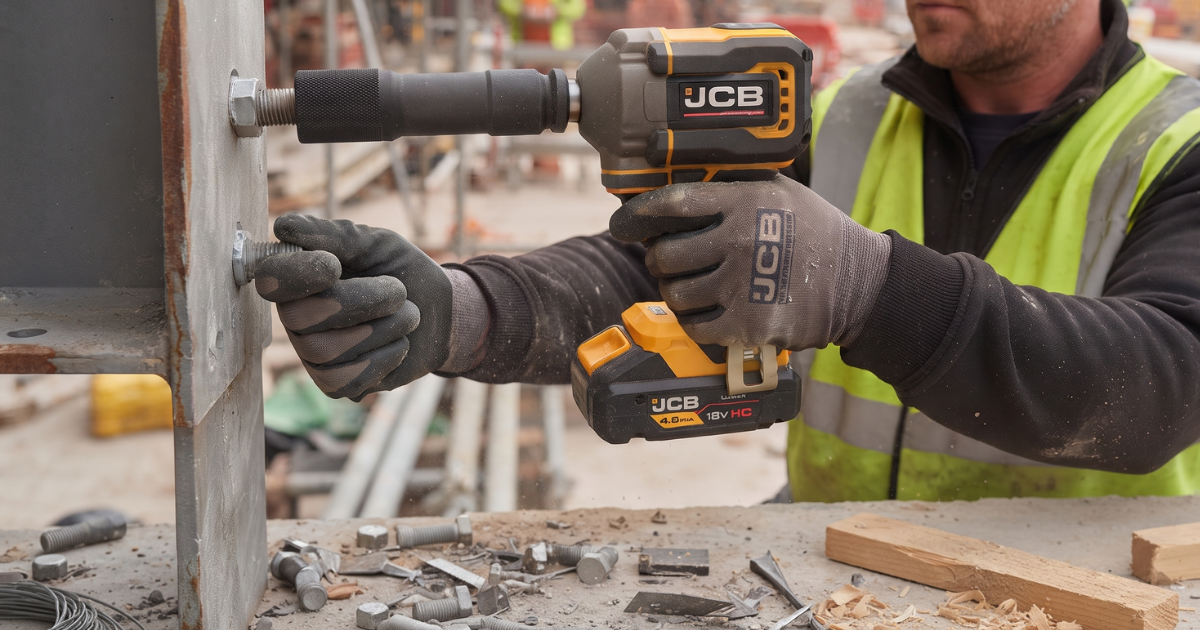
JCB Tools 18V 350nm Brushless Impact Wrench Review (JCB-18PIW-350) What's the verdict?
JCB 18V impact wrench review: 350Nm nut-busting torque, brushless motor, 3-year warranty for £89.99. Mark Moore rates the JCB-18PIW-350 4.4/5 for 2026.