
Mediterranean Garden Ideas for the UK: Drainage & Plants
A UK guide to Mediterranean-style gardens covering drainage, gravel gardens, the best drought-tolerant plants and hardiness protection.
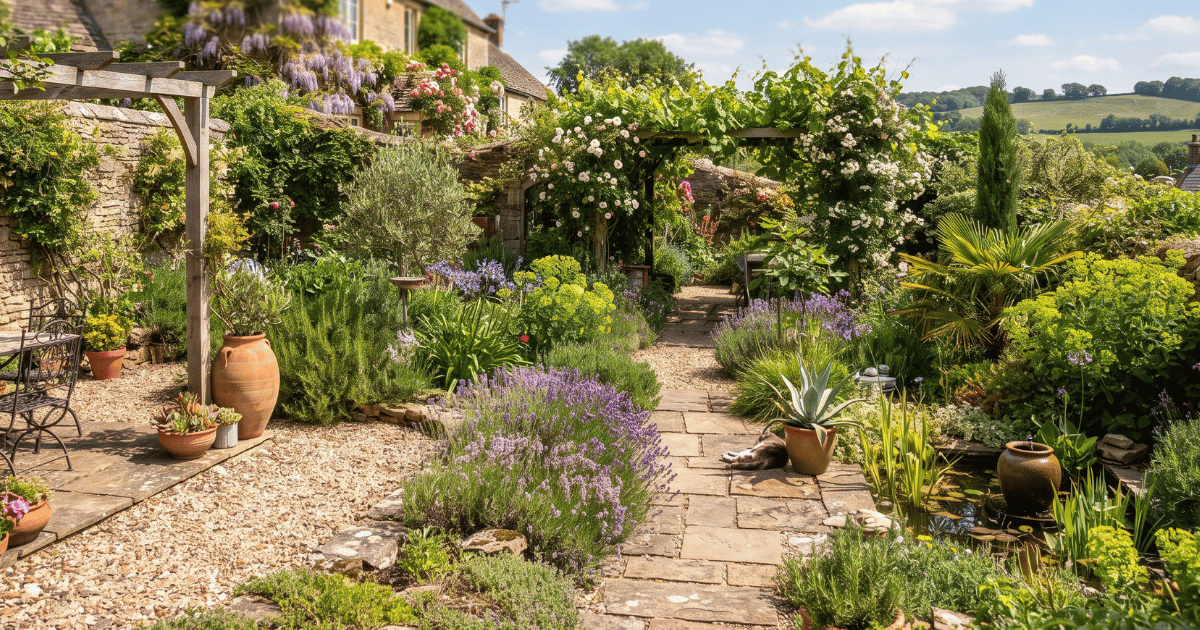
A convincing Mediterranean-style garden in the UK is built on sharp drainage, gravel mulches and a plant palette of genuinely hardy Mediterranean natives such as lavender, rosemary and cistus, supplemented by tender favourites like olives grown in pots for winter protection. Success depends more on soil preparation and plant choice than on climate, since a warm, sheltered, well-drained spot can support this style almost anywhere in the country.
Key takeaways
- Sharp drainage matters more than sunshine hours; improve heavy soil or build raised beds.
- Gravel gardens mimic Mediterranean conditions and dramatically cut watering needs once established.
- Choose hardy Mediterranean shrubs like lavender, rosemary, cistus and phlomis as the backbone.
- Keep tender species such as citrus and olives in pots so they can be moved under cover for winter.
- Mulch with grit or gravel rather than bark to keep crowns dry and deter slugs.
Why drainage comes first
Mediterranean plants evolved in free-draining, often stony soil with hot dry summers and mild, relatively dry winters. The main way UK gardens fail with this style is by underestimating winter wet rather than summer cold. On clay or heavy loam, dig in generous quantities of horticultural grit and coarse sand, and consider raising beds by 150-300mm to help water drain away from crowns and roots. The RHS guidance on soil types is a useful reference for assessing your starting point.
Building a gravel garden
Gravel gardens are the classic way to create a Mediterranean look while solving the drainage problem at the same time. The gravel layer keeps the plant crown dry, reflects heat back into the plant, and suppresses weeds.
- Clear the site of weeds and perennial roots thoroughly.
- Improve drainage by working grit into the top 300mm of soil, or import a free-draining sub-base.
- Plant through the soil first, then apply a 50-75mm layer of decorative gravel around each plant, keeping it clear of the main stem.
- Water well for the first growing season to establish roots, then reduce watering as plants mature.
- Top up gravel every few years as it settles or gets displaced.
Best drought-tolerant plants for UK conditions
Choosing plants that are genuinely hardy in your region, rather than borderline tender ones, saves ongoing effort. The table below groups reliable options by hardiness.
| Plant | Hardiness in UK | Notes |
|---|---|---|
| Lavender (Lavandula angustifolia) | Fully hardy | Trim after flowering; avoid heavy mulch at base |
| Rosemary | Fully hardy in most areas | Good on walls and banks; tolerates poor soil |
| Cistus (rock rose) | Hardy in mild/sheltered areas | Short-lived flowers but long summer display |
| Santolina | Fully hardy | Silver foliage; trim hard in spring |
| Phlomis fruticosa | Hardy | Architectural, yellow whorled flowers |
| Olive (Olea europaea) | Borderline/tender | Best in a large pot, moved under cover in winter |
| Citrus species | Tender | Container only; overwinter in a conservatory or greenhouse |
| Oleander | Tender | Container grown; protect below 5C |
For more plant-specific growing detail, see our grow guides and plants hubs.
Hardiness and winter protection
Understanding RHS hardiness ratings helps set realistic expectations; check the RHS hardiness rating system before buying tender specimens. As a general rule:
- Fully hardy plants (H5-H7) can stay outside all year in most of the UK.
- Borderline plants (H3-H4) need a sheltered site, south-facing wall, and a dry mulch over winter.
- Tender plants (H1-H2) are safest in containers so they can be moved into a greenhouse, porch or conservatory before the first frosts, typically from October in most regions, based on Met Office seasonal guidance.
Seasonal protection checklist
| Month | Task |
|---|---|
| September | Reduce feeding, prepare pots for moving indoors |
| October | Move tender container plants under cover before first frosts |
| November-February | Fleece borderline shrubs, keep compost on the dry side |
| March | Gradually reintroduce containers once frost risk drops |
| April-May | Resume feeding, refresh gravel mulch, plant new additions |
For a broader month-by-month planner across the whole garden, our seasonal guide hub and garden design hub are useful companions.
The bottom line
A Mediterranean-style garden works well in the UK once drainage is sorted and the plant list is honest about hardiness: build the backbone from fully hardy species like lavender, rosemary and cistus, use a gravel garden to keep roots dry, and treat genuinely tender favourites such as olives and citrus as container plants that come indoors for winter.
Frequently Asked Questions
Can you have a Mediterranean garden in the UK climate?
How do I improve drainage for a Mediterranean garden?
What is a gravel garden and how do I make one?
Which Mediterranean plants are hardy in the UK?
How do I protect tender Mediterranean plants in winter?
Tags
Comments
Join the conversation
Create a free account to leave comments, share photos, and connect with other gardeners.