
September Lawn Care UK: 8 Jobs to Do for a Healthier Lawn
September is the best month of the year to fix a tired lawn. Here are the eight jobs to do now, from scarifying and aerating to overseeding and autumn feeding, so your grass is thicker and greener by spring.
Key takeaways
- Spring gets all the attention, but autumn is when a lawn does its best recovering.
- Don't put the mower away yet, but don't scalp the lawn either.
- Scarifying is the single job that makes the biggest visible difference.
- After a summer of barbecues, garden games and dry, baked ground, most lawns are compacted.
- Warm soil, cooler air and regular rain are the perfect conditions for grass seed, and seed sown now usually establishes faster and with fewer weeds than seed sown in spring.
Quick Answer
September is the best month of the year to fix a tired lawn (especially after this summer's draught). Raise your mower blades, scarify out the thatch, aerate compacted ground, overseed thin or bare patches, and apply an autumn feed (low nitrogen, higher potassium) to build roots before winter. Soil is still warm and autumn rain is on its way, so new grass establishes far better now than in spring.
If your lawn looks patchy, brown or moss-ridden after the summer, don't panic. Most of the damage from heat, drought and heavy use is cosmetic, and the next few weeks are your chance to put it right. I've pulled together the September lawn jobs in the order I would tackle them, based on RHS guidance, UK turf and seed specialists and the lawn-care advice already published by the wider gardening press.
Why September matters
Spring gets all the attention, but autumn is when a lawn does its best recovering. Soil temperatures are still warm enough for seed to germinate, the sun is no longer scorching new seedlings, and rainfall is picking up, so you spend less time with the hose. Weeds also grow more slowly, which gives new grass a head start. Late September and early October is the sweet spot across most of the UK; if you are in Scotland or northern England, get on with it now rather than waiting.
1. Keep mowing, but raise the blades
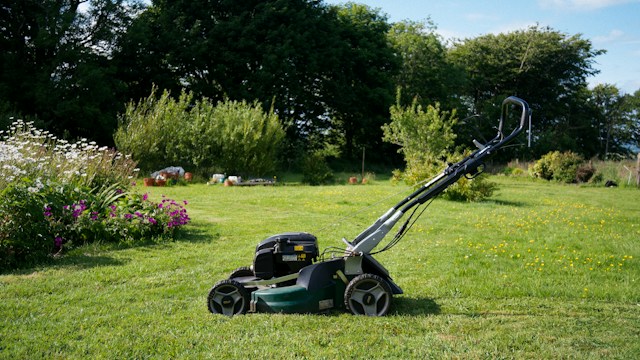
Don't put the mower away yet, but don't scalp the lawn either. The RHS advises keeping the blades set higher through September, which helps grass cope with any remaining dry spells and stands up better to foot traffic once the ground turns wet. Longer grass also shades the soil, which keeps moisture in and holds back weeds and moss.
As a rule of thumb:
- Raise the cutting height by roughly a notch or two compared with high summer, and around 4cm (1.5 inches) is a common rule of thumb for a general-purpose lawn (fine ornamental lawns are usually kept shorter).
- Mow only when the grass is dry and still growing. If growth has slowed right down, leave it longer between cuts.
- Never remove more than a third of the blade in one go. Cutting too hard stresses the lawn just as it is trying to recover.
- Go easy with the clippings. A thin layer can be left on the lawn, but thick clumps smother the grass. If you compost them, spread them thinly with other material so they don't turn slimy.
If your mower's blades are blunt after a busy summer, now is a good time to sharpen or replace them. A dull blade tears the grass rather than cutting it, leaving ragged brown tips that let disease in.
2. Scarify to remove thatch and moss
Scarifying is the single job that makes the biggest visible difference. Over a season, a layer of dead grass, moss and debris (thatch) builds up between the soil and the living blades. It blocks water and air, and gives moss a place to take hold. The RHS puts it simply: if you can't see the soil between the blades of grass, the lawn would benefit from scarifying.
How to do it:
- Mow the lawn on a fairly low setting first, on a dry day.
- Rake vigorously with a spring-tined (lawn) rake, working in more than one direction. On a small lawn this is a decent workout and all you need.
- For anything larger, hire or buy a powered scarifier. UK turf specialists suggest starting shallow, at about 2-3mm for light thatch and no deeper than around 5mm for heavy build-up, with two passes at right angles in bad cases.
- Collect every scrap of debris afterwards. A lawn can produce a surprising amount, and it needs to come off the surface, not be left to rot.
Expect the lawn to look worse before it looks better. Scarifying pulls out a lot of moss and dead material and can leave the grass looking thin and scruffy for a couple of weeks. That is normal, and it is exactly why September is the right time: there is still enough warmth and growth for it to fill back in before winter.
Do it before you aerate, overseed or feed, never after, so the seed and nutrients reach the soil rather than a mat of thatch.
3. Aerate compacted soil
After a summer of barbecues, garden games and dry, baked ground, most lawns are compacted. Compacted soil stops water and air reaching the roots, which is why puddles sit on the surface and the grass struggles even when you feed and water it. Aerating opens the soil back up. It is best done once autumn rain has softened the ground, so wait for a decent spell of wet weather if the soil is still rock hard.
- Spiking with a garden fork is fine for small lawns and lightly compacted areas. The RHS suggests pushing the tines in around 10-15cm (4-6 inches) apart, concentrating on the worn areas such as paths, the washing line and around play equipment.
- Hollow-tine aeration is the better option on clay, heavily compacted or waterlogged lawns. It removes small cores of soil rather than just poking holes, which improves drainage far more effectively. You can hire a hollow-tine aerator for larger areas.
How often? The RHS suggests repeating aeration every two to four years depending on your soil type, though busy family lawns and heavy clay may need it more regularly.
Top dress afterwards. Brushing a sandy top dressing into the holes helps keep them open, improves drainage and creates conditions that moss dislikes. The RHS recommends a loam, sand and compost mix in a 3:6:1 ratio at around 2-3kg per square metre; a common alternative is a 70/30 sand-to-soil mix. Work it in with the back of a rake or a broom so it sits between the grass blades rather than smothering them.
4. Overseed thin lawns and repair bare patches
This is where September really earns its reputation. Warm soil, cooler air and regular rain are the perfect conditions for grass seed, and seed sown now usually establishes faster and with fewer weeds than seed sown in spring.
Step by step:
- Scarify and aerate first, so the seed makes contact with bare soil.
- Rake bare patches to a fine, crumbly surface and firm it lightly.
- Sow evenly, following the rate on the packet. One UK turf supplier recommends around 35g per square metre for a full renovation, which works out at 3.5kg for a 100m² lawn.
- Lightly rake or brush the seed in and cover with a thin layer of top dressing.
- Keep the seedbed moist. If rain doesn't do the job, water gently every day or two until the seedlings are established.
- Keep off the area for several weeks, and wait until the new grass has grown enough to take its first cut, with the blades set high.
Choosing the right seed matters as much as timing. Match the mix to how you use the lawn:
- Hard-wearing mixes suit families, pets and play areas.
- Ornamental or fine-fescue mixes give a finer, more formal finish but need more care.
- Shade mixes are formulated for lawns under trees or beside fences and walls.
- Drought-tolerant mixes are a sensible choice if your lawn suffered this summer.
- General-purpose ryegrass and fescue blends are a good all-rounder for most gardens.
After a hot, dry summer, wait until the soil has been properly wetted by rain before sowing. Seed on baked ground simply sits there or gets eaten by birds. You should see visible improvement within a couple of weeks and full recovery within four to six weeks with proper aftercare.
5. Feed with an autumn lawn fertiliser
Don't reach for the spring or summer feed. Those are high in nitrogen, which pushes lush leafy growth that is soft and vulnerable to frost and disease. Autumn lawn feeds are formulated differently, with lower nitrogen and more potassium and phosphorus to strengthen roots and help the grass toughen up for winter. Look for a product clearly labelled "autumn" or "winter" lawn feed.
- Apply only if the lawn needs it. The RHS suggests feeding when growth is sluggish, and following the packet rate (typically around a handful per square metre) rather than doubling up. One UK supplier suggests 30-40g per square metre.
- Time it before rain, or water it in, so the granules dissolve and don't scorch the grass.
- Go carefully after drought. If your lawn is still baked and dormant, hold off. Feeding stressed, dry grass can do more harm than good. It's fine to wait for the rain to return, or leave it until spring.
- Skip wildflower areas. If you have converted a patch to meadow, leave it unfed to encourage wildflowers over grass.
If you have just sown seed, use a fertiliser designed for new grass, or check the label to see whether it is safe for seedlings. The wrong product can burn tender new growth.
6. Tackle weeds, moss and pests
Moss is best fought with cultural methods rather than chemicals: scarify it out, aerate, top dress and improve drainage. Moss thrives in shade, damp and compaction, so if it keeps coming back, look at the cause (overhanging branches, a soggy patch, mowing too short) rather than just the symptom.
Weeds are easier to control in autumn, but avoid weedkillers on or near freshly sown areas. New seedlings are easily damaged, and most packs advise waiting until the new grass has been mown several times. In the meantime, hand-dig dandelions, plantains and other deep-rooted weeds with a daisy grubber before they seed or spread.
Lawn diseases are more common in the damp, mild conditions of early autumn. The RHS highlights red thread, fusarium patch and lawn rust as the ones to watch for. Good airflow, regular scarifying, avoiding excess nitrogen and not letting leaves sit on the grass will prevent most problems.
Leatherjackets and chafer grubs are the lawn pests that catch out gardeners each winter and spring, when birds and foxes tear up the turf hunting for them. The RHS suggests biological controls in early autumn, when the grubs are still small and close to the surface. Nematode products are watered onto moist soil while it is still warm, so September is the time to act. Look out for yellowing, thinning patches and increased bird activity on your lawn as warning signs.
7. Water new areas and clear the leaves
Watering. An established lawn rarely needs watering in September. The RHS notes that drought-stressed lawns typically green up on their own once the rain returns and temperatures drop, so resist the urge to soak a brown lawn that is simply dormant. New seed and turf are the exception: keep them consistently damp, little and often, until they root. A water butt is ideal for this, and saves you from tap water if there are restrictions in your area. Our water butt guide covers the options.
Leaves. As soon as the first leaves start to fall, get into the habit of clearing them. A blanket of wet leaves blocks light, holds moisture against the grass and encourages disease and moss. A leaf rake or a leaf blower does the job quickly, and the leaves make excellent leaf mould if you stack them in a corner of the garden. Little and often beats one big clear-up in November.
8. Thinking of a new lawn? Now is the time
Autumn is the best season to create a new lawn from seed or turf, for the same reasons it is the best time to repair an old one: warm soil, moisture and slower weed growth.
- Prepare the ground first. Dig or fork over the soil, remove weeds and stones, level it and firm it by treading. The RHS recommends preparing the site weeks ahead so the soil has time to settle.
- Sowing seed: sow onto damp soil after rain and keep the seedbed moist while it establishes.
- Laying turf: lay it onto moist soil, stagger the joints like brickwork, water it in thoroughly and keep off it for several weeks until it has rooted.
- Meadow patches: if you would rather have flowers than grass, September is also a good time to sow wildflower seed or plant plugs while the soil is moist.
- Spring bulbs in the lawn: snowdrops, crocuses and daffodils can be planted now. Leave those areas unmown until the foliage has died back naturally.
Tools that make the September jobs easier
You don't need a shed full of kit, but the right tool turns a weekend slog into a couple of hours. Here is what suits each job, depending on the size of your lawn.
| Job | Small lawn (under ~100m²) | Larger lawn |
|---|---|---|
| Scarifying | Spring-tined lawn rake | Electric or petrol scarifier (buy or hire) |
| Aerating | Garden fork or hand aerator | Hollow-tine aerator, hired for the day |
| Overseeding and feeding | Hand-spread, or a small drop spreader | Wheeled broadcast or drop spreader for even coverage |
| Top dressing | Wheelbarrow, shovel and a stiff broom or lawn rake | Same, plus a bulk bag of dressing delivered |
| Leaf clearing | Leaf rake or lightweight cordless blower | Cordless or petrol blower-vac |
| Cutting | Any mower with adjustable height | Adjustable-height mower with sharp blades |
If you only have room for one purchase, a good scarifier is the tool most likely to transform your lawn. For a lawn of any size, an electric model will handle most gardens, while a petrol one suits large areas. Hiring is a sensible way to try before you buy.
We review garden machinery across the site, so browse our lawn and garden machinery sections if you're shopping for a scarifier, blower or mower before the season finishes.
September lawn checklist
- Raise the mower blades and mow only when the grass is dry and growing
- Scarify to remove thatch and moss, then clear all the debris
- Aerate compacted areas once the ground has softened, and brush in a top dressing
- Overseed thin areas and repair bare patches, then keep the seedbed moist
- Apply an autumn lawn feed if growth is sluggish, ideally before rain
- Check for leatherjackets, chafer grubs and lawn disease, and treat early
- Clear fallen leaves little and often
- Prepare the ground now if you're planning a new lawn or meadow patch
Sources
- RHS: Lawns in September
- RHS: Lawn care in autumn
- Willis & Ainsworth: Autumn lawn care guide UK
- Ideal Home: What to do with your lawn in September
Frequently Asked Questions
Tags
Comments
Join the conversation
Create a free account to leave comments, share photos, and connect with other gardeners.